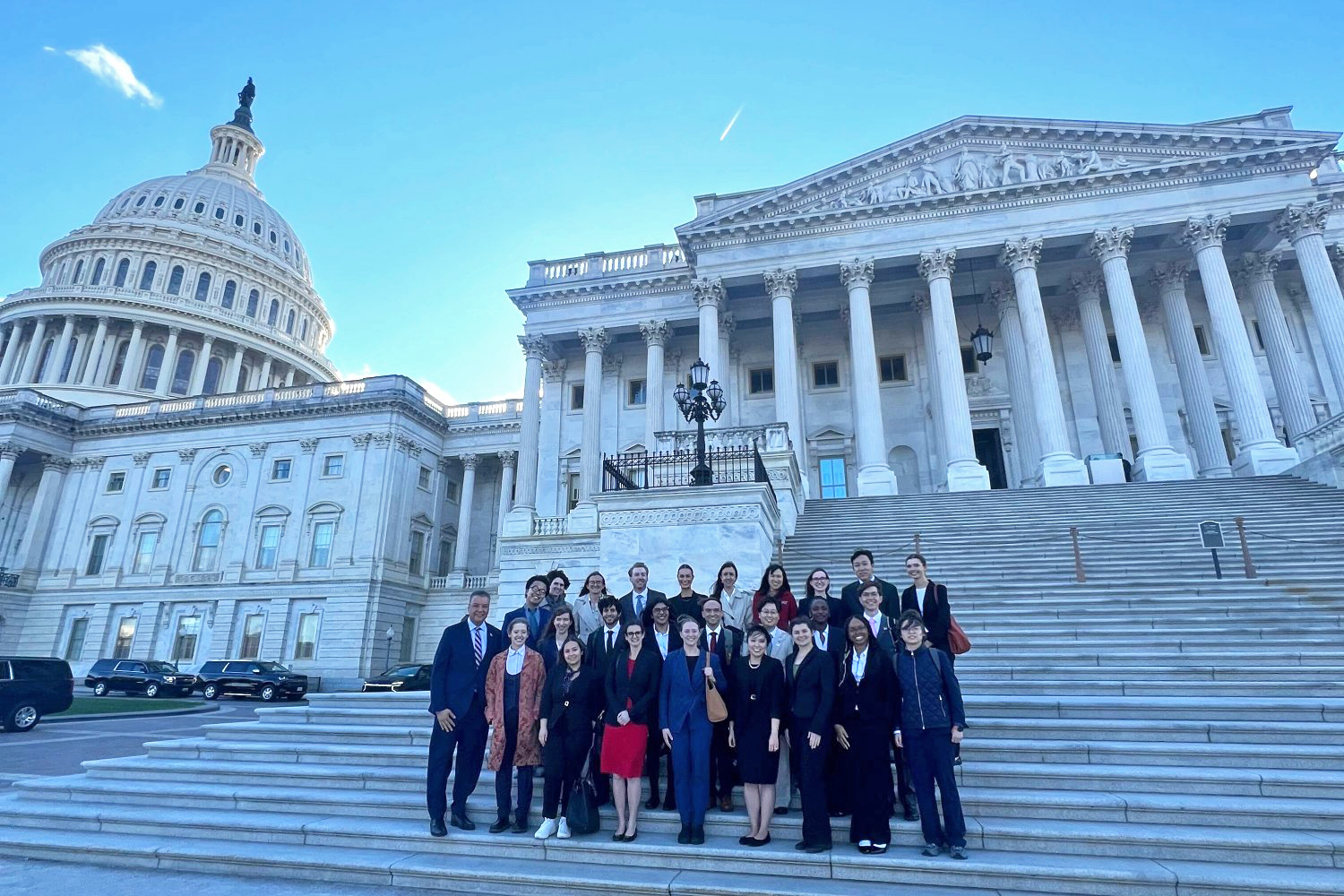
This spring, 25 researchers from MIT packed their bags and headed to Washington. Over just two days, they met with congressional offices from 32 states — 62 meetings total — to talk about why federal funding for science matters. And according to the people who went, something surprising happened: both Republicans and Democrats wanted to listen.
The trip came at a tense moment. Recent cuts to National Science Foundation programs have left many researchers worried about the future of federal science funding. So these MIT scientists decided to go straight to the source and make their case in person.
Each year, MIT's Science Policy Initiative organizes Congressional Visit Days, a program that teaches graduate students and postdocs how policy actually works in Washington. This year, the trip was co-organized by Audrey Parker, a PhD student studying civil and environmental engineering, and Ian Robertson, a PhD student studying physical oceanography at MIT and the Woods Hole Oceanographic Institution. Both say the experience changed how they think about their role as scientists.
"Having attended the trip as a participant last year, stepping into the role of a co-leader this year was a big commitment that was well worth the payoff," Robertson said.
Before the trip, participants attended three training sessions led by MIT's Washington Office and Policy Lab. They learned how congressional staff shape legislation, how federal budgets get decided, and how to explain their research to people who might not have a science background. They even practiced conversations with each other in mock meetings to get ready.
Once on the Hill, the group talked about everything from artificial intelligence to deep-sea mining. Surprisingly, staffers on both sides of the aisle showed strong interest in the same topics — especially AI safety and protecting ocean ecosystems. In many cases, meeting the actual researchers helped congressional staff understand why funding decisions matter in real, tangible ways.
Rodrigo Zuniga, a first-year PhD student who went on the trip, said the experience challenged what he expected to find.
"Going to Washington offered a whole new perspective of the role of science in politics for me," Zuniga said. "In today's news and social media landscape, it's really easy to see Washington as irreversibly polarized, but in talking to staffers from both the majority and minority parties, I saw a general desire for bipartisanship and widespread support for science."
Zuniga says he now believes young scientists have an important role to play in government — not just in labs, but in shaping the policies that determine what research gets funded. And programs like Congressional Visit Days are helping make that happen.