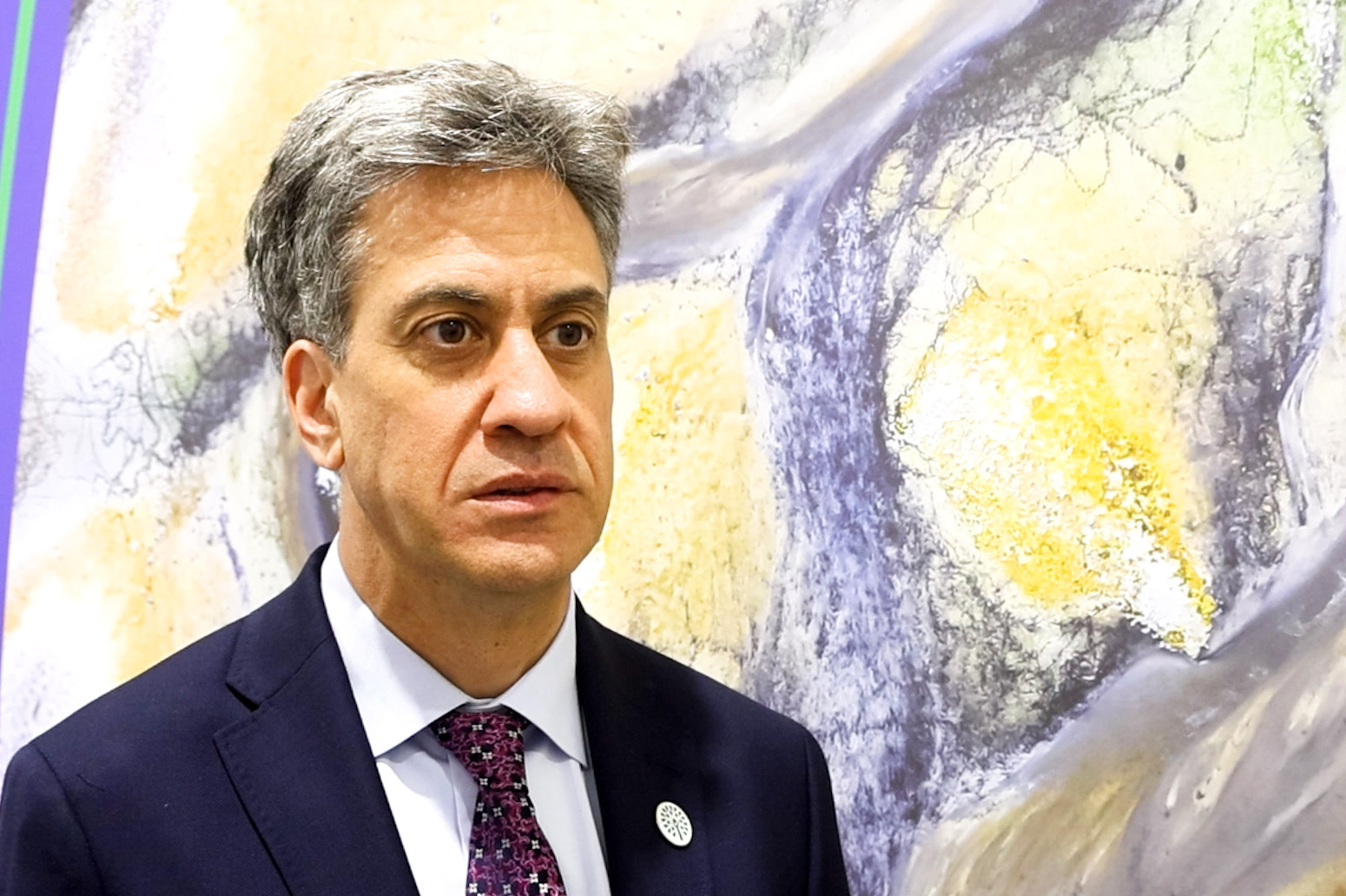
At COP31 in Antalya, Ed Miliband made a pointed case for Britain’s climate credentials: the country, he said, is still seen as a leader despite approving the Jackdaw gas field and facing questions about its electric-vehicle targets.
The UK energy secretary spoke with Carbon Brief at the climate summit after readers sent questions about Britain’s policies, the COP process and support for developing countries. Their questions touched on a central challenge for climate diplomacy: how governments can move toward cleaner energy while dealing with political disputes and tight public budgets.
Miliband said other countries see a UK government driving action on electrification and clean power. He pointed to Britain’s target to reach clean power by 2030 and its net-zero goals, which he described as among the world’s most ambitious. He also said the UK is legislating to prevent new oil and gas licences. That claim comes as the government faces criticism over approval of the Jackdaw gas field, a proposed North Sea development.
Asked whether Britain could meet its 2030 emissions target, Miliband said it would “go all out” to do so. The target is to cut emissions by 68% below 1990 levels. He acknowledged that the government inherited a difficult situation in 2024, but said the purpose of national climate pledges is to drive countries toward meeting them.
Miliband also linked climate policy to national security. Preparing for climate impacts, he argued, is a security issue for governments around the world, not just an environmental concern. He said Britain’s planned presidency of the G20 in 2027 would put climate resilience and development debt on the agenda.
On helping developing countries, he called for reform of multilateral development banks, institutions that provide financing to countries. He said they could make better use of their balance sheets and potentially provide hundreds of billions of dollars more to support climate resilience and ease debt burdens. During its G20 presidency, Britain plans to bring the banks together and encourage them to follow stronger practices, he said.
Miliband defended the COP institution, too, arguing that its value lies in bringing countries together for climate action. He recalled the 2009 Copenhagen summit, which ended in acrimony, and said the world has since moved away from the prospect of a 4C rise in global temperatures. The supplied interview excerpt ends as he begins to explain that point, so it offers no further detail on his case for COP reform.
He also stressed the need for action on methane and backed the “35×35” pledge to speed up electrification. The interview shows the gap between ambition and controversy in climate policy: Britain’s targets and international plans sit alongside criticism over new gas development and uncertainty about how quickly cleaner technologies will spread. Miliband’s answer was to insist the UK will keep pushing toward its emissions goal, while using its upcoming G20 role to press for wider cooperation.