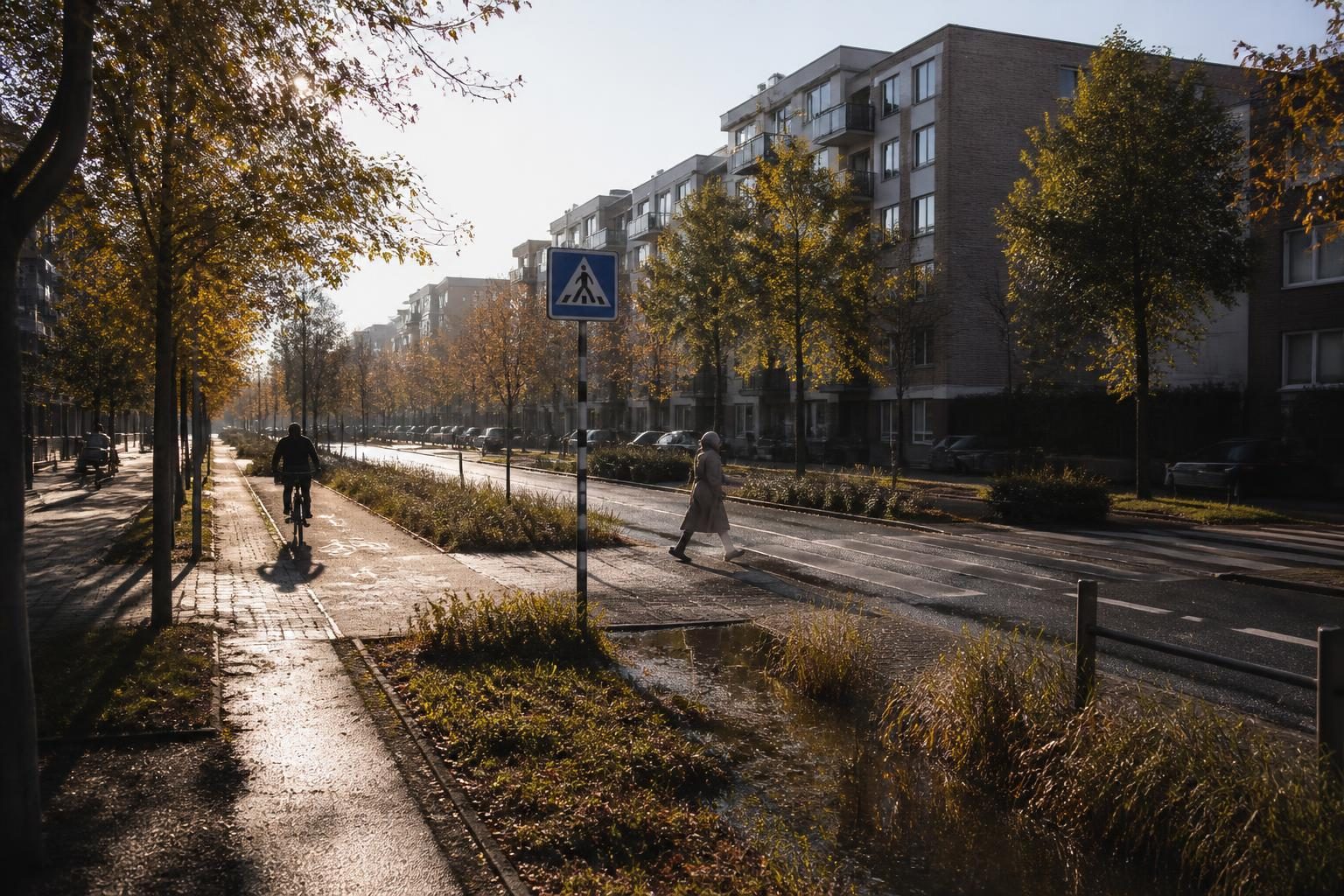
On Medeinos Street in Vilnius, the daily trip past a kindergarten and two schools can involve congestion, hard-to-see crossings and too little room for people on foot. A European Union overview is drawing attention to Lithuanian projects that tackle such everyday problems alongside wider climate risks and energy use.
The European Climate, Infrastructure and Environment Executive Agency published its overview on November 6, 2026. It brings together work in Vilnius, Klaipėda and Joniškis, as well as a national energy programme. The projects show that preparing for climate change can involve more than building flood barriers or planting trees: it can also mean using health research to guide city decisions, making streets safer and reducing energy waste.
In Vilnius, the AURORA project combines climate information with health data and computer modelling. It is looking at risks such as stronger heat and cold periods, changing pollen patterns and the spread of diseases carried by ticks. The goal is to help authorities see which neighbourhoods and groups may face greater risks, then plan public information, health services and other responses more precisely.
Vilnius is one of five demonstration cities in AURORA, a project for communities in Europe’s boreal climate region. The city’s work is scheduled to run from September 2024 to February 2028. The project has a total budget of about €7.21 million, including €6.10 million in EU funding, and brings together 26 organisations across Europe. Planned tools include ways to track climate factors, make risk maps and provide early warnings. They are meant to support local decisions, not make those decisions for city officials.
The street-focused project, JUST STREETS, centres on Medeinos Street in the Pašilaičiai district. Its plans connect safer travel with a more usable public space, including better crossings and infrastructure for pedestrians, people with disabilities and parents pushing strollers. The work also examines residential parking and car drop-offs at schools. The wider Horizon Europe initiative has received €10.23 million. In a place shaped by school runs and daily errands, safer walking routes could make short trips less dependent on cars while improving access for residents.
At national scale, ENERLIT supports Lithuania’s National Energy and Climate Plan. The integrated LIFE project works across buildings, transport and industry, backing energy-saving improvements, cleaner mobility and updated industrial energy systems. It also aims to improve how Lithuania tracks and models energy use and greenhouse-gas emissions. Its budget is about €11 million, co-financed by the LIFE programme and Lithuanian national funds.
Together, the projects link local experience with larger plans. A health-risk map, a safer crossing and an energy upgrade address different needs, but each can help public bodies act on evidence and measure progress. AURORA’s experience in Vilnius is also intended to support future demonstration activities in Klaipėda and Joniškis. The EU overview does not announce a new law or a single construction start; instead, it puts active efforts side by side. Their next test will be how well research and plans turn into practical changes people can see in their streets, services and energy use.