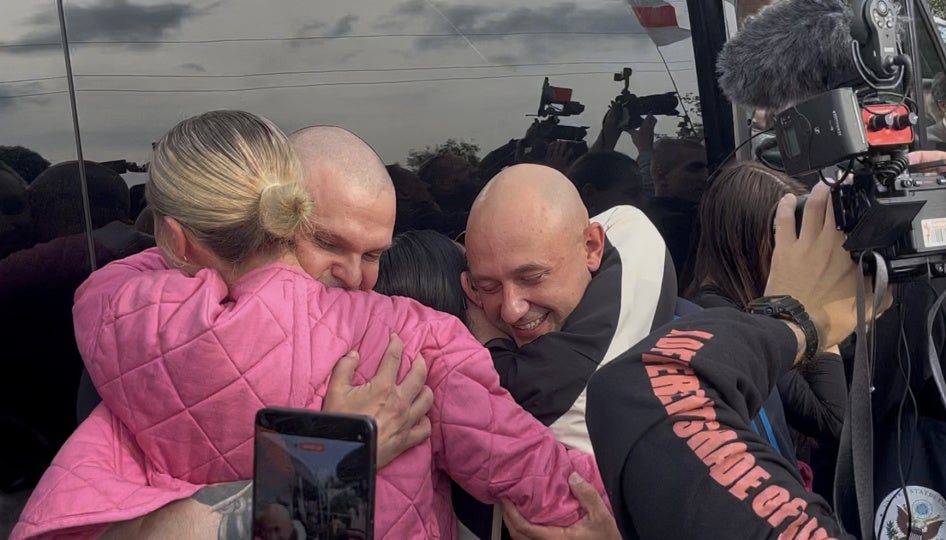
Alena Lazarchyk, a single mother jailed in Belarus, had stopped believing she would ever see freedom. She told the crowd gathered to greet her in Vilnius, Lithuania, that even when guards told her to pack her things, she suspected the worst. "I was sure they were just transferring me somewhere," she said, "but they said I was being deported." Lazarchyk was among 25 political prisoners who arrived in the Lithuanian capital this week, released from detention in Belarus after months or years behind bars.
Their freedom did not come easily, and it did not come free. The release was brokered by John Coale, the United States special envoy to Belarus, in direct talks with president Aliaksander Lukashenka. In exchange for the prisoners, the US lifted sanctions on two Belarusian companies. It was a trade — prisoners for policy — and everyone involved knew the cost.
The 25 freed prisoners include some of Belarus's most visible dissenting voices. Journalist Andrei Aleksandrau and activist Iryna Zlobina were among those released; the couple married while in detention. Lawyer Anastasiya Lazarenka had been prosecuted in part over something as ordinary as organizing legal consultations. Sviatlana Yakubovich volunteered with Viasna, one of Belarus's leading human rights groups. Most had been handed harsh sentences of up to 14 years for their activism.
There is cause for celebration here, but the picture is far from complete. At least 886 people remain jailed in Belarus on politically motivated grounds, and dozens more are detained and sentenced every month. President Lukashenka continues to insist that no political prisoners exist in Belarus at all — a claim that the releases themselves contradict.
The United Nations and human rights groups have also raised alarms about how these releases happen. Belarusian authorities regularly make forced expulsion a mandatory condition of release, a practice that international law experts say violates human rights. Since summer 2025, hundreds of released prisoners have been taken out of Belarus, sometimes without passports or with their passports canceled only after they were deported. These are not ordinary exits — they are exiles, forced on people who only wanted the right to speak, write, and organize in their own country.
Coale says negotiations will continue and more political prisoners should be freed soon. That is hopeful. But the deeper goal must be bigger than a trickle of releases. These prisoners are not bargaining chips to be swapped for sanctions relief. Governments need to keep pressing Belarusian authorities to end their crackdowns for good — and to free the hundreds still in jail without demanding that leaving home be the price of their freedom.
For now, 25 people are breathing free air in Vilnius. Their release is real, and it matters. But the fight is far from over.