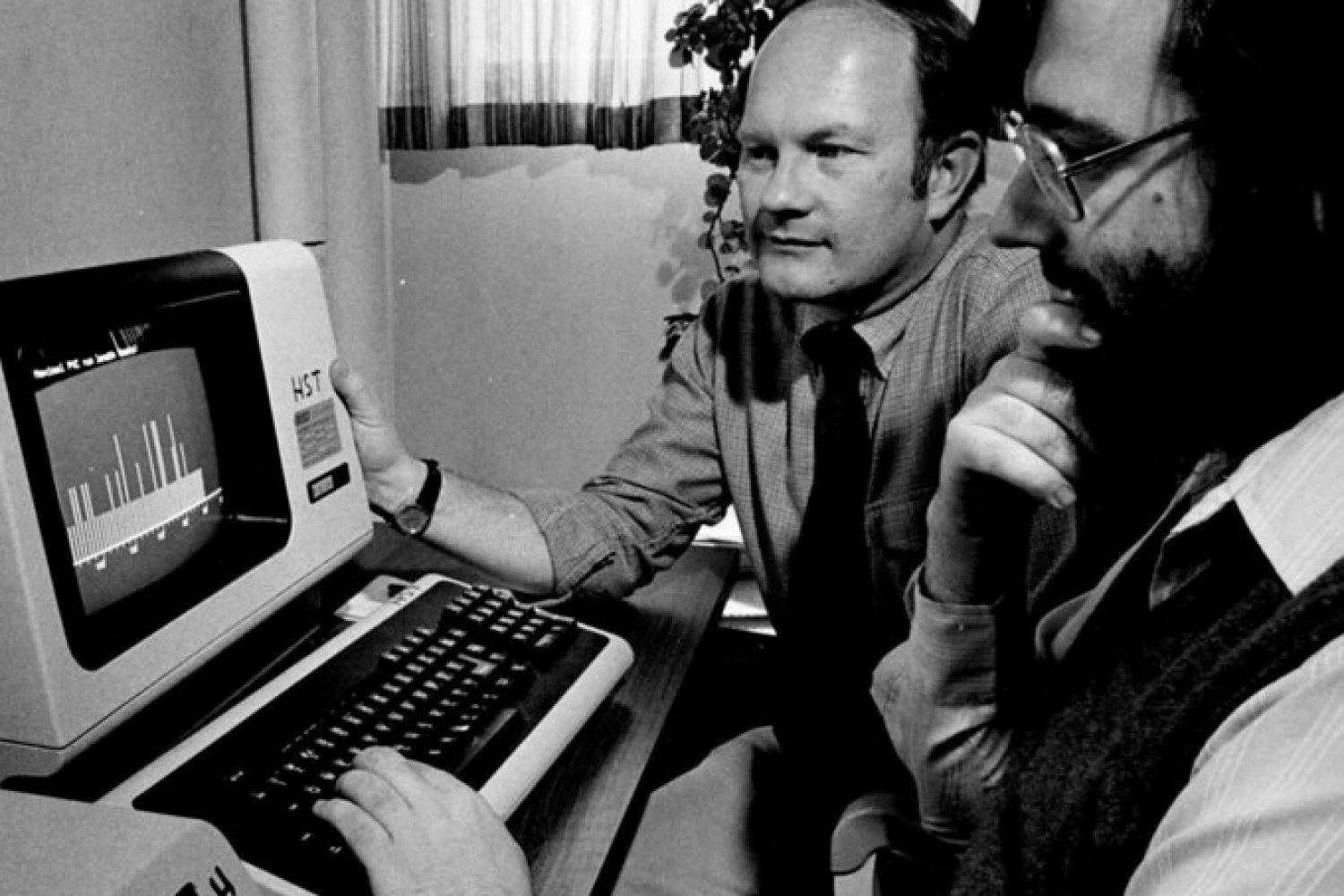
In 1975, a group of researchers at MIT started digitizing heart recordings with a bold idea: instead of keeping their data locked away, they would share it with anyone who could use it. At the time, sharing medical research across institutions was nearly unheard of. Scientists had to gather their own data from scratch, making research slow and expensive. But this MIT team, working alongside Boston's Beth Israel Hospital, believed something better was possible.
The team built their own computers for the job, copied tapes one by one, and created more than 100,000 annotations to make the recordings useful. It took years. By the summer of 1980, the heart recordings were ready. The researchers thought maybe a dozen academic or industry groups would care. Instead, interest poured in. Over the next decade, they mailed out roughly 100 copies to anyone who asked.
That small collection of heart recordings eventually grew into PhysioNet, a global platform founded in 1999 at the Harvard-MIT program in Health Sciences and Technology. Today, PhysioNet hosts hundreds of medical databases and has become one of the largest collections of health data anywhere. The platform's reach is staggering: last year alone, more than 15,000 scientific papers cited data from PhysioNet, and researchers from over 180 countries have registered to use it.
Tom Pollard, now a research scientist at MIT's Laboratory for Computational Physiology and technical director of PhysioNet, knows firsthand how transformative this kind of sharing can be. Around 2009, he was a PhD student in London studying critically ill patients. He needed health data for his dissertation, but hospital systems were not designed to share information for research. After searching online, he found MIMIC — a database of de-identified health records hosted by PhysioNet. That discovery changed everything. His supervisor arranged a visit to MIT, and soon Pollard was working directly with Roger Mark, one of PhysioNet's founders, to expand the database. MIMIC became central to Pollard's dissertation, and after finishing his PhD, he moved to MIT to help build the next generation of it.
Thomas Heldt, a professor at MIT's Institute for Medical Engineering and Science and senior author of a recent paper in Nature Health examining PhysioNet's impact, called the platform's founding "incredibly visionary." He called the research impact "truly significant" and "quite humbling." The late Roger Mark described PhysioNet's purpose as building an "accessible multinational community around data."
What started as a box of mailed tapes has reshaped how medical research happens worldwide. Scientists, hospitals, and companies now freely exchange health data that once sat locked in separate systems. That shift has made discoveries faster, cheaper, and more collaborative than anyone imagined in 1975. And the researchers who started with a simple belief — that shared data leads to better science — are watching their vision unfold across 180 countries.