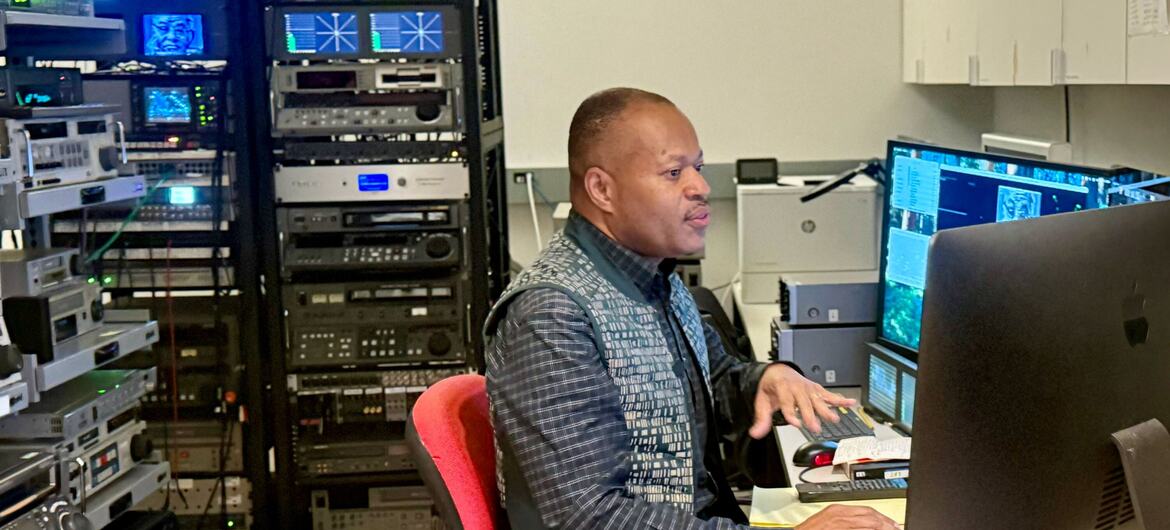
Rhony Dostaly has watched Harry Belafonte’s children grow up — not in person, but through decades of home movies the singer carefully filmed. One clip shows young sons learning to ride bikes in Central Park. Another captures family trips abroad. These aren’t just personal memories. They’re pieces of history now being rescued from fading film and decaying tape inside a quiet lab at the New York Public Library.
This lab is a time machine. Engineers here are racing to digitize over a century of sound and moving images before the fragile media crumble and the machines needed to play them vanish. The library holds more than 100 years of cultural memory — from civil rights leader Malcolm X’s rare footage in Mecca to UN radio broadcasts from 1949. But acetate film is rotting with “vinegar syndrome,” tapes are sticking together, and Digital Betacam cassettes are shedding oxide with every playback.
Casey McNamara, a media preservation coordinator, inspects each frame of film under a jeweler’s loupe. She’s found reels in rusty tins, plastic bags, even rag boxes. One bears the handwritten label “BHARATA NATYAM,” a clue to an ancient Indian dance form now preserved frame by frame. Without her work, these collections might never be seen again.
In the audio room, Jeffrey Willens places a 16-inch disc marked A Year To Remember onto a turntable. It crackles to life with voices from New Year’s Day, 1949 — Fredric March and Ted Husing broadcasting from the early days of the United Nations. Down the hall, engineers are digitizing the films of William Greaves, including Ralph Bunche: An American Odyssey, the story of the first Black Nobel Peace Prize winner and a key UN leader.
Victoria Fajardo, an audio preservation engineer, calls the work “kind of like surgery.” Tapes arrive crinkled or fused, and repairing them by hand — then hearing a voice for the first time in decades — is a rare gift. Francis Dougherty, who built the video lab, now cleans his playback machines between tapes. “Every year this job gets more difficult,” he says. “The old men who repair the machines are getting even rarer.”
Once digitized, most of this material will be available to anyone with a library card. This isn’t just about saving old tapes — it’s about keeping history alive for students, artists, and future generations. As Dostaly puts it, he hopes young people will “realize the importance of events that took place before they were here on Earth.” And with each passing year, the race to save them grows more urgent.