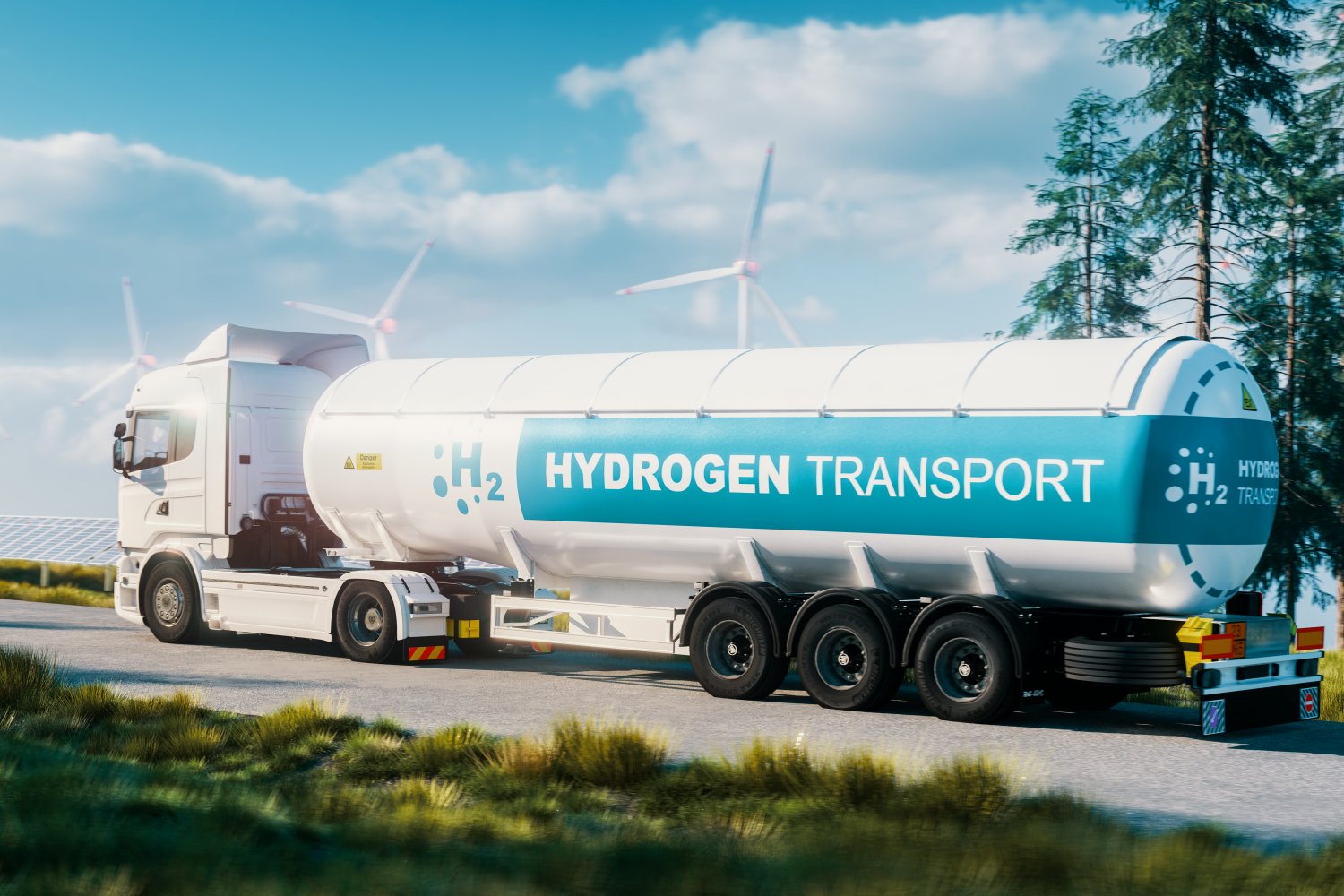
Gasim Ibrahim and his colleagues kept running into the same problem. They wanted to figure out the cheapest, cleanest way to ship hydrogen across oceans — but every time they checked the numbers, they got different answers depending on where the hydrogen was coming from and where it was going. "There hasn't been a lot of attention paid to addressing those questions," Ibrahim says. So the team decided to build a tool that anyone could use to find their own answers.
Ibrahim, now an R&D engineer at Honeywell, led the project while working as a postdoc at the MIT Energy Initiative (MITEI). Hydrogen is getting a lot of attention as a fuel of the future because it burns without producing carbon emissions — it just makes water. That makes it promising for fighting climate change. It could replace fossil fuels in planes, ships, and factories that are hard to clean up otherwise.
But hydrogen has a tricky feature: it's the lightest gas there is, and it takes up a lot of space for the energy it holds. Moving it across oceans is a real puzzle. To ship it, you'd need to compress it into a liquid or attach it to another chemical, which adds cost and carbon emissions. The trouble is, the best method changes depending on the route, the local energy prices, and how much carbon is already in the power supply.
"We decided the best thing to do was to develop an adaptive tool that would enable users to perform their own assessments," Ibrahim explains. That tool is called HyCAT, short for Hydrogen Carrier Analysis Tool. It lets companies type in details about their specific situation — where the hydrogen starts, where it's going, how much it costs to power the conversion process — and see a clear comparison of their options. The results show up as simple bar charts, with links to more detailed tables for anyone who wants to dig deeper.
The project was funded by ExxonMobil Technology and Engineering Co. through MITEI and involved researchers from MIT, Honeywell, and Washington State University. Guiyan Zang, who co-led the study and is now an associate professor at Washington State University, helped design the tool. The team published their work in the journal Fuel in 2024.
What makes HyCAT special is that it's free and open source, meaning anyone can see exactly how the calculations work and update the numbers as the industry changes. "As the industry develops, and as scale becomes more a factor, the assumptions made in [our initial] assessments of the economics and the carbon intensity [of different shipping methods] will need to be updated," Ibrahim says. The tool is built to grow with the field.
Right now, hydrogen is still mostly made from natural gas, which creates carbon pollution. But if cleaner production methods become cheaper — which many experts expect — hydrogen could become a major clean fuel. Tools like HyCAT could help make that future happen faster, by helping companies make smarter choices about how to move it around the world.