Deep in the basement of MIT's Building 35, something small began that would travel far beyond Cambridge, Massachusetts. FrED — a low-cost desktop machine that shapes plastic into thin fibers for manufacturing education — started as a student project. Today, it has grown into a network spanning two countries and hundreds of young engineers.
FrED stands for Fiber Extrusion Device. Designed and built by students in an educational factory at MIT, it lets learners practice real manufacturing without needing a massive industrial plant. No textbooks or diagrams can replace the experience of actually making something with your hands, and that's exactly what FrED makes possible.
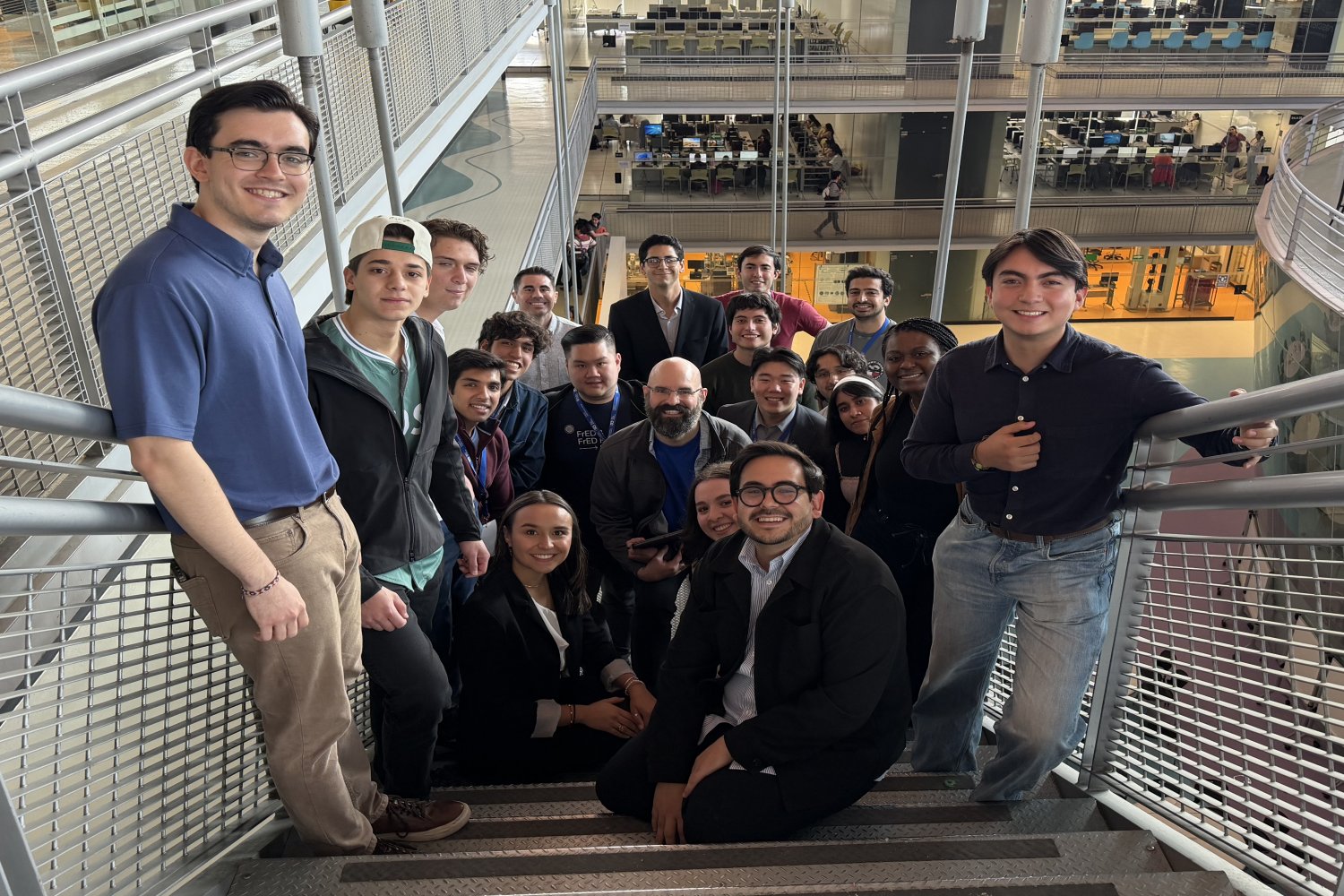
Through a partnership between MIT and Tecnológico de Monterrey in Mexico — managed by MIT's nanotechnology research center — FrED has been improved over many years of graduate research and undergraduate projects. The machine is now used at FrED factories on MIT's campus and at two Tec campuses in Monterrey and Mexico City. Nearly 500 students have already learned advanced manufacturing skills through this program, moving from classrooms into research labs and collaborative projects with MIT researchers.
"What does it mean to bring the factory to the learner?" asked Brian W. Anthony, MIT.nano associate director, at the second annual FrED summit in Mexico City. "We have FrED as a process that manufactures a fiber, and we also have the FrED factory that's an education and practice factory where we are manufacturing a real product. It's not just a learning factory where we tear apart the product when we're done."
The FrED factories don't just teach — they produce actual machines that ship to online learners, educators at both universities, and soon, partners around the world. The research output has been substantial: 25 academic papers published and seven more in development. International student exchanges also play a key role, bringing Tec undergraduates to MIT to work directly alongside MIT students, then return home to strengthen FrED factories there.
For Naomi Najera, a Tec undergraduate who completed a research stay at MIT in 2025, the experience changed more than her technical skills. "Beyond the technical side, FrED gave me memories, friendships, and a lot more confidence in myself than I knew I had," she said. "It also gave me a space where I could make mistakes and learn from them."
The timing matters. Manufacturing at MIT and across industry is shifting toward smart manufacturing, sometimes called Industry 4.0, which blends automation, machine learning, and artificial intelligence. FrED naturally creates the kind of real-time data needed for these modern techniques — turning abstract concepts into hands-on practice.
The next steps are already planned. A new FrED factory will open at Tec's Saltillo campus next academic year. After that, expansion continues to more campuses across the United States and Mexico.
"Together, we are helping build a global engineering talent pipeline," said Adriana Vargas Martinez, executive director of research strategy at Tec. From one basement in Cambridge, that pipeline keeps growing.