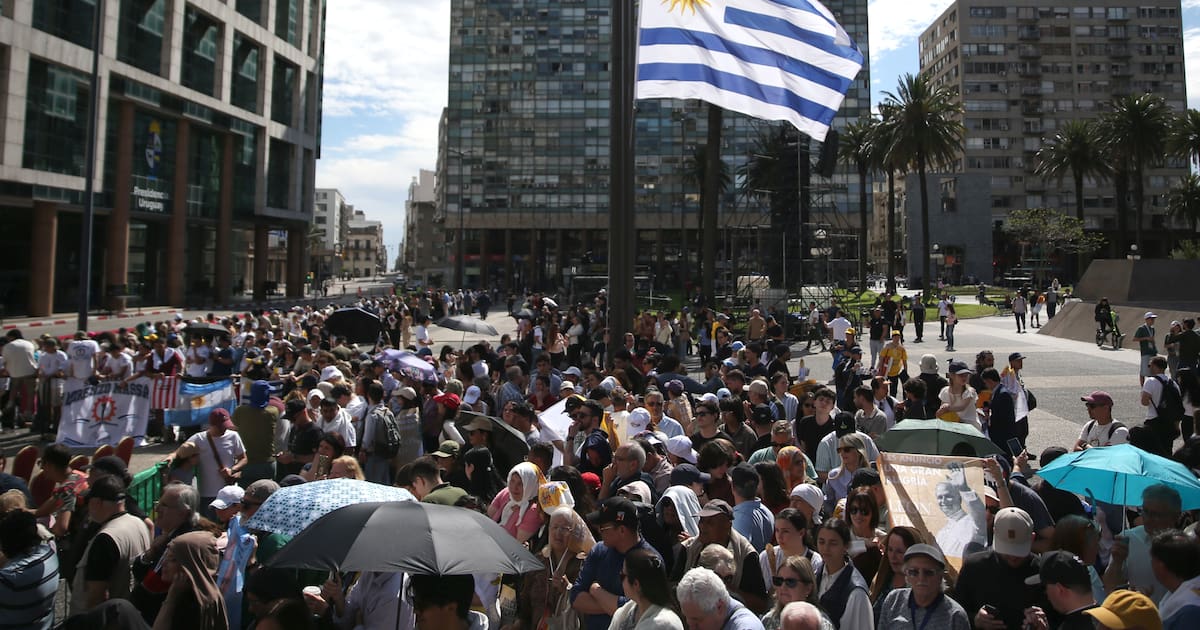
In Montevideo’s Plaza Independencia, Pope Leo XIV asked Uruguay to make dialogue and peaceful agreements a lasting offer to its neighbors. On Friday, November 6, during his first official event in the country, the pope spoke alongside President Yamandú Orsi, urging respect for law, negotiation and patient efforts to settle disagreements across Latin America.
The appeal points to a role Uruguay already says it wants to play: helping countries resolve disputes without violence. Regional cooperation matters because tensions between nations can deepen when trust breaks down. In his address to officials, Leo XIV praised Uruguay’s commitment to peaceful solutions and linked it to the country’s own constitution. The constitution, he noted, says Uruguay should seek arbitration or other peaceful methods to settle differences in international treaties. It also calls for social and economic integration among Latin American states.
The pope also highlighted Montevideo’s place as the home of the Secretariat of Mercosur, the South American trade and cooperation group. He said the office gives practical shape to Uruguay’s aim of creating spaces for understanding and regional cooperation. The message was not that disagreements can simply be wished away, but that countries can choose rules, talks and agreements over confrontation.
“When differences can easily become a reason for confrontation, persevering in respect for the law, negotiation and the patient search for agreements is a service Uruguay can continue to offer its neighbors,” Leo XIV said.
Orsi welcomed the pope’s words and thanked the Vatican for its position on human rights. He said Uruguay shared the Catholic Church’s emphasis on human dignity and supported peaceful solutions to conflict. The president described dialogue and consensus as principles Uruguay applies at home and promotes in international organizations.
Orsi also warned that violence and wars do not appear overnight. In his view, they can be preceded by climates of misinformation and fear. That warning widened the discussion beyond diplomacy between governments: political leaders, he said, have a duty to propose better ways of relating to one another in every setting. His point was that public words and information environments can matter before a crisis turns into open conflict.
The visit brought together a papal appeal for patient negotiation and a president’s warning about the conditions that can feed violence. Uruguay’s constitution, its role in Mercosur and its support for international dialogue give the country established channels through which to pursue that approach. Leo XIV’s call was for Uruguay to keep using them, and for its neighbors to see peaceful agreement not as a sign of weakness, but as work worth continuing.