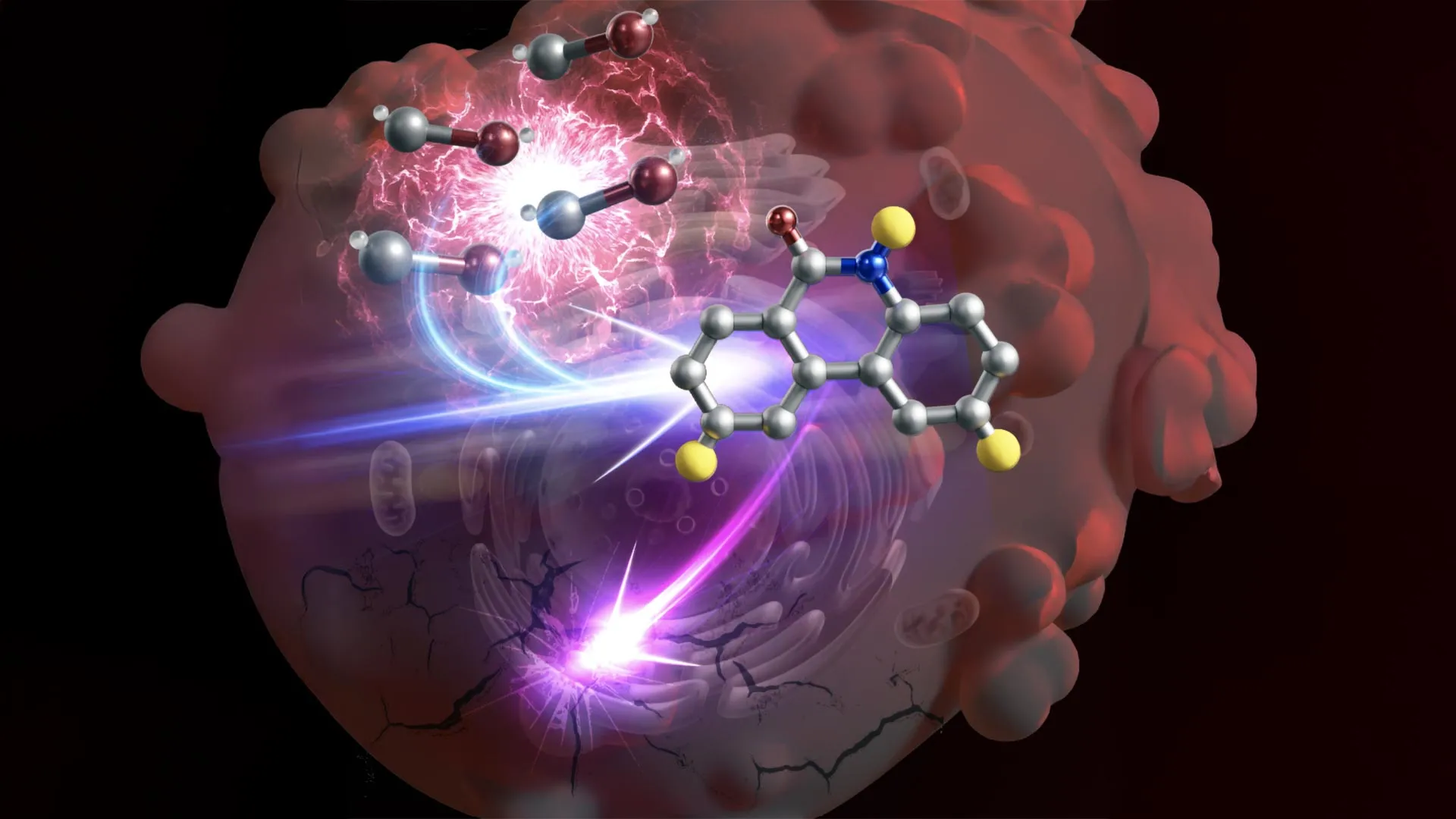
Inside cultured liver cancer cells, researchers watched a toxic anticancer compound form from a gas the cells themselves produce: carbon monoxide. The experiment, led by Katsunori Tanaka at RIKEN’s Pioneering Research Institute in Wako, Japan, points to a possible way to make cancer drugs where they are needed rather than sending toxic medicine through the whole body.
That distinction matters because chemotherapy can harm healthy tissue as well as tumors. Tanaka’s team is working toward treatments that begin as relatively harmless compounds and become active only inside cancer cells. The new approach, reported in Nature Communications, is an early laboratory study, not a treatment tested in people.
The researchers used carbon monoxide as a chemical trigger. Many kinds of cancer cells naturally make the gas, and tumors can produce it in unusually high amounts. The team aimed to use that difference to drive a reaction mainly inside cancer cells.
For the reaction, the scientists selected palladacycles, metal-containing compounds that can use carbon monoxide to make phenanthridinone. Some forms of phenanthridinone are toxic to cells and are used in anticancer drugs. But palladium catalysts can be disabled by substances inside cells, including glutathione, before they have a chance to work.
To protect the catalyst, the team enclosed a palladacycle in albumin, a protein found in blood. The carrier was designed to shield the metal complex as it traveled into cells. In tests, researchers exposed cultured human liver, cervical, breast and lung cancer cells, as well as a noncancerous cell line, to the albumin-palladacycle complex for 48 hours.
They detected phenanthridinone in the cancer cell lines, but not in the normal cells. The team then adjusted the system so the product could separate from its carrier and spread through a cell. Further changes enabled it to produce a particularly toxic form of phenanthridinone, a compound already used in anticancer drugs.
When the modified system was tested in cultured liver cancer cells, the drug formed inside the cells, which then showed signs of damage from the toxic compound. This is a proof of concept: it shows that a cancer cell’s own carbon monoxide can help activate a drug-making reaction under laboratory conditions. It does not yet show whether the method can safely reach tumors or work in an animal or a person.
The next challenge is to establish whether the selective reaction can be made reliable beyond cell cultures and whether the carrier and catalyst can be used safely in the body. If later studies support the approach, it could help researchers design treatments that concentrate their effects in tumors and spare more healthy tissue. For now, the study offers a precise idea to build on: use a chemical clue made by cancer cells to help create a weapon inside them.