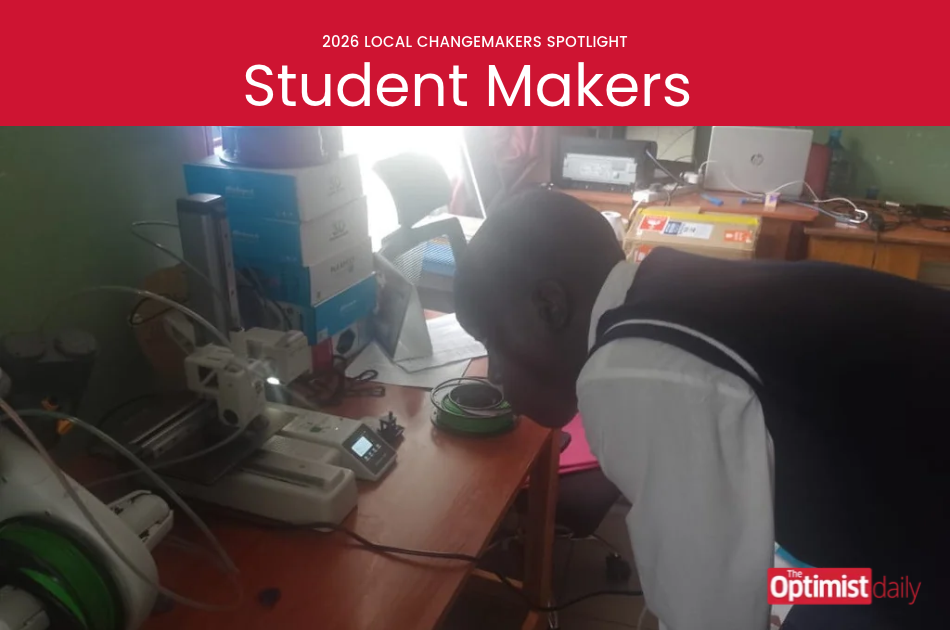
A 3D printer traveled from California to Migori, Kenya, in a suitcase beside a bag of stuffed animals—and it is still helping students learn. For Dilan Mehta, then a young maker with a printer at home, the trip became the start of a bigger effort to bring hands-on science and technology lessons to students with few chances to explore them.
That effort is Student Makers, a nonprofit offering free science, technology, engineering and math (STEM) workshops in the United States, Kenya and India. Its instructors are former students, many still in high school. The group grew from a simple idea: young people can learn by making things, then share what they have learned with others.
Anthony Neil Tan started the organization in California in 2019, when he was a high school senior. His school had no place for students interested in technology and making to gather and learn, so he created the Maker Hub Club Initiative. A $5,000 social impact scholarship grant helped him get it started. The original plan had three steps: learn a skill, make a project and show it to others.
Dilan joined after Tan spotted his entry in an Autodesk design contest. Dilan, then in eighth grade, had designed a 3D-printed fingerboard with a flexible grip surface. He took a 3D-printing course, returned as an instructor and later rebuilt the curriculum around design thinking. As he took on leadership, he added a fourth step: serve. He wanted workshops to reach students who had fewer resources, not only those who already had access to technology.
Kenya Relief Academy in Migori gave that idea a practical start. The school has 800 students, including roughly 170 to 190 orphaned children. It was ranked the top primary school in its region, among more than 800 schools, but had no STEM infrastructure. Dilan sent a printer and began meeting remotely with teachers three times a week. He trained them to use Autodesk Fusion 360, Tinkercad and the printer itself. The calls were often interrupted when rain knocked out the school’s internet connection, so teachers and Dilan would wait, reconnect and continue.
The lessons led to a collaboration that reached beyond the classroom. When teachers asked for help with a science fair project, 12 students from Georgia Tech joined the effort. They built parts in Atlanta while the Kenya team worked in Migori, sharing updates by video call and sending supplies in suitcases. Their Arduino-based robot measured soil moisture in a garden and chose where to water. It placed third at the regional Kenya Science and Engineering Fair.
One of the students on that project, ninth-grader Jacob, now leads the school’s robotics team. He hopes to become a rocket engineer at NASA. Teacher Ruth Agongo told Dilan, “Whatever you have taught us, we are putting into action because the kids are really excited by the technology.”
Student Makers also has programs in the United States and India, though the account of its India work offers no further details. Its approach depends on students teaching students—and on patient teamwork across distance. In Migori, a donated printer has become more than a machine: it is a tool local teachers can use, and a starting point for students such as Jacob to build what comes next.