On 22 October, Lodestone Energy began trading on New Zealand’s stock exchange, raising NZ$75 million at NZ$2.25 a share and bringing about 10,000 new shareholders into the country’s first pure-play solar listing.
The listing marked a milestone for New Zealand’s clean technology sector: it was the exchange’s first significant initial public offering since 2021. It also offered early backers, including Enterprise Angels, KW1W and Guy Haddleton, a chance to see their investment pay off. Lodestone operates five solar farms across the North Island, has a sixth under construction and reported a market value of NZ$440 million at listing. Nearly half of its new shareholders were retail investors.
Across the sector, October brought new funding, customers and international links. BioLumic, one of two New Zealand companies named in TIME’s Best Inventions of 2026, uses ultraviolet light to activate useful traits in seeds without chemicals or genetic modification. AgriZeroNZ invested a further NZ$5.1 million, doubling its stake, to support field trials of BioLumic’s low-methane ryegrass. The company also announced rice trials in the Philippines with the International Rice Research Institute, backed by the Gates Foundation.
The other TIME-recognised company, Leaft Foods, makes its Blade smoothie from lucerne grown in Canterbury. Each 100-millilitre pouch contains 18 grams of plant protein. TIME described it as “the world’s most abundant protein, in a smoothie.” Elsewhere in materials innovation, the US Plastics Industry Association named Zealafoam winner of its 2026 Innovation in Bioplastics Award. Its foam is made entirely from plants and is designed to replace polystyrene using existing equipment.
Some of the month’s progress came from technology finding a second life. Crux acquired the assets of Stralis, a Canterbury aerospace startup developing hydrogen-electric aircraft, keeping the aircraft technology moving forward. Tauranga electric-bike maker UBCO, which went into receivership in early 2025, was bought and rebuilt by New Zealand investors. It has already worked with Australia Post, and NZ Post has now taken delivery of its DUTY bikes for city and rural rounds.
Other projects aim to make hard-to-recycle materials more useful. Auckland startup Linca signed an agreement with Mitsui on 20 October to commercialise a process for recovering lithium, nickel and cobalt from used electric-vehicle batteries. It is building a demonstration plant in the UK. In Christchurch, a 100-kilowatt-hour lead-acid battery designed by battery company Redflow was switched on at Deakin University’s microgrid on 16 October and connected to Origin Zero’s virtual power plant. The company is targeting business and industrial energy storage at a fraction of lithium-ion battery prices.
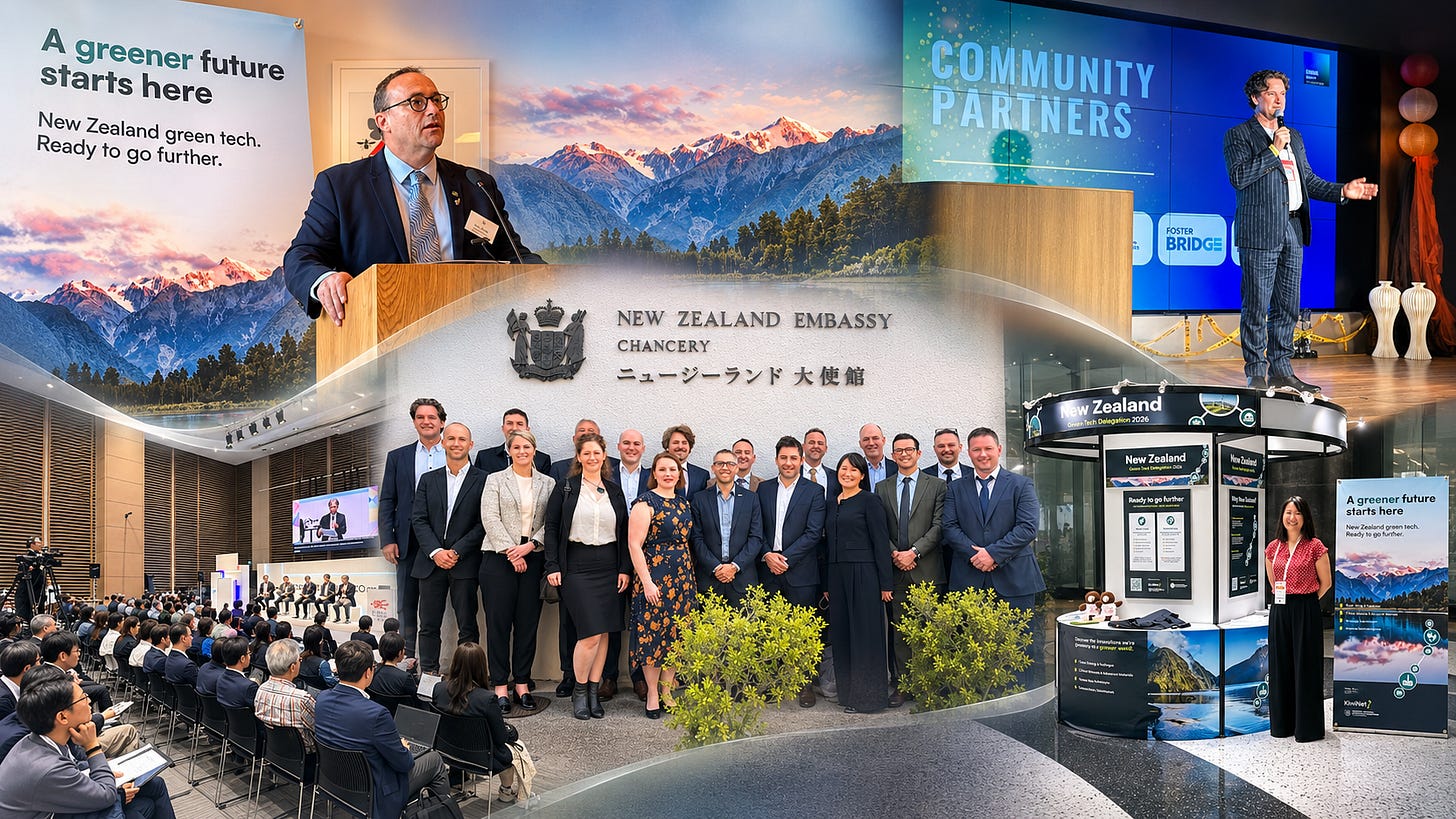
New Zealand’s cleantech connections also reached Japan. KiwiNet led a delegation of more than 20 startups and researchers to Tokyo and Osaka from 30 September to 8 October, linking them with Japan’s Green Transformation strategy. The group included investors and research commercialisation teams as well as companies.
Taken together, the month’s news shows a sector building through several routes: public investment, overseas partnerships, new customers and technologies rescued or recycled into new ventures. Lodestone’s public listing may also return capital to early investors, giving them the chance to back the next wave of New Zealand innovation.