Latest News
Positive stories from around the world · Good news by country
Showing 313–336 of 37342 articles

Removing background noise brings cellular properties into focus
Light that hits a material bounces back with a slightly changed energy. This shift acts like a molecular fingerprint, showing what the material is made of. The method, called Raman spectroscopy, won a physicist the 1930 Nobel Prize. A new approach removes background noise, so cell properties come into clearer focus.
A generic HIV prevention drug arrives in Zambia | Health | goskagit.com
A generic version of an HIV prevention drug has arrived in Zambia. Generic medicines are copies that usually cost much less than the original brand. Gilead, the company that makes the drug, signed voluntary licenses eight months before approval. These licenses let generic makers supply countries across sub-Saharan Africa, Asia and Latin America.

DNA storage system holds data in living human cells and protects access with genetic decoys
Researchers at the University of Texas at Dallas built a way to store digital data in the DNA of living human cells. Living cells can hold information for a long time. The system also uses genetic decoys, which are fake DNA signals, to keep outsiders from reading the data. The team described the work in Nature Communications.

New research identifies potentially overlooked factor in male fertility
Researchers at Wayne State University School of Medicine studied male fertility. They found that some men get normal results on standard semen tests but still carry a sperm trait linked to a lower chance of pregnancy with a partner. Spotting this trait could help doctors explain fertility problems and guide care for couples.
A generic HIV prevention drug arrives in Zambia | Nation | cecildaily.com
A generic version of an HIV prevention drug has arrived in Zambia. The drug helps stop people from getting HIV. Gilead Sciences, the company that makes the original drug, signed voluntary licenses with generic makers eight months before approval. These licenses cover a set of countries in sub-Saharan Africa, Asia and Latin America. The early deal was meant to make sure supply was ready on time.
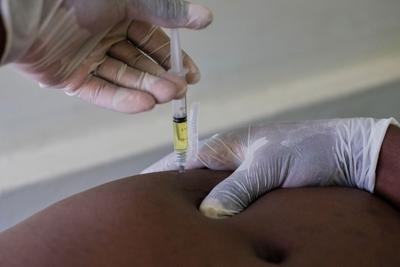
A generic HIV prevention drug arrives in Zambia | Business | dailygazette.com
A cheaper generic version of an HIV prevention drug has arrived in Zambia. Gilead Sciences, the company that makes the original medicine, signed voluntary licenses that let generic makers produce it. The licenses cover a set of countries in sub-Saharan Africa, Asia and Latin America. Gilead signed them eight months before approval so supply could start early.
A generic HIV prevention drug arrives in Zambia | Associated Press National | nvdaily.com
A generic version of an HIV prevention drug has now arrived in Zambia. Gilead, the company that makes the drug, signed voluntary licenses that let other manufacturers produce it. The licenses cover a set of countries in sub-Saharan Africa, Asia and Latin America. Gilead signed them eight months before approval so generic supply could start early.
A generic HIV prevention drug arrives in Zambia
A generic version of an HIV prevention drug has now arrived in Zambia. Gilead Sciences, the company that makes the drug, signed voluntary licenses with generic makers. These licenses cover many countries in sub-Saharan Africa, Asia and Latin America. Gilead signed them eight months before approval so cheap supplies could come quickly.

Nerve signaling pathway reveals how a tuberculosis molecule triggers cough
Researchers at UT Southwestern Medical Center studied a molecule made by some highly spreadable tuberculosis (TB) bacteria. They found it activates sensory nerves in the body and triggers coughing. The study, published in Nature Microbiology, uncovers a nerve signaling pathway. Drugs already made for chronic cough could target this pathway, offering a way to relieve TB cough and reduce transmission.

South Pole Telescope releases clearest map ever of matter in the distant universe
Scientists from 30 institutions have released the clearest map ever made of matter across the distant universe. The South Pole Telescope collected the data. The map was built by measuring how ancient light, the cosmic microwave background, bent as it travelled for more than 14 billion years. Bending of this light reveals where mass is hidden, including dark matter that we cannot see directly.
This AI Tweaks LLM Neural Networks Like a Gene Editor
Researchers at MIT used a large AI model called GPT-6 Astra to study other AI models. The AI could find what different parts do, spot faults, and fix them. In one test, changing just 0.016 percent of a small model's settings greatly improved its math scores. The Alan Turing Institute repeated the work and called it a promising early tool.

Australia’s legless geckos evolved like snakes did
Pygopods are Australia's limbless geckos. Scientists found they took an evolutionary path more like snakes than other legless lizards. Evolution is the slow change of species over many generations. This finding helps explain how legless animals can develop in different groups.
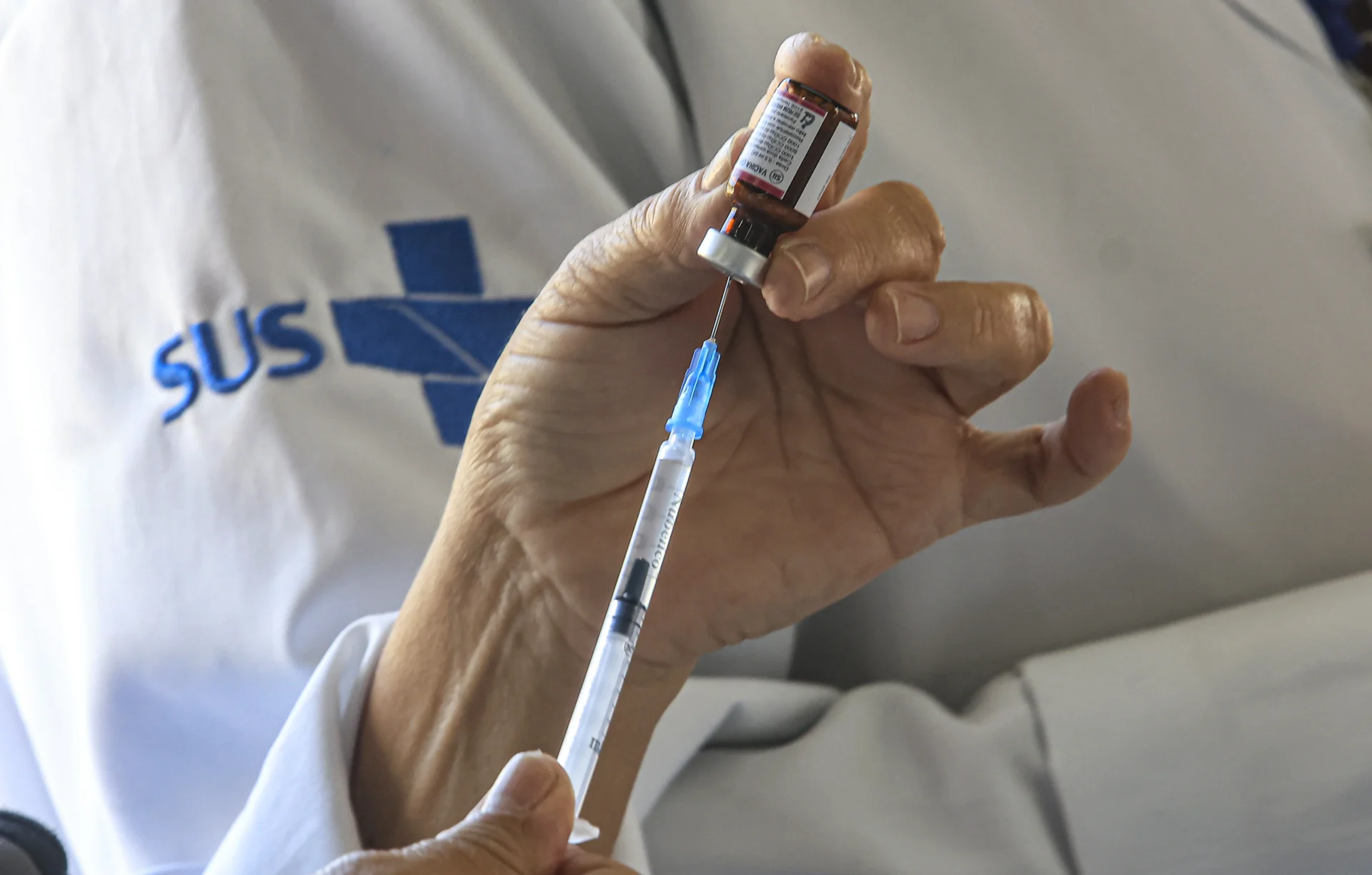
Brasil avança em vacina contra o câncer e prevê testes em pacientes em 2027 - ICL Notícias
Brazil's Ministry of Health is developing a therapeutic cancer vaccine with the University of Oxford in the United Kingdom. A therapeutic vaccine aims to treat cancer that a person already has, rather than prevent it. The plan includes tests in patients starting in 2027. The article is short, so details on the vaccine's design and results are limited.

Molecular backdoor destroys 'undruggable' protein driving rare childhood cancer
Penn State researchers found a hidden way to destroy a protein that drives Ewing sarcoma, a rare bone and soft tissue cancer in children and teens. They targeted a helper enzyme called CK2 that keeps the cancer protein stable. In mice, the drug slowed the spread of cancer and helped them live longer. A first safety trial in patients is now underway.

Webb discovers farthest 'little red dot' from universe's first 500 million years
An international team used NASA's James Webb Space Telescope to find the farthest "little red dot" seen so far. These are faint, early supermassive black holes. The object, called CW-LRD-z10, existed about 400 to 500 million years after the Big Bang. The find may help explain how huge black holes formed so early in the universe.

Q&A: Can short, animated videos boost screen mindfulness?
Stanford Medicine researchers worked with young adults to create short, wordless animated videos about phone overuse. In a randomized trial of 6,061 people aged 18 to 30 across the United States, viewers became more aware of their phone habits. Two weeks later, people who watched the videos had 20% lower odds of reporting high daily smartphone use. A written fact sheet showed no measurable change.

A prickly surprise: Mexican hairy dwarf porcupines glow under UV light
Scientists in Chetumal, Mexico, found that Mexican hairy dwarf porcupines glow under ultraviolet (UV) light, a type of light people cannot see. The team checked 20 adult porcupines, and every one of them glowed. The glow is strongest on the head and shows up clearly on quills and feet. The researchers also used a UV flashlight on night walks, and it helped them find the animals in the trees.

How brain aging differs from neurodegeneration: New data could help in the search for dementia drugs
Scientists from Skoltech and Ben-Gurion University studied how DNA folds inside brain nerve cells. They compared normal aging, brain disease, and mice missing a DNA repair protein. Normal aging keeps the DNA structure mostly intact. Brain disease breaks it down and causes more DNA damage. The team says this difference could help build drugs for dementia and spot risk early.

Salt reduction could maximize kidney drug benefits
Cutting salt to the recommended level of about 6 grams a day made a kidney drug work better. In a study of 12 adults with chronic kidney disease, the drug lowered pressure inside the kidneys and reduced protein leaking into urine only on the low-salt diet. Protein in urine is a sign of kidney damage. Experts say larger, longer studies are needed to show whether this slows the disease over time.

What We’re Reading: Building a Walkable City From Scratch
A new community called Utah City is being built in one of Utah's fastest-growing cities. The developer says the cost of tall buildings is the only real limit. The plan follows the idea of sustainable, walkable neighborhoods where people can get around on foot.

How the intestine keeps its tremendous surface area in order
Yale researchers studied how the small intestine keeps its shape while its cells are constantly replaced. The small intestine has finger-like folds called villi that absorb nutrients from food. A process called planar cell polarity, which lines up cells in one direction, is still active after birth. When the researchers damaged two genes that control this process in mice, the folds grew abnormally, showing the process is needed for healthy gut structure.

New PET tracer cocktail rapidly detects hospital-acquired bacterial infections
Researchers at Palacky University in Olomouc, Czech Republic, created a mix of three special tracers. Each tracer sticks to a different type of Pseudomonas aeruginosa, a germ that often infects patients in hospitals. In tests on mice, the mix found every strain tried and did not light up other infections. Doctors could one day use this to pick the right antibiotic faster.
Remarks by Executive Vice-President Virkkunen on the Quantum Act
The European Commission has adopted a new Quantum Act, a set of plans to grow quantum technology across Europe. Quantum technology uses the strange rules of very small particles to build powerful computers and sensors. Executive Vice-President Henna Virkkunen presented the act at a press point in Strasbourg. The article gives few numbers, so the details of the plan are still limited.

Dual inhibition of transcriptional kinases and anti-apoptotic proteins targets tumor growth
Researchers at Kyoto University and Chordia Therapeutics developed CTX-439, a pill that blocks two proteins called CDK12 and CDK13. These proteins help cancer cells keep growing by controlling how genes are read. The drug slowed tumors in cancer cell tests and in mice with breast cancer. Adding a second drug that blocks BCL-2 and BCL-xL, proteins that keep cancer cells alive, made cell death much stronger.