Latest News
Positive stories from around the world · Good news by country
Showing 289–312 of 37342 articles

UNESCO and European Union announce €10 million programme combining
UNESCO and the European Union announced a €10 million programme for Yemen in Brussels. It builds on eight years of work together. The programme, called SHAMIL, helps communities adapt to climate change and prepare for disasters. It also supports cultural and creative jobs, so people can earn a living after 12 years of crisis.
London Broncos to return to Super League for 2027
The London Broncos, a rugby league club based in London, have been confirmed as the 15th team in Super League. The club is set to return to the top competition for the 2027 season. Super League is the highest level of rugby league in the United Kingdom.

Scientists uncover how common intestinal bacteria 'starve' and disarm frontline immune cells
Scientists at Nanyang Technological University in Singapore studied how biofilms of Enterococcus faecalis, a common gut bacterium, disable the immune system. A biofilm is a sticky layer that bacteria build together. The team found that these biofilms starve and weaken frontline immune cells. The findings could lead to treatments that stop bacteria's energy supply instead of relying only on antibiotics.

Mountain gorillas that survive early hardship show few signs of lasting social isolation
Researchers studied mountain gorillas in Rwanda's Volcanoes National Park. They looked at young gorillas that lost a parent, had few peers, or faced other hard times. Males with more early hardships later spent more time near other males. Females that stayed in their birth groups also spent more time near other females.
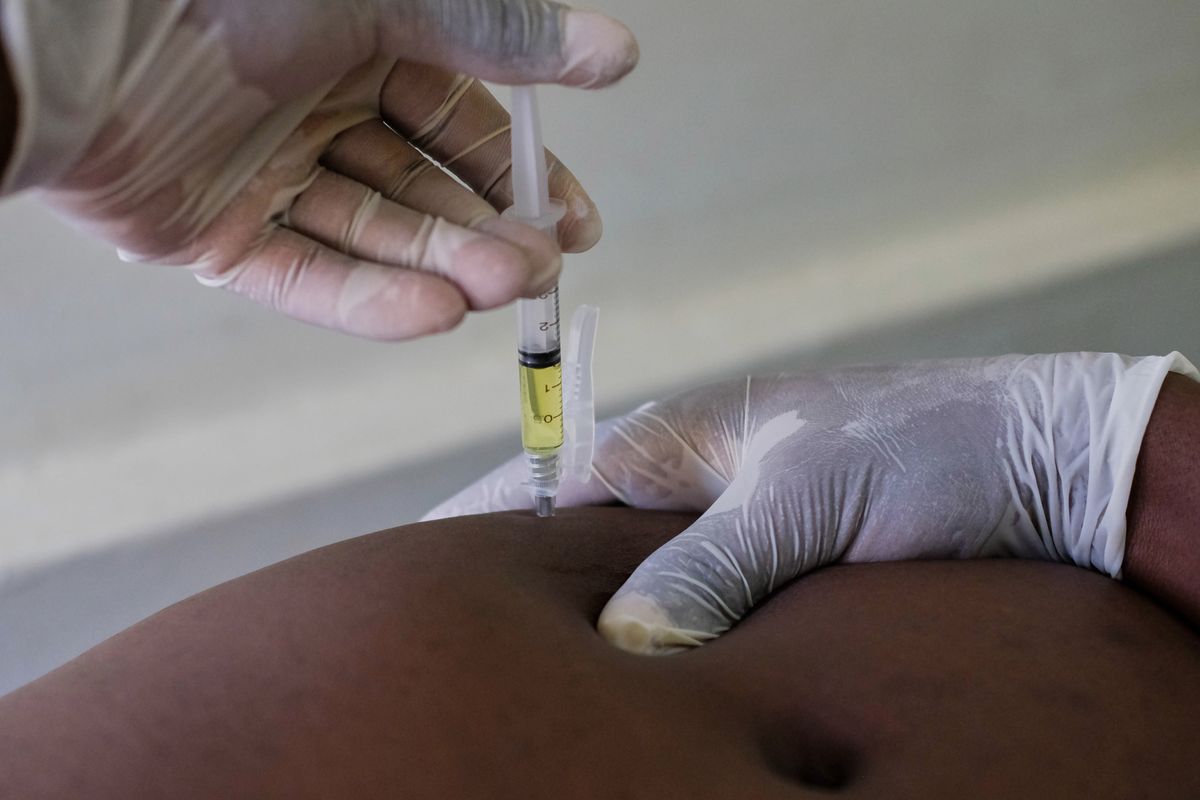
A generic HIV prevention drug arrives in Zambia - myMotherLode.com
The first shipments of a generic version of a twice-a-year HIV prevention shot arrived in Zambia this week. Uganda is due to get more doses in the coming days. The drug, lenacapavir, is expected to cost $40 a year per person and is nearly 100% effective at stopping HIV. It will reach 120 countries over time.

European loan of €119m to help build major housing development in Dublin – The Irish Times
A European loan of €119 million will help Dublin City Council build a large housing development in Inchicore, Dublin. The project, called An Droichead Órga (Goldenbridge), sits on the old St Michael's Estate site. It will bring 441 cost-rental homes and 137 social homes. It will also include a new library, a community hub, and a creche.

PARCERIA INTERNACIONAL ABRE NOVA ETAPA DE PESQUISA CONTRA O CÂNCER NO BRASIL | Antena 1
Brazil may take a new step in cancer treatment research starting in the first half of 2027. The Ministry of Health says it plans to begin a clinical study of a therapeutic vaccine. A therapeutic vaccine is a shot meant to help the body fight a disease that is already present. The work is part of an international research partnership.
GB, France and Germany launch new swimming competition
Aquatics GB, the French and German swimming federations have created a new team event called the Three Nations Cup. It has 22 races in 90 minutes each year. The first meet is in Manchester on 14 March 2027, and the deciding meet is in Paris a week later. The aim is to make elite swimming more exciting and bring in new fans.

Phosphate boosts nitrate conversion tenfold, helping copper catalysts produce ammonia
Nitrate is a pollutant that gets into water from fertilizer, livestock, and wastewater. A team including researchers from the University of Osaka found that phosphate ions act as "proton shuttles" on copper electrodes. This speeds up turning nitrate into ammonia, a useful fertilizer ingredient. The reaction ran about 10 times faster than in a strong alkaline solution.

Frontal brain regions reveal an unexpected eye for detail outside the visual cortex
Scientists studying mice found that brain areas linked to movement, attention and decisions also handle detailed vision. About 10% of the neurons they recorded in three frontal regions responded to visual signals. Those neurons were nearly as precise as neurons in the brain's vision areas. The findings were published in Nature Neuroscience and could help scientists understand how brains keep and route information.

A cosmically close supernova may spill the stellar explosion’s secrets
Astronomers spotted a supernova, a giant star exploding, relatively close to Earth in early November. They soon realized it was unusual. Scientists quickly began studying it, hoping it will reveal how stars explode.

Hundreds of new homes to be built in Dublin as major €119m funding deal announced
Hundreds of new homes will be built in Dublin, Ireland. The European Investment Bank is providing €119 million to pay for the project. It is the bank's first direct housing deal with an Irish local authority. The project will also include a library, a childcare centre, shops and public spaces.

€119 million committed to delivery of new homes in Inchicore | www.98fm.com
Dublin City Council and the European Investment Bank (EIB, the EU's public lending bank) have committed €119 million. The money will pay for 578 new homes in Inchicore, Dublin. The homes are part of An Droichead Órga, a regeneration project on the Emmet Road site.

European Parliament approves new EU medicines rules. What happens next? | Euronews
The European Parliament has approved new rules for medicines across the European Union. These rules set how new drugs are approved and sold in the 27 member countries. Groups that speak for people with rare diseases welcomed the decision. The rules still need final steps before they become law.

Glutamine-metabolizing enzyme worsens kidney injury after ischemia–reperfusion
Researchers at Chiba University in Japan studied kidney damage that happens when blood flow stops and then returns, such as during kidney transplants. They found that an enzyme called GLS2 helps drive a type of cell death called ferroptosis. In mice, blocking GLS2 or its pathway reduced kidney tubule damage. The team suggests this could lead to new treatments.

AI framework rapidly estimates sleep apnea severity using 10-minute snapshots of body signals
USC researchers built an AI tool that can spot sleep apnea and judge how severe it is. Sleep apnea is a condition where breathing stops or slows during sleep. The usual test, an overnight sleep study, is costly and hard to get. The new tool needs only 10 minutes of recorded body signals, and it beat leading methods by 8% to 18% across five groups of more than 35,000 people.

Quantum leap: Computing's next frontier takes shape
Quantum computers use qubits, which can hold more states than the simple 0 or 1 used by normal computers. Experts say the technology could speed up finding new medicines, materials, and batteries. The European Commission plans up to 50 billion euros for quantum computing and AI. IBM, Microsoft, and Google each aim to build a commercial quantum computer by 2029.
Greatest catch ever? Man on motorbike takes incredible grab
A passenger riding on a motorbike caught a cricket ball with one hand. The ball had been hit out of the ground for six runs during a match in the Swat Premier League in Pakistan. The catch is being called one of the greatest ever.

New database integrates genomic resources for China's protected wild plants
Scientists at the South China Botanical Garden built a new online database called GDNPP. It gathers genetic information for 291 wild plant species that China protects by law. The data came from a review of 381 research papers, and it helps researchers find gaps and track plant populations over time.

Shared membrane protects tuberculosis bacteria from antibiotics
Researchers at the University of Zurich discovered how tuberculosis bacteria form their rope-like cords. Neighboring bacteria share a single cell membrane, which links them into a network. This shared membrane hides the bacteria from the immune system and shields them from antibiotics. The team is now looking for ways to break the membrane apart so that existing medicines can work better.

How a brainless single-celled slime mold solves problems using the laws of physics
Physarum polycephalum is a slime mold made of just one cell. It has no brain or nerves, yet it can solve mazes and find the shortest paths between food sources. It can also learn from past experience. Scientists are studying how simple physical rules let it do this without any central mind.

Genetic map uncovers how inherited variants contribute to coronary artery disease
Researchers have built a detailed catalog of inherited gene changes that play a direct role in coronary artery disease. This disease narrows or blocks the blood vessels that carry blood to the heart. It is the first work to connect these gene variants to what they actually do inside the coronary arteries. The findings could help guide new heart disease treatments.

Study supports shorter pancreatic neuroendocrine tumor follow-up
A new study led by researchers at Cedars-Sinai in the United States looks at pancreatic neuroendocrine tumors. These are rare growths in the pancreas, an organ near the stomach. The study suggests that some patients who have had surgery may only need five years of follow-up checkups instead of the usual ten. A new scoring system helps doctors judge each patient's risk of the tumor returning after five years.

Air pollution mechanism that triggers asthma attacks discovered
Researchers at King's College London and Cardiff University found how tiny metal particles in polluted air harm the body. These particles can change the airways and cause swelling. That swelling can set off asthma attacks and chronic bronchitis, a long-term lung illness. Knowing this path may help doctors design better treatments.