Latest News
Positive stories from around the world · Good news by country
Showing 265–288 of 37342 articles

The triple helix: How a rare twist in human evolution may influence fetal cooling
Researchers from the University of Manchester and the University of Southampton studied umbilical cords from 130 mammal species. The human cord has three blood vessels in a tight twist, a rare combination in nature. Computer models suggest this shape helps move extra heat from the baby into the mother's blood. The findings could help explain how rising temperatures affect pregnancy.

Mapping the uncharted plate tectonic cycle: The hidden path from plate destruction to new oceanic crust
Scientists have long asked what happens to ocean plates after they sink into Earth's mantle at subduction zones. A team led by the Spanish National Research Council used selenium isotopes, which act like chemical fingerprints, to trace the answer. Their computer model shows that less than 10% of recycled material is enough to explain the pattern seen in new ocean crust. The study was published in Science Advances.

Light-activated nanorobots can boost drug delivery across the blood-brain barrier
Caltech researchers led by Wei Gao created BrainBots, nanoscale robots about 250 nanometers wide. The blood-brain barrier is a filter that blocks most drugs from reaching the brain. When near-infrared light is shone through the skull, the robots move toward brain blood vessel cells and carry medicine across. In mice, light-activated BrainBots delivered about five times more medication to the brain. The approach may help treat brain tumors and other brain diseases.
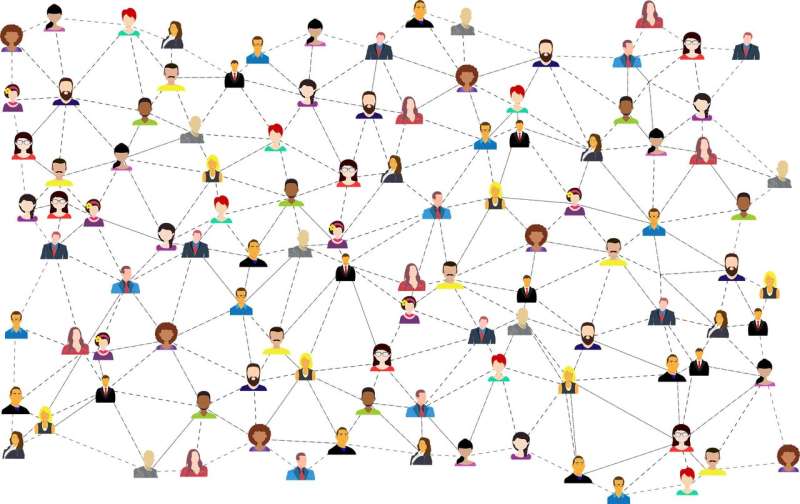
Errors in judging friendships predict who will connect or drift apart six months later
Brown University researchers studied incoming undergraduate students over one academic year. They found that people's wrong guesses about friendships often matched future changes. Falsely believing two people are friends predicted they would later become friends. Missing a real friendship predicted it would end. The predictions held up about six months out.

Evolution's balancing act—keeping genes in sync after genome duplication
Whole-genome duplication is when an organism gets a second copy of its entire genetic code. Scientists at the Norwegian University of Life Sciences studied Atlantic salmon, whose ancestors doubled their genes 80 to 100 million years ago. They found that many copied genes keep a connection in how they are regulated. This helps cells keep the right balance of proteins over time.

Mindfulness is linked to better mental health and more beneficial social media use
A review of 43 studies, covering 28,701 people, found that mindfulness is linked to better mental health. It is also linked to healthier social media habits, such as less compulsive use. Thirty-nine of the 43 studies showed this link. The researchers, led by University College London, say the results do not prove that mindfulness causes these benefits.

The birds are listening: Seabirds reveal hidden fishing activity at sea
Researchers at the University of Oxford fitted tiny microphones and GPS trackers to northern gannets and Balearic shearwaters. The birds' recordings picked up the hum of fishing boat engines. Many of these boats did not appear in official tracking data. This suggests seabirds may be at greater risk of being caught in fishing gear than past estimates showed.

NASA's Hubble views ocean of stars in groundwork for Roman
NASA's Hubble Space Telescope took detailed images of a dense region of stars in the Milky Way's galactic bulge. The bulge is a packed ball of stars at the galaxy's center. Scientists will use these pictures to compare with future data from NASA's Roman Space Telescope. The goal is to find new planets and learn how galaxies grow over billions of years.

Nasa knocked an asteroid off course. New closeup photos shed light on aftermath
NASA's DART spacecraft hit the asteroid Dimorphos in 2022 to test whether we could push an asteroid off course. Four years later, Europe's Hera spacecraft sent back close-up photos of the aftermath. They show a crater as wide as a sports stadium and hundreds of small boulders circling the asteroids. Scientists say the results will help them plan better defenses against dangerous space rocks.
Vacina contra o câncer que será testada no Brasil terá duas tecnologias e será voltada a linfomas e tumores de estômago; entenda | G1
Researchers in Brazil are preparing to test a new cancer vaccine. The work is a partnership between A.C.Camargo Cancer Center and the University of Oxford. The vaccines use two different technologies and target lymphoma and stomach tumors. The vaccines are still in the pre-clinical stage, and the first study is planned for about 30 patients.

Protein quality control helps regulate circadian rhythms, study suggests
Researchers at the Korea Advanced Institute of Science and Technology (KAIST) studied fruit flies. They found that a cell's quality control system, which removes faulty proteins, helps keep the body clock on time. When this system was blocked in clock neurons, the flies' daily activity weakened and their clock ran slower. The findings may help explain sleep problems linked to aging and brain diseases.

PET/CT imaging provides new insights into type 1 diabetes progression
A new imaging method measures beta-cell mass, the cells that make insulin, in the pancreas. It uses a PET/CT scan, a body scan that shows how tissues work. The study, published in the Journal of Nuclear Medicine, found people with type 1 diabetes for under seven years had more beta-cell mass, larger pancreases, and less fat inside the pancreas. This could help doctors track how the disease changes over time.

Lab-grown brain model may accelerate development of safer, longer-lasting brain implants
Researchers have built a cell model in the lab that copies how the brain responds to implanted devices. Today, new brain implants are often tested on animals, which takes time and costs a lot. This lab model could make testing faster and cheaper, and it could spare many animals. It may also help build implants that are safer and last longer.

Cells can adjust gene activity to partly offset extra or missing chromosomes
Cells usually have a set number of chromosomes, which carry their genes. When a cell gains or loses one, hundreds or thousands of genes can change how active they are. A new study in the journal Nature Communications finds that cells can adjust their genes to partly offset these changes. The results may help scientists understand how cancer cells cope with big changes to their genetic material.
Statement by President von der Leyen with President Costa following the EU-Western Balkans Summit
European leaders held a summit with Western Balkan countries in Brussels. Ursula von der Leyen, head of the European Commission, called EU enlargement a strategic need for Europe. She said the momentum in the accession talks is real. The statement gives no new numbers, so the outcome is mostly a sign of progress.

New quantum network entangles 123 qubits that store information in atoms' positions
Researchers built a network of 123 qubits, the basic units of quantum computers, using atoms. Each qubit stores information in the position of an atom. The network is entangled, meaning the qubits are linked so they act as one system. The study, published in Physical Review Letters, offers a new platform for quantum computing that works on many atoms at once.

Mouse study reveals early eye damage in rare childhood disease
Scientists at the University of Manchester ran a study in mice. It looked at a rare, inherited childhood disease called MPSIIIC. This disease slowly damages the brain and can also harm sight. The researchers found that eye damage starts remarkably early and grows worse over time. The results were published in Investigative Ophthalmology & Visual Science.

Structural details aid search for new drugs for heart failure and pulmonary fibrosis
Scientists have studied the detailed structure of relaxin-2, a hormone that helps relax blood vessels and reduce scar tissue. It also helps loosen tissues before childbirth. By understanding its shape, researchers can design better drugs. These drugs could one day treat heart failure and pulmonary fibrosis, a disease that scars the lungs.
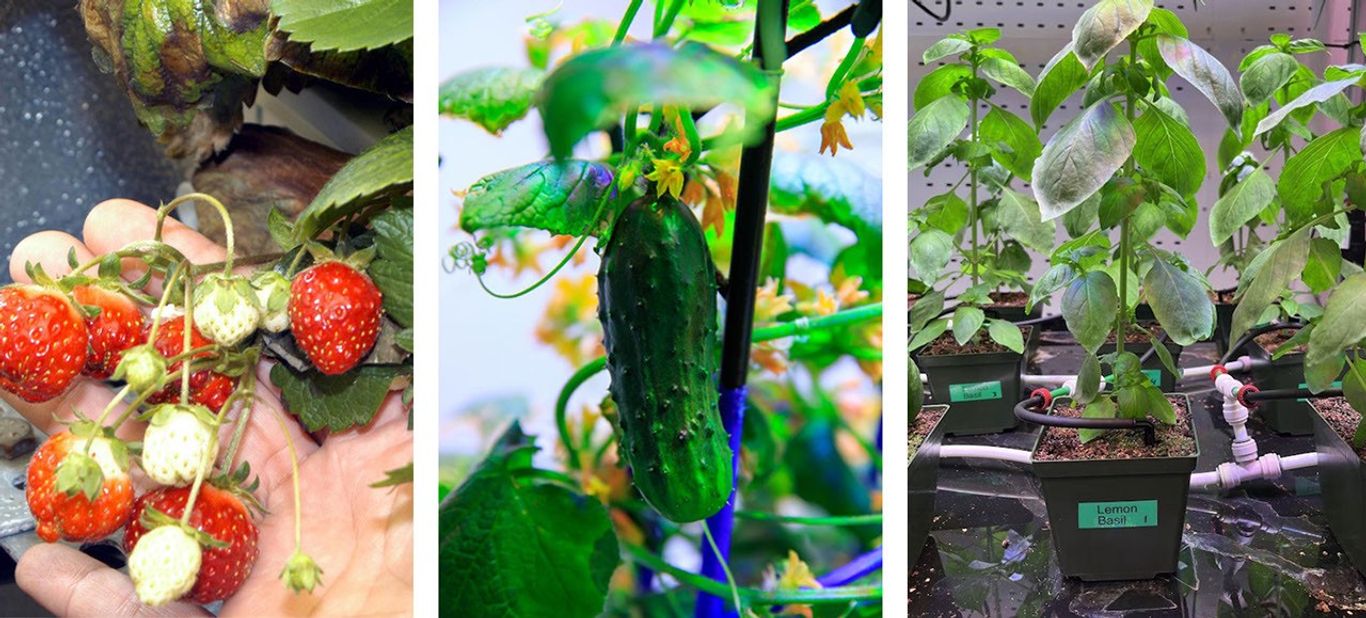
NASA Eyes Crop Candidates for Future Menus
NASA is studying which plants could grow fresh food for astronauts on future trips to the Moon and Mars. Researchers grow strawberries, cucumbers, and lemon basil in special controlled chambers. Fresh crops would give crews better nutrition and more variety than packaged food. The work is done at NASA labs, including the Kennedy Space Center in Florida.

An estate discovery helped trace these artifacts back to their Italian roots. Now they’re going home - The Globe and Mail
Nearly 20 cultural items are heading back to Italy from Canada. An estate discovery helped trace the artifacts to their Italian roots. Italy's ambassador to Canada called the return a major step in cooperation on protecting cultural heritage.
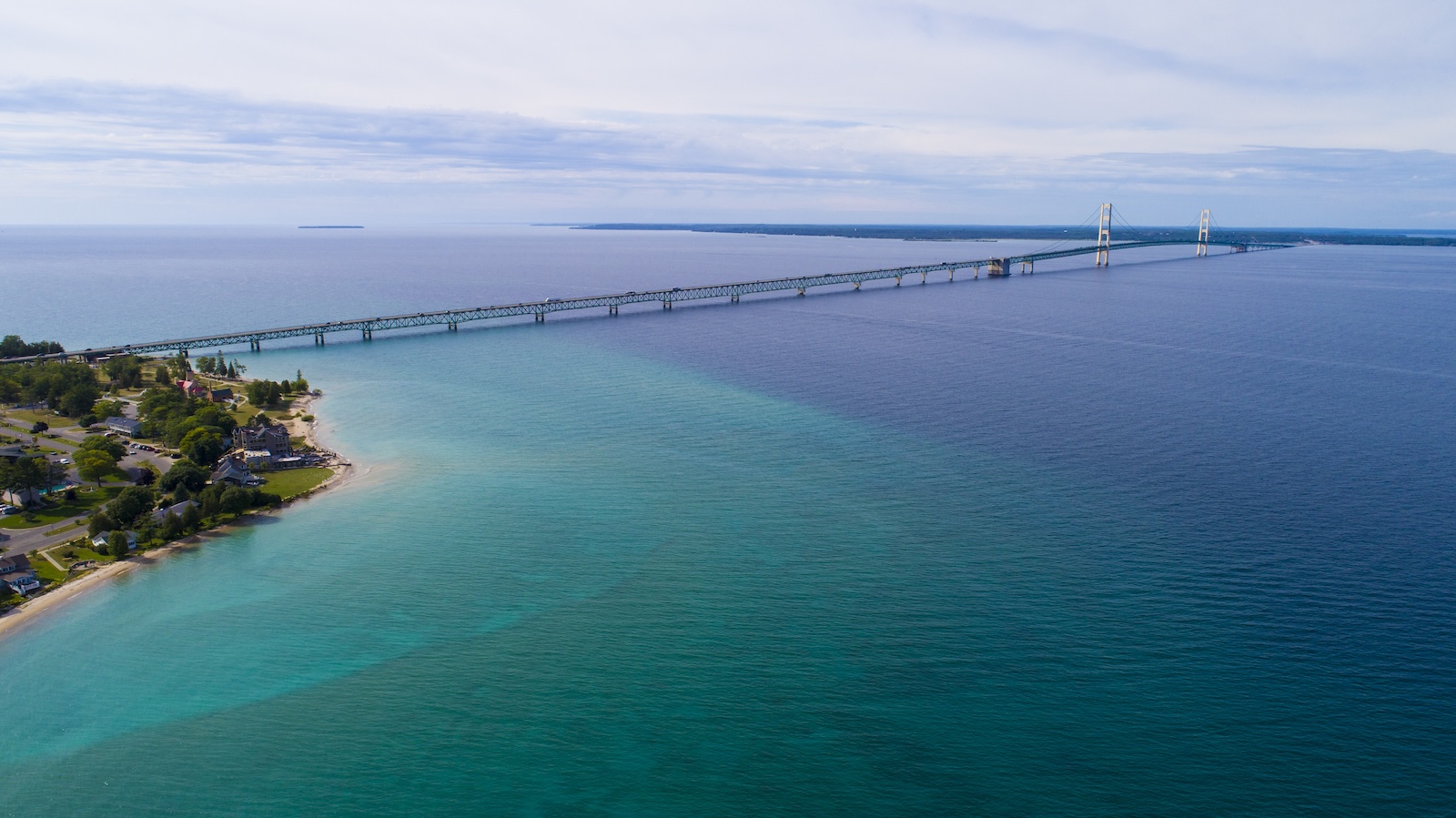
Michigan just hit pause on a plan to update the controversial Line 5 oil pipeline
Michigan Governor Gretchen Whitmer has paused both pending and issued state permits for a plan to replace a section of the Line 5 oil pipeline. The pipeline runs beneath the Straits of Mackinac, a waterway connecting Lake Huron and Lake Michigan. State regulators must answer questions about the full environmental threats first. The questions were raised by a recent Michigan Supreme Court ruling on the pipeline.

Exercise led to measurable improvement in COPD-affected lungs—something standard spirometry failed to detect
Chronic obstructive pulmonary disease (COPD) is a long-term lung illness that affects more than 400 million people worldwide. Its lung damage cannot be repaired with today's treatments. A new study found that exercise in pulmonary rehabilitation, a supervised exercise program for the lungs, made measurable improvements. Standard breathing tests did not pick up these changes.

Sibeprenlimab preserves kidney function in IgA nephropathy, study finds
A new drug called sibeprenlimab was tested on people with IgA nephropathy, a disease where the kidneys slowly fail. Over two years, patients who took the drug kept their kidney function nearly steady. Patients who took a placebo, a fake pill, saw their kidney function drop a lot. The results were published in the New England Journal of Medicine, a leading medical journal.

'Rubik's Cube molecule' puts the stretch in next-gen semiconductors
Plastics that conduct electricity are already used in foldable phone screens. But their crystal parts often crack when bent. Researchers at the University of Toronto found a way to make these materials stretchier while still conducting electricity. This could open new uses in medicine and bioelectronics.