Latest News
Positive stories from around the world · Good news by country
Showing 33865–33888 of 37371 articles

Long-term cure rates for multidrug-resistant tuberculosis much better than expected
A landmark study from Latvia shows that multidrug-resistant tuberculosis (MDR-TB) survival rates are far better than standard indicators suggest. Researchers tracked 1,299 adult patients treated between 2005 and 2021, finding 76.9% remained permanently disease-free during long-term follow-up. Traditional WHO cure definitions classified only 4.8% of these same patients as cured. The key to success was using at least three effective drugs in individualized treatment regimens.

Common Asian plant in Brazil shows potential for removing microplastics from water
Scientists at ICT-UNESP in São José dos Campos, Brazil, discovered that Moringa oleifera seeds can filter microplastics from water. The seeds produce a saline extract that acts as a coagulant, similar to aluminum sulfate commonly used in water treatment plants. Tests showed the natural method performed comparably to chemicals, and even better in alkaline waters. Researchers believe this could offer a cost-effective solution for rural properties and small communities dealing with microplastic contamination.

Temperature shifts change plant proteins that power photosynthesis
Researchers found that plants switch between different versions of the Rubisco protein to handle temperature changes. At cold 10°C (50°F), Rubisco uses a small subunit that makes it work faster. When it heats up to 30°C (86°F), it swaps to a different subunit that slows things down but protects the protein from damage. The team used cryogenic electron microscopy to see these structural changes in Arabidopsis plants. The difference between the "cool" and "hot" versions is tiny—just 8 amino acids, the building blocks of proteins.

First-line targeted therapy shows antitumor activity in patients with advanced lung cancer
MD Anderson Cancer Center researchers reported that Zongertinib, an oral HER2 inhibitor, achieved a 76% objective response rate (ORR) in the Phase Ia/Ib Beamion LUNG-1 trial, with 56 of 74 patients experiencing tumor shrinkage. Responses lasted a median of 15.2 months, with no disease progression for over 14 months. The FDA granted accelerated approval for Zongertinib for the treatment of unresectable or metastatic HER2-mutant NSCLC, following Breakthrough Therapy designation and prior approval for previously treated patients in August 2025.

From sunsets to the night sky: How technology can help you to notice nature in new ways
Smartphone apps and live feeds are transforming how people experience nature, especially the night sky. The article describes how a live broadcast from the International Space Station let users see Earth from space while viewing the station passing overhead. Apps like NASA Spot the Station and Lancaster University's Aurorawatch help users track satellites and aurora borealis in real time.

In Tasmania, the mines have closed but the rivers remember
The King River in Tasmania looks scenic to casual visitors, but beneath its tea-brown waters lies a toxic legacy from over 100 years of copper mining at Mount Lyell. Scientists say sections of the river are "biologically dead" — aquatic insects and fish that normally thrive in clean water are largely absent. Tailings piles continue leaching acid mine drainage containing copper, zinc and iron into the river system.
GB's Ellard breaks S14 100m freestyle world record
William Ellard, a 20-year-old Paralympic gold medallist from Britain, shattered the S14 100m freestyle world record at the Aquatics GB Swimming Championships in London. He finished in 50.41 seconds, beating the previous record held by Brazil's Arthur Xavier Ribeiro by 0.49 seconds. Ellard, who won two gold medals at the Paris 2024 Paralympics, has qualified for the European Championships this summer. He said breaking the record was his aim, though he admitted the last 15 metres hurt.
Amazon to expand renewable energy capacity in Australia to 1GW
Amazon Australia has signed nine new power purchase agreements, adding 430MW of clean energy to its Australian portfolio. This brings the company's total renewable energy capacity to nearly 1GW nationwide once fully operational. The agreements represent a major investment in Australia's clean energy sector and support the country's transition away from fossil fuels. Amazon is now one of the largest corporate buyers of renewable energy in Australia.

Nutrition Programs - Iowa Department of Education
The Iowa Department of Education's Bureau of Nutrition and Health Services runs programs that provide healthy food to children across the state. Schools, child care centers, and after-school programs can get money back from the government when they serve nutritious meals to kids. The goal is to help children eat well and stay healthy while also fighting problems like hunger and obesity.

Cancer's hidden switch may sit in the cell membrane, forcing growth receptors into permanent overdrive
MIT chemists discovered that the cell membrane does more than just protect cells—it also influences protein receptor behavior. Their study found that when membranes have elevated levels of negatively charged lipids, the EGFR growth receptor can get stuck in an overactive state. This mechanism may explain why some cancer cells multiply without control. The research used nanodiscs and single molecule FRET techniques to study how receptor shape changes affect cell growth signaling.
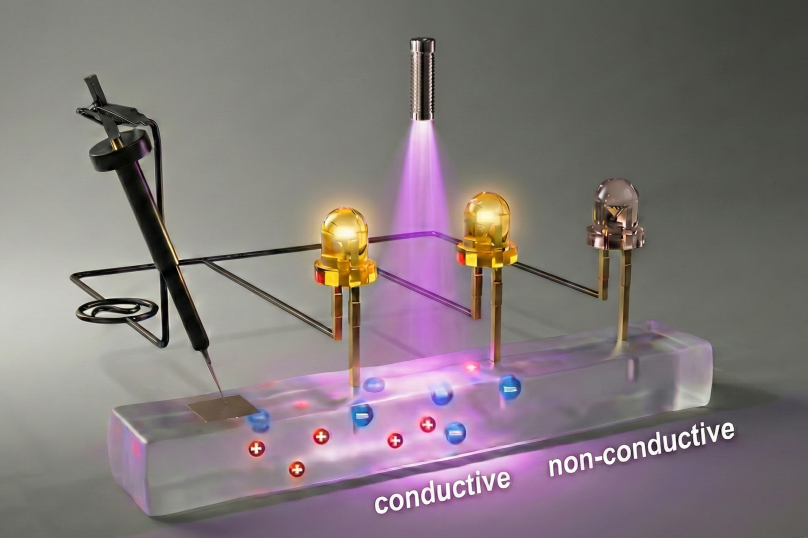
Light-activated gel could impact wearables, soft robotics, and more
MIT engineers in Cambridge, Massachusetts have created a soft, flexible gel that changes its conductivity dramatically when light is applied. The material can become 400 times more conductive upon exposure to light, using a class of materials called photo-ion generators (PIGs). The team dissolved PIG powder into a solvent and incorporated it into polyurethane rubber. Published open-access in Nature Communications, the work could impact soft robotics, wearable technology, and human-machine interfaces.
Villa & Forest progress - relive eight iconic all-English European ties
Aston Villa and Nottingham Forest have set up an all-English Europa League semi-final after both English clubs progressed from their quarter-final ties. Villa demolished Bologna 7-1 on aggregate, while Forest edged past Porto 2-1 to reach their first European semi since 1984. This guarantees a Premier League team in the final. The article also recalls eight memorable all-English European matches, from Tottenham's 2024-25 Europa League win to Chelsea's Champions League semi-final against Liverpool in 2005.
Clayton beats Littler in Rotterdam to extend lead
Welsh darts star Jonny Clayton beat teenage sensation Luke Littler 6-4 in the Premier League final held at Rotterdam Ahoy in the Netherlands. Clayton overcame a shaky start, coming back from 2-0 down to claim back-to-back nightly wins and extend his lead at the top of the table to five points. Littler hit seven maximum 180s but struggled on the doubles, hitting only four of his 15 attempts at double. The result keeps the race for the top four play-off spots tightly balanced.

Fat cells steer flies away from pathogen-tainted food through a newly revealed neural circuit
Scientists at German and Japanese universities found how fruit flies learn to avoid dangerous food. When flies eat bacteria-contaminated food, their immune system detects the pathogens and alerts special neurons near their throat. These neurons then signal fat cells, which send octopamine (a brain signal) back to the brain, teaching the fly to avoid that food in the future. This 'conditioned taste aversion' process discovered in flies may also work similarly in mammals and humans.

Closing the carbon cycle: Unraveling the roles of light and heat in CO₂ photocatalysis
Scientists in Japan have figured out how to turn carbon dioxide into methane using sunlight. A team at Chiba University created a special catalyst (made from ruthenium, nickel, and zirconium oxide) that achieved conversion rates of up to 10 millimoles per gram per hour—one of the highest ever recorded. Their key insight was separating how two different energy sources drive the reaction: pure light creates electrical charges on the catalyst surface, while heat from light creates localized hotspots.

Teen substance use linked to peer pressure and well-being, study finds
Researchers at The University of Manchester studied over 30,000 pupils aged 12–15 across 100 schools in England to understand what influences teenage substance use. They found that feeling pressured by peers, being bullied or struggling emotionally made teens more likely to vape, drink alcohol, smoke or use drugs. In contrast, having good relationships with parents and teachers, feeling connected to school and believing in their schoolwork protected teens from substance use.

LiDAR maps medieval castle terrain and flags landslide-prone slopes in Japan
Scientists in Japan have created a new way to find medieval castle ruins using airplane laser scans called LiDAR. They studied 39 castle sites and 39 natural hills in Hiroshima Prefecture. The castle hills turned out to have much bumpier, more uneven slopes than untouched hills. The method also helps predict which modified slopes might slide. This could protect both historical sites and people living nearby.
Fueling Delaware’s Small Business Growth Through Strategic Funding
Delaware's small businesses are the backbone of the economy. From family-owned restaurants and neighborhood retailers to innovative startups and growing manufacturers, these businesses create jobs, strengthen communities, and drive economic momentum across the First State. Growth rarely happens without access to capital. Strategic funding helps small businesses access the capital they need to grow.

eROSITA disentangles the solar system's X-ray glow from deep-space signals
Max Planck Institute scientists used the SRG/eROSITA space telescope to separate X-ray glow originating in our solar system from deep-space emission. Positioned at the Lagrange point L2—1.5 million km from Earth—the telescope conducted four complete sky surveys between 2019 and 2021.

Sex pheromone of a sandgrain-sized insect deciphered
Researchers from three European universities identified the sex pheromone of a tiny parasitic wasp called Trichogramma turkestanica. The females are only 0.4 mm long, about the size of a sand grain, yet they produce signals that male wasps can detect from an almost inconceivably small amount—600 attograms. Scientists spent years isolating and synthesizing just nanograms of the two compounds involved. These wasps naturally kill the eggs of pest moths, making them valuable for biological farming.

Liver cancer roadmap links tumor hallmarks to treatment, including targetable mutations
Researchers from Mount Sinai in New York and Barcelona have published a major review that maps liver cancer biology to treatment options. The study connects cancer hallmarks to real therapeutic opportunities, especially for bile duct cancers where 45% have targetable genetic mutations. Over the past two decades, survival for advanced liver cancer patients has improved from under one year to two to three years with modern immunotherapy combinations.

China’s G.D.P. Stronger Than Expected, Led by Infrastructure Spending - The New York Times
China's National Bureau of Statistics announced Thursday that the country's gross domestic product grew 6.5}% in the first quarter of 2026, exceeding economists' forecasts for6.6}}. The much of6}}}. Large spending on infrastructure projects helped keep growth going, with investments up 8.9% from a year ago. But retail sales rose only 2.4%, and6(}}%,and car sales fell 17%. A long slide in apartment prices has eroded household savings, prompting many people to cut back on spending.
Robotic or laparoscopic surgery can be successful for gallbladder cancer in select patients
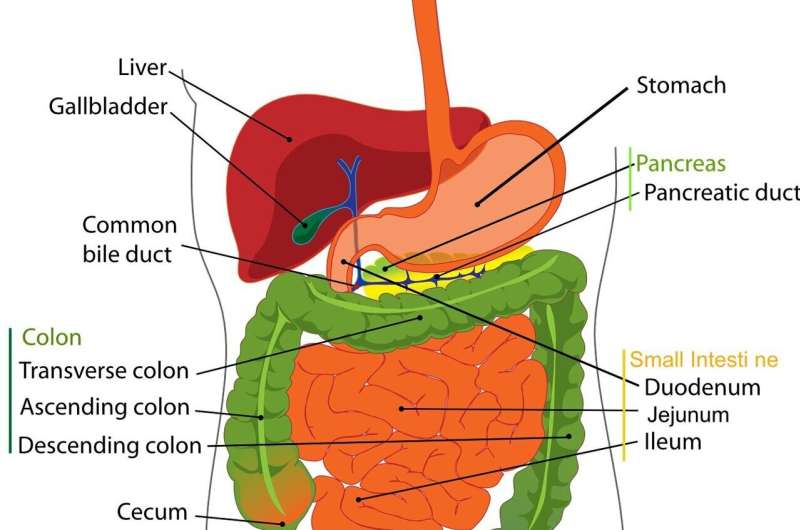
Boston University researchers have published a review showing that robotic surgery can be a safe option for some gallbladder cancer patients. The study of 21 prior studies found robotic approaches often resulted in less blood loss and shorter hospital stays compared to open surgery. Long-term cancer outcomes were similar for carefully selected patients. The researchers note that proper surgery must include removing at least 6 lymph nodes and achieving clean margins.

Global trial shows novel treatment for triple-negative breast cancer nearly doubles survival
Researchers conducted a large global trial testing a new drug called datopotamab deruxtecan on 644 patients with aggressive triple-negative breast cancer. The drug works by directly targeting cancer cells and delivering a powerful cancer-killing agent. Patients receiving the new drug lived nearly twice as long without their cancer getting worse compared to those on standard chemotherapy. The findings offer new hope for a cancer type that disproportionately affects young women and has few treatment options.