Latest News
Positive stories from around the world · Good news by country
Showing 34297–34320 of 37370 articles

Scientists discover gene that helps the brain repair itself
Researchers from Shanghai Jiao Tong University found that yaks and Tibetan antelopes carry a mutation in the Retsat gene that helps them thrive at extreme altitudes. This same mutation boosts production of a vitamin A byproduct called ATDR, which helps rebuild the myelin sheath — the protective coating around nerve fibers that is damaged in multiple sclerosis and cerebral paralysis. When scientists gave ATDR to mice with an MS-like condition, the animals showed less severe symptoms and better movement.

AI identifies early risk patterns for skin cancer
Swedish researchers trained AI on health records from 6 million people to predict melanoma risk. They found that AI correctly identified those who later developed skin cancer 73% of the time, far better than using just age and sex (64%). Some high-risk individuals flagged by the system had a 33% chance of developing melanoma within five years. The study suggests this approach could enable smarter, targeted screening in the future.

Graphene just defied a fundamental law of physics
Scientists have found electrons in graphene flowing like a nearly frictionless liquid, breaking a long-standing physics law. The team at India's IISc and Japan's NIMS created ultra-clean graphene samples and discovered that heat and electrical conduction moved in opposite directions at low temperatures. This violated the Wiedemann-Franz law by more than 200 times. At the 'Dirac point,' where graphene sits between metal and insulator, electrons flow together like water with almost no resistance.

Doing this throughout life may cut Alzheimer’s risk by 38%
Researchers at Rush University Medical Center followed 1,939 adults for eight years. They found that people with the highest cognitive enrichment throughout life were 38% less likely to develop Alzheimer's. Those with the most mental stimulation also delayed Alzheimer's onset by about five years, developing it around age 94 instead of 88. The study examined reading, writing, learning languages, and visits to museums and libraries at different life stages.

Primate Planet
Primates across tropical regions face serious threats from disease, deforestation, and wildlife trade. A growing movement of scientists, conservationists, and local communities is fighting back by rebuilding populations and reconnecting fragmented forests. This video series shows how innovation, collaboration, and resilience are making a real difference for primate survival in a rapidly changing world. The effort offers a hopeful look at what teamwork can achieve for wildlife conservation.

What We’re Reading: What Good Deed Would You Do With $500?
A generosity experiment called Drop Dead Generous is putting $500 in the pockets of 1,000 people — with one catch. Recipients must use the money to perform acts of kindness for strangers. Co-founder Tom Cledwyn became passionate about generosity after donating a kidney himself. He told Positive.News that the feeling from that experience is something he wants others to feel. The experiment distributes a total of half a million dollars.
Quiz: Name every team to have reached a Champions League semi-final
BBC Sport has launched a trivia quiz challenging football fans to name every team to have reached the Champions League semi-finals. Since the tournament's rebrand in 1992-93, 31 teams have made it to the last four. The quiz celebrates three decades of European club football history and gives fans a chance to test their knowledge of the competition's memorable teams.

Subaru telescope captures comet 3I/ATLAS composition change
The Subaru Telescope in Hawaii spotted the interstellar comet 3I/ATLAS in January 2026. By looking at the colors of gas around the comet, scientists measured its carbon dioxide to water ratio. This ratio was different from what space telescopes saw earlier, meaning the comet's chemistry changed as it warmed near the sun. The findings show the comet's inside differs from its outside, giving clues about how comets and planets form in other star systems.

This simple change stops robot swarms from getting stuck
Harvard researchers have found a simple fix for robot traffic jams. In crowded spaces, adding more robots can backfire — they start bumping into each other and grind to a halt. The solution? Let robots move with a little randomness instead of straight lines. This "Goldilocks zone" of movement variation lets robots occasionally bump into each other but still slip past and keep working. The team tested their math with computer simulations and real wheeled robots, confirming the theory works in practice.

Minot clinic helps guide mental health journey | News, Sports, Jobs - Minot Daily News
VitellaCare, a new clinic at Trinity Hospital in Minot, North Dakota, became the first in the state to add a mental health therapist when it opened in December 2024. Cale Homuth from Fargo had struggled to find timely care after a mental health crisis, facing a 5-month wait at his doctor's office. He connected with therapist Troy Roness via telehealth and found immediate relief through cognitive behavioral therapy and informed medication guidance.
Are Kompany's Bayern a glimpse at football after Guardiola?
Vincent Kompany has made a remarkable impact since becoming Bayern Munich manager in May 2024. The former Manchester City captain led Bayern to Bundesliga glory last season and they now sit 12 points clear at the top. Bayern also reached the Champions League semi-finals after beating Real Madrid 6-4 on aggregate. Kompany's tactical approach involves all 11 players moving fluidly, with defenders pushing into midfield and attackers dropping back to create numerical advantages and space.
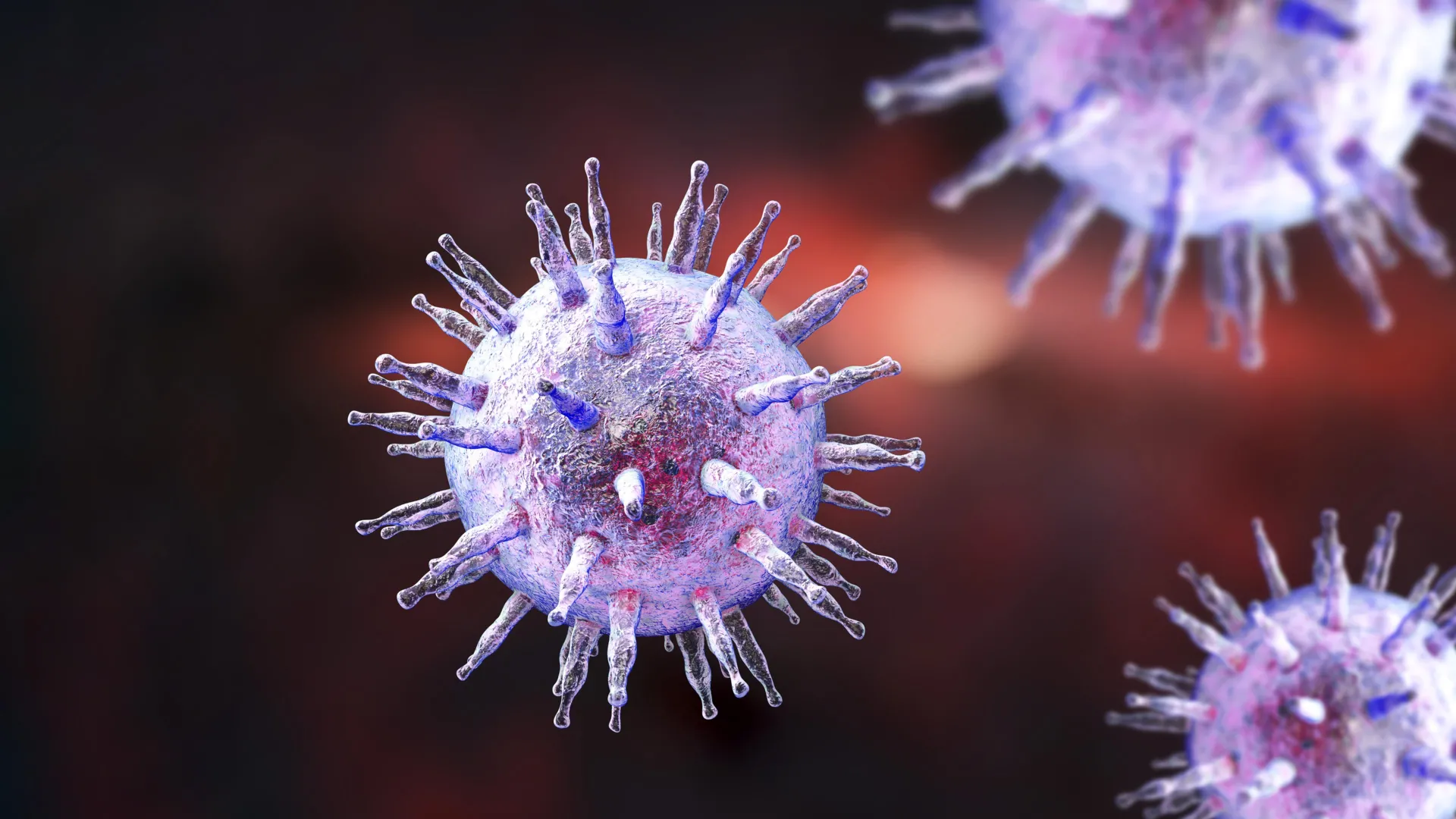
95% of people carry this virus and scientists may have just found how to stop it
Researchers at Fred Hutch Cancer Center in Seattle have created new antibodies that can block Epstein-Barr virus (EBV) from entering human immune cells. EBV infects about 95% of people globally and is linked to several cancers and chronic diseases. Using special mice that carry human antibody genes, scientists identified 10 monoclonal antibodies targeting two viral proteins. One of these antibodies completely prevented EBV infection in mice with human-like immune systems.
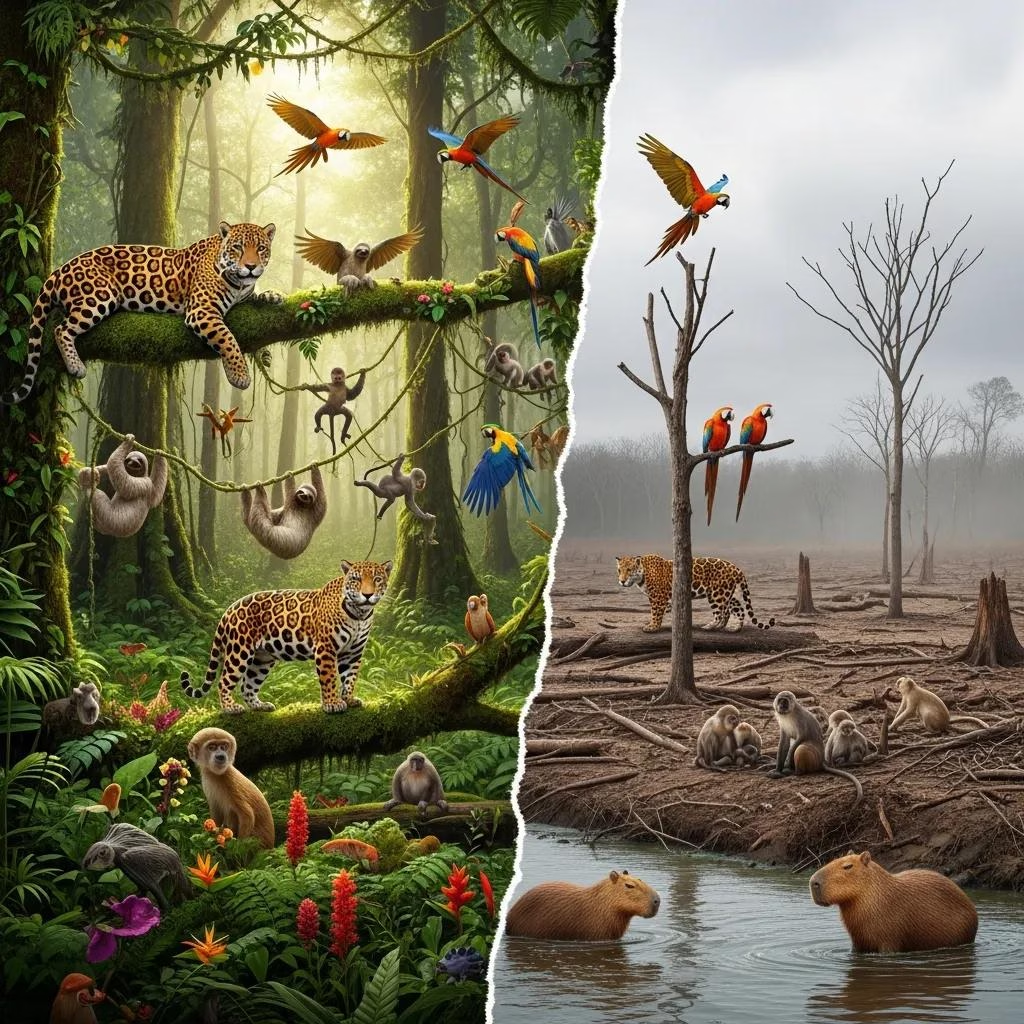
Endangered Species: Threats and Recovery Stories - Emagazine.com
Endangered species face threats like habitat loss, climate change, and poaching. But conservation is working: the bald eagle has rebounded from near-extinction, and the California condor is recovering thanks to captive breeding. Laws such as the U.S. Endangered Species Act provide legal tools and funding for recovery. Organizations like IUCN and WWF track species and push for protections that work.

Audubon California’s Camila Bautista Appointed to Salton Sea Conservancy Board | Audubon
Governor Gavin Newsom has appointed Camila Bautista of Audubon California to the newly created Salton Sea Conservancy Board. As Habitat Representative, she will help oversee conservation projects at California's largest lake. Camila brings over 20 years of conservation experience and has already engaged more than 600 local residents in community studies about the Sea's future.
Has Halliday's heroics started a new chapter for NI?
Northern Ireland women's football team ended a scoring drought in style, beating Malta 4-0 in a World Cup qualifier. The victory came after scoring just one goal in their previous six matches. New head coach McArdle, appointed in March, is focused on developing a younger, more attack-minded team. Five of the starting XI were under 25, with Linfield's Cora Chambers also making her senior debut. With captain Simone Magill away due to pregnancy, defender Rebecca McKenna took the armband and led by example from the back.

Scientists just solved a 160-million-year fossil mystery “I’ve never seen anything like it”
A team of scientists from Virginia Tech, Cambridge University, and the Nanjing Institute has uncovered a rare 550-million-year-old sea sponge fossil in marine carbonate rock along China's Yangtze River. The fossil, measuring about 15 inches long with a distinctive grid-like surface pattern, helps bridge a 160-million-year gap in the evolutionary record. Researchers believe the earliest sponges were soft-bodied creatures with organic skeletons and no mineral parts, making them extremely difficult to preserve.
Why Bellingham can rescue Real's Champions League dream
Jude Bellingham is back and ready to help Real Madrid after missing 10 games with a left hamstring injury. The 22-year-old England midfielder returned to the starting lineup on Friday in a La Liga draw against Girona. He will face Bayern Munich at the Allianz Arena in a match his team must win after losing the first leg 2-1. Bellingham has a personal reason to want victory—his former club Borussia Dortmund lost the 2022-23 Bundesliga title to Bayern on the final day.
Does it matter if Wrexham don't get promoted this season?
Wrexham AFC, the Welsh football club owned by Hollywood stars Ryan Reynolds and Rob McElhenney, faces an uncertain final month despite their remarkable climb from the fifth tier to the Championship. Their three consecutive promotions were historic, but four points separate them from the play-off places with just four games remaining. However, the club's record £33.3m annual turnover and ongoing stadium redevelopment suggest a long-term strategy prioritising sustainability over hasty promotion.
World Cup winner Kildunne reveals body dysmorphia struggle
England rugby star Ellie Kildunne has revealed she struggled with disordered eating and body dysmorphia during the COVID-19 lockdown. Without her usual team environment, she tried to control her life through food restriction and excessive running, eventually suffering a stress fracture in her knee from inadequate nutrition. When a physiotherapist asked if she was OK, Kildunne broke down and got the support she needed. She has since channelled her experience into helping others, becoming a World Cup winner in the process.

Copper's 'gatekeeper' could unlock cleaner energy future
Researchers found that chalcopyrite, the source of 70% of global copper, has hidden atomic properties that can be harnessed for cleaner extraction. Tiny amounts of silver can trigger a reaction that releases copper more efficiently, using less energy and fewer chemicals. The discovery comes as copper demand surges for renewable energy, EVs, and modern infrastructure. Published in Nature Geoscience, the study shows how understanding mineral chemistry at the atomic level can make mining more sustainable.

10 Vibrant Indigenous Art Centres To Shop Online
Ten Indigenous art centres across remote communities in the Northern Territory, South Australia, and Western Australia now offer online shopping, directly benefiting artists and their communities. Martumili Artists alone works with around 300 artists across seven East Pilbara communities, where art-making is described as practice of place-making. Other centres like Artists of Ampilatwatja preserve cultural knowledge by mapping traditional lands, while Buku-Larrŋgay Mulka sources natural pigments from local rock.
Joseph’s Transformation from Trainee to Skilled Mechanic
Joseph Mwangi from Nakuru, Kenya, transformed his life through skills training. He enrolled in the ILO's vocational programme and learned automotive engineering. Today, he works as an automotive engineer and earns a stable income. His next goal is self-employment through a small business of his own.

Invasive ferrets removed from an island in a world-first
Rathlin Island off Northern Ireland has become the first place in the world to completely eradicate feral ferrets. The invasive predators, introduced in the 1980s to control rabbits, had been devastating seabird populations — killing 26 puffins in just two days in one documented case. The five-year, $6.1 million project used 110 cameras, thermal drones, and a detection dog named Woody to track down and remove all 93 ferrets from the island.

Poll reveals millions of Americans consult AI before, after—and sometimes instead of—seeing a doctor
A new poll by the West Health-Gallup Center finds that 66 million Americans—one in four U.S. adults—have used AI tools or chatbots for health information or advice. Most Americans (84%) who consulted AI still saw a doctor afterward, using the technology to supplement rather than replace traditional care. Among AI users, 46% say it made them feel more confident talking with their provider, and 22% say it helped them identify health issues earlier.