Latest News
Positive stories from around the world · Good news by country
Showing 34393–34416 of 37370 articles
Simple rules guide how proteins assemble and evolve, study finds
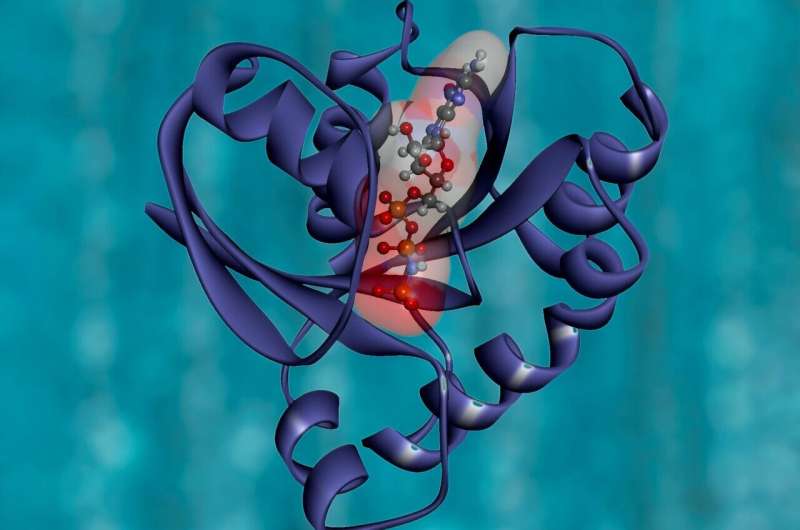
Scientists at Ben-Gurion University in Israel found that proteins called bacterioferritins follow simple rules when assembling. These proteins store iron safely inside bacteria. Although thousands of arrangements are theoretically possible, only a few actually work. The researchers discovered two rules that limit these configurations: one prevents certain subunit pairs from forming, and another favors pairings that keep the protein's key functions close together.

Why did the stag beetle Prosopocoilus hachijoensis lose its ability to fly?
Researchers at University of Tsukuba in Japan studied the stag beetle Prosopocoilus hachijoensis, which lives only on Hachijojima Island. They found this beetle lost flight because its flight muscles shrunk and its wings became smaller. Interestingly, females of the species got better at walking. The scientists concluded that losing flight was an adaptive shift, not a flaw. The beetle traded flying for walking as its environment changed, and this represents evolutionary progress.

How people approach test problems, not just how many answers they get right, can help predict dementia risk
Scientists at Boston University have discovered a new way to spot dementia risk long before symptoms appear. By analyzing not just test scores, but how people approach problems—their mistakes, strategies, and thinking patterns—researchers predicted dementia more than five years early in 2,363 older adults from the Framingham Heart Study. Using machine learning to study hundreds of small cognitive details, the team found these subtle features outperformed traditional scores.

Rett syndrome study highlights potential for personalized treatments
MIT neuroscientists grew miniature 3D brain structures called organoids from Rett syndrome patients' cells. They discovered that two different mutations in the MECP2 gene caused distinct abnormalities in the lab-grown brain tissue. Each mutation required a different treatment to correct, suggesting personalized medicine could help Rett patients. The findings challenge the one-size-fits-all approach to treating this rare neurological disorder affecting mostly young girls.

Ph.D. student solves persistent problem in high-entropy alloys
A Ph.D. student at the University of Wyoming has made a breakthrough in understanding high-entropy alloys. Lauren Kim, who graduated in December, developed a new method to study how atoms are arranged on the surface of these complex materials. High-entropy alloys contain five or more elements in nearly equal proportions, making them stronger and more resistant to heat and corrosion than regular alloys. Kim and her team used special microscopes and computer calculations to see atomic details that scientists could not detect before.

New research highlights strong benefits of HPV vaccines beyond cervical cancer | CIDRAP
A landmark study of over 510,000 Japanese males shows HPV vaccination cuts cancer risk by nearly 50%. The shots also prevent cancers of the head, neck, esophagus, anus, and penis in addition to cervical cancer. The research, published in JAMA Oncology, demonstrates that boys and men vaccinated between ages 9 and 26 gained significant protection against multiple HPV-related cancers. Experts called the findings "absolutely fantastic" and say the vaccine could be a "game-changer" for preventing cancers beyond cervical cancer.

Newly discovered neural connections in fruit flies reveal that inhibitory neurons can also drive movement
Researchers at UC Santa Barbara discovered that inhibitory neurons—nerve cells previously thought to only stop movement—actually drive coordinated rhythmic movements like grooming in fruit flies. Using optogenetics (light-controlled experiments), the team found these neurons put the 'brakes' on one muscle while releasing brakes on another, creating alternating motion. The study used the full fruit fly connectome, a complete map of 139,000 neurons and 50 million synapses.

When a key resource disappears: What wood ant networks can teach us
Scientists studied how wood ant colonies in Peak District National Park, UK, handle the loss of key resources. The research, published in Proceedings of the Royal Society B, found that ants living in polydomous colonies—multiple connected nests working as one—can quickly reorganize their networks when important nests disappear. Wood ants are ecosystem engineers, building mounds that house over 1,000 other species. The study suggests ant colonies offer lessons for understanding resilient networks in nature and human society.
McArdle praises NI's 'intent' in big win over Malta
Northern Ireland's women's football team secured a commanding 4-0 victory over Malta in their World Cup qualifying campaign. New head coach Michael McArdle, appointed in March, praised the side's intent in his debut match. Players credited the new direct playing style with boosting their confidence and freedom on the pitch. The win puts NI in a strong position as they pursue a first ever World Cup qualification.

AI-guided electron microscope provides unique glimpse into the world of MXenes
Researchers at the National Laboratory of the Rockies used artificial intelligence to study MXenes—ultra-thin 2D materials. For the first time, they mapped atom-scale defects in three dimensions. These tiny defects, where atoms are missing, can actually improve how materials work. The discovery could lead to better energy storage, water purification, and electronics.

Plants growing higher across the Himalaya region as climate warms
Scientists at the University of Exeter studied plant growth patterns across the Himalayan region for 23 years. They found that plants are growing at higher elevations than before, with the vegetation line shifting upward by up to nearly 7 meters annually in some areas. This change is happening fastest in Manthang, Nepal, and slowest near Mount Everest. While most areas show more vegetation overall, some eastern regions are showing browning trends.
WATERLINE: Mote releases Caribbean king crabs onto Florida’s Coral Reef | Waterline | yoursun.com
Mote Marine Laboratory released Caribbean king crabs onto Florida's Coral Reef on March 28. This was the first-ever release of hatchery-raised king crabs onto Florida's reef. The crabs came from Mote's Florida Coral Reef Restoration Crab Hatchery Research Center. Scientists hope the crabs will help restore the reef ecosystem by eating pests that harm coral.

Taking a closer look at immune 'memory' could spur progress in the fight against lethal illnesses
Scientists have learned that vaccines teach your body to remember germs for a very long time. Shane Crotty from the La Jolla Institute for Immunology found that COVID vaccines create immune memory that lasts years, not months. His research also showed people who got smallpox vaccines still had protective immune cells 60 years later. This understanding could help scientists create better vaccines that protect people for even longer against deadly diseases.

Smart cable sharing gives quantum computers a big boost
Quantum computers use qubits that can hold multiple values at once, giving them huge computing power. But as quantum computers grow bigger, they need more cables to send control signals to each qubit. These cables create heat inside the cooling systems, limiting how many qubits can fit. Chalmers researchers in Sweden proved that qubits can share cables by sending signals one after another very quickly. Their technique acts like a game of Tetris, ordering the control signals to avoid traffic jams and keep quantum computers running fast.

Yukiko Arai asume como Directora de la Oficina de la OIT para el Cono Sur
La Organización Internacional del Trabajo anunció que Yukiko Arai asumirá como Directora de la Oficina para el Cono Sur a partir del 1 de abril de 2026. Nacida en Japón, Arai tiene una maestría en Economía Internacional de la Universidad Johns Hopkins y una licenciatura en Derecho de la Universidad de Keio. Previamente fue Directora Adjunta del Departamento de Políticas Sectoriales de la OIT en Ginebra y trabajó en el Banco Mundial y el Banco Interamericano de Desarrollo.

EUDR is starting to steer company actions, despite slow progress: Report
The EU's new deforestation law is already changing how companies do business, even before it fully kicks in. An analysis of 500 major companies found that 68 now specifically mention the EU Deforestation Regulation in their commitments to stop cutting down forests for products like coffee, cocoa, and palm oil. More than a quarter reported taking new steps to trace where their supplies come from. The law requires companies to prove their products aren't linked to deforestation after 2020.
From hospital to Crucible - teenager Moody qualifies
Stan Moody, a 19-year-old from Halifax, Yorkshire, qualified for the World Snooker Championship after an incredible comeback. Despite being hospitalised with tonsillitis the day before, he discharged himself to play and beat China's Jiang Jun 10-9. He sealed victory with a stunning 104-point break in the deciding frame. Moody will be the first British teenager to play at the Crucible since Judd Trump in 2007.

Webb redefines the dividing line between planets and stars
Scientists used NASA's James Webb Space Telescope to examine 29 Cygni b, an exoplanet 15 times heavier than Jupiter orbiting a nearby star. They discovered carbon and oxygen in the planet, proving it formed through accretion—the same way smaller planets like Earth and Mars are built. This finding is surprising because such a massive object could theoretically have formed through a different star-like process. The research, published in The Astrophysical Journal Letters, helps scientists understand where planets end and star-like objects begin.

Phospholipid asymmetry helps explain extracellular vesicle surface charge and therapeutic quality
Scientists at the University of Tokyo have uncovered why tiny bubbles released by cells, called extracellular vesicles (EVs), carry different electrical charges. Their study in ACS Nano Medicine shows that the type of EV determines its surface charge: exosomes have weaker negative charge while membrane-derived vesicles have stronger charge. This difference comes from how a negatively charged fat called phosphatidylserine is arranged in the vesicle membrane.

Study reveals how dreams affect our emotions in day-to-day life
A study from the University of Kansas has uncovered new insights into how our dreams affect our waking emotions. Researchers analyzed dream reports from more than 500 people, using a large-language model to measure fear and joy in dreams. They found that when dreams contained both emotions at once, people reported less negative moods the following morning. This suggests emotional complexity in dreams may have a protective effect on mental health.

A silicon-compatible path toward scalable quantum systems
Researchers at Brookhaven National Laboratory in New York have achieved a key breakthrough for quantum computing. They built superconducting quantum interference devices (SQUIDs) using silicon-compatible transition metal silicides—the same materials used in regular computer chip factories. This is the first experimental demonstration of constriction junctions in functioning quantum devices. The team worked with NY Creates to adapt standard microelectronics manufacturing techniques.

Māori knowledge shows climate change domino effects on forest food chains
In New Zealand's North Island, Māori elders and researchers teamed up to study how climate change affects forests. Using traditional ecological knowledge, they tracked changes in fruit timing across Te Urewera and Whirinaki forests over 75 years. The study found that longer, hotter summers since the 1990s have disrupted when trees produce fruit. These fruiting changes cascade through the entire ecosystem, affecting birds, pigs, and local food systems.
New York City to open municipal grocery store in 2027 | Grocery Dive
New York City will open a municipal grocery store in 2027, making it one of the first major U.S. cities to try this approach. The city-owned store aims to improve food access in neighborhoods where fresh groceries are scarce or expensive. This initiative follows Chicago's 2023 announcement that it would explore creating a similar publicly owned food market in partnership with the nonprofit Economic Security Project. The plan represents a growing trend of cities using government ownership to address food deserts and food insecurity.

Some lake bacteria survive by slashing half their genome and never looking back
Scientists at the University of Zurich studied bacteria in Lake Zurich and found a surprising survival trick. One group of bacteria reduced its genome by 50 percent when moving from soil to freshwater. These "simplifiers" shed unnecessary genetic material and now thrive with fewer resources. The research was published in Nature Communications and reveals bacteria evolve differently to conquer new environments.