Latest News
Positive stories from around the world · Good news by country
Showing 34657–34680 of 37367 articles

Video shows that sunbirds suck, while hummingbirds don't
Scientists have found that sunbirds use their tongues to suck up nectar, making them the first vertebrates ever known to use this technique. Hummingbirds, which live in the Americas, use a different approach—they sponge up nectar with their tongues and then squeeze the liquid into their mouths by pressing their beaks together. Both bird groups solved the same problem—how to get sweet liquid from deep inside flowers—using completely different body parts and methods.

Renewables Overtake Natural Gas in Historic Grid Milestone
In March 2026, US renewable energy sources generated more electricity than natural gas for the first time in history over a full month. Solar installations grew 75% year-over-year while battery storage tripled in capacity. This milestone shows how renewables are becoming reliable and affordable, with virtually zero fuel costs once installed. The shift could mean lower, more stable electricity prices for consumers across the country.

Research reveals unseen changes in motor control after spinal cord injury
Scientists at KTH Royal Institute of Technology in Stockholm studied 25 people, including 10 without injuries, to understand how nerve-to-muscle connections coordinate movement after spinal cord injury. Using surface electrical sensors on calf muscles, they found that at low effort (20%), fewer motor units worked together smoothly, making movements shaky. At higher effort (50%), the nervous system appeared to overcompensate with louder but less refined signals.

Artemis II crew used modern photography to tell the story of their lunar journey—and update some classic Apollo images
NASA's Artemis II astronauts returned with stunning photos that update the classic Apollo-era images of space travel. The crew—Reid Wiseman, Victor Glover, Christina Koch, and Jeremy Hansen—used iPhones and Nikon D5 cameras during their lunar mission. Unlike Apollo's 1970s film cameras, today's digital tools let photos reach Earth almost instantly. The mission also captured a total solar eclipse from space on April 6, 2026, with the moon blocking the sun completely.

From ship wakes to soft tissues: Exploring fluid and solid surface-wave physics
Harvard scientists have uncovered a surprising connection between boat wakes and the behavior of soft materials like gels and living tissue. When a pressure disturbance moves across these ultrasoft materials, it generates V-shaped waves strikingly similar to those behind a boat on water. The researchers found that the angle of these waves reveals the material's stiffness—faster movement or softer materials create narrower wakes.

Combining ion pumps and click chemistry enables precise drug release in the body
Researchers at TU Wien in Vienna, Austria have found a way to release drugs exactly where and when they are needed in the body. They combined electronic ion pumps with click-to-release chemistry. Normally, only about one millionth of a drug reaches where it is needed after being taken by mouth or injection. With the new system, tiny "chemical scissors" are delivered to release drugs that were previously locked in place, allowing precise control over timing and dosage.

Physicists discover how reverse to 'quantum scrambling'
Scientists at the University of California, Irvine have discovered how to reverse quantum scrambling. This process makes quantum computers lose stored information when it spreads too far across qubits. The researchers found that the universe's microscopic laws are reversible, so information isn't truly destroyed—just dispersed. By precisely controlling the system, they can essentially drive it backward and refocus lost information.

Thailand’s Race To Save Coral Reefs From Bleaching
Thailand's coral reefs are showing remarkable signs of recovery after a severe 2024 bleaching event hit 60-80% of reefs in some areas. The country's Department of Marine and Coastal Resources deployed a "Reduce, Refrain, Rescue" strategy — cutting human damage, closing sensitive dive sites, and physically moving vulnerable corals to cooler waters. The effort is paying off: approximately 60% of bleached corals have bounced back, exceeding scientists' expectations.
Okafor fires Leeds to first league win at Old Trafford since 1981
Leeds United secured a major boost in their Premier League survival bid with a surprise 2-1 win over 10-man Manchester United at Old Trafford. The home ground of their bitter rivals, Manchester United. Goals from Crysencio Summerville and Joel Roersbach secured a famous victory. The win lifts Leeds out of the relegation zone.ith crucial points. It was their first league win at Old Trafford in over 40 years, since January 1981.

Expanding access to palliative care for patients with advanced liver disease
A major clinical trial involving 935 patients at 19 U.S. centers found that liver disease doctors (hepatologists) can deliver palliative care as effectively as specialists. Palliative care helps patients with serious illnesses feel better and have a higher quality of life. The study compared two groups: patients receiving care from trained hepatologists versus palliative care specialists, both using the same checklist. Results showed equal improvements in quality of life and symptom burden after three months.

Newly identified RPN1 disease helps explain how protein damage can disrupt early brain development
Scientists at Sanford Burnham Prebys Institute in San Diego discovered a new rare genetic disease by studying two siblings with an unknown neurodevelopmental disorder. Using a technique called whole exome sequencing, they found a mutation in the RPN1 gene that disrupts how cells build sugar chains on proteins. This process, called glycosylation, is essential for proper protein function and brain development.
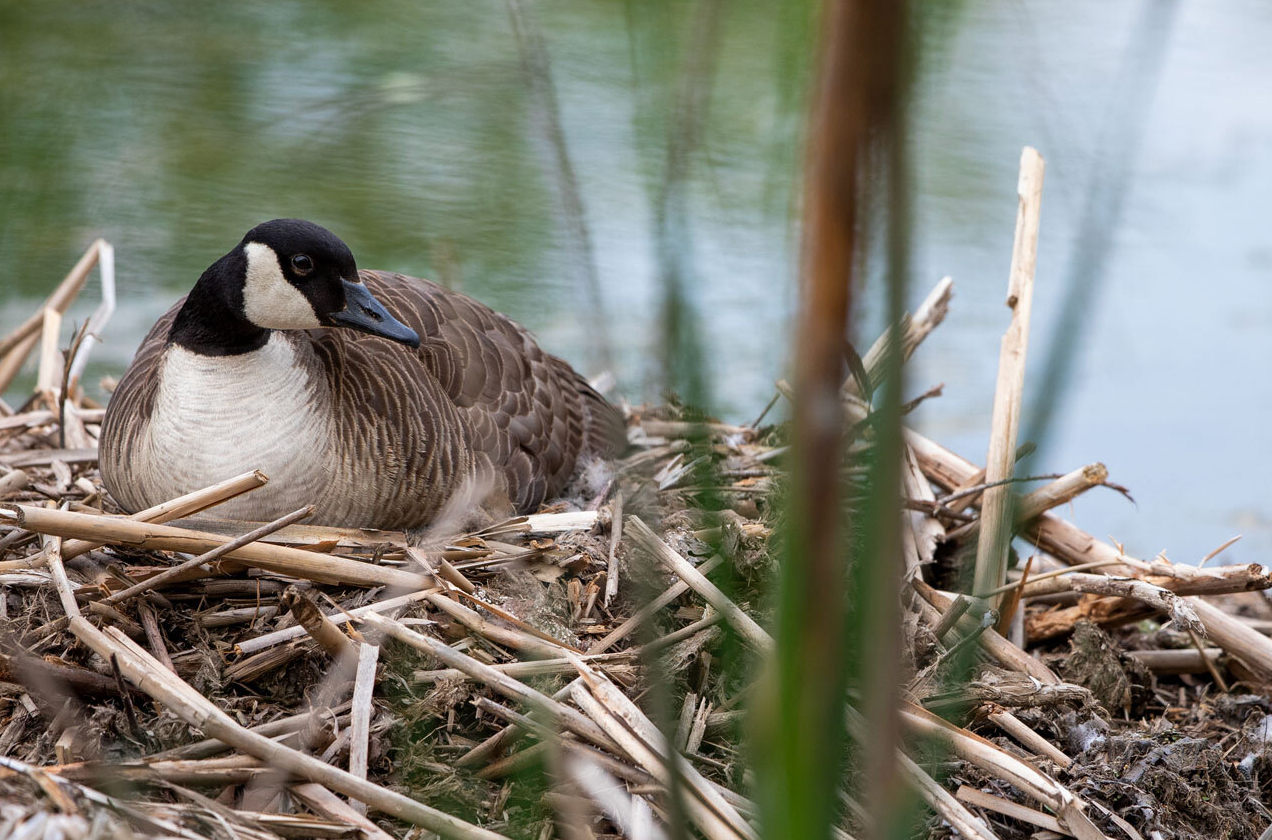
Putting the ‘forever’ in Forest Park - The Source - WashU
Scientists at Washington University and the Saint Louis Zoo compared bird surveys from 1997, 2007-2012, and 2023-2024 in Forest Park. They found that native bird species increased after Forest Park Forever restored habitats. Open water like ponds and creeks proved especially important for attracting more bird species. The study was published in the journal Ecological Applications.

Plants use a protein-tagging complex to control stress survival, study finds
Researchers found that the NatB protein complex marks certain proteins for breakdown, helping plants recycle nutrients during tough times like drought. When they turned off NatB in lab plants (using a plant called thale cress), the plants became better at surviving without light or food. The team found that a single chemical tag on proteins can change how plants respond to stress. Scientists say this knowledge might lead to crops that handle harsh conditions better.
Ghana appoint ex-Man Utd assistant Queiroz as coach
Carlos Queiroz, a 73-year-old Portuguese coach, has been appointed as Ghana's national football team head coach for the upcoming World Cup. Queiroz previously served as Sir Alex Ferguson's assistant at Manchester United from 2002-2008 and has coached multiple national teams including Portugal, Iran, and Egypt. He replaces Otto Addo, who was sacked after Ghana failed to qualify for the 2025 Africa Cup of Nations. Ghana will face Panama, England, and Croatia in the World Cup group stage.

Small, medium-sized independent US firms adapted well to minimum wage hikes, as did workers
Researchers at Carnegie Mellon and the University of Michigan studied 217,000 US businesses from 2010 to 2019. They found that small and medium firms adapted well to minimum wage hikes, covering extra labor costs with new revenues. Most firms kept their workers and owner profits stayed the same. Worker earnings rose substantially and employment held steady. Fewer new firms entered the market—a 2% drop—but the remaining businesses became more productive.

Fluoride and kids' IQ: What a decades-long analysis shows
A major study from the University of Minnesota has confirmed what many scientists already believed: adding fluoride to drinking water is safe for children. Researchers examined data from the Wisconsin Longitudinal Study, which followed 10,317 high school seniors from 1957 to 2026. They found no evidence that community water fluoridation harms children's IQ or cognitive functioning at any point in life.

Rapid method uncovers hidden structures in materials—including elusive quasicrystals
Researchers at Loughborough University and partner institutions have built a tool that makes materials discovery dramatically faster. Their method uses a simple equation based on classical density functional theory to map phase diagrams—charts that show how tiny particles arrange themselves under different conditions. What once took weeks or months now takes a single day. The team proved it works by testing it on complex systems known to produce many different structures, including hard-to-find quasicrystals.

Living lung model: A breath of fresh air for personalized treatment
Researchers at CU Denver built a living lung model to study diseases like pulmonary fibrosis and cancer. They take donor lung cells, turn them into powder, mix them with synthetic materials, and create a hydrogel that mimics real lung tissue. The model lets scientists make the lung sick and test treatments on it before trying on humans. This could help solve the problem where most drugs that work in labs fail when tested in people. The work is personal for lead researcher Chelsea Magin, who lived with undiagnosed asthma for 40 years.
Jorginho withdraws criticism of Chappell Roan
Former Chelsea and Arsenal midfielder Jorginho has publicly corrected his earlier criticism of singer Chappell Roan. The footballer explained that after speaking directly with Roan, it became clear she had no knowledge of a security incident at a hotel breakfast involving his daughter. Jorginho said he regrets the impact the situation had on Roan and does not support online attacks from any side. The incident had drawn significant media attention and sparked online debate.

Disrupting genome architecture selectively impairs developmental genes
Researchers at Weill Cornell Medicine in New York made a surprising discovery about how DNA is organized inside cell nuclei. They found that disabling the cohesin protein — which folds DNA into loops — disrupted the 3D structure of the genome, but most genes kept working normally. However, a small set of genes that guide cells to become specialized types like heart, brain, or liver cells were seriously affected. The team says this reveals a "molecular memory" that helps cells remember what they are supposed to become.

Amid fierce global competition, China launches national plan to boost AI education | South China Morning Post
China's government has released a major new "AI+Education" action plan requiring artificial intelligence to be integrated into learning at every stage—from primary schools to lifelong education programs. Five government ministries collaborated on the plan, which aims to build unified computing and data platforms for education across the country. Officials framed the initiative as a direct response to fierce global competition, with the US, EU, and Singapore all investing heavily in AI education.

Researchers demonstrate drug's effectiveness in drawing out dormant HIV from immune cells
HIV hides inside immune cells can hide in a dormant state, making the virus extremely hard to cure.ese latent reservoirs can reactivate if patients stop taking HIV medications. Researchers at UNC have shown that a drug called citarinostat can wake up these dormant viruses by blocking histone decrotonylation (HDCR), a genetic process that lets HIV hide from the immune system. The discovery brings scientists one step closer to eradicating HIV and may also help treat cancer and brain disorders.

Shorter antibiotic courses show similar outcomes to longer use for some pneumonia patients
A major study across 67 Michigan hospitals found that some pneumonia patients did just as well with 3-4 days of antibiotics as with longer 5+ day courses. The research looked at patients who showed early clinical stability after hospital admission. Only about 10% of patients met the criteria for short-course therapy. No meaningful differences were found in mortality, readmissions, or infections between the two groups. Researchers say this suggests shorter treatment may be appropriate for carefully selected stable patients.

Teaching critical thinking may help teens resist fake news, AI slop and online harm
Teaching critical thinking may help teenagers resist fake news, AI slop, and online harm. The idea comes from Dr. Maree Davies, a Senior Lecturer at the University of Auckland. " Critical thinking means analyzing things without emotion and making reasoned judgments. Teens can learn these skills, even though their brains are still growing, to spot fake news, avoid addiction to social media, and protect against harms like sextortion, revenge porn, and bullying. Dr.