Latest News
Positive stories from around the world · Good news by country
Showing 34609–34632 of 37367 articles
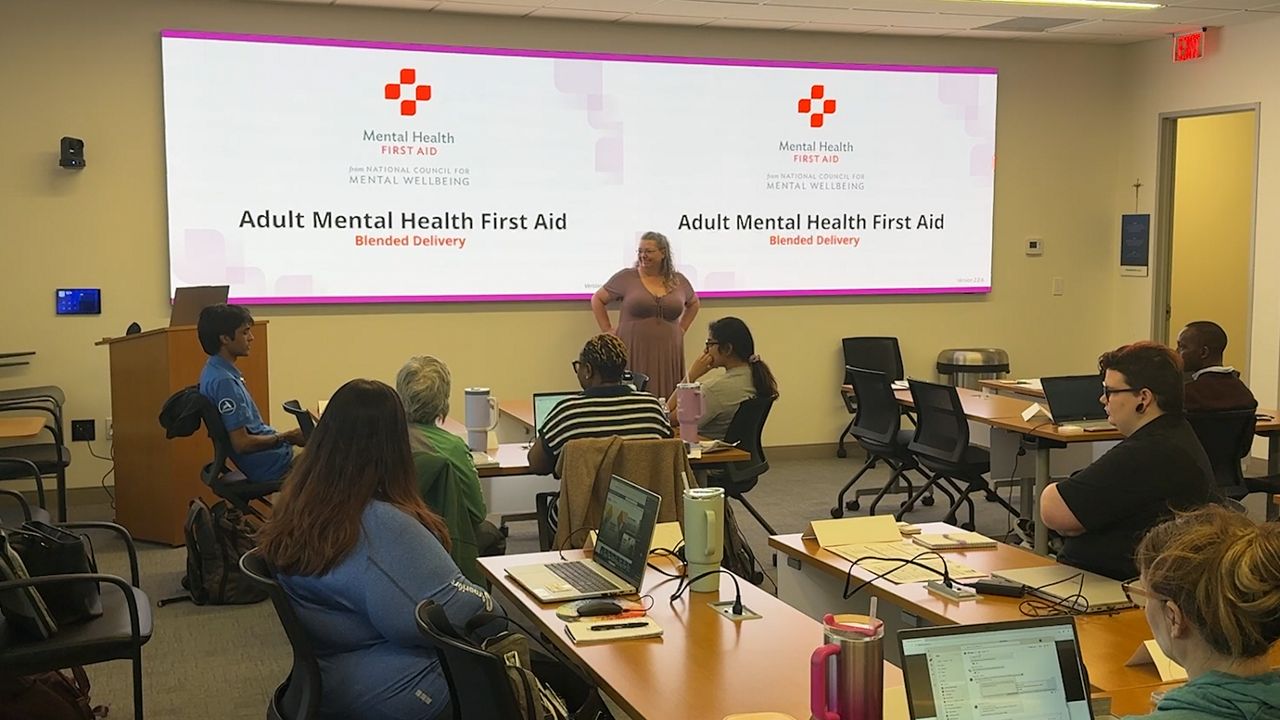
Mercy Health’s Mercy Serves program is hepling mental health challenges
Mercy Health's Mercy Serves program in Cincinnati, Ohio is training healthcare workers to support each other's mental health. The program uses mental health first aid training to help reduce burnout in high-pressure clinical settings. According to the Ohio Department of Behavioral Health, 75 of Ohio's 88 counties are designated as mental health professional shortage areas. The program aims to make sure healthcare workers are not alone in dealing with daily stress and trauma.

NCDHHS, Trillium Health to Hold Ribbon-Cutting for New Behavioral Health Urgent Care in Robeson County | NCDHHS
A new Behavioral Health Urgent Care (BHUC) has opened in Lumberton, Robeson County, North Carolina. The state provided $2.2 million for the facility as part of a historic mental health investment from the North Carolina General Assembly. This is the 8th of 13 planned new or expanded BHUCs across the state. The facility offers 24-hour rapid, short-term stabilization for children four and older and adults experiencing mental health or substance use crises, providing a better alternative to hospital Emergency Departments.

Beyond goodwill: How volunteering can bridge the employability gap
A new article argues that volunteering can help bridge the employability gap facing millions of young Africans each year. Organizations like PMI, with just under 18,000 volunteers, show how unpaid work can provide real responsibility and leadership opportunities. The African Development Bank notes 10–12 million young Africans enter the job market annually, yet employers cite gaps in experience and skills.

El Paso schools work to adapt to rise of AI in education: policies, programs and literacy lessons
Schools in El Paso, Texas are racing to adapt to AI technology in education. A RAND survey found 54% of students and 53% of teachers used AI for school in 2025 — a 15 percentage point jump from two years earlier. Yet over 80% of students have not had lessons on responsible AI use. Local districts like Ysleta and Socorro are developing guidelines and digital citizenship courses, while charter school system Harmony Public Schools will offer AI classes to all eighth-graders next year.

At These Luxury Resorts, Coral Reef Restoration Is As Much Of a Draw As the Views - Ethos
Luxury resorts from the Maldives to the Florida Keys are transforming their guest experiences around coral reef restoration. Properties like Six Senses Kanuhura now employ resident marine biologists, run underwater nurseries, and use AI-powered 3D reef mapping — putting travelers directly in the water with coral fragments. A 2024 Cell Press study found restored coral reefs can reach full recovery within just four years, proving intervention works.
RevMed’s Cancer Drug Nearly Doubles Overall Survival in Pivotal Study - Bloomberg
Revolution Medicines announced that its drug for aggressive pancreatic cancer nearly doubled patient survival in a late-stage clinical trial. The company saw its largest stock jump in six years after the breakthrough results were released. Pancreatic cancer is one of the deadliest forms of cancer, making this survival improvement a major advance. Researchers say the drug works by targeting a specific protein that helps cancer cells grow and spread.

'Bouncing back' is a myth: Resilience means integrating hard experiences into your life story, not ignoring them
A new look at resilience argues against the popular idea of 'bouncing back' from hardship. Researchers say real resilience means accepting change and integrating difficult experiences into your life story. Studies of young adult cancer survivors found people can feel distress and positive growth at the same time. The author, a four-time cancer survivor herself, says society should retire the myth that strength means showing no weakness.

Envisioning just futures: Framework can make distributive justice explicit in global emission scenarios
A team at IIASA, the International Institute for Applied Systems Analysis in Austria, built a practical framework to make justice part of climate planning. The tool connects ideas about fairness to measurable climate pathways, letting anyone check who gains and who sacrifices in a given scenario. When tested on IPCC climate reports, the framework revealed how existing plans share energy and food impacts across society., with many assuming the poorest benefit most.

Balancing work and family in China’s ‘new’ economic and demographic context: Policy choices and their implications for women and gender equality
A new ILO report examines China's policies on balancing work and family life in the context of changing demographics and finds that women continue to bear the primary burden of caregiving while structural gender equality challenges remain unaddressed. The analysis points out gaps in areas such as occupational security, gender equality in the workplace, and the fair distribution of care responsibilities across families.
UK startup turns festival urine into forest-grade fertilizer
A UK startup called NPK Recovery is transforming an unlikely resource — festival urine — into forest-grade fertilizer. Based at the University of the West of England in Bristol, the company collects urine at events like the London Marathon and Boomtown Festival, strips out contaminants, and concentrates the nitrogen, phosphorus, and potassium that plants need.
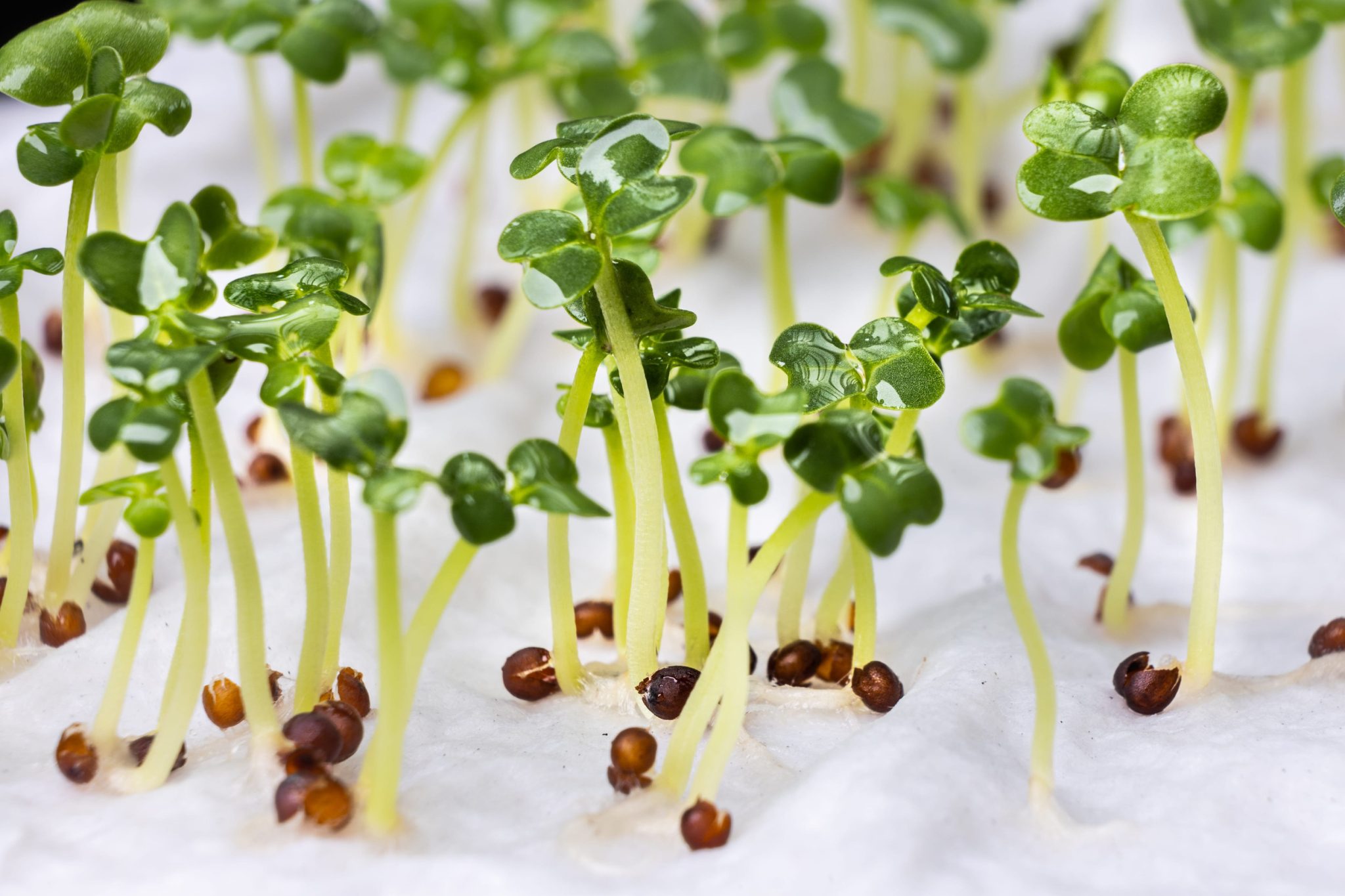
The gardening trick that gives vegetables a head start on weeds
A Cornell University professor has shared a free, low-effort trick that helps home gardeners grow stronger vegetables. The method involves soaking seeds on a moist paper towel overnight before planting. By speeding up germination, seedlings emerge faster and can better compete with weeds that would otherwise take over. The technique works best for large-seeded crops like sweet corn, peas, and cucumbers. Gardeners just need water, paper towels, and about 24 hours — no special tools or chemicals required.

Lab-grown retina gives gene change clue to rare childhood eye condition
Scientists at the University of Manchester grew tiny retinas in a lab to study how YAP1 proteinem changes lead to ocular coloboma, a rare condition affecting 1 in 5,000births and responsible roughly10% of childhood blindness.TheThe that retinas showed that YAP1 acts as aaswitch that controls whether retinal cells grow and survive.Their research reveals that the exact positioning each genetic change determines how severely YAP1 is disrupted, explaining why some children escape vision damage while others are severely affected

How hidden soil fungi 'steal' bacterial DNA to control the rain
Researchers found that fungi like Mortierella and Fusarium secrete ice-making proteins into the soil.elsename These tiny proteins are swept into the sky by wind, where they help water droplets turn into ice crystals even in relatively warm clouds above -5°C.elsenameThe ice crystals eventually fall and melt into rain, which waters the forests below And starts the cycle again.

Frontiers | Negotiating assistive technologies and AI in inclusive education: professional agency in neurodivergent contexts
Researchers studied 46 teachers across 7 focus groups to understand how they evaluate assistive technologies and AI systems in inclusive classrooms serving neurodivergent students. Teachers distinguished between traditional assistive tools (seen as individualized accommodations) and AI-based systems (which generated more uncertainty). The study found that technology adoption was conditional on pedagogical fit, professional control, institutional feasibility, and ethical accountability.
$6.5 million raised from 2026 conservation permits to benefit deer, other wildlife through habitat restoration projects
Utah wildlife officials raised $6.5 million from 2026 conservation permits to fund habitat restoration projects. The money will go toward protecting critical winter and summer ranges for deer and elk. Much of the on-the-ground work, like seeding and planting, will happen in the fall during prime planting season. Projects focus on sagebrush and aspen ecosystems, key habitats for Utah's wildlife.

New 'molecular handle' uses common amino acid to build complex medicines
Scientists at Hebrew University in Israel have discovered a radically simpler way to build complex medicines. They use proline, a common amino acid found in your body, as a tiny 'molecular machine' to attach a special chemical handle (dichloromethyl group) onto drug molecules. The process replaces old methods that needed toxic heavy metals or radiation. The best part? The reaction has built-in self-correction — it automatically rejects faulty molecules and only creates the right ones, ensuring medicines are purer and safer.

Building 'green' protection for fragile enzymes
University of Missouri researchers have built tiny protective shells called metal-organic frameworks (MOFs) to shield fragile enzymes from harsh conditions. Think of it like a shark cage protecting a deep-sea diver—sturdy enough to guard, but porous enough to let the enzyme keep working. What makes this special is the green chemistry approach: they use plain water instead of the toxic chemicals found in traditional labs.

Low-frequency wireless sensor tracks artery stiffening in real time with less interference
Korean researchers at KAIST and Hanyang University have built a new wireless sensor called WiLECS that tracks artery hardening safely. Traditional sensors use high frequencies that can heat body tissues and cause signal problems. WiLECS works at low frequencies under 1 MHz using ionic materials that store electricity efficiently. In lab tests with artificial blood vessels, the sensor successfully detected blood pressure changes linked to arteriosclerosis, showing promise for future heart disease monitoring.

Low-cost robotic chemistry system can be built and deployed in any lab
Researchers at the University of Amsterdam created RoboChem Flex, a robotic chemistry system that costs only $5,000—ten times less than similar systems. This AI-powered robot can optimize the synthesis of 10 to 20 molecules all by itself, work that would take a PhD student several months. The team published their open-source design in Nature Synthesis so any lab in the world can build their own. The system uses 3D-printed parts and an open-source software package, making advanced chemistry research accessible to under-resourced institutions.

Common, treatable ear conditions are linked to higher odds of dementia; treatment may help
Scientists at Columbia University and the University of Utah looked at data from more than 363,000 people in a large national health program. They found that people with eardrum perforations had more than twice the odds of dementia, and those with cholesteatoma (an abnormal skin growth in the ear) had nearly twice the odds. But when patients received treatment — either surgery or hearing aids — the link to dementia weakened.

Work begins on new community garden for Santa Barbara-Martineztown neighborhood - KOB.com
Work has started on the Santa Barbara-Martineztown Community Garden in Albuquerque, New Mexico. Crews broke ground on the project on Monday, building on a vacant lot north of Santa Barbara Park. The garden will be built in phases, with the first phase including garden boxes, irrigation, pathways, and shade structures. The project aims to give neighbors a place to grow food and get together.

New Iberia Spanish Festival gears up for a week of cultural celebration
The New Iberia Spanish Festival is ready for a week of cultural celebration in Louisiana. The nonprofit festival honors the city's founding in 1779 by seven families from Malaga, Spain. Now in its 13th year, the event offers family activities and introduces a new "mom-calling contest" where children compete in creative ways to call their moms, with three age divisions and $50 prizes. Queen X Kennadi Thibodeaux says the festival represents everything family means to her and invites everyone to experience the unique Spanish heritage.

A new fruit wash removes pesticides and extends shelf life
UBC researchers built a fruit wash from plant-based ingredients—starch, iron, and tannic acid—that lifts away up to 96% of pesticide residue. Tests on apples showed the wash far outperformed water or baking soda (which remove less than half). The same solution forms a light edible coating that slowed browning and moisture loss. Grapes stayed plump for 15 days at room temperature compared to untreated fruit. The ingredients are inexpensive, safe, and could be scaled for commercial or home use.

Can nature outcompete war in Eastern Congo?
Virunga National Park, Africa's oldest protected area, has built a conservation model that addresses both environmental and economic needs. Since 2007, when seven mountain gorillas were killed and linked to the charcoal trade, the park has deployed small-scale hydroelectric plants to provide electricity without cutting forests. Electricity enables welding, milling, and food processing businesses that create local jobs. Director Emmanuel de Merode argues that conservation cannot succeed without changing how communities earn a living.