Latest News
Positive stories from around the world · Good news by country
Showing 34681–34704 of 37367 articles

Date palm waste yields bio-oil, unlocking energy use for 150 million trees
Scientists at universities in the UAE and Malaysia have found a way to convert date palm waste into useful bio-oil. Each of the 150 million date palm trees worldwide produces about 20 kilograms of fiber waste yearly. The researchers use pyrolysis, a process of heating waste without oxygen, to break down the fibers into oil. The resulting bio-oil is rich in hydrocarbons that can power vehicles or generate electricity.

Vitamin B12 drives inherited behavioral changes across generations in roundworms
Researchers at the Max Planck Institute found that vitamin B12 acts as a molecular messenger allowing roundworms to pass on diet-induced behaviors to their offspring. When Pristionchus roundworms ate the bacteria Novosphingobium, they became predatory and remained so for generations. The scientists identified that B12 works by increasing yolk proteins that carry nutrients—and likely other signals—from mother to babies.

These nanotweezers grab thousands of tiny cell packets in seconds and expose their hidden cargo
Vanderbilt University scientists built nanotweezers that rapidly grab tiny cell packets called extracellular vesicles (EVs). The new technology, called IET, traps thousands for particles in seconds—much faster than older tools. Unlike older methods, it needs no chemical dyes or fixing. This lets scientists study EVs as they exist naturally, which could improve cancer tests and new medicines.

Smart OLED patch uses light to automate drug delivery, doubling healing speed
Scientists in south Korea have built a new wound healing patch. It mixes light and drugs to heal wounds about twice as fast. The light comes from OLEDs (short for organic light-emitting diodes). When the light touches the skin, it triggers the release of drugs from nanoparticles. A wearable patch was made to glow steadily for more than 400 hours.

Fixing Baltimore's unequal weather data coverage
Baltimore has launched a community weather network to solve a big problem: weather data is missing where it's needed most. Only one National Weather Service sensor exists within city limits, leaving lower-income neighborhoods without critical information about heat, air pollution, and flooding risks. The Baltimore Community Weather Network (BCWN) partners with universities, state agencies, and residents to install weather stations in underserved areas.
How community gardens grow food and give back | KPBS Public Media
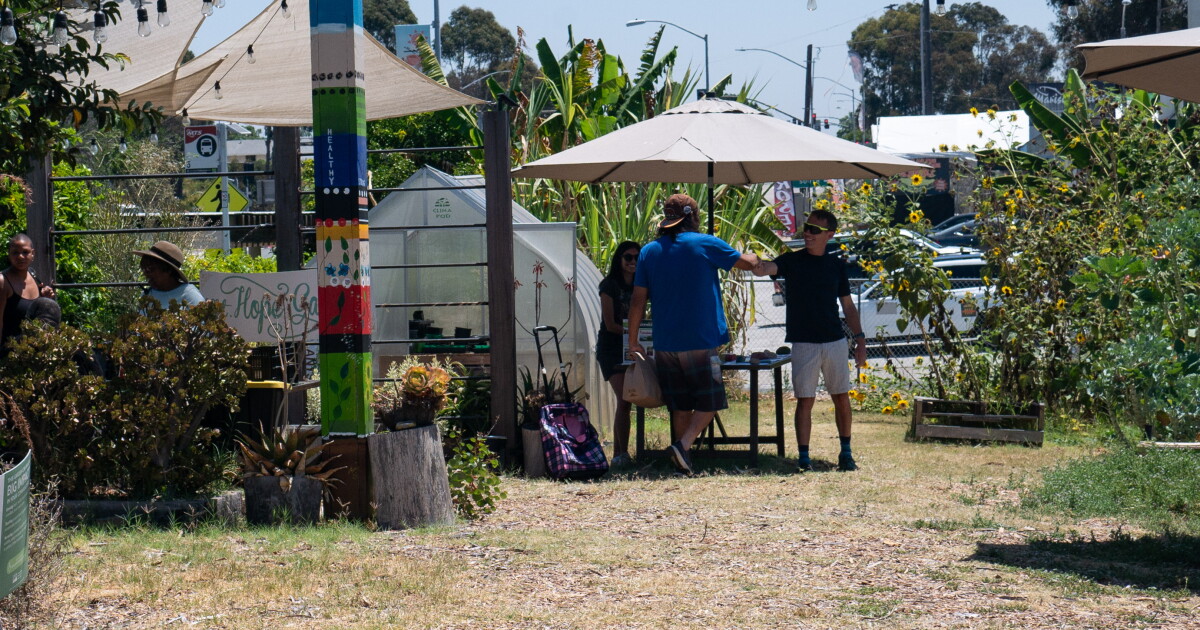
Community gardens in San Diego are helping families grow fresh food in neighborhoods where healthy options are hard to find. As of December 2025, more than 1 in 4 San Diegans face food insecurity. Project New Village runs Mount Hope Community Garden and a network of about 20 backyard growers supplying a mobile farmers market and weekly veggie box subscriptions. All produce is hyperlocal — grown within 60 miles — and shared collectively with the neighborhood.

A child's headache, dizziness and mental fog now stand out as the clearest concussion red flags
Researchers have found that headache and dizziness are the strongest signs a child has a concussion. A new study published in JAMA analyzed many earlier studies to identify which symptoms doctors should look for. Mental fog, nausea, sensitivity to light or noise, drowsiness, fatigue, and difficulty remembering also point to concussion. The study helps clinicians and bystanders recognize concussions faster so children can get proper care sooner.

Math model reveals how life may have switched on from Earth's primordial soup
Researchers at Yale University have created a mathematical model that may explain how life began on Earth nearly four billion years ago. Varun Varanasi, now a PhD student at Harvard, and Yale geophysicist Jun Korenaga found that the transition from chaotic molecules to organized, self-sustaining chemical networks was sudden—like flipping a light switch. Using Kauffman networks, they showed that the probability of such life-like structures appearing rose from zero to near-certainty.

Beneath this cemetery, 5.5 million wild bees form a giant underground city vital to spring pollination
Scientists at Cornell University have uncovered one of the world's largest wild bee aggregations hiding in plain sight at Ithaca's East Lawn Cemetery. An estimated 5.5 million regular mining bees nest in the 1.5-acre plot, with documented populations dating back to the early 1900s. The discovery highlights cemeteries as unexpected havens for biodiversity—places where peace, minimal pesticide use, and undisturbed ground create ideal habitat for pollinators.

Longer-term plankton species diversity is independent of ocean mixing, study finds
Scientists at the OCEANS Observatory near Oshima Island, Japan, spent 4 years studying plankton and ocean mixing. They found that long-term plankton diversity has no link to ocean turbulence—a surprising discovery. Instead, plankton variety synced with their daily vertical migration at night. The study tracked 33 types of organisms using high-tech sensors over 33 different time segments.
A Timeline of COVID-19 Vaccine Developments in 2021 | AJMC
The article provides a chronological overview of COVID-19 vaccine developments during 2021. It highlights that vaccination or intention to vaccinate increased by 14 percentage points among those surveyed. As pandemic cases rose week over week, pharmaceutical companies released clinical trial data demonstrating vaccine efficacy. The piece serves as a factual record of the vaccination rollout and the ongoing challenges of the pandemic during that year.

Museum fossil reveals that extinct giant echidnas once roamed Australia
Scientists have identified an extinct giant echidna fossil hiding in a museum collection for over a century. The specimen, found at Foul Air Cave in Buchan, Victoria, proves that Megalibgwilia owenii lived in southeastern Australia during the Ice Age. The echidna grew up to 1 meter long and weighed as much as a 4-year-old child. This discovery fills a gap of over 1,000 kilometers between previous finds across Australia.

What is the chance of a message in a bottle being found?
A cheerful 100-year-old message in a bottle was found on Australia's southwest coast. Written by a World War One soldier, it declared him "as happy as Larry." Scientists use this rare find to teach probability. German ocean experts estimate only a 1-in-10 chance that any message bottle will be discovered. Historical drift bottle experiments show recovery rates ranging from 5% in cold northern waters to 14% in the Gulf of Mexico.
Norway's 'Oslo patient' reaches HIV remission after rare stem cell transplant donated by brother
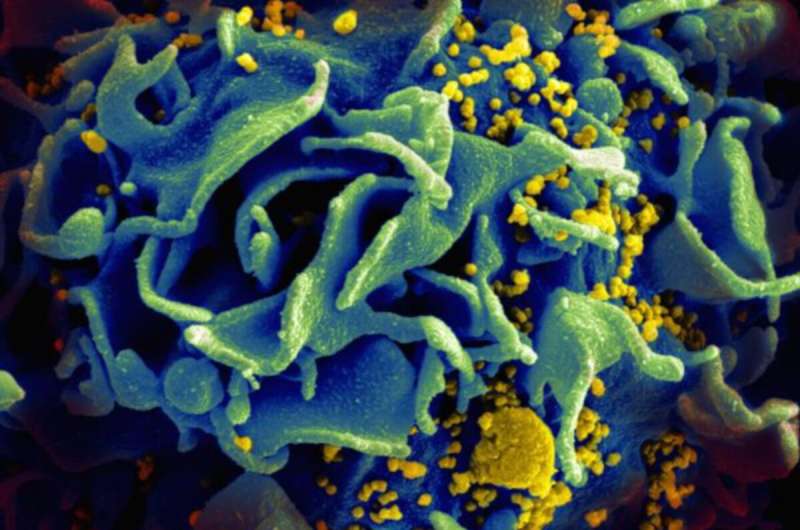
A Norwegian man has become the tenth person worldwide to achieve long-term remission from HIV after a stem cell transplant. The transplant came from his brother, who unknowingly carried a rare genetic mutation called CCR5 that blocks HIV from entering healthy cells. The 63-year-old, called the 'Oslo patient,' stopped taking antiretroviral drugs in 2022 and doctors found no trace of the virus in his blood, gut, or bone marrow. Anders Eivind Myhre at Oslo University Hospital said the patient no longer feels like a patient and is doing very well.

Unlocking unusual superconductivity in a lightweight element
Scientists at Penn State have engineered a new superconductor by stacking just three atomic layers of the lightweight metal gallium between two other materials. Normally, strong magnetic fields break apart the electron pairs that allow superconductivity, but this new sandwich structure avoids that problem. For the first time, a lightweight element showed a special type of superconductivity previously only seen in materials made from heavy elements. This breakthrough could enable more powerful quantum computers and faster electronics.

Feeling distracted? How hobbies can help you find 'flow state' and save your brain
Scientists say hobbies can help you reach "flow state"—a mental zone where you become so absorbed in an activity that stress and distraction fade away. This concept was developed by psychologist Mihaly Csikszentmihalyi, who found flow makes people want to continue an activity just for the joy of it. Neuroscience studies show flow suppresses the brain's "default mode network," the area responsible for self-doubt and anxious thoughts. Unlike hyperfocus (common in ADHD), flow is intentional and controlled, not something that just happens to you.
City leaders encourage West Philly High School students to vote and engage | Local News | phillytrib.com
City leaders are working to get young people excited about voting in Philadelphia. City Commissioner Omar Sabir and community groups brought the Philly Rises Youth Civic Engagement Tour to West Philadelphia High School. Students heard encouragement to use their voices through voting and community involvement. The initiative aims to build the next generation of engaged citizens.

France Moved First, But Markets Everywhere Are Signaling Electrification - CleanTechnica
France announced a major clean energy policy package that will double annual state support for electrification to €10 billion by 2030. The plan includes banning gas heating in new buildings from 2026, phasing out gas in 2 million social housing units by 2050, and targeting 1 million French-made heat pumps per year. European markets are already responding: EV registrations in Germany jumped 66-327% in March, while UK consumers drove EV leases up 85%, heat pump orders up 103%, and solar sales up 78% in a single month.

30-year Himalayan project shows power of community-led forest restoration
Researchers and local communities in India's Western Himalayas worked together for 30 years to restore degraded land. The project began in 1992 on a 28-hectare slope prone to wildfires. Today, 88 tree species are naturally multiplying, and the forest supports over 160 bird species and 100 butterfly species. The site, called Surya-Kunj (Sun-Grove), has become both a conservation area and a learning center, hosting over 60 workshops for 5,000+ students and researchers.
Is the moon more iron-rich than what we thought?
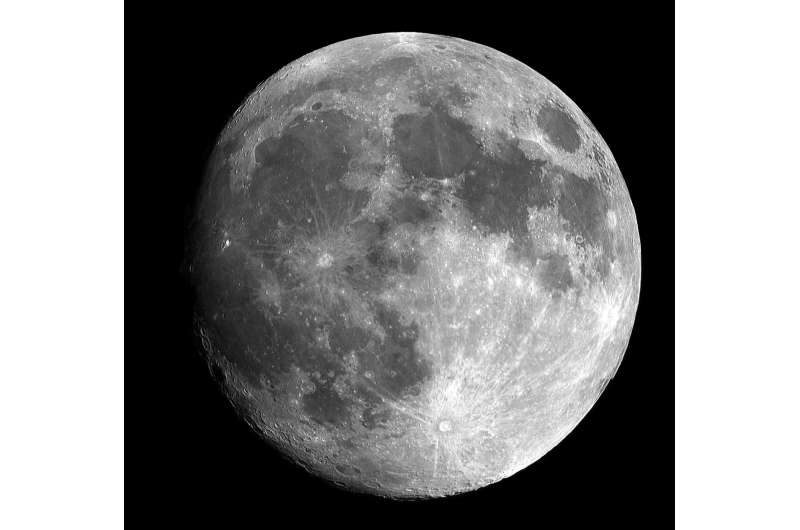
Researchers at Japan's Geodynamics Research Center found the Moon has more iron in its interior than scientists previously thought. Using ultrasonic tools and powerful X-rays at the SPring-8 facility, they measured how sound waves travel through lunar rock samples. Their model shows the Moon's upper mantle needs 20% iron content to match data from Apollo-era seismometers. This discovery also means the giant impact that formed the Moon may have involved a denser, more iron-rich object than expected.

A tiny twist and synthetic diamond put superconductivity on a switch, opening a new route to lossless electronics
Scientists at Ohio State University have discovered how to control superconductivity—the flow of electricity with zero energy loss—by attaching a specially twisted carbon material to a man-made diamond. By adjusting electron pair interactions, the team switched superconductivity on and off, which normally requires extreme cold. The discovery challenges conventional theory and could help engineers build faster, more efficient electronics.

Scientists uncover brain circuits for impulsivity
Researchers at Nanyang Technological University in Singapore found that three brain regions—the anterior insular cortex, posterior parietal cortex, and dorsomedial frontal cortex—each play different roles in controlling impulses. Using optogenetics (light to control brain cells), they showed that one region makes mice more impulsive when inhibited, while another makes them more patient, and a third helps with timing consistency.
Nandhaur Wildlife Sanctuary biodiversity gallery opens to support eco-tourism - Oneindia News
Tourists visiting Uttarakhand's Nandhaur Wildlife Sanctuary can now explore a new biodiversity gallery at two entry gates. The 269-square-kilometre sanctuary, established in 2012, is home to 37 tigers and many other species. The gallery uses clear visuals and panels to teach visitors about mammals, birds, butterflies, and reptiles. Officials say the space helps people understand biodiversity even when animals stay hidden during visits.

Young artisans certified for a greener future in Grand’ Anse, Haiti
In Grand' Anse, Haiti, 31 young artisans celebrated their graduation from a bamboo craftsmanship program on 28 February 2026. The four-month training, running from October 2025 to January 2026, taught participants to process bamboo into handmade products and use digital tools to promote small businesses. The project also established a 6,000 m² bamboo plantation introducing six new varieties suited for artisanal work and construction.