Latest News
Positive stories from around the world · Good news by country
Showing 35233–35256 of 37356 articles

Unlocking the hidden metabolism of algae to advance the promise of renewable fuels and sustainable biomass
Scientists in St. Louis have cracked a key puzzle about algae growth. They found that when microalgae get both light and a carbon source, they completely rewire their internal chemistry to grow far more efficiently. This matters because algae produce oil, protein, and other useful compounds up to 50 times faster than most land plants, yet can grow on land unsuitable for farming. The new understanding could finally make algae a practical source of renewable fuels and other bioproducts.

AI in Education Legislation: 2026 State Policy Trends | MultiState
In 2026, 31 US states passed 134 bills regulating AI in schools, showing a coordinated approach to managing new technology. States are prioritizing student data privacy, with California banning the use of student data to train AI models. Idaho requires local policies for AI use and prohibits AI from replacing human teachers. Meanwhile, Georgia and Mississippi are adding AI to graduation requirements, preparing students for a tech-driven future.
Estevao could be Brazil's World Cup's surprise - Davide Ancelotti
Chelsea's 18-year-old Brazilian winger Estevao has been tipped as a potential star at the World Cup by assistant coach Davide Ancelotti. The teenager joined Chelsea from Palmeiras last summer for an initial fee of £29m and has scored eight goals in 34 appearances this season. Estevao made his Brazil debut at 17 and became the first under-18 player in Brazil's top league to record a combined 20 goals and assists. Ancelotti said: "The guy that will surprise you is someone that is not so well known."

Integrative experiment design reveals hidden patterns in decades-old social science research
MIT researchers have unveiled a new method for designing social science experiments that can uncover hidden patterns. Called integrative experiment design, the approach tests multiple factors together instead of one at a time. In a demonstration study published in Science, researchers tested 14 variables across 360 conditions and found that punishment's effect on cooperation ranged wildly from harmful to helpful depending on context.

Nickel catalyst enables precision mirror-image assembly for key drug scaffolds
Prof. Sangwon Seo at DGIST in South Korea created a new nickel catalyst that builds key drug structures in just one mirror-image form. Mirror-image molecules are like left and right hands — they look similar but work differently inside the body. One form may heal, while its mirror twin could be useless or harmful. This new method uses inexpensive nickel instead of expensive metals. It achieved near-perfect precision in selecting the correct form, even in complex drug molecules.

AI model suggests CPAP can massively swing heart risk in sleep apnea
Mount Sinai researchers in New York created an AI tool that can predict whether CPAP therapy will help or harm individual sleep apnea patients. The machine learning model studied data from over 2,600 patients in the SAVE trial, using 23 health features to estimate treatment effects. The tool found that some patients experienced up to 100 times better heart health outcomes with CPAP, while others were predicted to be harmed.

There are no good ways to avoid childhood eczema but many treatment options, say researchers
The American Academy of Dermatology has released its first-ever guidelines for treating childhood eczema, a condition affecting up to 25% of children worldwide. Researchers found that popular prevention tactics — including special diets, probiotics, breastfeeding, and allergen avoidance — simply don't work.

Simple vineyard growing practice impacts soil microbiome deep below surface
Penn State researchers found that planting grass between vineyard vines changes tiny living things in soil all the way down to 1 meter deep, even though the grass roots stay near the surface. Grass roots grow only 6 to 12 inches down, while grape roots go much deeper. But the microorganisms in deep soil responded to the grass roots growing far above them. This discovery at the Russell E. Larson Agricultural Research Center could change how vineyards worldwide manage their soil.
Rose moves into contention with birdie on the 13th
This brief sports item reports that golfer Rose made a birdie on the 13th hole, moving into contention in a tournament. However, this is routine sports coverage without geographic specificity (no tournament or location named) and does not fit Meridia's mission. The atlas focuses on progress toward social, environmental, health, and rights issues worldwide—not general sports achievements. The article title and content are identical, suggesting it's a minimal sports ticker update rather than substantive news.

Surprising finding in the eye may explain how we see in low light
Yale School of Medicine researchers uncovered a surprising mechanism in how our eyes process visual information. Previously, scientists thought different visual channels stayed separate as they traveled through the visual system. However, the study found that electrical synapses actually integrate these channels together. A specific type of bipolar cell called BC6 drives this signaling hierarchy. This integration may help our eyes process weak visual signals in dim lighting conditions.
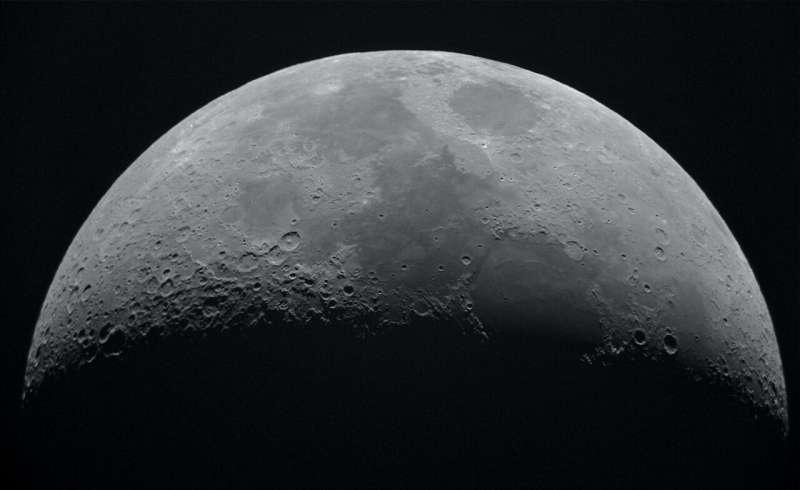
How NASA's Artemis II mission rediscovered the majesty and mystery of the moon
Artemis II marked the first time humans visited the moon's vicinity since the Apollo era. Four astronauts—Reid Wiseman, Victor Glover, Christina Koch, and Jeremy Hansen—traveled farther from Earth than anyone in history, reaching 252,756 miles from our planet. Flying 4,067 miles above the moon's far side, they saw a landscape completely different from what we see from Earth: heavily cratered with few smooth lava plains.

CPR goes high-tech: Transesophageal echocardiography turns blind compressions into precision hits
Researchers at National Taiwan University have completed the world's first randomized clinical trial testing a new CPR technique. Called transesophageal echocardiography (TEE), it uses a special ultrasound probe to see inside the chest in real time. This lets doctors guide chest compressions precisely to the heart, rather than using the traditional "feel and guess" method. The trial of 132 cardiac arrest patients showed the TEE group had better blood flow markers, though larger studies are still needed.

Google AI for Education Accelerator has 400+ schools
In under a year, more than 400 higher education schools across every US state joined Google's free AI training program. Students and faculty get access to the Google AI Professional Certificate, which teaches real AI skills that employers want. The certificate is one of the first AI programs approved for college credit by the American Council on Education. Big schools like the University of Texas System and Vanderbilt are already putting these free resources to work.

Why Sal Khan is rethinking how AI will change schools - Chalkbeat
Sal Khan, founder of Khan Academy, admits his AI-powered tutor Khanmigo failed to spark the learning revolution he predicted. Three years after launch, he acknowledges the tool was 'a non-event' for most students — most never bothered to use it. Teachers report students prefer using AI to find answers rather than learn, raising cheating concerns. Khan now calls AI 'part of the solution; not the end-all and be-all' for schools.

AI diffusion models tailor drug molecules to custom-fit protein targets, speeding drug development and evaluation
Scientists at the University of Virginia created three AI tools to design new drugs faster. The main tool, YuelDesign, uses smart AI called diffusion models to create drug molecules that fit proteins even as those proteins wiggle and change shape. Currently, 90% of drugs fail in human testing partly because old methods treat proteins as frozen. This new approach could help patients with cancer, brain disorders and other conditions where better drugs are desperately needed.

Why autism affects more men than women—MDGA1 gene mutation may help explain
Researchers found that MDGA1 gene mutations disrupt the balance of brain neural circuits, leading to autism-like behaviors. Interestingly, female mice were protected because estrogen signaling shields their brains from these circuit abnormalities. When scientists gave bazedoxifene, an FDA-approved drug, to male mice with the mutation, their autism-like behaviors returned to normal. This study not only identifies a new cause of autism but also explains the gender bias and suggests a potential treatment.

Could we actually terraform Mars? A new scientific roadmap lays out the blueprint—and the risks
Scientists at the University of Chicago have published a paper exploring how we might terraform Mars. The three-stage roadmap proposes greenhouse domes made of silica aerogel, massive orbital mirrors to reflect sunlight, and specially engineered nanoparticles released into the atmosphere. Each approach faces major challenges: current solar sails are too heavy, and 3 million tons of nanoparticles would be needed. The paper focuses on analyzing whether terraforming is feasible rather than advocating for whether we should attempt it.
Fury takes aim at heavyweight rivals
Tyson Fury is making his return to professional boxing after a 16-month break from the sport. The British heavyweight will fight Russian Arslanbek Makhmudov at Tottenham Hotspur Stadium in London. This marks Fury's first fight since his last bout, with the event announced at a Thursday news conference in the capital.

A pocket-sized personal trainer: AI-written texts aim to get older adults moving
Researchers at the University of Michigan and Penn State tested AI-generated text messages encouraging older adults to move more. They asked 630 adults aged 40+ to rate nearly 50,000 messages. About 94-95% of ratings said the messages were appropriate and high quality. The study found that knowing a message came from AI, and how someone feels about AI in general, affects how they judge it. Messages that felt too generic—like suggesting dancing for people who don't dance—got lower scores.

How an internal plant 'thermostat' guides root growth in unpredictable temperatures
Scientists at the Salk Institute in California made a surprising discovery about how plants survive temperature changes. They found that proteins called ARF (Auxin Response Factor) proteins act as tiny thermostats inside plant cells. When it's cool, these proteins cluster together in storage. When it gets warmer, they break apart and move into the cell's control center to turn on growth genes. This lets plants adjust root growth without making new proteins, which is much faster.

Designing cities: Should we build from scratch or keep history alive?
Urban historians study how cities show layers of history like old writing beneath new text. This 'palimpsest' approach honors memory, unlike the 'blank slate' method that clears everything away. But the article warns that even after demolition, forces like politics and money still shape the space. Scholars argue that understanding history helps planners build better places for people.

Somatostatin in brain regulates immune cells to mitigate dementia, opening path for treatment with existing drugs
Scientists at DGIST in South Korea found that somatostatin, a brain chemical, can control immune cells in the brain to fight Alzheimer's disease. When somatostatin levels were raised in mice with Alzheimer's, their brain immune cells stopped causing harm and started protecting brain cells again. The mice showed less inflammation, fewer harmful plaques, and better memory. The study is exciting because drugs already approved for other conditions might work for dementia too.

'Cuddle therapy' sounds like what we all need right now. But will it actually help?
Cuddle therapy involves booking sessions with a professional cuddler for consensual, non-sexual touch in a safe environment. Providers claim it can reduce depression, anxiety, loneliness, and even PTSD symptoms. However, no peer-reviewed studies directly examine cuddle therapy's effects. Research does support benefits of physical touch in close relationships, like triggering oxytocin release, but it's unclear if these findings apply to paid cuddling services.

Carbon nanotube fiber sensors achieve record measurement error below 0.1%
Scientists at Skoltech in Russia have built tiny sensors from carbon nanotube fibers that are far more accurate than existing ones. These new sensors can track materials while they're being made and also after they're finished, something current sensors cannot do. The sensors made only 0.1% error in tests, compared to 2% for commercially available sensors. This breakthrough could make manufacturing safer and more reliable.