Latest News
Positive stories from around the world · Good news by country
Showing 35281–35304 of 37356 articles

New mahogany species found in Zanzibar — but fewer than 30 trees remain
Scientists discovered a new mahogany tree species on Pemba Island, Zanzibar, growing along a 200-meter stretch of beach visited by thousands of people yearly. Named Afzelia corallina after the fossilized coral beds where it grows, fewer than 30 trees remain, making it critically endangered. The trees produce sweet-smelling flowers but face threats from illegal timber poachers — one was already felled and two were toppled by storms.
Oliver and Taylor selected as World Cup referees
England will send six referees to the 2026 World Cup, including Premier League officials Michael Oliver and Anthony Taylor, who both previously officiated at the 2022 tournament in Qatar. Six female match officials have been selected for the expanded 48-team tournament, maintaining the representation that began at Qatar 2022. For the first time, referees will wear body cameras during matches, with a 10-day preparation seminar planned in Miami before the tournament begins on 11 June.

Mammal ancestors laid eggs—and this 250-million-year-old fossil proves it
A 250-million-year-old fossil egg containing a Lystrosaurus embryo has been discovered in South Africa. This is the first egg ever found from a mammal ancestor, proving they reproduced by laying eggs rather than giving birth. The fossil shows the baby animal's lower jaw had not yet fused together, meaning it couldn't have fed itself after hatching. Scientists used advanced X-ray technology at the European Synchrotron in France to study the delicate fossil without breaking it open.

Brain tumors: 3D experimental system to evaluate candidate drugs against glioma
Italian scientists have created a new 3D experimental system to study pediatric low-grade gliomas. Researchers at the University of Trento grew miniature brain organoids from stem cells and used them to model tumor growth. These organoids let scientists study how gliomas develop and test candidate drugs in a more realistic setting. The system still lacks blood vessels and an immune system, limiting how fully it can replicate human biology.
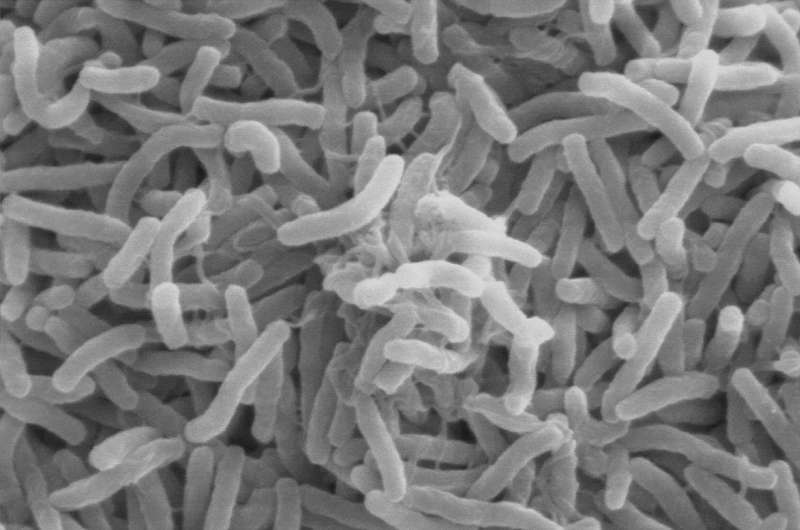
Keeping up with the phages: How V. cholerae neighbors swap defenses against viruses
Scientists at EPFL in Switzerland discovered that Vibrio cholerae bacteria can gain immunity by absorbing DNA from their surroundings. When viruses kill neighboring bacteria, their DNA floats free in water. Living bacteria can grab these gene fragments and add them to their own genetic arsenal. The researchers grew bacteria on crab shells to study this natural competence, showing how bacteria share defenses across generations. This discovery published in Science helps explain how bacteria adapt to fight ever-changing viral threats.

Northeast farmers could profit from grass-fed beef if they expand, join forces
Cornell University researchers published a study in Agricultural Systems showing that grass-fed beef can be profitable for Northeast farmers. The team surveyed 31 farms across the region and found that scaling up operations or forming cooperatives could cut production costs by 24%. Currently, only 43% of available pastureland is used, and most grass-fed beef is imported from Australia—creating room for regional farmers to profit while meeting rising consumer demand for sustainable, locally-produced food.
Without the right tests, the best medicines make no difference
Medical tests that help doctors choose the right treatments are being ignored in healthcare systems around the world. Researchers from UC San Francisco say nearly half of all people cannot get these important tests. The problem is made worse because test developers receive less money for research and insurance companies pay for tests differently than for drugs. Experts say policies need to change so tests and drugs are evaluated together.

Oxygen sensing helps explain why amphibians regenerate limbs but mammals cannot
Scientists have solved a long-standing mystery about limb regeneration. A team led by Can Aztekin compared amputated limbs from frog tadpoles and mouse embryos in the lab. They found that the way cells sense oxygen determines whether regeneration can begin. In low-oxygen conditions, mouse embryo cells closed wounds faster and started a regenerative program. The key protein is HIF1A, which acts as an oxygen sensor. Amphibians keep this protein active across all oxygen levels, while mammals quickly switch it off after injury.
Slice and dice
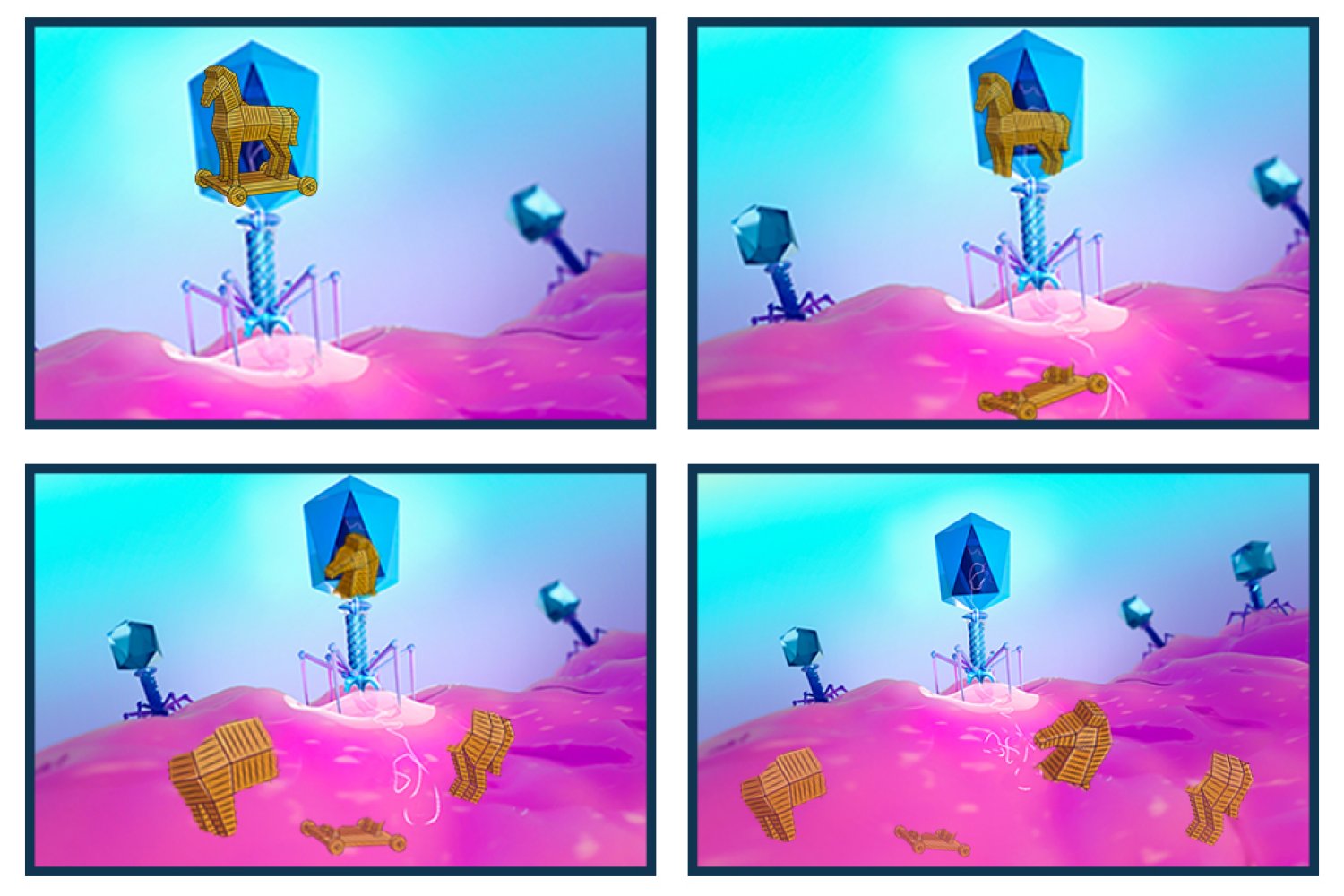
MIT researchers have uncovered SNIPE, a new bacterial defense system that acts like a molecular immune system for bacteria. When bacteriophages (viruses that infect bacteria) try to invade, SNIPE locates to the bacterial membrane and shreds the viral DNA into useless pieces before it can hijack the cell. The researchers called it "god-tier protection" because it was so effective that fluorescent markers showed no viral DNA penetration at all.

Learning with audiobooks
MIT researchers tested how well audiobooks help students learn vocabulary. They found that students who listened to audiobooks did gain new words. However, struggling readers learned the most when audiobooks were combined with explicit tutoring from trained college students. The study used a randomized, controlled design — one of the few rigorous tests of educational technology. The findings suggest that technology alone may not be enough; human support makes a big difference for students who need it most.
A philosophy of work
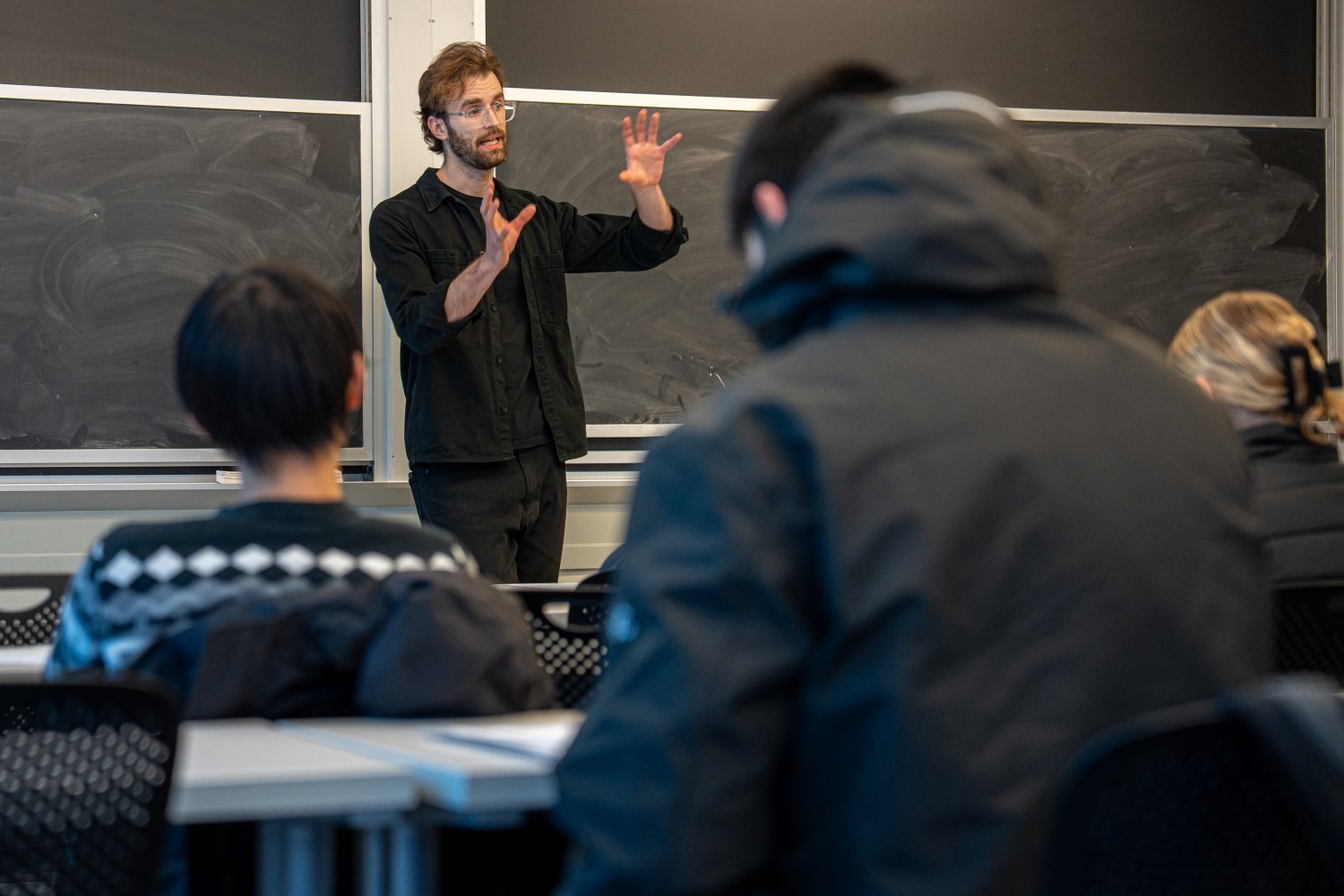
Michal Masny, a postdoctoral fellow at MIT's Department of Philosophy, studies what makes work meaningful in human life. His research argues that work provides benefits beyond a paycheck — it helps people develop excellence, contribute socially, gain recognition, and build community. Masny teaches ethics of technology and advocates for bridging the gap between scientists and philosophers. The NC Ethics of Technology Fellowship, supported by the NC Cultural Foundation, aims to advance ethical thinking in technology development.
Lowry holes out for an eagle on the 13th at Augusta
Irish golfer Shane Lowry pulled off an impressive feat during the opening round of The Masters at Augusta National. He holed out from 99 yards on the par-five 13th hole, recording an eagle—one of the best shots in golf. Lowry was competing against the world's top players at the prestigious tournament in Georgia. This type of shot, where a player finishes the hole two strokes under par, is considered an exciting moment in the sport.

Earlier ADHD diagnosis linked to better education
A major study 580,132 20, 16, 20:,,,
IDC, DBSA Strengthen Ties as South Africa Seeks Private-Sector Led Renewables Growth
South Africa has set an ambitious target of 56,000 MW of new renewable energy capacity by 2034. The Industrial Development Corporation (IDC) and the Development Bank of Southern Africa (DBSA) are strengthening their partnership to support this goal. Their joint projects will focus on Special Economic Zones, attracting private investment to expand clean energy infrastructure. This collaboration aims to strengthen grid stability while accelerating the country's transition away from fossil fuels.

Mathematical signature spots when competition is fair, winner-take-all, or too soft
A University of Houston computer science professor has developed a new mathematical model that can identify whether competitive environments are fair, overly dominated by a few winners, or too soft. The model works by studying the statistical patterns of repeated successes and figuring out what kind of competition produced them. The research analyzed three different domains: Olympic athletes, scientists competing for research funding, and WWII fighter pilots.

Scientists unveil breakthrough tool that could help stop the world's third‑biggest driver of deforestation
Scientists at Kew Gardens, World Forest ID, and the University of Sheffield have built a tool that can pinpoint where soybeans were grown to within roughly 200 kilometers. By analyzing chemical signatures in 267 soybean samples across South America and feeding them into a machine-learning model, the team can now verify crop origins far more accurately than before. This matters because soy is the third-largest driver of tropical deforestation, yet tracing it has been nearly impossible due to complex global supply chains.

Flu treatment shields lungs, cuts pneumonia risk
Researchers have developed a new flu treatment that protects against both severe flu and the secondary bacterial infections that often follow it. The synthetic peptide LAT9997, derived from human growth hormone, blocks the flu virus from spreading while helping lungs maintain their protective lining. Just two doses administered into the airways provided long-lasting protection with no observed side effects in pre-clinical trials.

Families | Foundation For The Homeless | Austin
Foundation for the Homeless serves Central Texans experiencing hunger, homelessness, and poverty. Based in Austin, the organization offers hot breakfast, showers, AA meetings, and a clothing closet. Their rapid re-housing program specifically helps families with minor children find stable homes. The nonprofit commits to non-discrimination and welcomes applicants with lived experience of hardship.
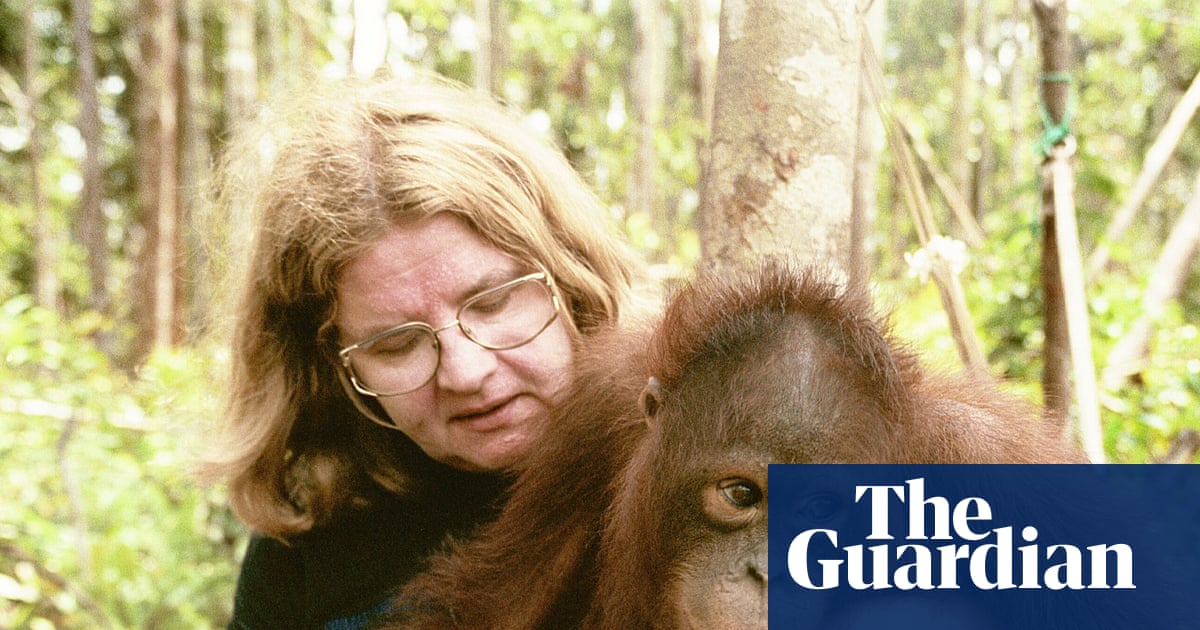
Biruté Galdikas obituary
Biruté Galdikas, who has died aged 79, spent over 50 years studying orangutans in Borneo, Indonesia. Her patient observations from 1971 onward transformed scientists' understanding of these great apes. She showed they have the longest birth interval of any land mammal (7-8 years), act as essential 'gardeners of the forest' by distributing seeds, and are not strictly solitary. Her work also revealed that orangutans use tools and show cultural variations across populations, challenging the view that such behaviors were exclusively human.

How our research led to a privacy complaint that pushed the World Anti‑Doping Agency to change its rules
Canadian researchers filed a privacy complaint that led the Privacy Commissioner of Canada to rule against the World Anti-Doping Agency. The investigation found that WADA violated privacy law by sharing athletes' doping data with international sport federations for sex-testing. WADA, based in Montréal, must now ensure doping data is used only for anti-doping purposes. The ruling is expected to reshape sex-testing policies in women's sport and protect athletes from improper data sharing.

How surface chemistry impacts the performance of malaria nets
Researchers at the University of Liverpool and Liverpool School of Tropical Medicine have created a new way to test malaria-preventing bed nets. They discovered that the same amount of insecticide can perform very differently depending on how it's arranged on the net surface. PFAS-free nets (used since 2014) were found to have larger, uneven insecticide particles compared to older nets with PFAS coatings. The difference was most noticeable in mosquitoes resistant to insecticides.

Artemis II crew will endure 3,000°C on re‑entry. A hypersonics expert explains how they will survive
The Artemis II astronauts are preparing for the most dangerous part of their moon mission: returning to Earth. Their Orion capsule will slam into the atmosphere at 40,000 km/h, creating temperatures of 10,000°C — twice as hot as the sun's surface. The extreme heat turns air into electrically charged plasma, briefly cutting off radio contact. But the spacecraft's design uses lift to slow the descent gently, keeping g-forces survivable for humans. The crew holds the record for the farthest human journey from Earth at 406,771 km.

A year after forgiving, people report stronger mental health and pro-social character
Harvard researchers studied over 200,000 people across 22 countries for one year. They found that people who habitually forgive others tend to feel happier and less depressed. The study also found gains in positive character traits like gratitude and a drive to do good. However, the strength of these benefits varied by country. South Africa showed high forgiveness rates, while Japan and Turkey showed lower levels.

No more giants, no more heavy handaxes: Why early humans downsized their stone tools
For over a million years, early humans in the Levant relied on heavy tools like handaxes and stone balls to process giant animals. Researchers at Tel Aviv University studied 47 archaeological sites and found that when megaherbivores (animals over 1,000 kg) disappeared around 200,000 years ago, humans adapted by switching to lighter tools like blades and scrapers. This challenges the idea that humans simply became smarter—instead, tool changes followed changes in available prey.