Latest News
Positive stories from around the world · Good news by country
Showing 35641–35664 of 37354 articles

Treating tumors independently of oxygen: Photodynamic therapy uses hydrogen peroxide instead
Photodynamic therapy treats cancer by injecting an inactive drug that light activates inside tumors. The activated drug creates reactive oxygen species that destroy cancer cells. But this fails in tumors lacking oxygen, which is common in fast-growing cancers. Researchers have found a workaround: using hydrogen peroxide to produce the cell-killing molecules instead. This breakthrough could let doctors treat tumors previously considered untreatable with this method.

Treating previously untreatable cancers: How CAR‑T cell therapy could be made accessible to more patients
CAR-T cell therapy represents a major breakthrough in cancer treatment. The therapy works by modifying a patient's own T cells — important immune cells — to better recognize and attack cancer. What was once considered incurable can now potentially be treated with this method. Researchers are focused on making these powerful treatments available to more patients who need them.
Sixteen new START.nano companies are developing hard-tech solutions with the support of MIT.nano
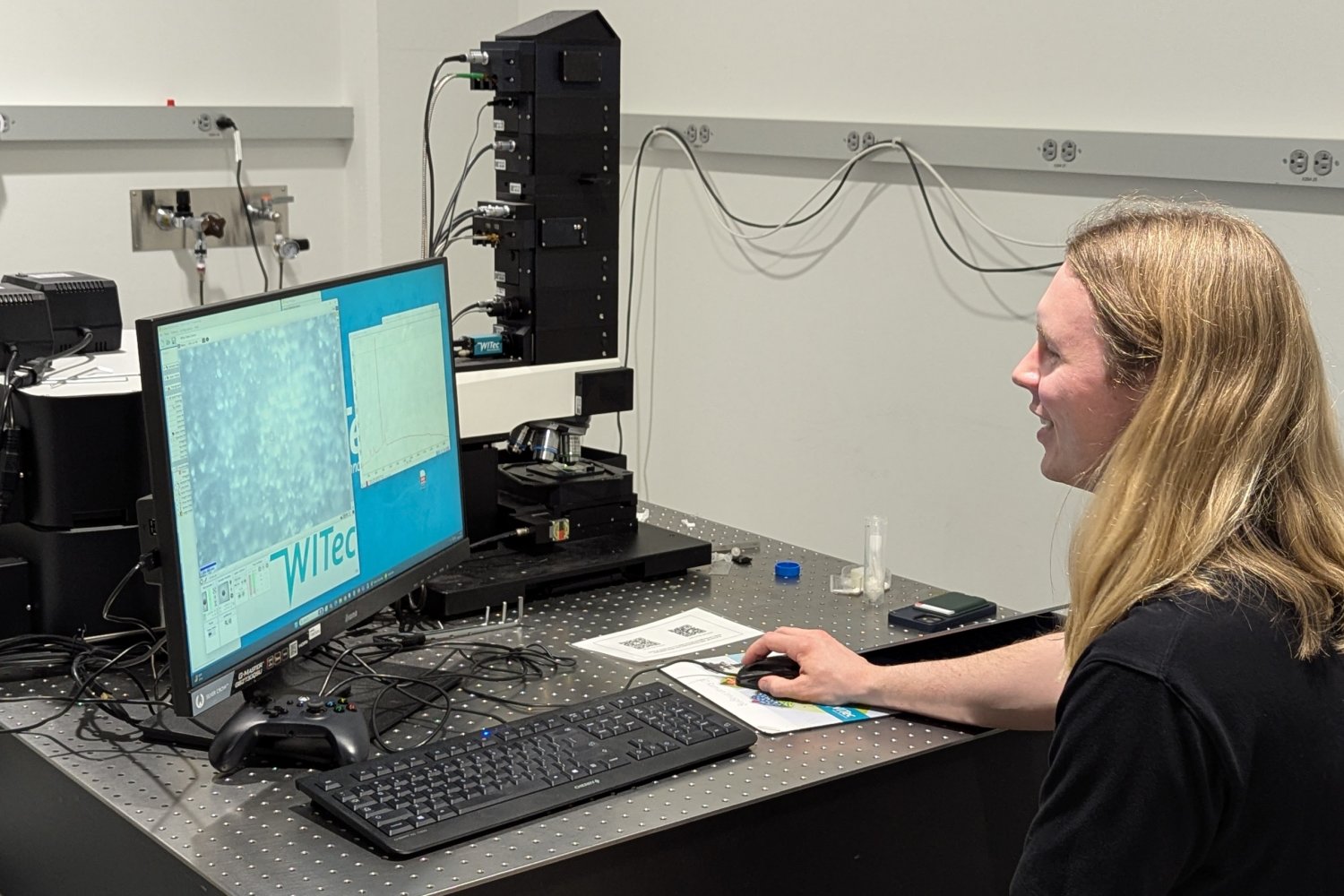
Sixteen startups joined MIT's START.nano program in 2025 — more than double the previous year's total. The program gives these companies discounted access to shared labs and MIT's innovation network. These hard-tech ventures are working on solutions for health and climate challenges.

Phengite identified as key carrier of halogens into Earth's deep mantle
A team led by Prof. Wang Yu from the Chinese Academy of Sciences found that phengite, a mineral common in subduction zones, can transport halogens like fluorine and chlorine to depths of about 330 km. Their experiments showed phengite remains stable up to pressures of 11 gigapascals and temperatures of 1,050°C. The findings explain how these chemicals reach the deep mantle despite previous models suggesting they would be released at shallower depths. This research also helps explain the salty fluids found inside deep diamonds.

A big step toward safe, reversible male contraception
Scientists at Cornell University have developed a promising male contraceptive that achieved 100% effectiveness in mouse trials. By targeting a specific checkpoint in meiosis—the cell division process that creates sperm—the researchers created a nonhormonal method that completely stops sperm production. When treatment stopped, sperm production returned to normal and offspring were completely healthy. This six-year study, published in the journal PNAS, shows a new path toward safe, reversible male birth control for humans.

How stem cell descendants preserve flexibility while maintaining distinct identities
Researchers at Whitehead Institute have uncovered how stem cells maintain flexibility while their descendants develop distinct identities. Studying male fruit fly germline stem cells, they found that stem cells and their immediate descendants share identical RNA molecules—but only stem cells continue producing new RNA. This means the descendants inherit the molecular legacy of their stem cell parents but follow their own path.

What this AI epitope library means for vaccines, immunotherapy and biosensors
CIC biomaGUNE in Spain has created epiGPTope, an AI tool that speeds up the search for useful protein fragments called epitopes. These fragments teach our immune system to recognize threats like viruses, so finding the right ones faster means faster vaccine and drug development. The system uses machine learning to generate and sort hundreds of thousands of synthetic epitopes, replacing slow lab work with quick computer analysis.

Nearly 29,000 genetic 'switches' found unique to East Asian populations
Researchers have mapped genetic regulatory elements in East Asian populations, finding nearly 29,000 unique markers linked to complex diseases. This large dataset helps fill a critical diversity gap in genetics research. For years, most genetic studies focused on people of European ancestry, leaving other populations less understood. This work now enables more fair and accurate genetic discoveries that can benefit people worldwide.

Scientists test new ways to regrow joints damaged by arthritis
Scientists are testing new methods to regrow joint cartilage damaged by arthritis. Early research shows promising results for millions of people suffering from joint pain. Arthritis causes stiffness and pain when protective cartilage wears down over time. If successful, this could offer a new treatment path for patients worldwide.
Celtic lift suspension of Green Brigade fans group
Celtic Football Club has announced the lifting of the Green Brigade supporters group suspension, effective immediately for Saturday's home match against St Mirren. The Green Brigade, an organized group of Celtic fans known for their vocal support and tifo displays, had been suspended from attending matches. The reinstatement means members can return to Celtic Park to support the team. No reasons for the original suspension or its lifting were provided in the brief announcement.

A French city cut its marine pollution — and its seagrass bounced back
Neptune grass meadows have made an extraordinary comeback in the waters off Marseille, France. The recovery took place over four decades after France strengthened environmental regulations in the 1980s. Researchers at GIS Posidonie, a marine research group, say the seagrass—home to up to 25% of Mediterranean marine species—is also the world's champion at storing carbon. The study shows the power of passive restoration: remove pollution and other threats, and nature can heal itself.
Rahm confident he will play at 2027 Ryder Cup
Jon Rahm, a Spanish professional golfer, has said he is confident he will play for Europe at the 2027 Ryder Cup. The Ryder Cup is a prestigious golf competition between teams from Europe and the United States. However, Rahm is currently ineligible to play due to his move to LIV Golf. He remains hopeful about meeting the requirements to represent Europe next year.

Parabolic flight test shows lasers can propel graphene aerogels in microgravity
Scientists tested graphene aerogels on a parabolic flight—a gravity rollercoaster that creates brief weightlessness. When lasers hit the ultralight material, they generated enough push to potentially steer spacecraft. The test brings solar sail technology closer to reality, offering a way to navigate space using only light. This could change how satellites adjust their orbits without needing traditional fuel.

Teeing up good health: Tips for preventing golf injuries
Golf injuries are a common concern for players of all levels. Unlike acute injuries seen in professional sports headlines, most golf injuries develop gradually over time. The good news is these overuse injuries are largely preventable. Experts recommend three main strategies: thorough warm-up before playing, regular strength training, and maintaining proper swing mechanics to reduce stress on the body.

Indigenous leaders say, ‘secure forest financing with us, not for us’ (commentary)
Indigenous leaders across Brazil, Costa Rica, and Ecuador are demanding a real say in how forest carbon money is spent. They argue that climate programs must be built with communities, not just for them. In Brazil's Pará state, traditional forest communities are taking part in the largest REDD+ consultation effort ever attempted in the country, with nearly 1,000 communities now involved. The leaders say programs that include genuine community participation will be more credible and durable for climate buyers.

3D microscopy reveals how a tick-borne virus reshapes human cells to replicate
Researchers at Umeå University in Sweden made a breakthrough discovery about tick-borne viruses. Using advanced 3D microscopy, they watched in detail how these viruses reshape human cells to create more viruses. The scientists found exactly how the virus copies itself and grows inside cells. This new knowledge could help researchers develop better treatments for tick-borne encephalitis, a dangerous brain infection spread by tick bites.

This new method may make French fries lower in fat
Scientists have developed a potential new method to reduce fat content in French fries while preserving their signature crunch. This could be good news for fry lovers watching their fat intake. The research focuses on modifying the frying process or coating technique to achieve a healthier result without sacrificing taste or texture. More details about the exact method would be needed to understand how it works in practice.

WHO and France shift One Health vision to action with new high-impact initiatives
WHO and France brought global leaders together in Paris for the One Health Summit on World Health Day 2026. The event launched a new Global Network of One Health Institutions to help countries prevent health crises before they start. About 60% of human diseases originate in animals, making cross-sector cooperation essential. The summit also extended the One Health High-Level Expert Panel to guide scientific action worldwide.

New spider species in the Amazon mimics parasitic fungus
Scientists in Ecuador have discovered a new spider species that copies the look of a deadly fungus. The spider, called Taczanowskia waska, looks so much like a fungal growth that researchers initially mistook it for a mushroom during a nighttime expedition. This is the first time any spider has been documented mimicking this type of fungus. The discovery was made possible by ordinary people reporting sightings on the iNaturalist app, showing how citizen science helps reveal Earth's hidden biodiversity.

Can We Bring Back the Butterflies?
This winter, volunteers counted only about 12,000 western monarch butterflies along California's coast, the third-lowest in 30 years. That's a drop from roughly 4.5 million in the 1980s — a decline of more than 99 percent. Scientists say the collapse comes from habitat loss, pesticide use and climate change. Monarchs survive winter by clustering in coastal groves like Pismo Beach, forming tight groups in trees while entering a resting state until spring.
'I don't want to give it up!' - McIlroy on Green Jacket
Rory McIlroy, the defending Masters champion from Northern Ireland, sat down with BBC Sport NI's Stephen Watson to discuss his upcoming return to Augusta National. The interview captures his reflections on what it means to return to the famous Georgia golf course as the defending champion. McIlroy's comments suggest he's focused and motivated to compete at the highest level once again.

Social honey bees stay cool: How groups mitigate heat-triggered hormone spikes
Researchers at Michigan State University discovered that isolated honey bees experience rapid hormonal spikes when exposed to heat, while bees kept in groups stay stable. Entomologist Zachary Huang led the study, which focused on how social conditions affect bees' stress responses. The findings highlight how chemical signals and group living help bees manage environmental challenges. This research adds to our understanding of bee biology and what helps these important pollinators survive.

New study finds a missing link in how the brain regulates appetite
Researchers have uncovered a new way the brain controls hunger. When we eat, specialized cells called tanycytes detect rising blood sugar and release a substance called lactate. This lactate is picked up by astrocytes, brain cells once thought to only support neurons. The astrocytes then send signals to neurons that tell us to stop eating. This discovery, published in the Proceedings of the National Academy of Sciences, challenges the old view that only neurons control appetite.

Singapore’s First 3D-Printed Bridge Planned for 2028 After Rigorous Testing
Singapore will soon have its first 3D-printed concrete bridge. The bridge will stretch 30 feet across a waterway in the Jurong River area. Transportation officials chose this method after rigorous testing. It is part of a larger project to improve transit options in that part of the city-state.