Latest News
Positive stories from around the world · Good news by country
Showing 35713–35736 of 37354 articles

Reducing risks when modernizing packaging
Researchers at Adelaide University's Ehrenberg-Bass Institute studied what makes packaging redesigns succeed or fail. The study surveyed shoppers in the US and UK, finding that 58% of marketers modernized packaging recently. However, the research warns that removing familiar visual elements like colors or logos can weaken how consumers recognize and buy products. Real-world examples prove this risk: Tropicana's 2009 redesign cut sales by 20%, and Bahlsen's 2021 redesign caused a 12% sales decline despite winning a D&AD award.

Mongabay launches Solutions Desk to track what works for the planet
Mongabay, a major environmental news outlet, has launched a new Solutions Desk to focus on what works in nature conservation and climate action. Instead of just reporting problems like extinctions and habitat loss, the desk will rigorously evaluate which environmental approaches actually succeed and why. The team includes six staff members and a dedicated solutions researcher to fact-check claims before publication.

Artemis II crew describe ‘overwhelming’ emotions after soaring past the moon
Nasa's Artemis II astronauts have successfully completed their lunar flyby, capturing stunning images including Earthrise, a solar eclipse, and the 950km-wide Orientale impact basin. The four-person crew—Christina Koch, Victor Glover, Reid Wiseman, and Jeremy Hansen—worked in pairs to document the moon's surface during a 40-minute communication blackout when they were farthest from Earth and closest to the moon.

A layered approach sharpens brain signals in optical imaging
Scientists have improved a brain-scanning method called functional near-infrared spectroscopy (fNIRS). This technique tracks brain activity without surgery or radiation by sending light through the scalp and measuring how it scatters back. A new layered analysis approach helps separate brain signals from interference caused by the scalp and skull. The improvement could make brain imaging more accurate and accessible.

Early signs of cognitive decline can be detected in middle-aged and older adults with problem alcohol use
Scientists have shown they can spot cognitive decline linked to heavy alcohol use even before full dementia sets in. The research, published in the journal Alcohol: Clinical and Experimental Research, found that alcohol use disorder is a risk factor that can be changed. This means doctors could potentially help patients take action before memory and thinking problems worsen. The findings open a window for early treatment in middle-aged and older adults.

New Artemis II 'Earthset' shot revisits Apollo 8's iconic 'Earthrise,' 57 years on
NASA's Artemis II crew captured a stunning 'Earthset' photo—Earth slipping below the Moon's horizon—on their historic lunar flyby. The four astronauts (Reid Wiseman, Christina Koch, Victor Glover, and Jeremy Hansen) broke the Apollo 13 distance record, traveling 252,756 miles from Earth. Glover became the first person of color to orbit the Moon, Koch the first woman, and Hansen the first non-American. The crew also witnessed a solar eclipse and named two Moon craters, 'Integrity' and 'Carroll,' in tribute to their spacecraft and a loved one.

Body-focused mind-wandering associated with better mental health outcomes, finds new study
A new study published in April 2026 explores how people direct their attention during rest. Most research on mind-wandering has focused on thoughts about the past, future, or other people. This study breaks new ground by examining body-focused mind-wandering — attention turned inward toward physical sensations like breathing, heartbeat, and other bodily feelings. The findings suggest this type of inward attention is associated with better mental health outcomes.

Tech can enable cross-species experiences, new research suggests
Scientists have found a new way for lemurs and humans to connect. The research shows that zoo animals can share control of technology with visitors, allowing them to experience sensory interactions together. This sharing of control creates more meaningful bonds than passive viewing. The study suggests this approach could transform how people connect with animals in zoos and other settings.
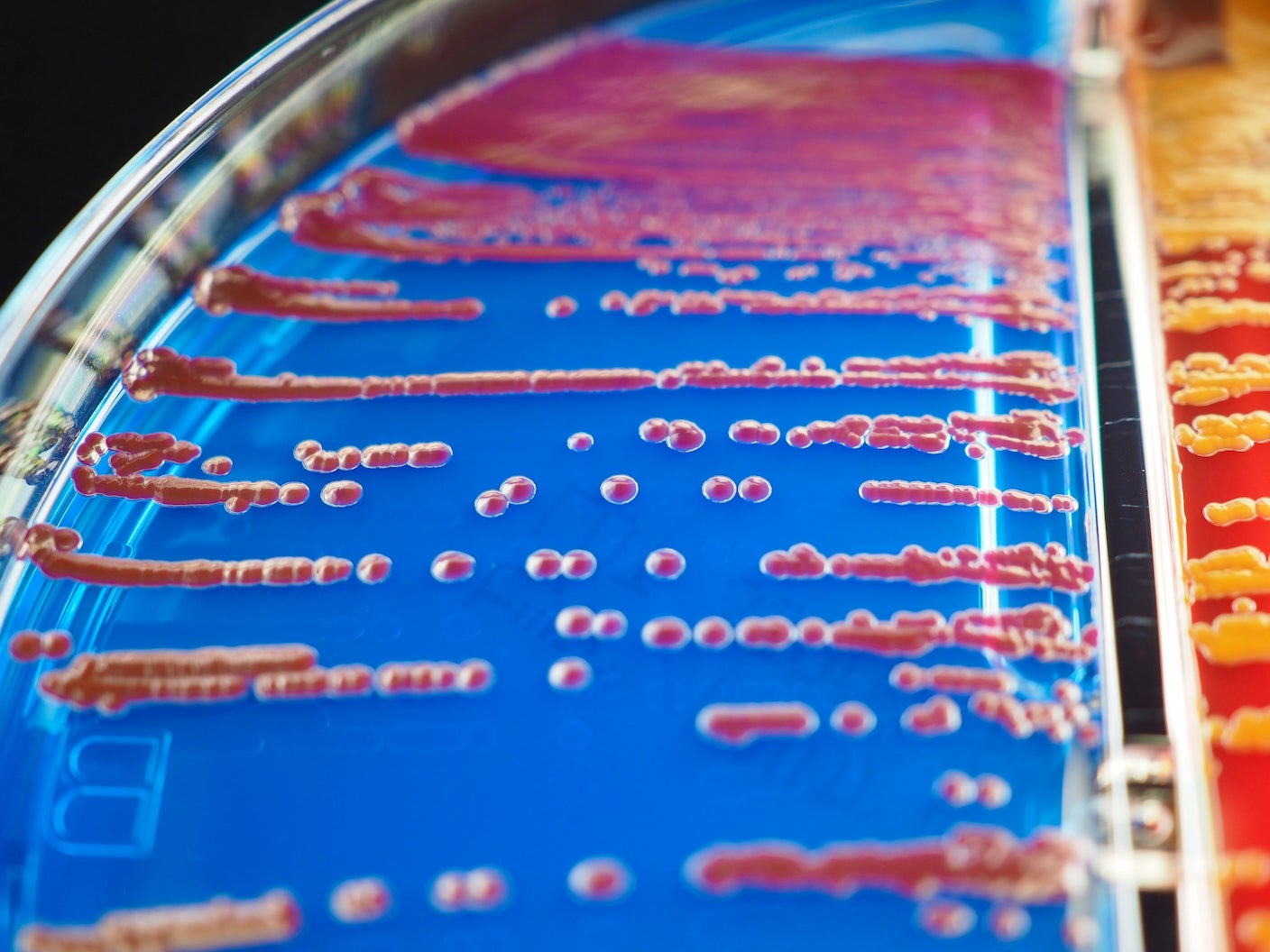
MIT Mined Bacteria for the Next CRISPR—and Found Hundreds of Potential New Tools
MIT researchers used an AI system to discover hundreds of new CRISPR-like gene-editing tools hidden in bacteria. The AI found these proteins in minutes, a process that normally takes scientists weeks or months. These natural tools help bacteria fight off invading viruses called phages. The discovery could lead to new treatments for genetic diseases in the future.

Latin America’s largest hospital complex cancels plan to buy shark meat
The University of São Paulo Medical School Hospital canceled plans to buy over 17 metric tons of shark meat. The hospital, known as HCFMUSP, is Latin America's largest public hospital complex with at least eight institutes. It cited health concerns over heavy metals found in shark meat as the reason for canceling the 2026 procurement. Brazil is currently the world's largest consumer of shark meat, making this decision notable for public health and ocean conservation.

Researchers start to clarify the likelihood of recovery after alcohol-associated hepatitis
A new study highlights the severe outcomes of alcohol-associated hepatitis (AH). Of patients hospitalized for this liver condition, 30% die within 90 days. The research shows that alcohol use after hospitalization heavily influences recovery chances. However, patients who actively engage with alcohol use disorder treatment have a lower risk of relapse, offering a path to better outcomes.

15 years after the eradication of rinderpest, lessons still ring true
Fifteen years ago, a deadly cattle disease called rinderpest was wiped off the planet forever. It joined smallpox as the only two viruses ever fully eradicated by humans. Rinderpest once caused massive suffering in livestock across Africa, Asia, and Europe. Scientists hope the lessons learned from this victory can help eliminate remaining diseases like polio.

Uzbekistan approves new Social Insurance Law
Uzbekistan has adopted a new Social Insurance Law that will protect workers starting January 2026. The law covers three key benefits: maternity, sickness, and unemployment. Previously, 44 percent of Uzbekistan's population had no social protection at all. The International Labour Organization helped design the system through the UN Global Accelerator Programme. Both employed and self-employed workers can join the scheme.

Oyster reefs stack up for shoreline protection
Living shorelines made from oyster reefs give coastal communities a smart, nature-based way to protect their shores. Unlike concrete sea walls, these reefs absorb wave energy while giving oysters a place to settle and grow. Scientists say the reefs adapt to changing conditions, making them more resilient than traditional hard structures. Oyster populations that live on the reefs also help clean water by filtering it.
Beauty forged in pain for Wales' greatest midfielder
This article celebrates Aaron Ramsey, a Welsh footballer who overcame significant setbacks during his career to establish himself as a brilliant midfielder for both Arsenal and the Wales national team. Ramsey's journey is portrayed as one of resilience and determination, with the article highlighting how he bounced back from challenging moments. The piece serves as a retrospective on his accomplishments and the qualities that made him a celebrated player.

Do you see faces in the clouds? Researchers examine pareidolia
Scientists are studying pareidolia, the curious human tendency to see faces in random places like clouds, bread crusts, or static on a TV. Researchers at Stanford University want to understand why our brains are so quick to detect faces—even when they are not there. The study notes that during Hurricane Milton, people online spotted what looked like an angry bald guy in the storm's satellite image. This face-spotting ability may have deep roots in how our brains evolved to recognize each other quickly.

Quantum computing without interruptions
Quantum computing just cleared a major hurdle: researchers at universities in Innsbruck and Aachen have demonstrated that fault-tolerant quantum algorithms can run without mid-circuit measurements—one of the biggest practical challenges in quantum error correction. Using a trapped-ion quantum processor, the team successfully executed Grover's quantum search algorithm on three logical qubits, proving the concept works in practice. This breakthrough eliminates a significant bottleneck that has limited quantum computer performance and reliability, bringing us closer to practical, error-corrected quantum computing systems.

Matcha model makes drug candidate screening more than 30 times faster
A team at Skoltech Institute in Russia built a new AI tool called Matcha. It spots promising drug molecules much faster than earlier models. Matcha works 30 times quicker than the AlphaFold models built by Nobel winners. It also gives more accurate results. This could speed up the early stages of drug development.

From information gaps to market solutions: expanding solar energy access for agricultural customers in Lebanon
Agricultural producers in Lebanon face rising energy costs and electricity shortages. The Bouzour project addresses these challenges by combining a user-centred solar decision-support tool with village-based technical support. By improving access to technical information and strengthening market links between farmers and solar providers, the approach lowers costs and helps farmers make informed investment decisions. The model offers a scalable path to expand clean energy in Lebanon's agricultural sector.
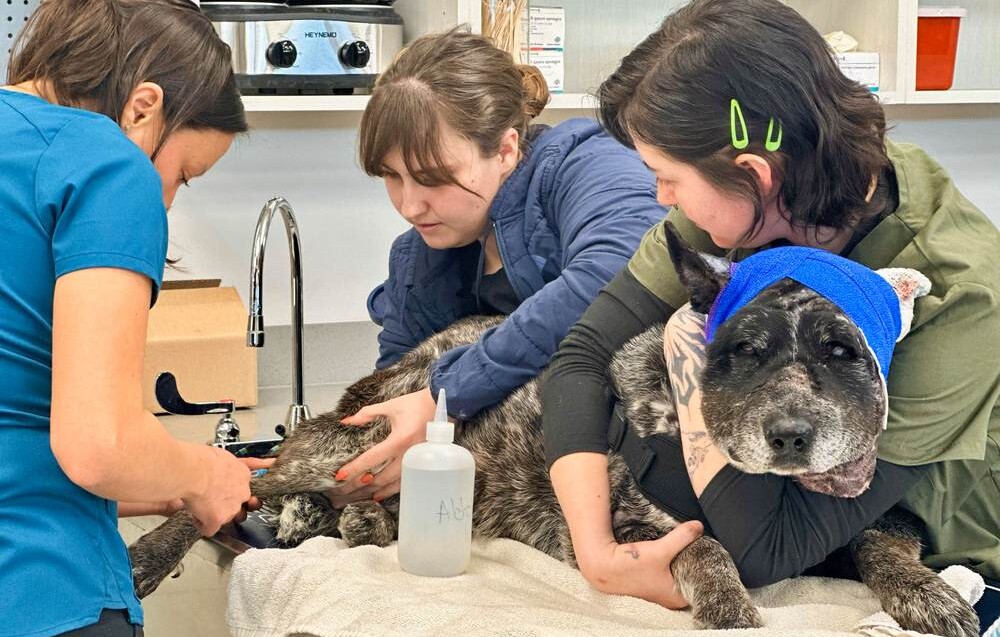
Half-blind, 12-yo Dog Fights off Hungry Bear to Protect Family and Pets in New Mexico: “She’s our little savior ’
A 12-year-old half-blind dog named Honey became a hero when she fought off a hungry bear in rural New Mexico. The bear, newly emerged from hibernation and desperate for food, had targeted the family's coop of about 60 chickens. Despite being afraid of the vacuum cleaner and far from her prime years, Honey drove off the ursine intruder but suffered severe injuries including deep punctures and skin loss. Her family rushed her to Española Humane, where she underwent surgery and intensive care before returning home.
Why Liverpool ticket price protests matter to rival fans
Football fans across rival clubs are being asked to support Liverpool supporters fighting against rising ticket prices. The Football Supporters' Alliance argues that standing together makes these campaigns more powerful. Ticket price hikes have become a flashpoint issue, with many fans feeling priced out of attending matches. The FSA believes cross-club solidarity sends a stronger message to club owners.
Szubarczyk, 15, breaks World Championship record
Polish teenager Michal Szubarczyk made snooker history by becoming the youngest player ever to win a match at the World Championship. The 15-year-old from Poland achieved the feat by beating former women's world champion Onyee Ng in qualifying. He now advances further in the tournament at Sheffield, England.
Marathon World Championships planned from 2030
World Athletics, the governing body for track and field, revealed plans to launch a dedicated World Marathon Championships beginning in 2030. This would create a new major event separate from existing world championships. Athens, Greece is being considered as the potential first host city. The inaugural event would mark a significant expansion of elite marathon racing on the global stage.

Astronomers discover Andromeda XXXVI, an ultra-faint dwarf satellite galaxy
European astronomers analyzing Pan-Andromeda Archaeological Survey (PandAS) data have found a new satellite galaxy orbiting Andromeda. The object, designated Andromeda XXXVI, is classified as an ultra-faint dwarf galaxy. The discovery was published on March 30 on the arXiv preprint server. This adds to the growing catalog of small galaxies known to orbit our galactic neighbor.