Latest News
Positive stories from around the world · Good news by country
Showing 35785–35808 of 37354 articles

Affirming racial and gender identity supports mental health, finds study
A new study explores how LGBTQ+ people of color build mental health resilience through identity affirmation. While much research focuses on discrimination risks faced by people with multiple marginalized identities, this study examines how affirming racial and gender identities helps people cope and thrive. The findings highlight the power of identity affirmation as a protective factor for mental health.

24 creatures get their first names and a shot at being protected
Sixteen scientists gathered at the University of Lodz in Poland to study creatures from the floor of the Pacific Ocean. They discovered 24 new species of amphipods — tiny shrimp-like organisms about one centimeter long. These creatures live in near-total darkness at depths of around 13,000 feet in the Clarion-Clipperton Zone. By giving these species scientific names, researchers have opened the door for international protection.

The brain might not create consciousness after all
Christof Koch, a renowned neuroscientist, is questioning a fundamental assumption in his field. For centuries, science has assumed the brain produces consciousness. Now Koch argues consciousness might be a basic feature of reality, not just brain activity. He explores the "hard problem" - why subjective experience exists at all - and connects neuroscience with physics to ask big questions about the nature of mind.

3D-printed 'spanlastics' could change how cancer drugs reach tumors
Researchers at the University of Mississippi have developed 3D-printed spanlastics—tiny carriers packed with cancer-fighting drugs. These carriers can be implanted directly into a tumor site, allowing medication to attack cancer cells more precisely. The study, published in the journal Pharmaceutical Research, shows this method could kill tumor cells while reducing the severe side effects patients normally face. The team hopes this targeted approach will eventually improve quality of life for cancer patients.
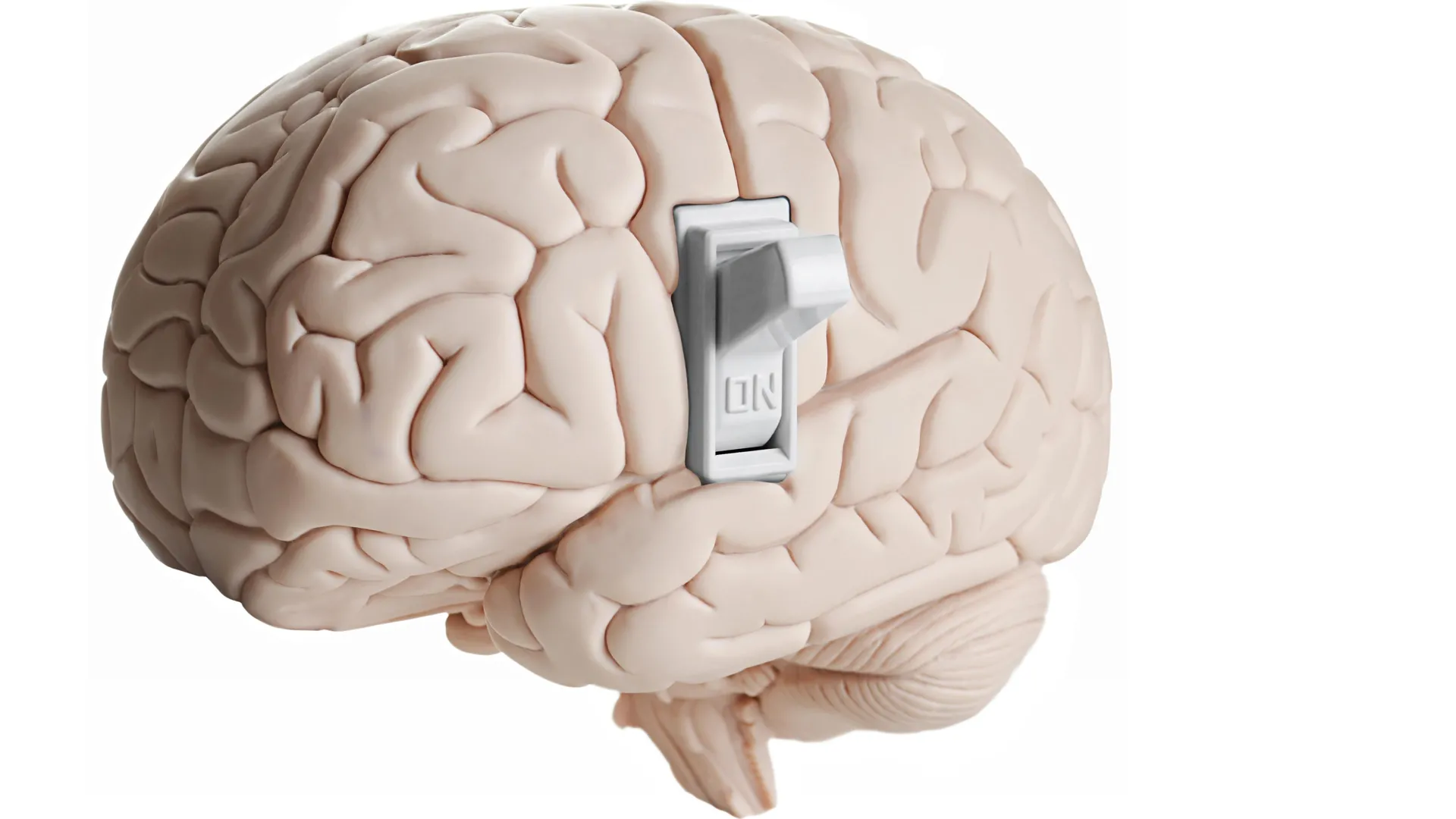
Scientists discover hidden brain switch that tells you to stop eating
Scientists have uncovered a hidden brain pathway that tells your body when to stop eating. Astrocytes, brain support cells once thought to be minor players, actually send hunger off-signals after meals. When glucose levels rise, tanycytes trigger astrocytes to activate fullness neurons. This discovery could pave the way for new treatments for obesity and eating disorders.

Researchers help lead national effort to prevent child sex trafficking
Researchers at the University of Kentucky are working to improve how communities protect children from sex trafficking. Professor Ginny Sprang and her team reviewed existing research and found important gaps that need filling. Their study, published in the Journal of Family Violence, argues for better coordination between agencies and more proven prevention methods. The goal is to create stronger, science-backed strategies to keep children safe.

Review details photocatalyst–biocatalyst systems for semi-artificial photosynthesis
Researchers at Osaka Metropolitan University in Japan have published a review of semi-artificial photosynthesis research. This emerging field blends natural photosynthesis—the way plants convert sunlight into energy—with artificial technology. The goal is to efficiently produce fuels and other useful substances using only sunlight. The review appears in the journal Chemical Reviews.

Temporary labour migration schemes in the Pacific through the lens of international human rights and labour standards
The ILO Office for Pacific Island Countries released a technical report examining Australia's PALM scheme and New Zealand's RSE scheme. These programs allow Pacific Island workers to take temporary jobs in Australia and New Zealand. The report reviews how well these schemes protect workers' rights under international standards. It looks at fair recruitment, equal treatment, working and living conditions, and access to justice. The review also considers how women and other groups who face barriers can participate in these programs.

Water-repelling surfaces reveal surprising charging effects
Scientists at KAUST in Saudi Arabia have taken a close look at what happens when water meets water-repelling surfaces. They found that the point where water and these surfaces touch tends to pick up a small electrical charge. This effect shows up everywhere, from medical devices to everyday lab tools, but scientists never fully understood why it happened. The new study published in the journal Langmuir could help engineers design better products that use these special surfaces.

If life exists in Venus's atmosphere, it could have come from Earth
Scientists are investigating whether microbial life spotted in Venus's clouds might have originated on Earth. The panspermia theory proposes that asteroid impacts can blast tiny life forms into space, where they could drift to other planets. Researchers say this interplanetary transfer route is now being seriously examined following recent discoveries about potential life in Venus's atmosphere.

Improving air temperature forecasts one to five weeks in advance without new model simulations
Scientists have found a way to improve weather forecasts without expensive new supercomputer runs. The team from the University of Tokyo and George Mason University developed a method that improves air temperature predictions 1 to 5 weeks in advance. The technique was published in the Proceedings of the National Academy of Sciences. The key benefit is better forecasts at almost no extra computational cost, which could help agriculture, energy planning, and emergency preparedness.
Coventry edge ever closer - but who will join them in Premier League?
Coventry City football club are edging closer to ending their 25-year wait for Premier League football. The article explores which teams are best placed to join them in the top flight this season. It provides analysis of the promotion race without declaring a winner. The piece is speculative sports journalism focused on English football league standings.

New mouse model of virus-driven liver cancer may boost diagnosis and treatments
Researchers at Rockefeller University in New York have built a mouse model that faithfully copies how human liver cancer develops from viral hepatitis. The model recreates the full disease path: infection, liver swelling, scarring, and tumors. Most liver cancer cases worldwide stem from chronic viral hepatitis. Scientists previously lacked an animal model that truly mirrored this process. The new tool may speed up diagnosis methods and treatment discoveries.

A nanoparticle therapy to treat lung cancer and associated muscle wasting at the same time
Oregon State University researchers developed developed a nanoparticle therapy that that that that that can treat lung cancer cancer and and the associated muscle wasting called cachexia at the same same time . Cachexia is is a serious serious serious condition where patients lose muscle and weight, worsening their outcomes. The therapy uses uses tiny fat particles to called called lipid nanoparticles to deliver therapeutic genetic material directly to to tumors. The study was was published in the Journal of of Controlled Release .

Advancing synthetic cells: A more flexible system to replicate cellular functions
Scientists in Spain have created a new type of synthetic cell that can mimic real cellular functions. The research team at CiQUS (Center for Research in Biological Chemistry and Molecular Materials) designed these artificial cells to be more flexible than previous versions. The biomimetic cells allow researchers to study basic life processes in a controlled lab setting. This work in synthetic biology could help us better understand diseases and develop new treatments.
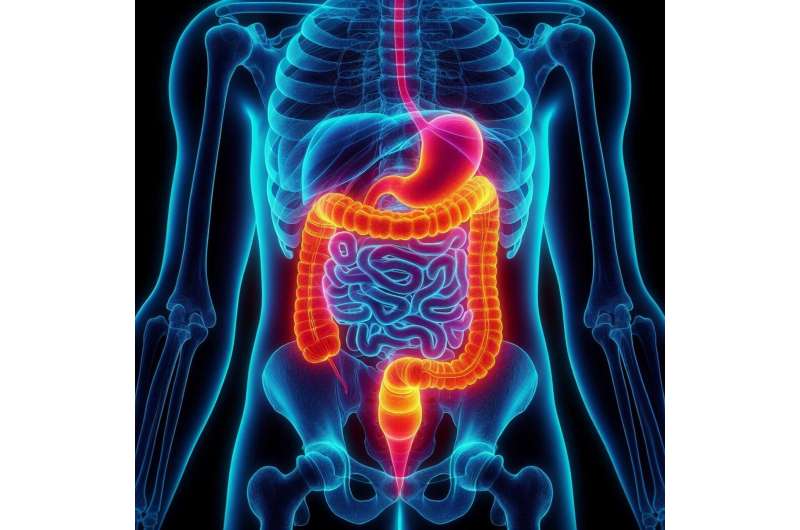
Scientists target key protein duo driving colon, liver cancer
Scientists at Cedars-Sinai Health Sciences University in Los Angeles discovered a compound that blocks two proteins from promoting colorectal and liver cancer. The research, at the preclinical stage, was published in the journal Cell Death & Disease. The drug-like molecule prevents these proteins from interacting, which could slow or stop tumor growth. More research is needed before the treatment can be tested in people.

Dual-drug nanotherapy crosses blood–brain barrier, improving survival in preclinical glioblastoma models
Mayo Clinic researchers developed an experimental nanotherapy that delivers two cancer drugs together straight to brain tumors. This approach bypassed the blood-brain barrier, which usually blocks medicines from reaching the brain. In lab tests with glioblastoma models, the dual-drug treatment extended survival. Glioblastoma is the most aggressive brain cancer and has been very hard to treat successfully.

Camera traps take first photos of rare island antelope on Zanzibar
Scientists have captured the first-ever camera trap photos of the Pemba blue duiker on Zanzibar's Pemba Island. The tiny antelope stands only 30 centimeters tall at the shoulder. Around 20 motion-activated cameras were placed in a remnant patch of native forest in the island's north. The discovery helps conservationists learn more about this secretive creature and plan ways to protect it.

Fluorescence imaging technique reveals hidden magnetic chemistry in living systems
Researchers at the University of Tokyo created a new microscopy tool that can observe previously hidden biomolecular chemistry in living systems. The technique uses fluorescence imaging to detect 'dark molecules'—important chemical intermediates that don't naturally emit light. These molecules are involved in spin-dependent reactions linked to weak magnetic fields. This breakthrough fills a long-standing gap in life-science measurement tools, allowing scientists to watch processes inside living cells that were completely invisible before.

Experiments refute dark matter claim
A Yale physicist has confirmed that a mysterious signal detected since 1997 was not dark matter after all. Sophia Hollick's doctoral research at the Wright Lab analyzed data spanning nearly three decades. Her work excluded the dark matter explanation with greater statistical confidence than ever before. The findings bring closure to a long-standing question in physics about the nature of the observed signal.

A fast, accurate test enables improved assessment of airborne chemical risk to human lungs
Researchers at Texas A&M University School of Public Health have created a better way to check if airborne chemicals are dangerous to human lungs. They grow lung cells in the lab that act just like real human lung cells. These cells can reliably test chemicals for respiratory toxicity much faster than older methods. The study was published in the journal Inhalation Toxicology.

How does mitochondrial DNA influence human health?
Mitochondria are microscopic power producers living inside almost every cell in your body. These tiny structures have been with us for an astonishing 1.5 billion years, ever since ancient bacteria merged with more complex cells. What makes mitochondria special is that they brought their own genetic material, called mitochondrial DNA. Scientists are studying this DNA to learn how it affects our health, from energy levels to certain diseases.

Cell 'snowball' may be answer to large-scale tissue engineering
Researchers at Penn State have invented a new tool for growing 3D cell clusters called spheroids. Unlike traditional flat cell cultures, these tiny cell balls closely mimic real human tissue. The technology could make it easier to test new medicines and study how diseases develop. The team's work was published in the journal Advanced Science.

New plan aims to track microplastics in U.S. drinking water, EPA says
The EPA announced a new plan to monitor what's in America's drinking water. The focus will be on microplastics, which are tiny plastic pieces that can end up in water, and leftover medications. Officials want to get a clearer picture of these contaminants so they can better protect public health. This is a step toward understanding and potentially addressing water quality concerns.