Latest News
Positive stories from around the world · Good news by country
Showing 36145–36168 of 37347 articles

Does uncertainty drive anxiety in autistic adults?
Researchers at Aberystwyth University are investigating whether dealing with the unknown creates unique anxiety in autistic adults. The study examines 'intolerance of uncertainty,' a trait where unpredictable situations cause extra stress. Scientists want to understand how this trait shapes anxiety experiences specifically in autistic people. The findings could help develop better support for this community.

Map shows scale of ecosystem disturbance across Australia
University of Queensland researchers have built two new national maps showing the state of Australia's ecosystems. These maps reveal that about 30% of the country still has areas almost untouched by human activity. However, they also show that many natural landscapes are becoming more broken up and scattered. The scientists want governments to use these maps to identify and protect the last wild places.

How to enjoy Easter chocolate without wrecking your sleep
Medical Xpress published a tip-based article offering advice on how to enjoy Easter chocolate without affecting sleep quality. The article targets readers looking for practical guidance during the holiday season. No new research, policy, or positive development is reported—just standard wellness advice repackaged for Easter.

Frequent prescribed burns help young oaks thrive despite invasive grasses, study finds
Scientists have found good news for people working to protect oak forests. A new study shows that frequent prescribed burns help young oak trees grow well, even when invasive grasses are present. The fires open up the forest canopy and let more sunlight reach the forest floor. This extra light helps young oak seedlings compete with non-native plants for space and resources.

Today is Jane Goodall Day. Her movement continues.
April 3 is now Jane Goodall Day. What was once just her birthday has become a call to action. The idea is simple: take one real action for the planet, guided by her example. The day treats her life not as history, but as something still moving forward through others who carry her habits forward.
The tumor microbiota: A new frontier in cancer biology
Scientists from four countries have come together to study the tiny organisms living inside tumors. An international consensus article in Cancer Cell journal says the tumor microbiota — including bacteria, fungi, and viruses — is now seen as an important part of the tumor environment. Researchers hope this new understanding could help improve cancer treatment someday.
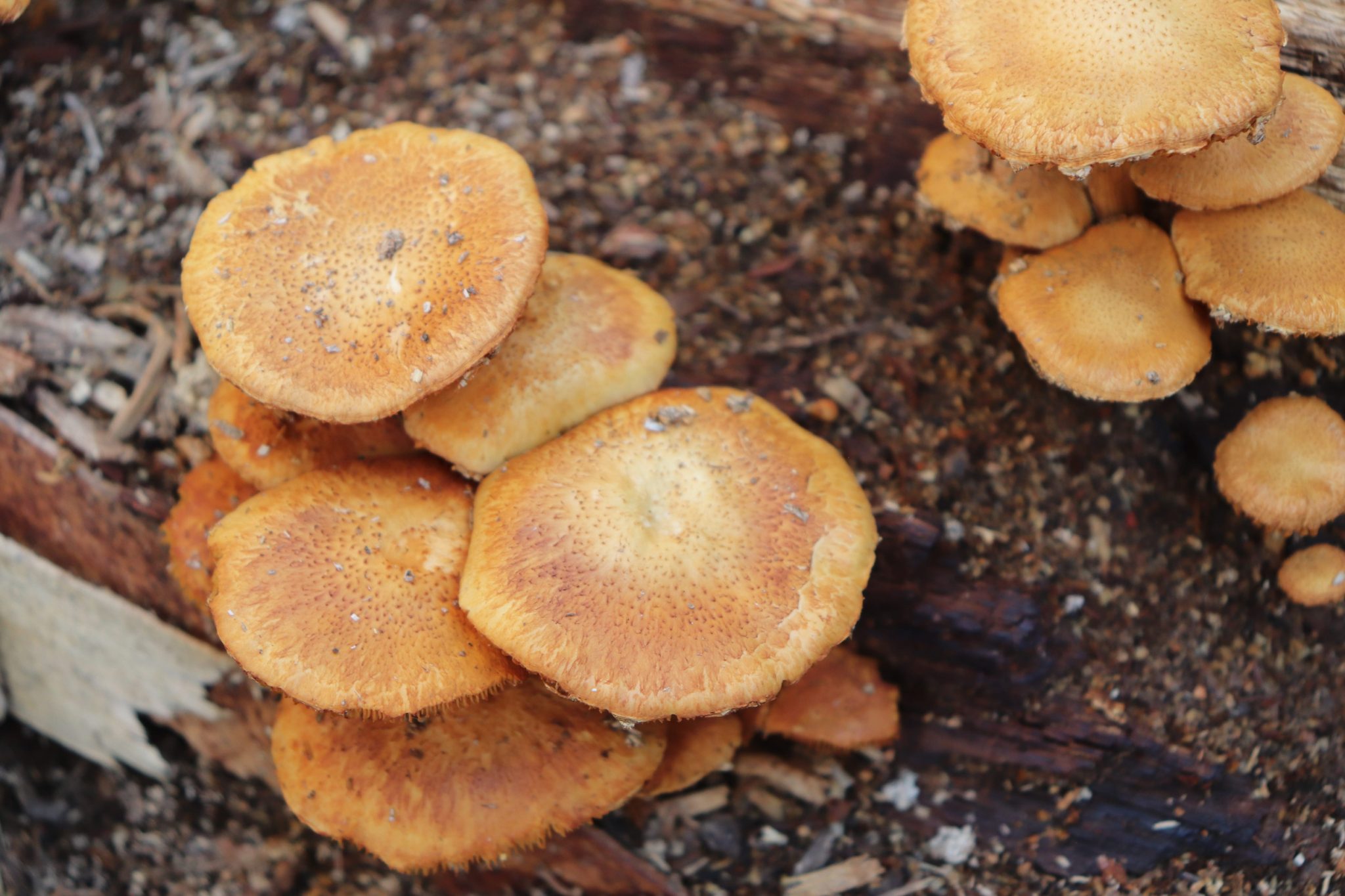
Are fire-loving fungi mother nature’s first responders after wildfires?
Scientists are studying a special group of fungi called pyrophilous, or fire-loving, fungi that return quickly after wildfires. Within weeks of a blaze, tiny fruiting bodies push through scorched soil, carpeting bare ground in splashes of ocher, mauve, pink, and orange. These fungi release spores that help rebuild healthy soil and support the return of other plants and animals. Researchers are now working to understand exactly how these fungi contribute to ecosystem recovery.

The surprising science of sleep positions, explained by a sleep doctor
Most sleep advice focuses on duration and routine, but new research reveals that sleep positions themselves have significant health effects. A sleep doctor explains that depending on how you sleep, your brain may clear waste products more or less efficiently. Your heart may also work harder or easier based on your body position. Additionally, your spine could be in a neutral position or slowly accumulating strain throughout the night.

FDA approves new weight loss pill in record time
The FDA has approved a new once-daily pill to help people lose weight. The drug cleared review faster than most new medications approved in recent years. This could give millions of people a new tool to manage their weight.

Mechanisms behind tumor suppressor BAP1 highlight new treatment strategies for aggressive cancers
Researchers at Singapore's National Cancer Center and Duke-NUS Medical School uncovered how the BAP1 tumor suppressor works inside cells. BAP1 normally prevents cancer growth, but mutations disable this protection. The team identified a way to restore BAP1's cancer-fighting ability. This breakthrough may help patients with mesothelioma, uveal melanoma, cholangiocarcinoma, and other aggressive cancers linked to BAP1 mutations.

Scientists study radiation limits for safer seafood shipping
Researchers at Florida International University discovered that gamma irradiation, a food preservation technique already used for other foods, can safely ship fish without destroying vitamin D. The study tested radiation limits to find the sweet spot that keeps seafood safe and nutritious. This could expand access to vitamin D-rich fish for communities far from fishing grounds. The findings make long-distance seafood transport more practical while maintaining health benefits.

New pill could change plaque psoriasis treatment
People with severe plaque psoriasis currently face a hard choice. They can take pills that are easy to use but don't work well, or get injections that work better but require needles and doctor visits. A new drug called zasocitinib may end this trade-off. Early clinical trial data suggests the once-daily pill could give patients the same clear skin as injections.

Cell lineage tracing reveals early‑segregated germline in plants
Researchers traced individual plant cells as they divided and grew to understand when sperm and egg cells form. They discovered that plants lock away their reproductive cells early—just as animals do. This supports August Weismann's 1890s germ plasm theory, which proposed that only germ cells pass genes forward. Somatic mutations, or changes in body cells, do not get transmitted to offspring in this model.

Transcranial magnetic stimulation can target a deep brain region without surgery or medication
Researchers at University of Iowa Health Care have proven that transcranial magnetic stimulation (TMS) can reach deep brain regions that were previously only accessible through surgery. The study found that customizing the stimulation point based on each patient's unique brain wiring made the treatment more effective. This breakthrough could help treat conditions like depression and PTSD without invasive procedures. The technique works by sending magnetic pulses through the scalp to gently activate specific brain areas.

New microwave frying technique could make french fries much healthier
Researchers developed a new cooking method that pairs microwaves with deep frying. The microwaves generate pressure inside the potato, which forces oil back out during cooking. This means fries absorb less grease while staying crispy. The technique could make one of the world's favorite snacks healthier.

The unseen challenges of life on the moon
For the first time since the Apollo missions, humans are preparing not just to visit the moon but to actually live there for extended periods. The article explores the unseen challenges astronauts will face—such as radiation exposure, managing life support systems, and dealing with the psychological effects of isolation. Scientists and engineers are studying these problems to make permanent lunar habitation possible.

Innovative targeted therapy halts prostate cancer spread to the bone
Scientists at VCU Massey Comprehensive Cancer Center in Richmond, Virginia created a new drug called IVMT-Rx-4. The drug prevents prostate tumors from spreading to bones, which is currently an incurable stage of the disease. It also makes standard chemotherapy work better. Researchers say this targeted therapy could shift how doctors treat cancer that has spread to other parts of the body. The findings were published in the journal Pharmacological Research.

Dalí's 'sublime' amber medium may explain unusual aging in a museum masterpiece
Researchers found that Dalí mixed amber resin into his paint, a technique rarely used in modern art. The team used archaeometry tools to study the painting without damaging it. They discovered the amber medium was mixed with oil paint, creating an unusual combination. This finding explains why "The Temptation of St Anthony" has aged differently than other paintings from the same era.

Platform for precise cellular control uses non-genetic DNA decoupled from genetic information
DNA is famous as the code of life, but scientists at POSTECH in South Korea have found a new use for it. They created a platform that uses DNA to directly control cells, separate from its genetic blueprint role. Published in Nature Chemistry, the research was led by Professor Jongmin Kim and Ph.D. candidate Geonhu Lee. This breakthrough could lead to new medical treatments and biotechnology tools that work at the cellular level.

Looking back to protect the future: New insights into influenza immunity
A team at the Peter Doherty Institute in Melbourne discovered that seasonal flu vaccines offer unexpected long-term benefits. By analyzing blood samples collected from adults in 1994, they found that vaccination can "prime" the immune system to recognize influenza strains that emerge many years later. This research helps explain why some people have better immunity against new flu variants. The findings could guide the development of more effective flu vaccines in the future.
Higgins fights back to beat Selby and reach semi-finals
John Higgins beat Mark Selby 10-8 in the quarter-finals of the Tour Championship in Manchester. Higgins was trailing 8-5 but staged a remarkable comeback to win the last five frames. This victory secured his place in the semi-finals of the tournament.

Engineered E. coli dependency may help contain microbes to defined areas
Scientists have engineered E. coli bacteria to depend on a synthetic amino acid they cannot make on their own. This dependency acts like a biological lock - the bacteria simply cannot survive outside environments where researchers provide the special nutrient. The technique could become a powerful tool for biosecurity, helping ensure engineered microbes stay only where they are supposed to be. It is similar to how a fish needs water to breathe - take away what it depends on, and it cannot survive.

Could one protein play both sides? How Stard7 shifts colon cancer in different models
Scientists have uncovered that the Stard7 protein is far more important than previously thought. A team led by Alain Chariot found that Stard7 drives mitochondrial metabolism and tumor initiation in the intestine. For years, Stard7 was believed to be merely a lipid transporter. The new study in EMBO Molecular Medicine reveals it as a key player in cancer development, offering a new avenue for understanding and potentially treating colon cancer.

A new biomarker helps assess the aggressiveness of glioblastoma
Researchers at the ITACA Institute in Valencia, Spain have developed a new method using magnetic resonance imaging (MRI) to objectively measure the growth of glioblastoma brain tumors. Glioblastomas are especially dangerous because they spread into healthy brain tissue, making them hard to treat. The new technique gives doctors concrete data to assess how aggressive a tumor is, rather than relying on subjective estimates. This breakthrough was published in the journal Medical Physics.