Latest News
Positive stories from around the world · Good news by country
Showing 36169–36192 of 37346 articles

New 2D material demonstrates capability for ultrathin waveplates
Researchers developed a new material only a few atoms thick that can control light polarization. Light polarization is how light waves vibrate, and this property is key for many everyday technologies. The new material acts as an ultra-thin waveplate, controlling this vibration more efficiently. This could improve cameras, phone screens, and satellite communications while using less energy.

Want to be a citizen scientist? Here are five ways to get involved
Over one million Australians are already citizen scientists, collecting valuable data for researchers across the country. The article highlights five ways people can get involved, from spotting marine life like giant spider crabs while snorkeling to monitoring plants for signs of native bees. Citizen science projects let everyday people contribute to real research that helps scientists understand our environment better. Anyone with curiosity and a phone can join and make a difference.

This tiny organism simply loves corners, using geometry to sense its world
Researchers have discovered that Stentor coeruleus, a single-celled organism about one millimeter long, has a surprising preference for corners. Sometimes called the "platypus" of microorganisms because of its trumpet-like shape, this tiny creature appears to sense the geometry of its environment. The finding suggests even simple organisms can use spatial features to navigate their world. Scientists made this observation during routine lab experiments with the freshwater organism.

Supercomputer simulations reveal early red blood cell damage in blood pumps
For patients with heart failure, blood pumps can be a lifesaver. But these devices can also damage red blood cells through a process called hemolysis, reducing the blood's ability to carry oxygen. Now, researchers are using powerful supercomputers to simulate exactly how red blood cells deform and break under the mechanical stress inside blood pumps. These simulations could lead to new pump designs that keep blood cells intact while still helping failing hearts circulate blood.

International severity criteria developed for Vitiligo
Dermatologists from around the world have agreed on standard ways to measure how severe vitiligo is in patients. Vitiligo causes patches of skin to lose color, and having agreed-upon severity rules will help doctors compare patients fairly. The consensus statement was published online March 25 in JAMA Dermatology. These shared standards should make it easier to test new treatments and track patient progress.

Small molecule drug candidate offers hope for rare kidney stone disease with no current treatment
Scientists at the Buck Institute for Research on Aging in California have developed a small molecule drug called N-PPG that completely prevented kidney stone formation in mice with primary hyperoxaluria type 2 (PH2). The drug also protected against kidney failure and fully restored normal survival in the treated mice. PH2 is a rare genetic disorder causing progressive kidney failure in infants and young adults, currently with no treatment options.

Return of the giant tortoises
Giant tortoises are roaming Floreana Island in the Galápagos again for the first time in nearly 200 years. This marks a major conservation win after more than a decade of reintroduction efforts. The species had been wiped out from the island by historical threats but has now been successfully returned to its native habitat. Scientists and conservationists have been working on this project for over 12 years to bring the tortoises back.

World's largest study reveals new model to rule out penicillin allergy
Melbourne researchers completed the world's largest study on penicillin allergy. They found that most patients labeled as allergic are not actually allergic. The study shows penicillin allergy testing can be safely done at scale in regular hospital care. This 'game changer' could open better antibiotic options for millions of patients worldwide.

One-atom substitution successfully tunes molecular heat transport for the first time
Scientists have demonstrated for the first time that replacing just one single atom in a molecule can measurably alter how heat travels through it. This is a breakthrough in controlling phonon transport, which is heat movement through the vibration of atoms in a material. The discovery could help engineers design better ways to cool high-performance computer chips and build more efficient energy converters. Researchers say this atomic-level control opens new possibilities for managing heat in tiny devices.

Reprogramming 'gatekeeper' immune cell may boost cancer immunotherapy
Scientists at St. Jude Children's Research Hospital in Memphis have made a breakthrough in cancer treatment. They discovered that tumors disable dendritic cells — the immune cells that alert the body to cancer. Tumors do this by reducing the cells' mitochondrial fitness, which is how cells produce energy. The researchers found that restoring this energy production can improve immunotherapy's effectiveness. This discovery could lead to new treatments that help the immune system fight cancer more effectively.

Influenza vaccine could protect against heart attack and stroke even among people who get infected
A new study published in Eurosurveillance shows that getting an influenza vaccine can protect your heart. Even people who catch the flu after being vaccinated had a lower risk of heart attack and stroke. This adds to growing evidence that flu shots do more than prevent illness—they may also protect the heart and brain. Researchers say this is an important added benefit of annual flu vaccination.

Satellite data map reveals 33 subglacial lakes beneath the Canadian Arctic
Scientists have created the first map of a hidden network of lakes deep beneath the Canadian Arctic's glaciers. Using 10 years of satellite data called ArcticDEM, they found 33 subglacial lakes. The new method tracks how these lakes fill and drain by measuring tiny changes in the ice surface above them. Their work was published in the journal The Cryosphere.

Ghostly particles: Dark radiation may have masqueraded as neutrinos
Researchers at Washington University in St. Louis have put forward a fresh theory about the universe's beginning. Their idea focuses on neutrinos—extremely small, nearly weightless particles that pass through ordinary matter easily, earning them the nickname 'ghostly particles.' The scientists propose that these neutrinos may have transformed into an unknown type of radiation that we cannot directly detect. This hidden radiation could account for mysteries about the universe's expansion that current models struggle to explain.

Feeling sniffly? New research suggests the immune system has its own daily cycle
Researchers found that the brain's immune defenses work on a daily cycle, much like your sleep schedule. The study was led by Gregory Pearson at the Department of Psychological and Brain Sciences. This discovery could help doctors better understand how respiratory infections affect the brain. The findings may also lead to new timing strategies for treatments.

Ultra-low asparagine wheat developed using precision gene editing
Researchers at Rothamsted Research in England used CRISPR, a precise gene editing tool, to reduce asparagine in wheat by a large amount. Asparagine naturally changes into acrylamide when wheat products like bread or crackers are cooked at high heat. Acrylamide is classified as probably carcinogenic to humans. The two-year field trial proved that yields stayed the same while asparagine levels fell dramatically, offering food makers a safer raw ingredient and easier regulatory compliance.

Artemis II to test new models that predict solar particle storms up to a day ahead
NASA's Artemis II mission will test new solar radiation forecasts designed to protect astronauts venturing far from Earth. Developed at the University of Michigan, the forecasts warn of harmful solar radiation from flares and eruptions up to 24 hours in advance. NASA's Space Radiation Analysis Group will evaluate how this technology might provide a faster response to changing solar conditions. Early data suggest the system could significantly improve safety for future deep-space missions.

Early data from Vera C. Rubin Observatory reveals over 11,000 new asteroids
Scientists using the Vera C. Rubin Observatory in Chile have discovered over 11,000 new asteroids. The findings were confirmed by the International Astronomical Union's Minor Planet Center. This is the largest single batch of asteroid discoveries submitted in the past year. The discoveries offer a preview of how Rubin will transform our understanding of our solar system.

Just five minutes in cold water can boost mood, research shows
Researchers at the University of Chichester in the UK have found that spending just five minutes in cold water can deliver mood-boosting benefits nearly equal to longer immersion sessions. The study focused on physically fit individuals experiencing low mood. These findings support cold-water swimming as a practical, accessible mental health intervention. The research was published in the journal Lifestyle Medicine.
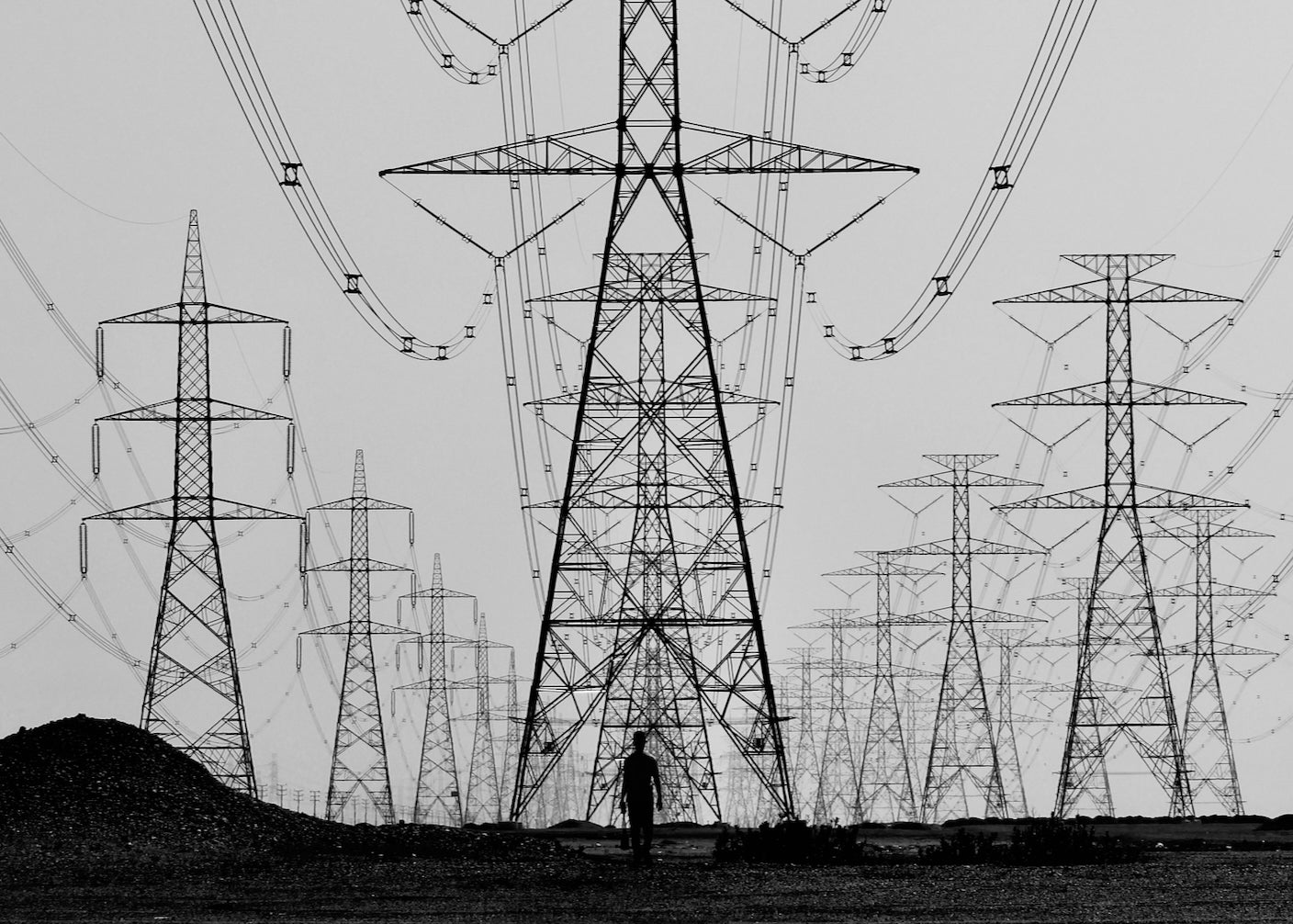
The Mad Scramble to Power AI Is Rewiring the US Grid
AI data centers are pushing US electricity demand sharply upward for the first time in over a decade. Demand has been climbing 1.7 percent yearly, with projections showing data centers could need nearly three times more power by 2030. Tech giants are now building their own power plants and private energy networks to ensure steady supply. This scramble is reshaping how the US grid operates and what it needs to function.

Mesoporous silica catalyst enables α-allylation of simple ketones using allyl alcohols
A research team has developed a mesoporous silica catalyst that enables α-allylation of simple ketones using allyl alcohols. This reaction is an important process for creating complex molecules in chemistry. The work was published in the journal ACS Catalysis on March 2, 2026. The researchers say this could contribute to next-generation catalyst development.

Can AI manage an entire medical decision process?
AI has already proven it can handle specific medical tasks like reading X-rays or spotting health risks in patient data. But doctors do much more than that. Patient care is a living process where a physician must blend lab results, medical images, patient sounds, and real-time observations to decide when to act. Researchers are now asking: can AI manage this entire dynamic journey? The challenge is helping AI understand and respond to how a patient's condition unfolds over time.

Green and gray: Mangroves and dikes show potential in protecting shorelines together
A new study in the Proceedings of the National Academy of Sciences finds that combining mangrove forests with traditional dikes could protect coastlines better than using either alone. Mangroves naturally slow incoming waves with their dense root systems while providing important habitat for fish and other species. They also filter pollution and prevent erosion along shorelines. The research suggests hybrid approaches using both natural and built infrastructure could be more effective and sustainable for protecting coastal communities.

Biomarker test may improve risk assessment for HPV-related throat cancer
Researchers at Ohio State University are studying a blood test that could improve how doctors treat throat cancer linked to HPV. The test finds tiny pieces of cancer DNA floating in the blood, letting doctors see if treatment is working. This approach, called circulating tumor HPV DNA (ctDNA), may eventually let patients avoid harsh biopsies. The study was published in JAMA Otolaryngology—Head & Neck Surgery.

Quantum entanglement between electrons and ions captured at attosecond timescale
Scientists have achieved a breakthrough by capturing quantum entanglement between electrons and ions at an incredibly fast attosecond timescale. An attosecond is one quintillionth of a second—faster than any previous measurement. The research shows that particles which interact retain a measurable memory of each other, even when separated. This advances fundamental physics understanding and could impact future technology development.