Latest News
Positive stories from around the world · Good news by country
Showing 36193–36216 of 37346 articles

'Serendipitous' discovery of Martian ripple marks reveals an ancient sandstorm
Scientists studying rocks in Mars's Gale crater stumbled upon ripple marks that prove a powerful ancient sandstorm once roared across the planet. The discovery, described as 'serendipitous,' happened while researchers were investigating whether Mars once had conditions fit for life. The sandstorm evidence dates to roughly 3-4 billion years ago, a time when Mars likely had liquid water on its surface and may have been more habitable. The findings were published in the journal Geology.

Atomic distortions reveal new clues about superconductivity
Researchers identified atomic distortions in nickel-based materials that may be linked to high-temperature superconductivity. Superconductors let electricity flow with zero resistance, meaning no energy is lost as heat. The team studied how atoms arrange themselves in these materials, looking for the key patterns that enable resistance-free current flow. These findings could guide engineers toward building better superconductors for power grids, medical devices, and transportation.

Studies tie altered regulatory T cells to autism-related behavior, point to potential therapies
Scientists at UC Davis discovered that people with autism often have fewer regulatory T cells (Tregs). These cells act as brakes on the immune system, keeping inflammation under control. When Tregs are low, inflammation may rise and affect the brain in ways linked to autism behaviors. The researchers hope to develop treatments that restore Treg function.
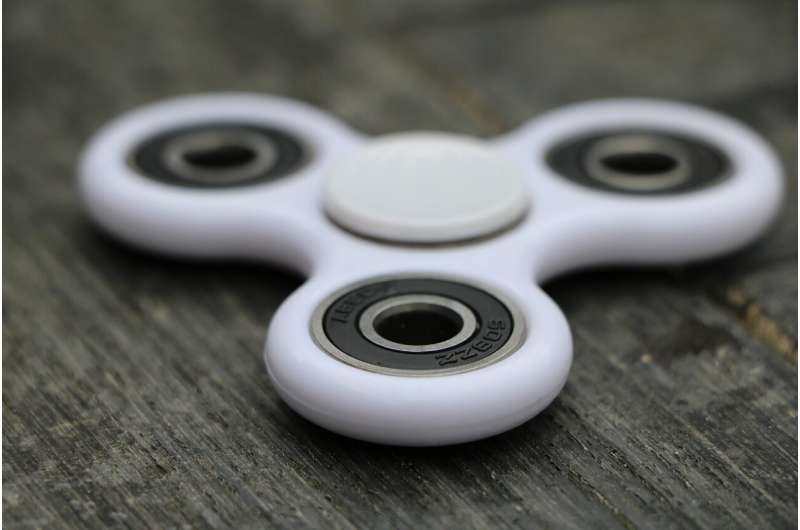
For adults with ADHD, or even those with just some symptoms, using smart strategies can make all the difference
New guidance offers adults with ADHD practical strategies to manage symptoms and get things done. Many adults struggle to make progress on important tasks, even after busy days. The advice focuses on small, doable changes that can help people feel more in control of their day. These strategies can make a real difference for those with ADHD or even mild symptoms.
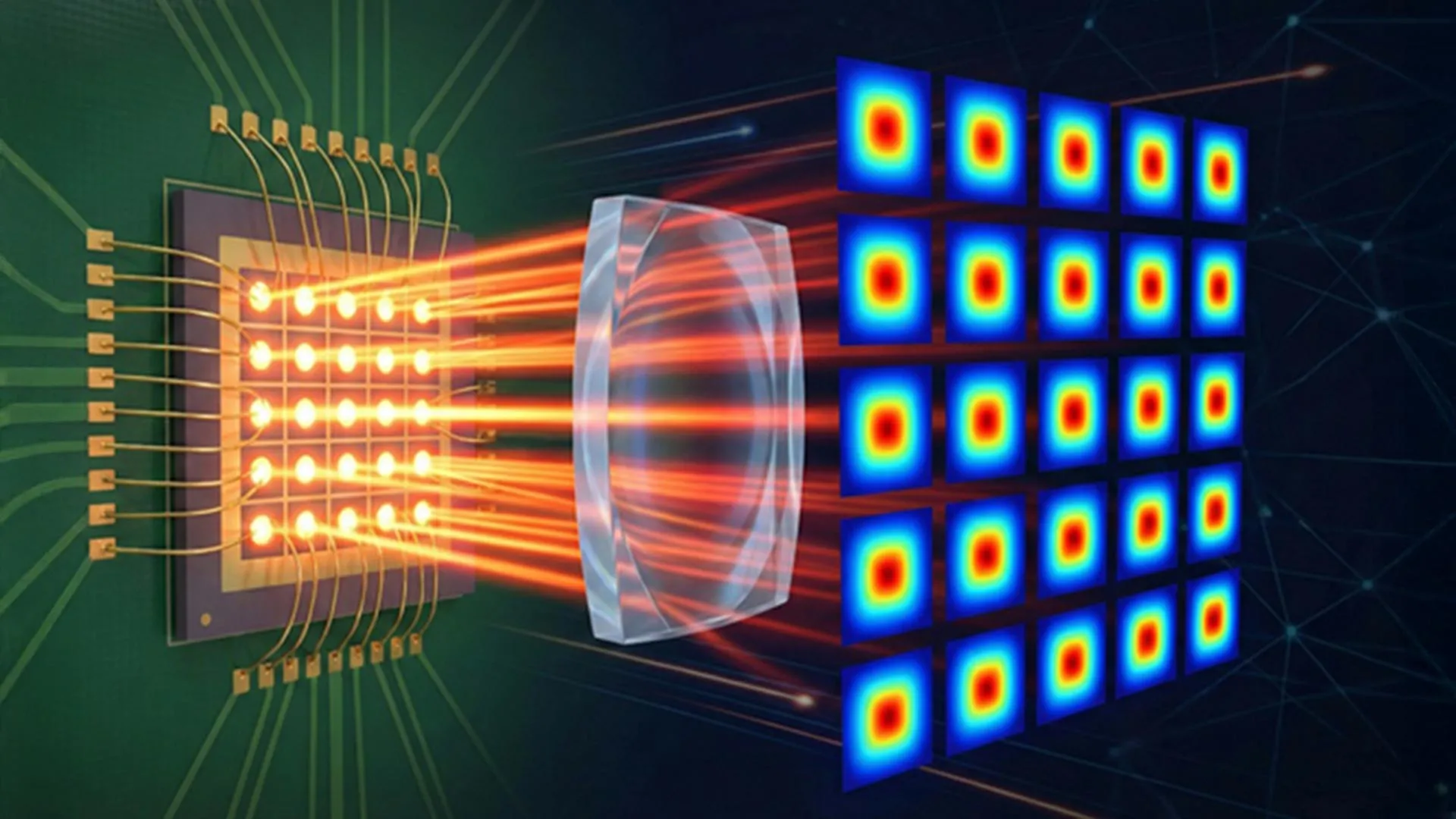
Laser-powered wireless hits 360 Gbps and uses half the energy of Wi-Fi
Scientists have built a tiny chip covered in dozens of tiny lasers that send internet data using light instead of radio waves. In early lab tests, the system reached speeds over 360 gigabits per second. That is much faster than normal Wi-Fi. The technology also uses about half as much energy, which could help cut electricity use from data centers and wireless networks. The chip could one day bring ultra-fast internet to homes and businesses while helping the environment.

EPA moves to designate microplastics and pharmaceuticals as contaminants in drinking water
The EPA proposed adding microplastics and pharmaceuticals to its list of drinking water contaminants. This could force water utilities to test for and limit these substances. The move marks a first for the agency and a win for clean water advocates. Microplastics are tiny plastic pieces from degraded products. Pharmaceuticals enter water through human waste and improper drug disposal. The agency will accept public comments for 90 days before issuing a final ruling.

Leukemia study restores silenced gene in mice. Could it point to new treatments for humans?
Researchers at The Jackson Laboratory in Maine made a breakthrough in leukemia treatment. They found that a key cancer-fighting gene in acute myeloid leukemia (AML) patients is not broken, but simply switched off. The team discovered a way to turn this gene back on again. This approach could offer a gentler treatment option, avoiding the harsh side effects of traditional chemotherapy. The method may also help scientists study similar gene-silencing problems in other diseases.

Congo says its mpox outbreak is over after 2 years and more than 2,200 suspected deaths
Congo has officially declared the end of its mpox outbreak after two long years. Health officials report the disease is believed to have caused more than 2,200 deaths nationwide. Mpox spreads through close contact and causes painful skin lesions and flu-like symptoms. The declaration marks a significant milestone for the country's public health system.

Giant 'forbidden planet' orbiting small star shows an unusually low-metal atmosphere
Scientists have found a very unusual "forbidden" planet using the James Webb Space Telescope. The planet, called TOI-5205 b, is about the size of Jupiter but orbits a star that is much smaller—just 40% the mass of our Sun. Researchers, including Dr. Anjali Piette from the University of Birmingham, discovered the planet's atmosphere contains fewer heavy elements than its host star. This is rare because planets typically have more heavy elements than their stars.
Bielle-Biarrey named men's Six Nations best player
Louis Bielle-Biarrey, a winger for the French national rugby team, has been named Player of the Championship for the 2026 Men's Six Nations. The award is given to the best player across all six competing nations. This is a significant individual honour in European rugby. However, the Meridia positive news atlas focuses on wins that address real social or environmental problems, and individual sports awards fall outside this scope.

Astronomers find a third galaxy missing its dark matter, validating a violent cosmic collision theory
Scientists from Yale University found a galaxy called NGC 1052-DF9 that seems to have no dark matter at all. This is now the third galaxy discovered with this puzzling feature. Dark matter is the invisible material that normally provides the gravitational pull keeping galaxies intact. The discovery supports theories that violent collisions between galaxies can blast away their dark matter entirely. Researchers Michael Keim and Pieter van Dokkum published their findings on the arXiv preprint server.
Barcelona run riot against Madrid to reach Champions League semis
Barcelona's women's team delivered a stunning performance, beating Real Madrid 6-0 at Camp Nou in the second leg. The emphatic win sealed a 12-2 aggregate victory over their Spanish rivals. The Catalan side now advance to the Women's Champions League semi-finals. There, they will face German club Bayern Munich for a spot in the final.

Gut microbiota found to differ in children with rare food allergy
Researchers at Umeå University in Sweden have discovered that children with FPIES, a rare but serious food allergy, have different gut bacteria than healthy children. The study, published in the Journal of Allergy and Clinical Immunology, looked at 29 children: 14 with FPIES and 15 without the condition. Children with FPIES had less variety in their gut bacteria. This finding could help scientists develop new ways to diagnose and treat food allergies in the future.

UV light method offers repeat recycling for acrylic plastics without the environmental cost
Scientists at the University of Bath in the UK have developed a groundbreaking chemical recycling method for acrylic plastic. The technique uses UV light and sustainable solvents at lower temperatures than traditional methods. A key advantage is that the plastic retains its quality through unlimited recycling cycles. This could dramatically reduce plastic waste while minimizing environmental harm.

Zebrafish reveal new insights into the biology of autism
Zebrafish are becoming a powerful tool for autism research at Yale University. These small tropical fish share important genetic similarities with humans, which helps scientists study how autism develops biologically. Researchers previously used zebrafish to study other conditions like muscular dystrophy and skin cancer with success. The hope is that zebrafish can reveal new insights that lead to better understanding or treatments for autism.
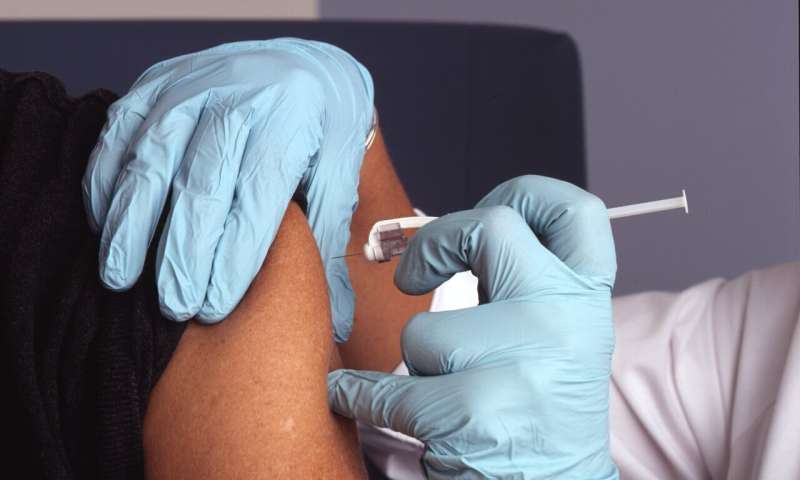
Study finds third dose of COVID-19 vaccine is crucial for immunocompromised patients
Scientists studied patients with inborn errors of immunity (IEI), whose immune systems don't work like most people's. These patients often fail to produce the neutralizing antibodies that doctors normally use to check if vaccines work. The study found that even these patients benefited from receiving a third COVID-19 vaccine dose. The findings were posted on the medRxiv preprint server.

A redesigned endoscope offers a new way to look for early signs of ovarian cancer
A team of researchers has created a redesigned endoscope to look for early signs of ovarian cancer. The device can examine the fallopian tubes, where many aggressive cancers actually begin, not the ovaries where doctors typically look. Current tools like blood tests and ultrasound often miss early-stage disease. The new endoscope aims to solve this gap by giving doctors a safer way to inspect these tubes directly.

Compact flat-lens system can generate nondiffracting bottle beams
Researchers have developed a new optical technology: a compact flat lens that produces nondiffracting bottle beams. Unlike normal laser beams that spread out as they travel, these special beams stay tightly focused over long distances. The lens controls the light's structure—its brightness pattern, wave shape, and direction of vibration. This could help in fields like microscopy, material processing, and optical communication.
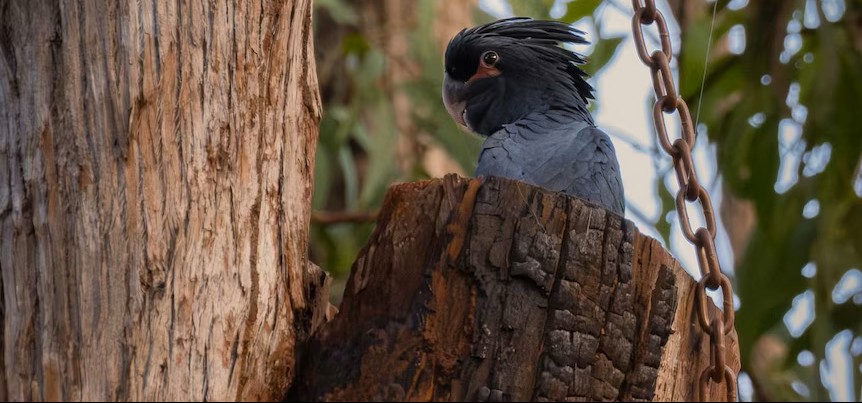
Endangered Cockatoos Finally Hatch Chick in Artificial Nest, a Promise of Conservation Success
A palm cockatoo chick has finally hatched in an artificial nest in Australia, giving hope for one of the world's most difficult-to-breed birds. The species needs tree hollows that take 250 years to form, created by a rare combination of termites, no wildfires, and cyclones. Deforestation destroyed most natural hollows, leaving the birds nowhere to nest. After years of trial and error, conservationists built artificial nests that mimic the exact conditions the birds need.

Deep mantle deformation is linked to subducted slabs, global map shows
Scientists have confirmed that the deepest parts of Earth's mantle deform where ancient tectonic plates have been pushed underground. A study in The Seismic Record journal shows that slow convection currents in the mantle not only move tectonic plates but also deform the mantle material itself. The deformation mainly happens where researchers believe deeply subducted slabs exist. This discovery helps us understand how Earth's interior works.

Uncontrolled scarring: Study reveals the cell sensor that turns healing into harm
Researchers have found the specific cell sensor that controls whether wound healing stays normal or turns into harmful fibrosis. When you get a cut or injury, fibroblast cells rush in to make fibronectin and collagen—two proteins that act like scaffolding to hold the wound together. Normally, once healing is done, the body slowly removes these extra fibers and the tissue softens again. But sometimes this process doesn't shut off properly, leading to excess scarring.

Remains of the Real d’Artagnan May Have Been Found Under Church Altar – DNA Testing Underway
Researchers believe they may have discovered the remains of the historical d'Artagnan beneath the Church of Peter and Paul in Wolder, Netherlands. The real Charles de Batz de Castelmore served as a musketeer and close aide to France's King Louis XIV. He died in 1673 during the Siege of Maastricht. Scientists are now running DNA tests on the bones to confirm the identity, which could finally solve a centuries-old mystery about where this famous figure was buried.

Banned but not silenced: Gerry Flynn’s commitment to uncovering the truth across the Mekong
Gerry Flynn is an environmental journalist who has made Southeast Asia his home base since 2017, reporting mainly from Cambodia. He joined Mongabay as a features writer in 2023 after working with the Rainforest Investigations Network. His work focuses on the complicated relationship between human rights, ecosystems, and natural resource governance.

Research points to brain-based clues for mental health
Psychologist Maital Neta at the University of Nebraska studies how the brain instantly decides if something is good or bad. These snap judgments are called valence bias. Neta's research suggests these split-second reactions might help doctors spot people at risk for depression, anxiety, and other stress-related conditions. The findings could also teach us more about how the brain handles everyday emotions.