Latest News
Positive stories from around the world · Good news by country
Showing 36385–36408 of 37346 articles

SpaceX files to go public, paving way for record stock offering
Elon Musk's SpaceX has filed paperwork with US regulators to go public. If approved, this could become the largest stock offering in history. The move would let regular investors own shares in the space company. SpaceX is known for its rockets, satellites, and missions to the International Space Station.

High nickel concentrations in Martian bedrock point to potential biosignatures
NASA's Perseverance rover made an exciting discovery on Mars in 2024. While exploring an ancient river channel called Neretva Vallis, which once flowed into what is now Jezero crater, the rover found unexpected levels of nickel in the bedrock. Researchers analyzing this data in a new study published in Nature Communications believe these nickel concentrations might be biosignatures - traces left behind by ancient Martian life.

Newly identified chronic pain circuit offers pathways to new treatments
Researchers have created a new map of a brain circuit linked to chronic pain. The study found that turning off specific cells in this circuit reduced chronic pain without affecting the body's ability to feel acute, dangerous pain. This discovery could help the roughly 60 million Americans living with persistent pain. The findings were published in the journal Nature.

Social media enables mapping of public perceptions of redlining across the U.S.
Researchers at the University of New Mexico looked at more than ten years of social media posts to understand how Americans discuss redlining. Redlining is a historical form of housing discrimination where banks and the government refused services to people in certain neighborhoods, often based on race. The study maps public perceptions of this ongoing issue. It was published in the journal Computational Urban Science.

A color-changing phosphor can encode information
A team at the University of Michigan built a molecule that switches between two colors. When you add a solvent (a liquid that can dissolve things) or apply gentle heat, the molecule changes from emitting green light to blue light. The researchers call this a "two-layered" encoding platform. One layer shows when the molecule glows green, and the other reveals itself when it switches to blue — creating a way to hide messages in plain sight.
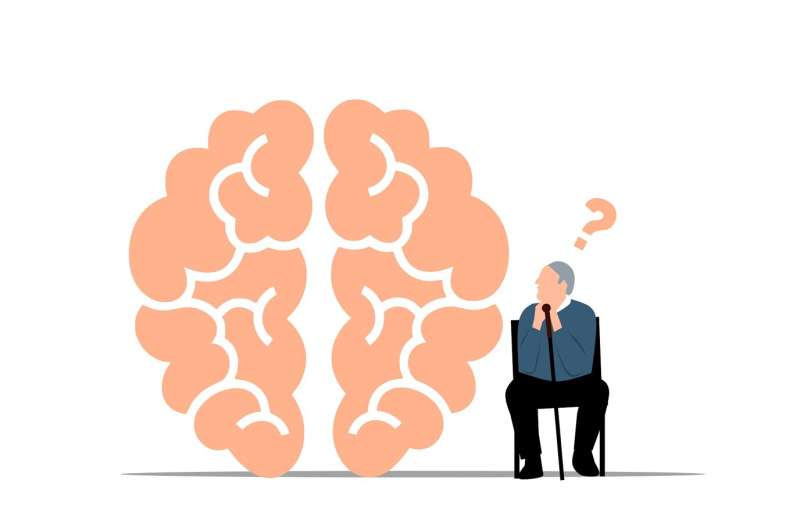
Co-designed intervention shows promise for improving mental health discharge for people with dementia
Researchers at the University of Manchester created SAFER-Dem, a new tool to help people with dementia when they leave mental health hospitals. The tool was co-designed with patients and caregivers, making it better suited to real-world needs. It aims to make the discharge process safer and more personalized. Early results show it could improve how dementia patients transition out of hospital care.
Low-dose leukemia drug can clear senescent fat cells and cut inflammation
A team from The Hospital for Sick Children (SickKids) in Toronto collaborated with researchers in South Korea to discover a promising therapeutic target in fat tissue. They found that a low dose of a leukemia drug can clear senescent (damaged) fat cells, which improves cellular function and reduces inflammation. The study, published in the peer-reviewed journal Nature Communications, suggests this approach may protect against obesity-related diseases.

Analysis tracks 20 years of coastal species shifts in the Gulf of Maine
Researchers from the University of Maine, working with the Maine Department of Marine Resources, are examining two decades of fishery survey data from the Gulf of Maine. The study focuses on how environmental changes are reshaping marine ecosystems. It also aims to evaluate and adapt survey methods for more effective, science-based assessments. This work could serve as a model for other regions studying marine ecosystem shifts.

Millions-of-years-old insect symbioses are surprisingly fragile
Many insects rely on bacteria for vital nutrients in partnerships that have lasted millions of years. New research reveals the mechanisms behind why insects sometimes exchange these bacterial partners. Scientists previously did not understand how such ancient, close relationships could change. This discovery shows these symbiont swaps are more common than once believed.
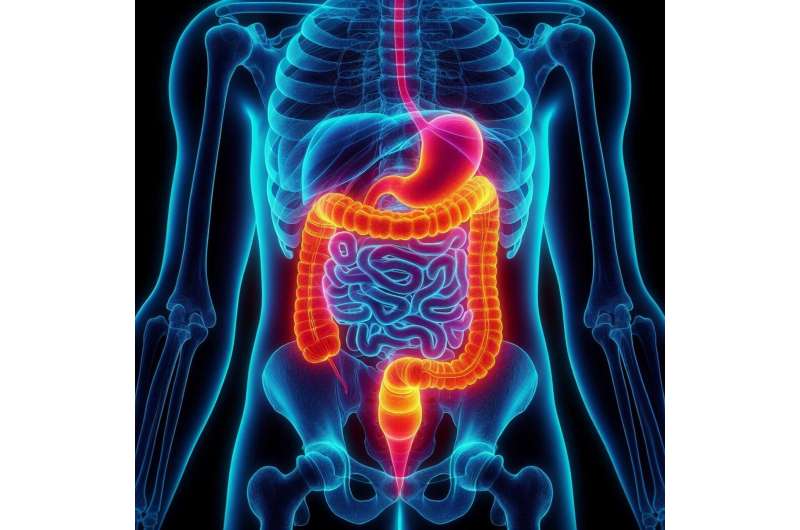
How stomach cells rebuild after injury: Study uncovers key players in tissue regeneration
Researchers at Baylor College of Medicine and partner institutions have uncovered how the stomach's inner lining repairs itself after damage. The team identified the key cellular players and their interactions that drive this regeneration process. The study, published in the Proceedings of the National Academy of Sciences, suggests these same mechanisms may help repair other tissues in the body. This discovery could open doors for new treatments that help the body heal more effectively.

The Sunniest, Windiest Country Announces Renewables Project to Power 6 Million Homes
Egypt announced new wind and solar projects to power 6 million homes. The North African country, which is over 90% desert, is leveraging its abundant sunshine and Saharan winds for clean energy. This move comes as many countries respond to current energy challenges by investing in renewable sources. Egypt's geography makes it ideal for solar and wind power generation.

Graphene 'scaffold' recruits bone cells and helps the body regenerate fractures
Researchers in Brazil have developed a graphene-based scaffold that dramatically speeds up bone healing. The scaffold is made of sheets of carbon just one atom thick. In tests on lab rats, it achieved nearly 90% bone repair within one month. This biocompatible framework guides new bone cells to grow, offering hope for treating fractures and bone loss in humans.

Useful quantum computers could be built with as few as 10,000 qubits, team finds
Quantum computers of the future may be closer than we thought. Researchers at Caltech and startup Oratomic have found a way to reduce errors in quantum machines. Their new approach means these computers could work with just 10,000 qubits, when before millions were thought necessary. This makes the dream of powerful quantum computers more realistic.

Language processing requires rapid cross-talk across brain regions, researchers discover
Scientists at UTHealth Houston have made a breakthrough in understanding how the brain processes language. Their research shows that multiple brain regions engage in fast conversations with each other to understand words and meaning. This challenges the old view that only one brain area was responsible for language. Led by neurosurgeon Dr. Nitin Tandon, the findings were published in the journal PLOS Biology.

Thai court rules gold mine liable, but villagers face uncertain justice
After 10 years of fighting, villagers in Ban Khao Mo, Thailand, won a landmark legal victory against the Chatree gold mine. On March 24, 2026, the Bangkok Civil Court held the company liable for environmental damage and health harms to the community. This ruling marked a rare court win for rural villagers against a major mining corporation in Thailand. Despite the victory, villagers report still living with pollution and uncertain whether they will ever receive meaningful compensation or cleanup.

Small molecule could slow or stop progress of Parkinson's disease and related brain disorders, not just treat symptoms
Scientists at NYU Abu Dhabi and the University of Denver have discovered a small molecule that could slow or stop serious brain diseases including Parkinson's disease, Lewy body dementia, and multiple system atrophy. These diseases occur when a protein abnormally clumps together and spreads through the brain, killing nerve cells over time. Unlike current treatments that only manage symptoms, this molecule targets the root cause of these disorders. There are currently no approved drugs that can halt or slow the progression of these conditions.

A new way to detect breakthroughs in science: Large-scale analysis reveals 'disruptive' innovations in research history
Researchers at Binghamton University, State University of New York, have created a new method to identify breakthrough scientific discoveries. The team analyzed millions of research papers to detect which discoveries genuinely reshaped their fields. Their approach can recognize famous breakthroughs like the theory of evolution, splitting the atom, and the development of antibiotics. This tool could help scientists and institutions recognize truly transformative research.

Are relationship surveys measuring the wrong thing? How one 'Q-factor' shapes most answers
A study by James Kim at Lakehead University in Canada finds that most relationship surveys may be measuring the wrong thing. The research, published in PLOS One, suggests these surveys don't actually capture distinct relationship parts like communication, conflict, or affection. Instead, they mainly reflect how people feel about their relationship overall. This single underlying judgment, called a "Q-factor," shapes how people answer nearly all survey questions about their relationships.
Urban vs. rural exercise habits: Why walking dominates, yet many miss activity targets
A study published in PLOS One by researchers at West Virginia University found walking is by far the most popular leisure-time physical activity among U.S. adults. Rural residents tend to enjoy gardening, hunting, and fishing, while urban residents more commonly report running, weightlifting, and dancing. Urban residents were found to be more likely than rural residents to meet physical activity guidelines.

Cosmic collision of galaxies mapped by Maunakea telescope
Astronomers at the University of Hawaiʻi at Hilo are studying a cosmic collision between galaxies using the Canada–France–Hawaiʻi Telescope on Maunakea. Professor R. Pierre Martin leads the international research team, including PhD student Camille Poitras and colleagues at Université Laval in Canada. The study simulates the past, present, and future of this galactic merger, which has been unfolding for hundreds of millions of years. This research helps reconstruct one of the universe's most dramatic and slow-moving events.

Uncovering cellular drivers of increased brain signal activity
Northwestern Medicine scientists uncovered new insights into how high gamma activity—a widely studied brain signal—is generated. The study was published in the journal Nature and reveals the cellular drivers behind this important brain activity. These findings could impact how researchers interpret both past and future neurological studies that use gamma signals.

Soil biodiversity linked to lower human infectious disease risk
A new study reveals that soil teeming with diverse microscopic life acts as a natural defense against human diseases. Researchers from the University of Western Australia found that rich microbial communities in soil can suppress pathogens, keeping them from establishing and spreading. The findings, published in the journal Cell Host & Microbe, suggest nature offers free protection against infectious diseases through its hidden below-ground ecosystems.

The body's internal clock can be determined from a hair sample
Researchers at Charité–Universitätsmedizin Berlin have developed a test that reads a person's internal body clock from hair roots. The technique was applied to roughly 4,000 participants to identify their chronotype—their natural sleep-wake pattern. The study also found that women and men differ slightly in their biological rhythms, and that lifestyle affects these rhythms more than previously thought. This work could lay the foundation for circadian medicine, where treatments are timed to match the patient's body clock.

Smart titanium implant enables rapid bacteria elimination and enhanced bone regeneration
Researchers at the University of Hong Kong developed a titanium implant surface that responds to near-infrared (NIR) light. When exposed to NIR for 15 minutes, the surface destroys 99.94% of Staphylococcus aureus biofilms — a common cause of implant infections — without requiring antibiotics. Beyond fighting bacteria, the light-activated surface also encourages bone to fuse more strongly with the implant. This dual benefit could reduce infection risks and improve healing outcomes for patients receiving orthopedic implants.