Latest News
Positive stories from around the world · Good news by country
Showing 601–624 of 37342 articles

Discovery of curse ritual in trash dump surprises Egyptologist: 'It must have been widespread in ancient Egypt'
Researchers found 40 charred papyrus fragments at a temple in the ancient city of Thebes, in Egypt. The pieces were found in a trash dump. They show that a famous curse ritual was probably far more common than experts thought. Egyptologists now think such rituals were widespread in ancient Egypt.

A fungus that can survive in Chernobyl could help create materials that trap and break down nerve agents and pesticides
Black molds grow on the walls of the damaged Chernobyl nuclear plant in Ukraine. Some of these fungi even grow toward radiation. Scientists think their special traits could help make materials that trap and break down nerve agents and pesticides. The idea is still early, so more research is needed.

310 million-year-old fossil reveals scorpion that looked much like modern relatives
Researchers at Flinders University in Australia took a close look at a rare fossil scorpion. The animal lived about 310 million years ago. It looks very much like scorpions alive today, which shows how little some body shapes have changed over time.

Croatia and Costa Rica lead countries in sustainable development—while Norway ranks near bottom
Researchers at ICTA-UAB created a new Sustainable Development Index, called SDI, to measure how well countries balance people, nature, and the economy. Croatia and Costa Rica come out on top. Norway ranks near the bottom, which shows that wealth alone does not make a country sustainable.

Whole-genome sequencing study reveals how antibiotic-resistant bacteria may spread through rural communities in Malawi
Researchers at the Liverpool School of Tropical Medicine (LSTM) studied how bacteria that resist antibiotics move through rural communities in Malawi. They used whole-genome sequencing, a method that reads the full genetic code of each bacterium. This shows which germs are linked and how they travel between people. The findings can help health teams decide where to focus efforts to slow the spread.

Star's record eruption shows how key elements can spread through space
Astronomers led by Wouter Vlemmings and Miora Andriantsaralaza took a very detailed picture of a nearby star. They used ALMA, a telescope in Chile. The pictures show how a star's eruption can spread important elements across space.

Uganda: Five Kayunga Schools Receive Major Upgrade With Shs700m Grant - allAfrica.com
Kayunga District in Uganda has spent Shs700 million on classroom buildings. The work covers five schools. It uses a government grant. The aim is to reduce crowding and make learning better for students.
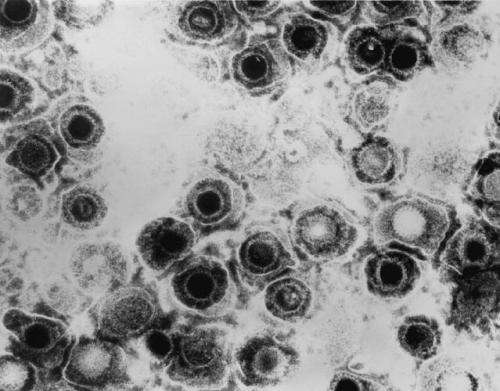
T cells gone viral: New study finds host genetics shape the brain's immune response to chronic herpesvirus infection
Scientists have long suspected a common herpesvirus helps cause multiple sclerosis (MS), a disease that harms the brain and spinal cord. A new study in mice, led by Dimitry Krementsov at the University of Vermont, shows that genes affect how well the body controls this virus. Mice that controlled the virus poorly had immune cells gather in the brain before any disease appeared. The team hopes to find drug targets that could boost immunity and help prevent MS in people at high risk.

Older drivers are not making the roads unsafe, research shows
A 2015 change in South Australia let drivers aged 75 and older use a self-check form instead of a full medical test. A study from Adelaide University, using data from 1997 to 2023, found roads did not get less safe. Injury crashes fell, and the chance an older driver was in a crash also dropped. Researchers said more medical license suspensions happened after the change, which suggests the self-checks still catch unfit drivers.

Hidden leaf dynamics could improve Amazon rainforest carbon uptake estimates
Researchers at the University of Hong Kong studied the Amazon rainforest from satellite images taken from 2019 to 2021. They found that trees shed and replace leaves at different times, even though the forest always looks green from space. Including this leaf change in computer models shifts the estimate of carbon uptake by 9.4%, about 1.42 billion metric tons per year. The study was published in the journal Nature.

Can AI expedite medical imaging? Yes—if we can trust the picture
Researchers from Virginia Tech and partner universities built a new statistical tool. It checks whether AI-made medical images are accurate enough to stand in for real patient data in clinical trials. The team tested it on synthetic mammograms, which are breast cancer X-ray images. The U.S. Food and Drug Administration is exploring this approach, which could cut trial timelines to a matter of months.

Inflammatory sensor offers a target for new therapies in patients with brain injuries
Researchers at the University of Bonn and the University of Luxembourg studied brain injuries in mice. They found that the NLRP3 protein drives harmful inflammation after injury. When the protein was missing, less brain tissue was lost and recovery was faster. A drug called NP3-253, given through food for 31 days, brought similar gains and reached brain tissue.

Baltic Sea measurements reveal more complex ocean-atmosphere exchanges than previously assumed
Researchers on the island of Utö in the Baltic Sea tracked how gases move between the ocean and the air. They measured 73 gases, and 48 of them could be identified. The study covered 51 days and showed that seasons strongly change which gases escape from the sea. Scientists say this knowledge will help make better climate models.

Key to successful 'green budgeting' uncovered
Green budgeting means building climate and environment goals into every step of a national budget. Researchers at Sungkyunkwan University studied 13 South Korean central government agencies that used it in 2023. They found that a mid- to long-term environmental and climate plan within an agency is the most important factor for high performance. Strong leaders helped too, but only when they worked with solid plans.

How shells are made: New insights elucidate crystals' uptake of 'disruptors'
Mollusks like clams and snails build shells from chalky calcite, which is brittle on its own. Scientists at Cornell and Pacific Northwest National Laboratory studied how crystals take in tiny particles to become stronger. They built a predictive model and tested it with glowing silica particles called "C dots." The findings could help engineers design better materials and understand key chemical processes.

Microscopic chambers reveal how bacteria navigate tight spots
New York University researchers built microscopic hollow spheres that act like tiny rooms for bacteria. Each sphere has a small door, so a bacterium can swim inside. The team tracked the bacteria's paths in three dimensions without using dyes. The study was published in the journal Small.

Mongabay Kids launches Wild Guardians: A free education initiative to engage children with nature
Mongabay Kids has launched Wild Guardians, a free educational series for upper elementary students. It connects children with nature and encourages them to care for wild animals and places. The series includes five-minute videos, illustrated comics and lessons for fourth and fifth graders. It shares stories of young people around the world who are protecting their favorite animals and ecosystems.

No magnets needed: Extreme voltage drives completely new kind of Hall effect
Physicists at Rice University and the Technical University of Vienna studied a special material called a topological semimetal. The Hall effect is a current that flows sideways when voltage is applied. In this material, they saw the effect appear with no magnetic field at all. Strong voltage seems to copy the effect that a magnet would normally cause.
Evansville Promise Neighborhood initiative to expand with second $30M federal grant – Inside INdiana Business
Evansville, Indiana's Promise Neighborhood program has won a second $30 million federal grant. The program will expand into new neighborhoods with higher poverty and lower student test scores than the county and district averages. About 25% of residents in the new area live in poverty, compared with 15% countywide. The grant aims to give local children and families better support from school to career.
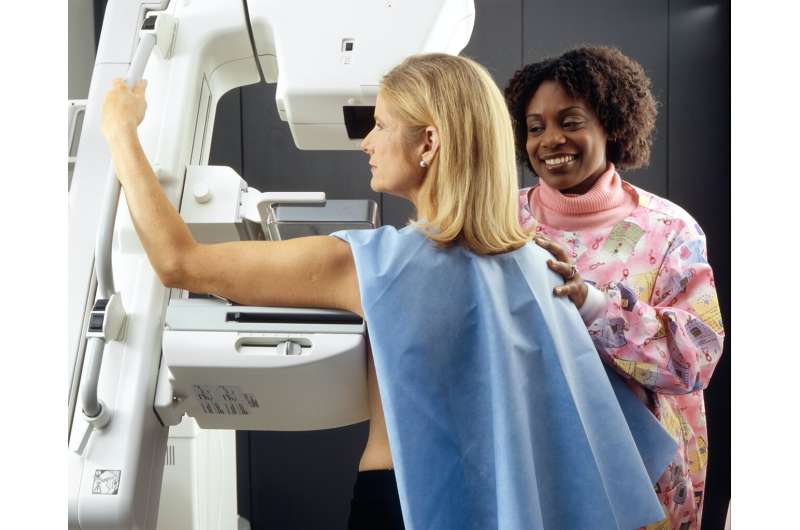
England launches world's largest AI-aided breast cancer screening trial
England's National Health Service has started the biggest AI breast cancer screening trial in the world. It will involve nearly 700,000 women over three years. The AI tool helps specialists check mammogram images for cancers that are too small to see or feel. If it works, it could let most images be reviewed by one specialist instead of two.

Diffusion models may not need equal precision at every step
Diffusion models are AI tools that create images step by step. A new paper studies how precise the math must be at each step. Early steps are very sensitive to errors, but later steps are sturdy. Using cheaper math later could lower computing costs and hardware needs with little loss in quality.
A small price add-on could end power-market make-whole payments
Electricity markets sometimes pay power plants extra money outside the normal system. These are called make-whole payments. A research paper proposes a small uniform price add-on, called LMP+U, to stop these side payments. The idea keeps the price signals that show where the grid is congested. Simulations show it works better than the current method in crowded networks.
A 2-megawatt-hour battery kept a ship’s reactor from chasing a five-second maneuver
Researchers built a computer model of a ship powered by a small modular reactor, a compact type of nuclear reactor. When the ship's engines suddenly slowed, extra electricity built up and caused a large jump in electrical frequency. Adding a 2-megawatt-hour battery absorbed that surplus and lowered the peak from about 61.1 Hz to about 60.06 Hz. The battery also made the reactor and steam system respond more smoothly.

A drone’s detour may be invisible—unless you measure where it was trying to go
Drones are becoming common in cities, and managing many of them at once is hard. Researchers created a new way to model drone traffic. It counts only the part of each flight that moves toward the destination. Computer simulations showed the model works, and mixing drone priority levels can help more drones get through.