Latest News
Positive stories from around the world · Good news by country
Showing 649–672 of 37342 articles

Study uncovers potential strategy to expand immunotherapy benefit for metastatic melanoma
Immunotherapy, a treatment that helps the immune system fight cancer, works well for some people with advanced melanoma but not all. Researchers at Dana-Farber Cancer Institute combined large sets of data from earlier clinical studies. They found that tumors with low oxygen resisted treatment in immune-active tumors. In mice, a drug that blocks the HIF-2α oxygen pathway worked together with anti-PD-1 therapy to slow tumor growth. This could help expand treatment benefits to more patients.

Iron single-atom nanozymes enable sustainable catalysis for tumor therapy
Researchers at the Hefei Institutes of Physical Science in China designed tiny iron catalysts, called single-atom nanozymes. These act like natural enzymes and turn a substance in tumors into harmful molecules that damage cancer cells. The best version, FeN3, kept working for long periods and slowed tumor growth most in mice. The study was published in Angewandte Chemie International Edition.

Open-source pipeline faithfully produces models of pediatric tumors to support drug testing
St. Jude Children's Research Hospital in the United States built a new way to grow models of children's tumors. Older pediatric cancer cell lines are often decades old and may not act like real patient tumors. The new method first grows cells in 3D, which keeps more of the tumor's mix of cell types. So far it has made organoids from 135 tumors and 20 renewable cancer cell lines, all shared freely with researchers.

New test could detect early-stage lung cancer by analyzing a patient's breath
Scientists are working on a breath test that could find lung cancer early. Lung cancer is the leading cause of cancer deaths in the U.S. More than 250,000 new cases are expected in 2026. About half of those cases are expected to be fatal. Finding it early could give patients a better chance of survival.
Greece’s oldest modern-era museum reopens on the Acropolis after major restoration
A museum on the Acropolis in Athens has reopened after a major restoration. It has stood on the site since 1874, making it the oldest museum of the modern era in Greece. The reopening came after a high-tech makeover that updated the building.

Theoretical model describes a new type of atomic oscillation with cloverleaf symmetry in altermagnets
Researchers at Martin Luther University Halle-Wittenberg and the University of Münster in Germany found a new kind of atomic motion. Atoms in special magnets called altermagnets move in a pattern with a cloverleaf shape. The team used a theory model to describe this motion. The results were published in the journal Physical Review Letters.
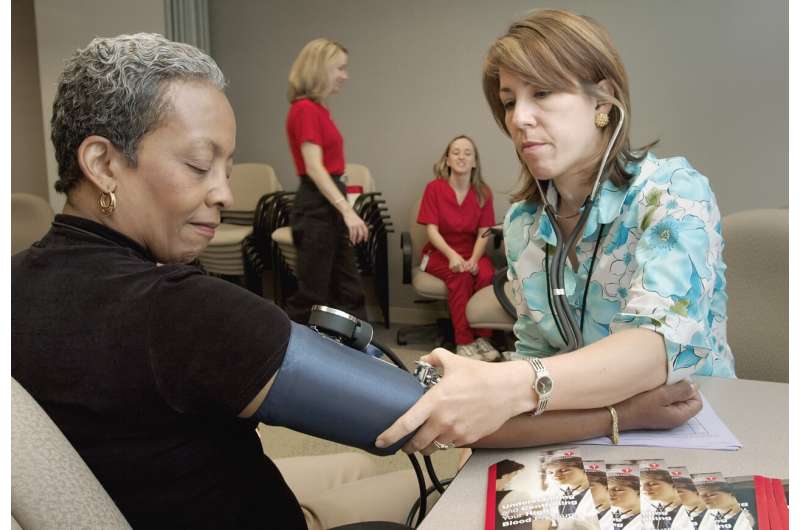
Heart attack and stroke warning signs emerge up to 30 years before events, research suggests
Researchers found early warning signs for heart attacks and strokes. Changes in blood pressure, diabetes and kidney function can appear many years before an event. Some blood differences showed up more than a decade before a heart attack or stroke. Doctors could use these signs to act earlier and prevent serious harm.

NASA+ Documentary Captures Europa Clipper’s Journey Into Deep Space
NASA has released a new documentary called "The Europa Concept" on its NASA+ streaming service. It follows the Europa Clipper mission from an early idea to a real deep space project. The spacecraft will study Jupiter's moon Europa. Scientists want to learn whether the ocean under its icy shell could support life.
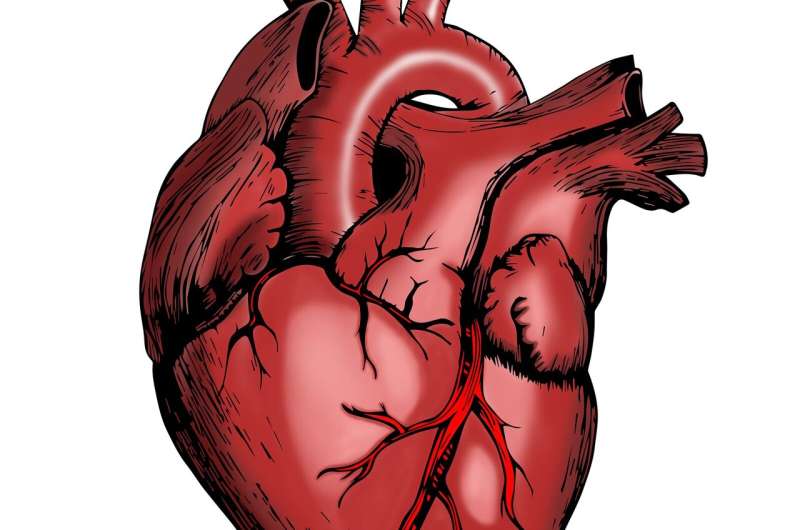
Research paves the way for blood-based heart diagnostics
Researchers from the Mass General Brigham Heart and Vascular Institute found a new way to study the heart. They isolate tiny particles called cardiovesicles that float in the blood. These particles carry signals about molecular changes happening inside the heart. The method could one day help doctors diagnose heart problems with a simple blood test.

Specialized brain cells help wasps recognize other wasp faces
Researchers at Wake Forest University studied how wasps recognize the faces of their nestmates, the other wasps living in their nest. They found specialized brain cells that make these face distinctions possible. Wasps can tell one face from another much like people tell apart mom, dad, a friend, or a stranger. The finding may help scientists understand how many animals, including humans, process faces.

Researchers identify a way to turn off the growth switch in glioblastoma
Researchers have found a way to turn off a growth switch inside glioblastoma, one of the most common and deadly brain tumors. This type of tumor grows fast and often returns after treatment, which makes it very hard to beat. The discovery points to a possible new way to slow the tumor down. Further testing is needed before it could help patients.

ALMA resolves the gravitational reach of a black hole in the early universe
Astronomers used ALMA, a group of radio telescopes in Chile, to measure the mass of a huge black hole. The black hole sits in a galaxy called W2246-0526. Its light has stretched about 5.6 times, so we see it as it was when the universe was about 1.3 billion years old. This helps scientists understand how giant black holes grew so early in cosmic history.

A 'vicious cycle' between mechanically stressed cancer cells and surrounding cells captured
Researchers at KAIST, a university in South Korea, studied melanoma, a type of skin cancer, in a lab model. They found that repeated pressure damages the protective membrane around the nucleus, the cell's control center, of cancer cells. The cells around the tumor then change and cause even more damage. Stopping this loop could lead to new ways to keep cancer from spreading.

Researchers discover possible new molecular 'brake' in the development of esophageal cancer
Researchers at Case Western Reserve University have found a possible new molecular brake in the development of esophageal cancer. Barrett's esophagus is a condition where the food pipe lining changes into intestinal-type cells. It greatly raises the risk of esophageal adenocarcinoma, one of the deadliest cancers. The discovery could help doctors find new ways to stop the disease early.

Anatomical variant found in an ancient jaw reveals a modern-day mystery
Researchers at La Trobe University found a harmless bony ridge on the inside of a lower jaw in a fossil from Sterkfontein, South Africa. The fossil, called Sts 52b, belonged to a young Australopithecus africanus and is 2.1 to 2.8 million years old. This makes it one of the earliest and clearest examples of this trait in the human fossil record. The finding suggests heavy chewing alone does not cause the ridge, and that genes and environment may also play a part.

New research could help clinicians track emerging resistance to mutant-selective PI3K inhibitors in breast cancer
Researchers at the Mass General Brigham Cancer Institute studied blood samples from 32 breast cancer patients. The patients took experimental PI3Kα inhibitors, drugs that target a gene mutation called PIK3CA. The team found new gene changes that let tumors resist these drugs. Combining low doses of approved drugs with the new ones shrank resistant tumors better in mice than either drug alone.

Scientists build nearly 7,000 'digital brain twins' to explore aging, dementia and the exposome
An international team built personal computer models of brains for 6,986 people. Each model, called a digital brain twin, is based on brain scans and simple biology equations. The people range from 18 to 100 years old and live in 16 countries. Researchers can now test how aging, disease and surroundings affect the brain. The team is sharing its code so others can build on the work.
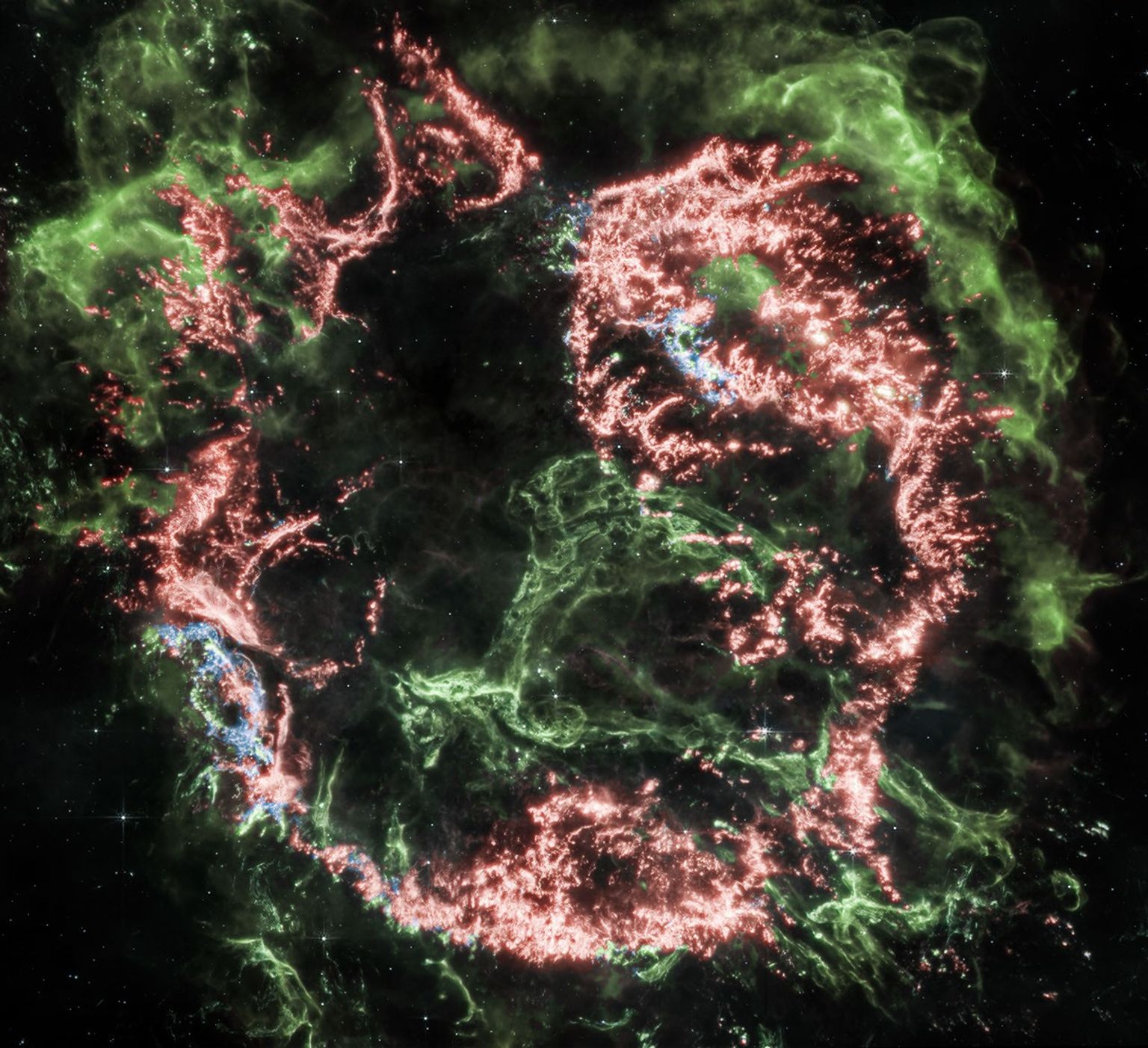
NASA’s Webb Shows How Supernova Dust Chronicles Star Evolution
NASA's James Webb Space Telescope looked at dust left behind by supernovas, which are huge explosions at the end of some stars' lives. This dust holds clues about how stars evolve. Scientists use these clues to understand how stars and the materials around them change over time.

Could astronomers be closing in on a hidden planet beyond Neptune?
Researchers used computer simulations to model a possible hidden planet beyond Neptune, nicknamed Planet X2. The planet would have about 1.5 to 2 times Earth's mass and orbit hundreds of times farther from the sun than Earth. Its gravity could explain unusual orbits of icy objects in the distant solar system. The Vera C. Rubin Observatory's sky survey could help test the idea.
Is Marquez MotoGP's greatest of all time?
Spain's Marc Marquez won his eighth MotoGP world title in 2026. He overcame the biggest points deficit in MotoGP history, 102 points, to take the crown. The win came after crashes, surgeries and months out of action. It ties him with Giacomo Agostini for the most premier class titles.

Massive cell atlas reveals shared patterns across cancer ecosystems
Scientists built a large atlas of the cells that surround tumors. They pulled together data from 258 studies, covering more than 15 million cells from 42 solid cancer types. The team found that healthy cells near tumors change in similar ways across cancers and species. This suggests mouse cancer models closely reflect what happens in human patients.

'The sacred object in mathematics': The Riemann hypothesis, AI and a proof no human can read
An AI-assisted proof of the Riemann hypothesis has been announced by Levent Alpöge, a mathematician who works at Anthropic. The Riemann hypothesis is one of the most famous unsolved problems in math, first posed in 1859. The proof was released as more than 17 million lines of Lean code, which a computer can check step by step. Mathematicians have not yet confirmed that the claim is correct.

2026 Women’s Amateur Latin America: María José Marín defends title - Yahoo Sports
María José Marín won the 2026 Women's Amateur Latin America golf tournament at El Pulté Golf in Guatemala. She beat the field by seven shots. The win gives her back-to-back titles in the event. It is a strong run for a young amateur player.
England's tearaway quick bowler reinvented as a top-order batter
England cricketer Katie George was once a fast bowler, but nine stress fractures in her back ended that path. Working with her coach at Warwickshire, she became a top-order batter instead. She topped the averages in this season's One-Day Cup and earned a place on an England A tour of India.