Latest News
Positive stories from around the world · Good news by country
Showing 625–648 of 37342 articles

When microbes run short of food, they can build their own neighborhoods
Microbes often trade food molecules with their neighbors. This study shows that when food is scarce, these trades can make microbes gather into separate clumps on their own. The researchers built a simple model that explains which factors control this pattern. The clumps form compact groups that compete for shared resources, so they do not merge.

A dying epidemic can come back—and stay, if its neighbor keeps the spark alive
This study uses computer simulations to model how diseases spread across two connected areas. It finds that an outbreak in one area can revive a disease that had nearly died out in the other. In two linked areas where people recover and gain immunity, a spread can still cause a second, large outbreak. The work is a mathematical model, not a test on real people.

Intermittent fasting can reverse diabetes in mice, study finds
A new study found that intermittent fasting, which means eating only during set hours, can reverse type 2 diabetes in mice. Type 2 diabetes is a condition where the body struggles to control blood sugar. Patients today usually take medicine and change their lifestyle. The results are from mice, so more research is needed before this could help people.

New modeling tool sheds light on how climate change could reshape marine ecosystems
Researchers at the University of Strathclyde have built a new high-resolution modeling tool. It uses machine learning, a type of computer pattern-finding, to predict changes in the ocean. The tool focuses on zooplankton, tiny drifting animals that feed many larger sea creatures. It shows how they could respond to changing seas in Northwest European waters over coming decades.

China’s mangroves have bounced back. Birds have returned too
Mangrove forests along China's coast more than doubled in size between 1998 and 2020. After losing nearly 70% between 1950 and 1990, the government set aside reserves and restored former fish ponds. Bird species recorded in these areas rose from 148 to 397. Warmer temperatures and more rain also helped the forests grow.

New fiber laser combines ultrashort pulses with broad spectrum and stable output
Scientists have built a new fiber laser that makes extremely short flashes of light. These flashes last only quadrillionths of a second. The laser also covers a broad range of colors and keeps its output steady. That steadiness matters for clear images and accurate measurements.

Bacteria split their membranes to kill infected cells and block viral spread, study shows
Scientists have discovered a new immune defense in bacteria. A signal molecule called 2′,3′-cGAMP tells the bacteria to split their outer membrane into two layers. This kills the infected cell and stops viruses that attack bacteria, called phages, from spreading further.

NAD⁺ plays a hidden role in giving immune cells a lasting disease-fighting memory, study reveals
Our immune cells can build a long-term memory each time they fight off an illness. Scientists did not know how signals inside the cell reached the DNA switches that hold this memory. A new study reveals that NAD+, a molecule found in every cell, plays a hidden role in this process. The finding could help future treatments boost the body's defenses.

Countries agree on new ways to achieve safe chemical use
Countries have agreed on new steps to speed up work that prevents harm from chemical products. These chemicals can hurt people's health and the environment. The United Nations announced the agreement. The steps aim to make chemical use safer for everyone.

Proteins with ancient viral roots guard genetic switches left by mobile DNA
Much of our DNA is made of mobile pieces called transposable elements. Many of these pieces came from ancient viruses and spread over millions of years. Although most can no longer move, they can still affect when nearby genes turn on or off. New research shows that certain proteins with viral roots help guard these genetic switches.

Scientists reveal how chemical changes switch on leukemia-driving genes
Researchers have uncovered how odd chemical changes to proteins that sit on DNA can turn on genes that push cells toward cancer. These genes drive acute myeloid leukemia (AML), a fast-growing blood cancer. The finding helps explain how a rare form of the disease develops, which may guide future treatments.

Engineering study reshapes understanding of remotely triggered earthquakes
Scientists have long seen big earthquakes trigger other quakes very far away. Some of these far quakes happen long after the first waves have passed, which puzzled experts. A new engineering study explains both this timing and why certain surface waves have a bigger effect. The findings could help experts better understand and prepare for earthquake risk.

A brain circuit may put the brakes on physical activity as we age
Scientists at the University of Aberdeen in Scotland led by Professor Lora Heisler found a specific brain circuit. This circuit helps explain why physical activity naturally drops as we get older. Understanding it may open the door to new ways to help people stay active as they age.

BepiColombo safely in Mercury orbit despite unexpected challenge
BepiColombo, a joint mission by Europe and Japan, reached orbit around Mercury on 21 November. Its engine burn stopped early, and the spacecraft went into safe mode, which pauses non-essential tasks. Engineers traced the problem to a software glitch and confirmed the spacecraft is safe in a stable orbit. The two science orbiters are set to separate on 9 December.
WHO congratulates India for crossing 1 crore HPV vaccinations
The World Health Organisation (WHO) congratulated India for giving over 10 million doses of the HPV vaccine. The shots went to 14-year-old girls in less than nine months. HPV, or human papillomavirus, can cause cervical cancer, so this vaccine helps protect girls from it later in life.

New imaging tool detects glaucoma progression eight months before standard scans in small study
An imaging tool built by scientists at the U.S. Food and Drug Administration (FDA) can see tiny changes inside the eye. In a small study with the University of Maryland, it showed nerve cells dying in people whose glaucoma looked stable on regular tests. Glaucoma is a common eye disease that can cause permanent blindness. Finding damage early could help doctors act sooner.

Biological differences may affect dementia with Lewy bodies
A new study from Karolinska Institutet in Sweden followed 360 people with dementia with Lewy bodies, a common form of dementia. About 54% also had biological signs of Alzheimer's disease, and those people declined faster on memory and thinking tests. The gap was about 0.80 points per year on a 30-point test. Among people with Alzheimer's signs, a common dementia medicine appeared to slow decline, though the study cannot prove cause.
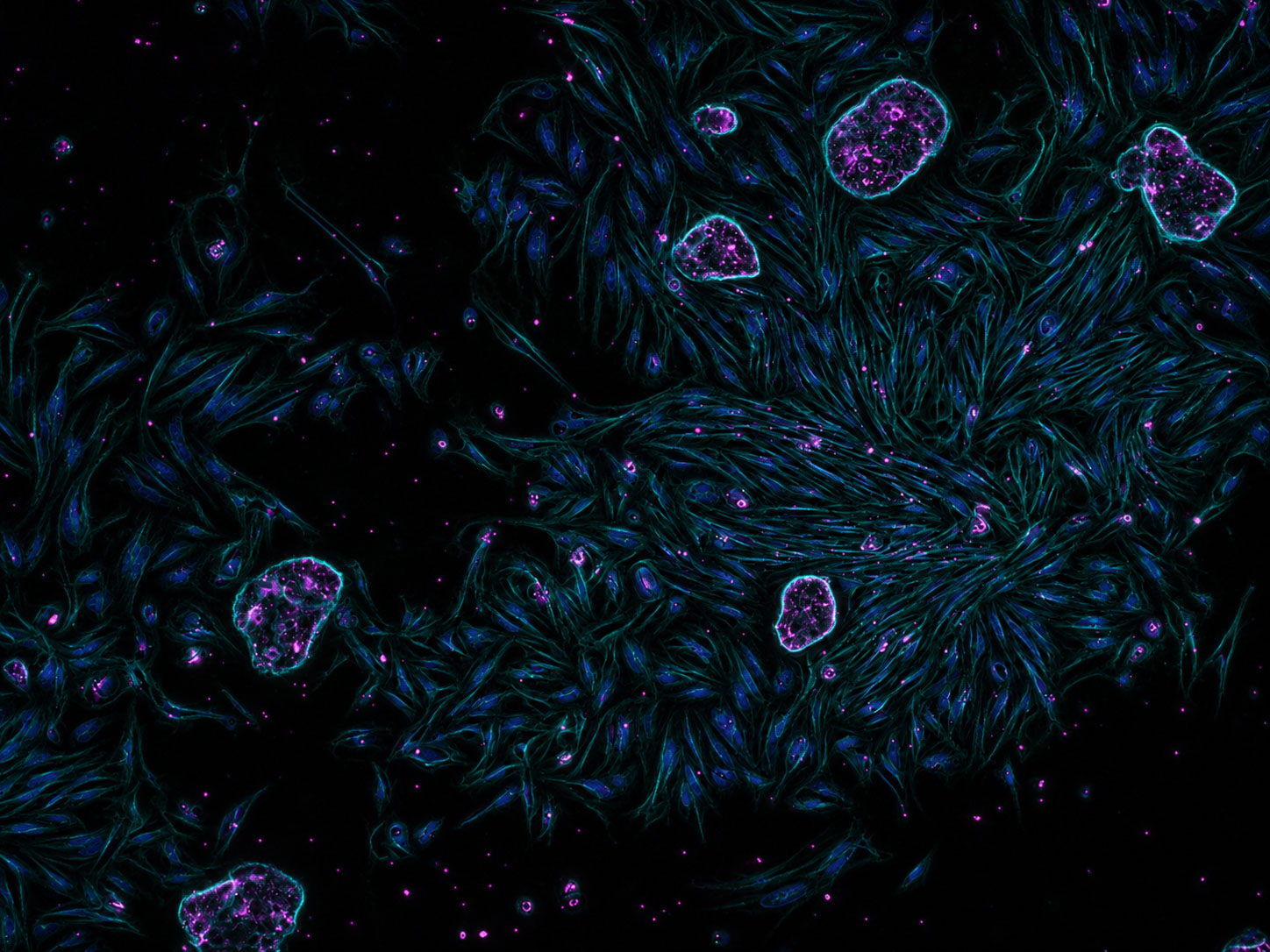
Studying Cancer Cells in Microgravity
Researchers are growing tiny tumors from patient samples aboard the International Space Station. The Encapsulate-1 study watches how cancer cells move and interact in microgravity, where gravity is almost gone. The findings could help predict whether a patient's cancer will spread. That could lead to more personalized treatments.
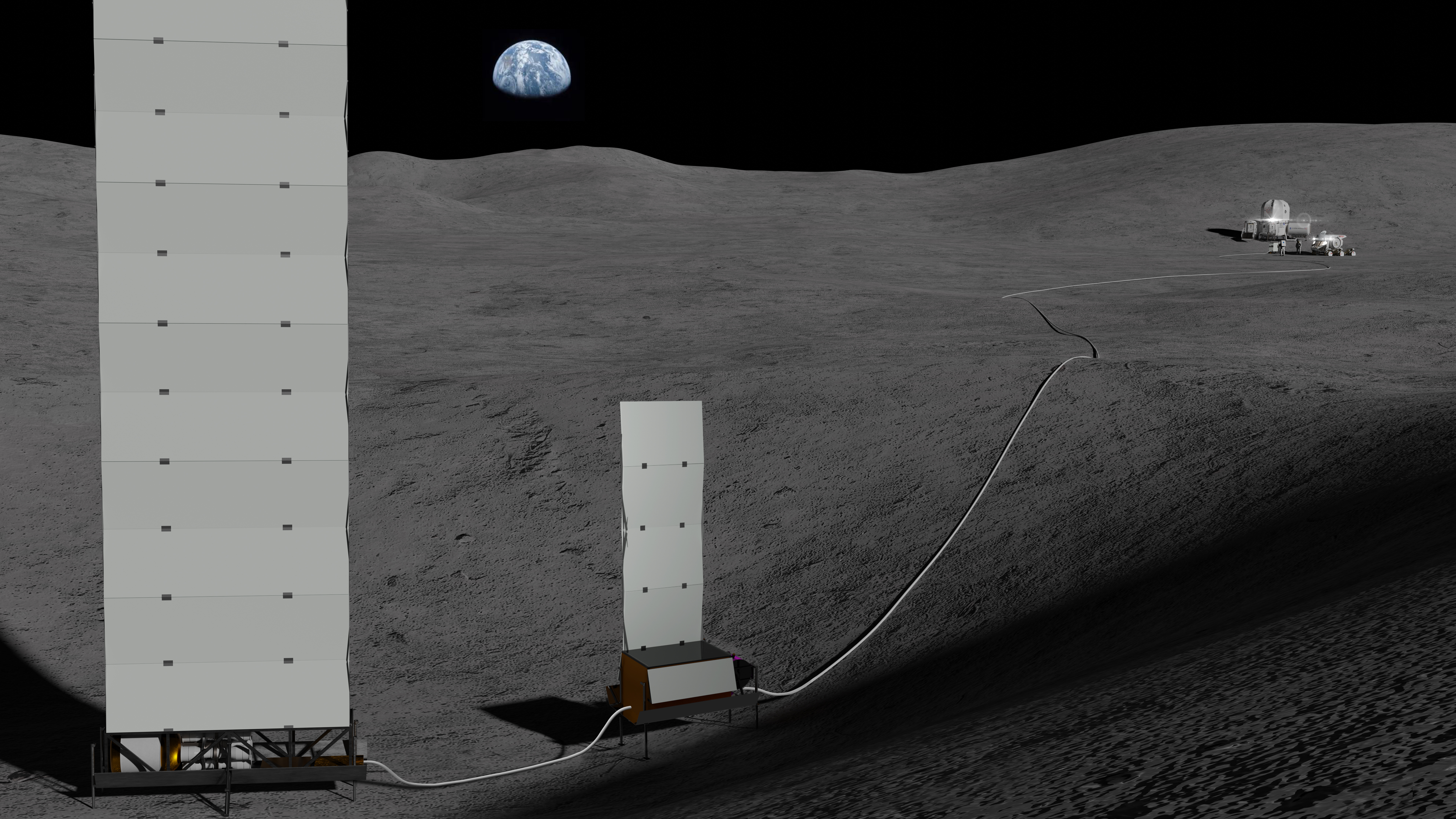
NASA Seeks Partners to Design First Nuclear Reactor for the Moon
NASA is seeking industry partners to build and test the first nuclear reactor meant to make electricity on the Moon. The reactor, called Lunar Reactor-1 (LR-1), is a small fission power system. Fission means splitting atoms to release energy. It will generate 20 kilowatts of electricity, enough to power about 16 average U.S. homes each year. The project is a major step toward a lasting human presence on the Moon.

AI-assisted method advances high-resolution structure classification of membrane proteins in vesicles
Researchers at the Institute of Biophysics of the Chinese Academy of Sciences built an AI-assisted method called isSPA-vesicle. It finds the three-dimensional shapes of proteins that sit inside membranes, the fatty walls around cells and viruses. The team tested it on flu virus proteins and a coronavirus relative, reaching detail as fine as 2.7 Å (about 2.7 ten-billionths of a meter). The study was published in the Proceedings of the National Academy of Sciences.

One random shot or none: A mathematical proof for learning a physical system from one experiment
Cornell researchers have shown that some experiments only need one good try to learn the equations behind a physical system. Their proof uses an all-or-nothing rule, called a zero-one law. For a broad class of models, if one experiment works, almost any random experiment will work too. This helps when experiments are costly, destructive, or hard to repeat. The work was published in the Proceedings of the National Academy of Sciences.

Mechanical crowding near a memory hub may play a role in Alzheimer's progression
Scientists at Columbia University and Mount Sinai studied whether physical crowding in the brain affects Alzheimer's disease. The brain area called the entorhinal cortex sits close to a stiff structure in some people. In a study of 47 patients with mild memory problems, those with close spacing and high tau were more likely to develop Alzheimer's. The idea could point to a new risk factor to watch.

Rocket mission puts a new protective coating for space medicine to the test—and it holds up
Researchers from Adelaide University and the German Aerospace Center sent experimental medicine droplets about 310 kilometers above Earth on a rocket. The rocket launched from Esrange Space Center in northern Sweden in November 2024. A coating made from chitosan, a material found in crab and shrimp shells, helped the droplets keep their size and release medicine steadily. The team hopes this will help keep astronauts' medicines safe on future trips to the Moon and Mars.

Enzyme EPHX1 may influence how liver fibrosis progresses
Researchers at Osaka Metropolitan University in Japan found that an enzyme called EPHX1 is higher in the livers of people and mice with advanced liver fibrosis. Fibrosis is a build-up of scar tissue that can lead to cirrhosis. Mice without the enzyme had more of a helpful fat molecule and less scarring. The team also suggests a blood test could spot patients at risk, though drugs are not yet ready for people.