Latest News
Positive stories from around the world · Good news by country
Showing 1081–1104 of 37346 articles

A safety shield can go stale when the machine changes
Researchers studied safety systems for machines that use data-driven controllers, which are hard to inspect. A safety shield limits the controller's actions, but it relies on fixed assumptions about the physical system. The team's approach checks consistency between models and automatically updates the shield when the machine changes. Tests on a simple reach-avoid task for a unicycle showed safety was maintained.
Flexible AI workloads could unlock a third more data-center capacity on today’s grid
A new study finds that AI data centers can grow without new power lines if their computing work is flexible. Moving some tasks to other sites and delaying others to later hours lets the existing grid carry more load. In a computer model, hosting capacity rose from 4635.1 MW to 6231.5 MW, a 34.44% gain. The researchers say this makes flexible workloads a useful planning tool.
A Backup to GPS Needs Its Own Warning Light
Magnetic navigation can guide vehicles without GPS, and it resists jamming and spoofing attacks. It works by matching magnetic readings against a map of Earth's magnetic field. Researchers built a monitoring method that detects faults caused by bad map data and sets safe error limits for faults too small to catch. The method was tested on simulated aircraft data with injected faults.

Spirituality and religiosity associated with better quality of life in older adults
Researchers Alessandra Buja and Sohail Akhtar at the University of Padova in Italy reviewed many studies on aging adults. A meta-analysis combines results from many earlier studies to find overall patterns. Their findings, published in the open-access journal PLOS Aging and Health, suggest that being religious or spiritual improves how older people view their lives. Having faith generally helped more than turning to it only as a way to cope with problems.

Ultrasound imaging without the goop: A gel-free patch shows promise
Engineers at MIT and the Singapore-MIT Alliance for Research and Technology's WITEC project have created a new material. It is dry and stretchy. It could replace the wet, sticky gel used in ultrasound scans. The goal is easier, more comfortable imaging, especially for elderly care.

Scientists find the brain's blueprint for spoken words
Scientists at UC San Francisco have found new evidence about how the brain handles speech. For about a century, experts thought understanding speech and producing speech were run by separate systems. The new work shows they may share a common blueprint. This also helps explain why injuries to one speech area can make it hard to talk, not just to understand.

Chips smaller than rice grains wirelessly track heat during chemical reactions
Researchers have built a wireless chip about the size of a fleck. It can sit at the bottom of a test tube. The chip records temperature data every second while a chemical reaction is happening. This gives scientists a clear, live view of what is going on inside.

A brain region known for listening helps us speak
Wernicke's area is a part of the brain long linked to understanding spoken words. New research shows it also plays a role when people try to speak. Recording activity in this region while people speak could guide the design of brain implants. These implants could one day help people regain their ability to talk.

Broad Satisfaction With 2026 Midterm Election Administration
A Pew Research Center survey asked voters how the November 2026 midterm elections were run. About 83% said the elections across the United States were run well. Even more, 94%, said their own community's elections went well. Confidence was high overall, though Republicans were less sure about mail-in ballots.
In Wake of Democrats’ Midterm Victory, Majority of Americans Approve of the Party’s Policies and Plans
A new Pew Research Center survey of 10,247 U.S. adults finds that 57% feel excited or relieved that Democrats won control of Congress in the midterm elections. Another 55% approve of the Democratic leaders' plans for the country. Many people also want Democrats to help lead the nation, though 47% say both Trump and Democrats should lead. The survey was taken November 9 to 15, 2026.

‘Today the Truth Has Been Recognized’
The International Court of Justice in The Hague issued its final judgment on November 19, 2026. The case was brought by Gambia against Myanmar for breaking the Genocide Convention. Rohingya families gathered at Jamtoli Camp in Bangladesh to watch the ruling. Many saw it as a recognition of the truth about what happened to them.

A shared molecular weakness in glioblastoma tumor cells may offer a new treatment target
Researchers at the Icahn School of Medicine at Mount Sinai in New York found a molecular trait shared by glioblastoma tumor cells. Glioblastoma is an aggressive brain cancer in adults. The trait is similar to one used by immature cells while the brain is developing. This shared weakness may reveal a target for future treatments.

Two new 16-week tuberculosis regimens advance in clinical trial
Two new treatments for tuberculosis (TB), a serious lung infection, have advanced in clinical trials. Each regimen lasts 16 weeks. TB causes more than 1 million deaths every year. Shorter, safer treatments could help the world meet its goal of ending TB.

Neutrons, death metal and a tiny prehistoric dragon: Scans reveal new horned reptile species from 156 million years ago
A fossil found in Wyoming was first thought to be a baby dinosaur or a snake. Scientists used neutron scans, a special imaging tool, to look inside the rock. The fossil turned out to be a new reptile species that lived 156 million years ago.

PACER trial evaluates online cognitive behavioral therapy for anxiety after chest pain
Some patients keep returning to emergency departments with chest pain, even after doctors confirm they are not having a heart attack. Emergency physician Paul I. Musey Jr. of the Regenstrief Institute asked what hospitals could offer those who also show clinically significant anxiety. The PACER trial tests an online form of cognitive behavioral therapy, a talk-based method that teaches people to change harmful thought patterns. The goal is to give these patients support for their anxiety.

Newly discovered gut viruses offer clues to the origins of the smallpox virus family
Scientists led by a team at Genoscope in France searched over 85,000 DNA collections from environmental and digestive samples. They found a new group of large DNA viruses, called egoviruses. The team found 12 complete egovirus genomes and detected them in 864 samples worldwide. Egoviruses are the closest known relatives of poxviruses, the family that includes smallpox.

Artificial wetland near Valencia traps 36% of incoming microplastics, study finds
An artificial wetland called Tancat de la Pipa near Valencia, Spain, works as a "green filter" for the Albufera lagoon. Researchers found it holds back about 36% of the microplastics that flow in. The wetland uses plants, sediment settling, and filtering to trap the tiny plastic pieces. Scientists say the particles can still be stirred up by floods, so careful design matters.

Black gobies are growing larger despite climate change
Black gobies in the northern Adriatic Sea are growing faster and reaching larger sizes today. Scientists at the University of Vienna made this discovery by comparing fish ear stones, called otoliths, from ancient sediment with those of living fish. Many fish are shrinking as the climate warms, so this result is unusual. The small goby may benefit from fewer predators and less competition.

Little-known protein may help protect spinal disks from aging
University of Utah researchers studied a little-known protein called BLST, also known as ZNF865. Levels of this protein were lower in older and damaged spinal disks, the soft cushions between bones in the back. Using CRISPR, a gene-editing tool, the team restored BLST in human disk cells and reduced signs of aging and DNA damage. The work was published in Aging Cell, but safety tests in people are still needed.

Can Healthy Coral Save Bleached Reefs?
Coral reefs can lose their color when they become bleached, often from warm water. A new study suggests that adding healthy coral can help bleached reefs recover. The helpful algae inside the recovering coral doubled every four days, about ten times faster than in the wild.
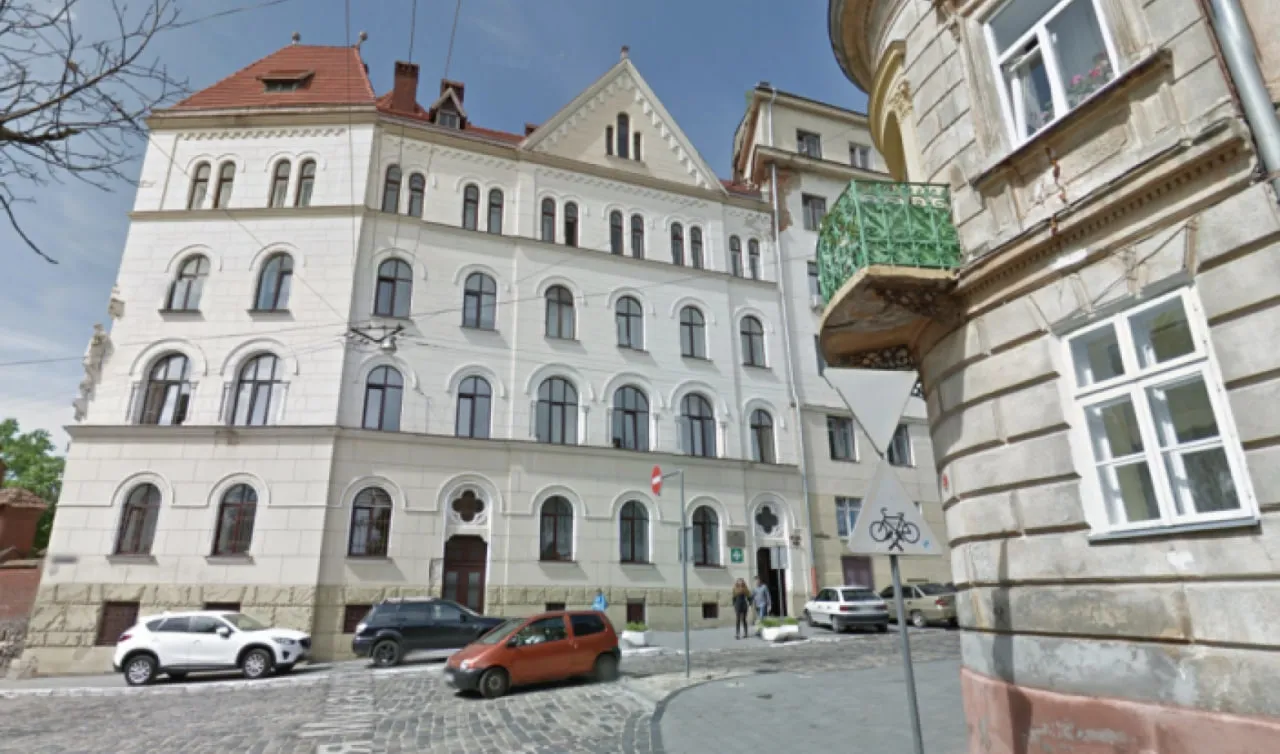
Lviv and Ternopil will receive nearly 2.7 million euros from the EU to renovate medical wards | UA.NEWS
The European Union has granted Ukraine nearly 2.7 million euros for a cross-border medical project called "CareLikeHome". The money will help improve hospital wards in Lviv and Ternopil. The project aims to bring more care to people who are seriously ill, older adults, and cancer patients.

Smart floss can measure blood sugar and inflammation markers
Researchers at the Hong Kong University of Science and Technology built a disposable "Smart Floss." It has tiny channels and sensors inside. Users floss, and the device reads fluid from the gumline. Results are sent to a smartphone in seconds, so there are no finger pricks. It can track diabetes, gout, and gum inflammation.

New metal-organic material combines metallic conductivity with promise for light-sensing electronics
Researchers across four institutions in Taiwan built a new copper-based crystal material. It conducts electricity very well, reaching up to 120 siemens per centimeter, which is close to true metal. The material also reacts strongly to infrared light, which could help make better light sensors. Scientists say it may also support future spintronics, a type of technology that uses electron spin to store and process information.

Duck-billed dinosaur discovered in Italy had a birdlike beak hidden among its bizarre 'spikes'
Scientists studied three fossils of Tethyshadros, a duck-billed dinosaur found near Trieste, Italy. For 15 years, its jaw "spikes" were thought to be exposed decorations. Using X-ray scans, the team found they were bony supports for a larger beak. That beak had many blood vessels and likely helped with eating, touch, and cooling the body.