Latest News
Positive stories from around the world · Good news by country
Showing 1105–1128 of 37346 articles

Exercise intensity may influence postexercise cooling
Researchers at Jeonbuk National University in South Korea studied 15 active adults after two types of hot-weather exercise. Cooling in cold water took about 10 minutes after low-intensity walking and about 23 minutes after high-intensity intervals. Body temperature was similar at the start, so the exercise before cooling made the difference. The team says coaches should check core temperature rather than stop after a set time.
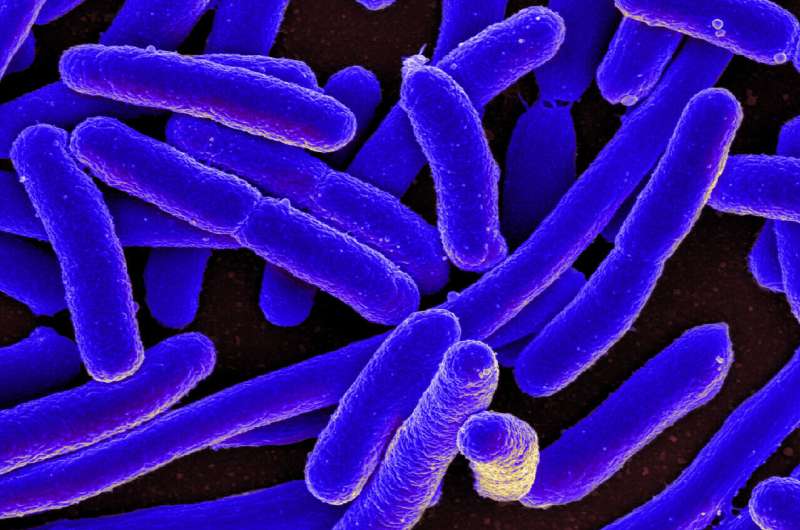
Decoding interactomes: Supercomputing predicts bacterial protein links from shared evolutionary patterns
Researchers at the Barcelona Supercomputing Center built a tool called ContextMirror2.0. It finds pairs of proteins that likely interact by comparing how they changed over millions of years of evolution. Using supercomputers, the team checked about 9 million protein pairs in E. coli bacteria. They picked the 1,000 strongest matches, and 600 of them were new links never described before.

Lunar sample research yields new discoveries, revealing the history of the moon's largest impact basin
Researchers from The University of Hong Kong led an international team studying samples of moon rock. Their work reveals new clues about the South Pole–Aitken basin, the largest crater on the moon. The basin formed long ago and changed over billions of years. The findings help scientists understand the moon's early history.

A potential pathway to reversing liver fibrosis targets specialized immune cells
Researchers at Western University in Canada have found a possible way to reverse liver fibrosis, a condition where scar tissue builds up in the liver. Fibrosis can grow into serious, life-threatening liver disease. The study, published in Science Advances, shows that specialized immune cells called MAIT cells help cause this scarring. Targeting these cells could help reduce or even reverse the damage.

From broken circuits to growing graphite: A new role for electromigration
Inside electronic devices, electric current can slowly push atoms out of place in tiny metal wires. This often breaks circuits, and engineers have worked hard to prevent it. A new idea turns this effect into a tool, guiding atoms to build useful structures such as graphite.

Novel CAR-T platform uses radiation-activated switch to destroy tumors more effectively
CAR-T therapy uses a patient's own immune cells to fight cancer. It has worked well against blood cancers but struggles with solid tumors. Those tumors create a shield that blocks immune cells and wears them out. A new platform uses radiation to switch on the immune cells once they reach the tumor.
‘When it roars, we roar back’: the man who faces Bengal tigers armed only with a stick | Bangladesh | The Guardian
Abdul Goni Gazi faces Bengal tigers in the Sundarbans, a huge forest of mangrove swamps in Bangladesh. He carries only a stick and works to protect both people and the tigers. Tiger numbers have grown slightly in recent years, thanks in part to conservation efforts. The story shows how local people can help wild animals live alongside humans.

Engineered mice mimic rare human movement disorder in weeks rather than decades
Scientists inserted a large piece of human genetic material into mice. This material is linked to X-linked dystonia-parkinsonism, a rare disease that affects movement. The mice developed an accurate version of the condition in weeks instead of decades. This gives researchers a faster way to study the disease and test possible treatments.

U.S. demand for menopause hormone therapy has more than doubled recently
More American women aged 40 to 74 are now using menopause hormone therapy. A study of a large U.S. pharmacy database found use rose from 2023 to 2026. Demand more than doubled in that time. Hormone therapy eases symptoms like hot flashes and night sweats.

IUCN and Can Tho Unite to Drive Sustainable Shrimp Farming in the Mekong Delta - environment coastal & offshore
IUCN, a global nature group, and Can Tho City are working to make shrimp farming in Vietnam's Mekong Delta more sustainable. The project plans to set up 45 recirculating aquaculture systems, which are tanks that reuse water instead of dumping it into rivers. So far, 43 of them are installed, reaching 96% of the goal. The systems serve households in Ca Mau Province and Can Tho City.

Can a small DNA fix protect against Parkinson's disease?
Researchers in Norway are working on a new way to protect nerve cells from Parkinson's disease. The work started with a 2021 finding in roundworms, where switching off one gene protected nerve cells. The team at SINTEF then tested a synthetic DNA molecule on human cells. When the cells were exposed to a substance that causes Parkinson's-like damage, about 40% died. With the molecule added, all the cells survived.

Why fierce tropical downpours thrive in a relatively dry atmosphere
Researchers at Monash University studied 20 years of weather radar data near Darwin, Australia. They found the most intense local downpours happen when the surrounding air is relatively dry and unstable. Widespread heavy rain happens when the air higher up is very moist. The findings may help improve weather and climate models, though more testing is needed.

A protein could help isolate particles in blood that carry clues about neurons
Researchers at the Wyss Institute, MIT and other groups found a protein on tiny particles in blood and spinal fluid. These particles, called extracellular vesicles, are released by cells and carry clues about where they came from. The protein marks particles released by neurons, the brain's nerve cells. The team also built a method to pull out these neuron particles, which could help track brain health over time.

NASA Science Data Powers New Method to Discover Hard-to-Find Pulsars
Scientists built a new way to search NASA's Fermi gamma-ray data for pulsars. A pulsar is a dead star that spins very fast and sends out beams of light, like a lighthouse. The new method found pulsar PSR J1622−7204 using about 10 hours of computer time. The old method failed, even though it would have taken a standard computer 600 years.

Successful high-purity synthesis of the challenging-to-produce cerium orthoferrite!
Scientists including a team from Ehime University in Japan made CeFeO3, a cerium-iron oxide that is hard to produce. The material has a special crystal shape called perovskite. By carefully setting the amount of hydrogen gas and the gas flow, the team reached 99% purity. The method could help future work on magnetic materials and catalysts, which speed up chemical reactions.
Nicholls sets record for jump winners by British trainer
Paul Nicholls has passed Martin Pipe to set a new record for National Hunt race winners by a British trainer. His 3,931st win came at Warwick, when the horse Knappers Hill won a chase. Nicholls started training in 1991 and has trained famous horses such as Kauto Star and Denman. He says the record may one day be broken too.

Key EU committee backs EU-wide restrictions on 'forever chemicals'
An expert committee of the European Chemicals Agency backed EU-wide limits on PFAS, a group of more than 10,000 "forever chemicals." These chemicals are used in nonstick pans and stain-proof carpets, and they often end up in food, water and wildlife. The committee says the chemicals can harm health, including by raising cancer risk. The European Commission is expected to propose the rules in early 2027.

NASA's Voyager 1 phones home from an awe-inspiring 1 light-day away
NASA's Voyager 1 spacecraft has sent a signal from one light-day away in interstellar space. A light-day is how far light travels in one day, about 16 billion miles. The radio message took 24 hours to reach Earth. Voyager 1 launched in 1977 and is still sending back data.
Opening remarks by Commissioner Albuquerque at the high level conference on financial literacy: beyond numbers
The European Commission hosted a high-level conference in Brussels on 19 November 2026. Commissioner Albuquerque opened the event with remarks on financial literacy. Financial literacy means understanding how to manage money, save, and make smart choices. The speech focused on why this skill matters beyond simple math.

Expert Q&A: What a New Transmission and Permitting Bill Means for Energy in the US
A bipartisan energy bill is advancing through the US Senate. It aims to speed up building power lines and clean energy projects. Experts say it could lower the cost of the power system by 3.5% to 7% compared with no bill. The bill also aims to protect families from higher power bills caused by new data centers.

Astronomers discover remarkable triple-star system just 28 light-years from Earth
Astronomers found a new star system just 28 light-years from Earth. It is called Welopōʻai and has three stars. Two of them are white dwarfs, the dead cores of old stars like our sun. The discovery could help scientists test how stars age and die.

You aren't just what you eat: Analysis shows exercise and fitness matter more for longevity
Researchers from Arizona State University and Kaiser Permanente compared decades of studies on diet, exercise and fitness. They found that physical activity and fitness were linked to a lower risk of early death more strongly than diet quality. Walking 11,000 to 16,000 steps a day was linked to a 45% to 67% lower risk of death. The findings were published in Mayo Clinic Proceedings.

Blocking receptor signals can help treat fibrosis
Researchers at the University of Cologne ran a randomized, placebo-controlled trial with 45 participants. They tested dupilumab, a drug already used for asthma and eczema, in localized scleroderma, a skin condition that causes hardening. Over six months, patients improved more than those on placebo, with less local inflammation. The team says larger, longer studies are needed, but the results could help treat other fibrotic diseases.
Novel Gene Therapy Nearly Erases ‘Drug Resistant’ Seizures
A new gene therapy nearly erased seizures in people whose epilepsy does not respond to standard drugs. Over 30 percent of epilepsy patients have drug-resistant seizures, a rate that has barely changed in decades. The method, called chemogenetics, uses engineered genes to control brain cells, and has long been used only in lab studies. This small pilot trial is its first step into medicine.