Latest News
Positive stories from around the world · Good news by country
Showing 1417–1440 of 37354 articles
Quantum position verification with remote untrusted devices
Researchers report a new quantum protocol that can check where a device really is. It uses a loophole-free Bell test, a experiment that proves quantum effects are real. The method does not need the devices to be trusted, which makes location checks harder to fake. The team says it gives localization volumes up to 4.53 times smaller than classical methods.
Host–microbe interactions in engineered immunocompetent human gut tissues
Researchers built lab-grown versions of the human small intestine and colon. These models include immune cells and a community of microbes. They let scientists study how human gut cells react to Salmonella, a common cause of food poisoning. The study looks at each cell separately, giving a detailed view of the infection.
An inspiral of a star inside a common envelope with its giant companion
Astronomers have directly observed a star spiraling inward through the outer layers of its giant companion. The object is called AT 2025abao. The process is known as common-envelope inspiral. It shows how orbital energy can blow off a star's outer layers during binary evolution.
Quantum physics can prove where you are
Proving where you are to someone far away is harder than it sounds. A new idea uses quantum correlations, linked behaviour of tiny particles, to do this. The method works without needing to trust any quantum hardware. The approach could make location checks more secure.
First observation of a giant star swallowing its neighbour
Astronomers have seen a giant star swallow its neighbour for the first time. This is a rare event called a stellar merger. The finding gives new clues about what happens inside such mergers. The report is from Nature.
Observation of tunable superradiant frequency combs
Researchers showed how a group of tiny spinning particles inside a resonator can switch from steady light to regular pulses of light. The change links to time crystals, a strange state of matter that repeats in time. The result could help build synchronized microwave and optical frequency combs. These combs act like rulers for light, used in clocks and precise measurements.
Closest relatives of poxviruses prevail in human and animal guts worldwide
Scientists have found a new group of DNA viruses, called egoviruses. They have large linear genomes, which are long strands of genetic code. The viruses are closely related to poxviruses, the family that includes smallpox-like viruses in animals. Egoviruses are common in the digestive systems of animals worldwide.
Designing dislocation-driven polar vortex networks in twisted perovskites
Researchers twisted very thin layers of strontium titanate, a common crystal used in electronics. They saw a regular pattern of tiny defects called screw dislocations. They also found swirling electric patterns, called polar vortices, along the layer surface. The work combines imaging and computer modeling to explain how these patterns form.
Fully integrated perovskite active polaritonic circuits
Researchers report a new kind of light-based chip made from perovskite, a crystal material. The chip can produce laser light at room temperature, steer light along its paths, and strengthen it. It is made in a single growth step, which could make future light-based computers and sensors simpler to build.
A glucose-powered artificial neuroimmune axis for metabolic control
Researchers built an artificial system that runs on glucose, the sugar in the blood. It helps the body handle blood sugar better. In rat studies of type 1 and type 2 diabetes, blood sugar levels returned to normal. The good effects kept going even after treatment stopped.
Belief and bench help Northern Ireland scale new heights as promotion secured
Northern Ireland's football team came from behind to draw with Hungary. The result secured promotion to League A, the top group of the UEFA Nations League. Manager Michael O'Neill praised the belief his players showed throughout the match.
With Dems on the Rise, Organizers Ramp Up Push for Paid Family and Medical Leave
Organizers in the United States are ramping up their push for paid family and medical leave. The US is one of the only countries in the world without a federal law guaranteeing this kind of leave. The article tells the story of Jasmine White of Harrisburg, Pennsylvania, who was injured in June 2025 and could not work. Her story shows why many workers face hard choices between their health and their money.

First evidence from a Chinese population supports review of long-term blood monitoring for local clozapine use
Researchers at the University of Hong Kong studied 20 years of health records from Hong Kong. They compared 4,868 people taking clozapine with 38,277 people taking other medicines. The risk of a dangerous drop in infection-fighting white blood cells was highest in the first 18 weeks. After about two years, the risk looked similar to other medicines, so less frequent testing may be possible.

Implanted electrodes restore function after severe muscle loss in early tests
Severe muscle injuries from accidents, gunshots, or surgery often leave people with permanent weakness, because the muscle cannot grow back on its own. A team from Carnegie Mellon University and the University of Pittsburgh built a small implanted electrode that delivers electrical pulses right inside the injured muscle. In tests on animals, one hour of daily stimulation in the first two weeks after injury helped muscles regain near-normal strength. The electrodes also kept working for the full eight-week study.

Engineered gel controls particle release to help injured spinal cord cells recover in lab
Researchers at the FAMU-FSU College of Engineering built a gel that carries tiny healing particles called extracellular vesicles. These particles are released by cells and carry helpful molecules. The gel lets them leave slowly, so more of them reach the hurt spinal cord cells. In lab tests on tissue that copied a spinal cord wound, the gel helped injured cells recover.

AI Cameras Can Now Spot Bears, Detect Falls and Warn of Flooding | News On Japan
Kazuki Yokoyama, a 28-year-old entrepreneur from Niigata Prefecture in Japan, was named to Forbes Japan's 30 Under 30 list for 2026. He was recognized for a business model that combines artificial intelligence, or AI, with data gathering. The article describes AI cameras that can spot bears, detect falls, and warn of flooding. The excerpt provided is short, so details are limited.
Native Youth Programs Are Building a Different Model of Mental Health Care
Native youth programs in Northern California are building a new way to care for young people's mental health. Roger "Chapreges" Jones grew up connected to his Yurok culture in Eureka. After his family changed, he moved to Redding at 13 and lost those supports. He then got a job at Two Feathers Native American Family Services, a clinic run for Native people.
Republic of Ireland talisman Parrott caps dream year with two more goals
Troy Parrott scored two penalties as Republic of Ireland beat Kosovo 3-0 in the Nations League. The result put Ireland second in their group. That gives them a play-off chance to move up to League A for the first time. Parrott now has 17 goals in 43 international games.
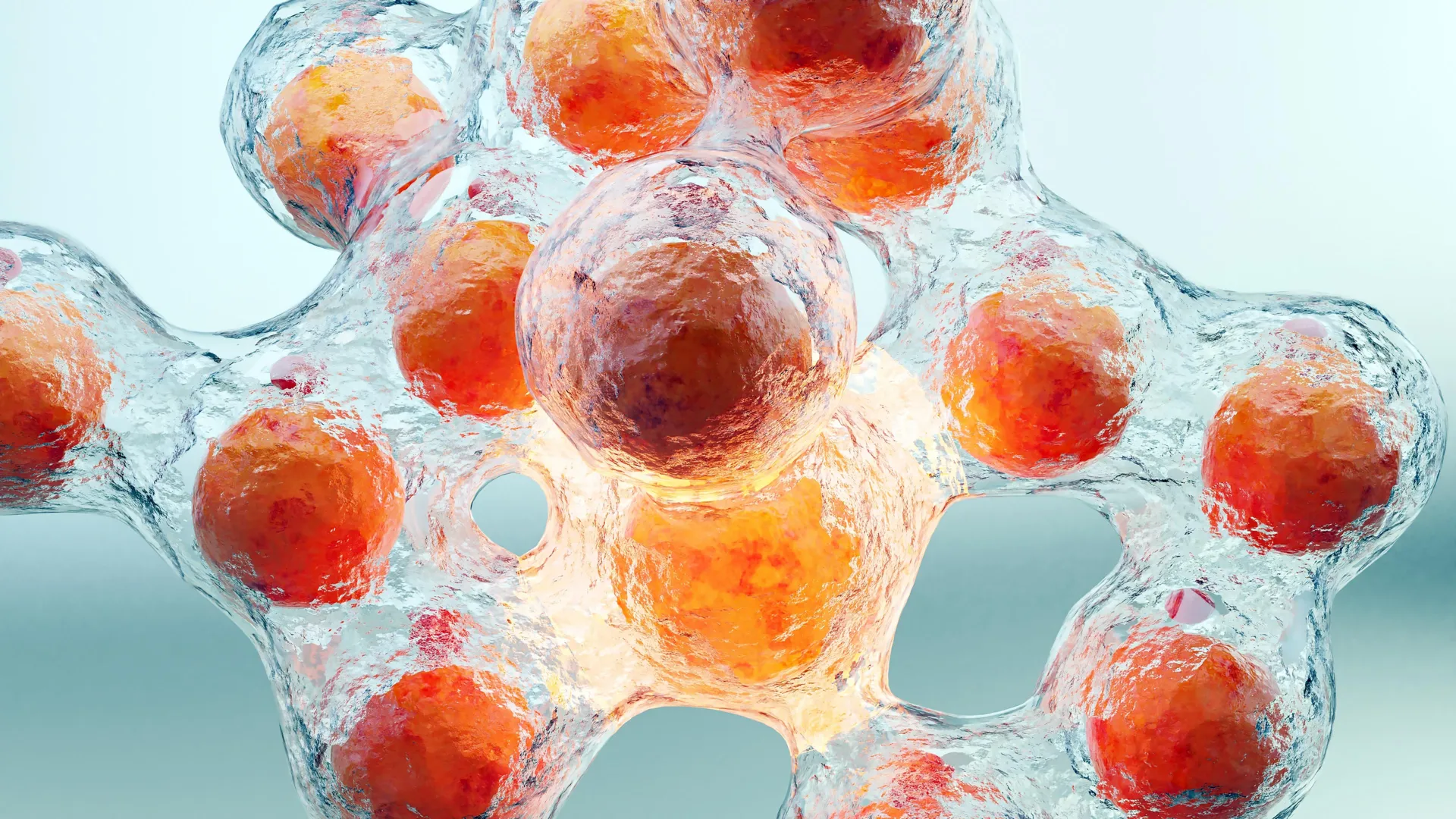
Why obesity affects men and women differently may be hiding in their fat
Researchers at the University of California, Riverside studied mice to learn why obesity affects males and females differently. They found that immune cells linked to allergies and asthma can either protect the body or cause harm. The result depends on the cell type and the animal's sex. The findings could help future obesity treatments work better for both men and women.

Turning food waste into insect feed poses only low mad cow disease risk
Insects can turn food waste into animal feed, which helps make food production more circular. But leftover food can contain animal proteins that may spread mad cow disease. Researchers at Wageningen used a mathematical model to test this risk. They found the chance of new mad cow infections in cattle is very low under current European rules.

The Gulf's oil-eating microbes lay in wait before Deepwater Horizon spill, frozen samples suggest
Scientists tested seawater from the Gulf of Mexico that was frozen a year before the 2010 Deepwater Horizon oil spill. The team found that oil-eating microbes were very rare before the spill. After the oil flooded in, these microbes multiplied quickly. The researchers think such microbes could act as early warning signs that the ocean is in trouble.

Alzheimer's disease protein atlas reveals hidden cell-type biology
Scientists at St. Jude Children's Research Hospital studied brains from mouse models of Alzheimer's disease. They built a map showing which proteins change in each type of brain cell. The team found more than 3,000 changed proteins, and 78% had not been reported before. The work may point to new targets for future Alzheimer's treatments.

Forgetful neural networks could shed light on how humans learn
Researchers at the University of Groningen in the Netherlands and KU Leuven in Belgium studied how artificial neural networks forget things. A computer network can briefly get worse at an old task while learning a new one, even when it keeps practicing. The team calls this the "stability gap." They found no sign against this effect in people, and they suggest how future studies could test for it in human brains.

Lasers near physical limits of miniaturization open possibilities for tracking life at the nanoscale
Researchers at Rice University and Harvard Medical School built one of the world's smallest lasers. The laser particle is about 115 nanometers long, which is thousands of times thinner than a human hair. It could act as a tiny optical barcode to tag and track structures inside cells. The work was published in the journal Optica.