Latest News
Positive stories from around the world · Good news by country
Showing 1465–1488 of 37354 articles

Over a decade of atmospheric data from NASA's Curiosity rover hints at small amounts of surface water on Mars
NASA's Curiosity rover has been measuring Mars' thin air since 2012. A new study in the Proceedings of the National Academy of Sciences looked at over ten years of this data. The daily and seasonal changes in the air could not be fully explained by carbon dioxide freezing and melting at the poles. The results point to a process where small amounts of water stick to soil grains and move in and out of the air.

New nanoparticle MRI probe enables quantitative pH imaging
Researchers have developed a new nanoparticle probe for magnetic resonance imaging (MRI), a scan that uses magnets to look inside the body. Tumors and inflamed tissue often become more acidic than healthy areas. The new probe can measure these small acidity differences more accurately, which could help doctors understand disease and check whether treatments are working.

In Zimbabwe, trusted local guardians help communities coexist with lions
Wildlife Conservation Action, a nonprofit led by conservation biologist Moreangels Mbizah, helps communities in Zimbabwe live safely near African lions. The group started six years ago in two wards of Nyaminyami rural district. Conflict incidents there fell by 98%. Across the Mbire and Binga districts, conflict dropped by 53%.

Quantum observers can 'agree to disagree,' but within limits, new theorem shows
Researchers have proved a new theorem about quantum physics, the science of very tiny particles. It looks at how two observers can read the same quantum system and still disagree. They can even know the other person's view and still differ, but only within certain limits. The work helps clarify how probability works in this strange field.

A 50-Residue Protein Puzzle, Solved by Thinking in 2D
Researchers built a new computer method for designing protein sequences. Proteins are chains that fold into shapes, and finding the right chain is very hard. The method beat past scores on four simplified test sizes, including a 50-unit chain. These are model results only, not a designed drug.

A smarter cyclone forecast can cut track error—but not every time
Researchers tested six ways to make hurricane and cyclone track forecasts more accurate. They studied 138 storms from 2016 to 2024, using three major forecast systems. A simple filter called dynamic trimming cut long-range track error by 16.1%. An AI method did best at medium range but made short-range forecasts worse in some cases.
An 8,387-node power grid can lose half its map—if the weather stays inside the lines
Power grid models can be huge and slow to run. Researchers built a method called Opti-KRON that picks the most important points in a grid and drops the rest. On a real 8,387-node feeder, it removed 49.9% of the nodes. A new step also cut memory needs by more than 18 times for one case.

When Should a Sensor Wait—and When Should It Start Over?
Researchers studied how a sensor should decide when to take a new reading and when to resend an old packet of data. Sensors can waste limited power and bandwidth by sampling too often or by holding on to failed packets too long. The team created a simple decision rule that comes close to the best possible performance. It uses a few waiting and replacement thresholds to keep data fresh.
AI’s 2030 emissions hinge on where its power comes from
Artificial intelligence data centers used 20.4 million tons of carbon dioxide-equivalent emissions in 2024. Under current policies, that could rise to 68.7 million tons by 2030. If grids get much cleaner, emissions could fall to 48.3 million tons, but backup fossil generators at data centers could cancel much of that benefit.
A sharper global rain map—and a warning about the satellites behind it
Scientists released GPROF V08, a new version of the software that turns satellite signals into rain estimates. It uses a neural network, a type of artificial intelligence, instead of older math methods. Accuracy improved by up to 40% for some sensors over oceans. The team warns that aging sensors can reduce gains over time.

Small life, big job: Enlisting microbes to fight climate change
Scientists are studying how tiny microbes can help fight climate change. The article looks at working quarries, which are dusty sites with bare rock and no plants. Microbes could help these areas recover and may also pull carbon out of the air. The article is based only on its opening passage, so details are limited.

Astronomers track a flaring dwarf-star duo with exceptional precision
Astronomers used a network of radio telescopes to track two small, active stars. The pair is called DG CVn and sits about 59 light-years from Earth. The team measured their orbit, masses, and distance with very high precision. The data gives a clear picture of how these red dwarf stars move and behave.

Liming soil could help protect crops during extreme heat waves
Scientists at the University of Nottingham studied how heat affects plant roots. They found that soil acidity changes how well roots cope with high temperatures. Neutral soils helped roots grow better during heat stress. Adding lime to acidic soil, a common farm practice, could help crops survive extreme heat waves.

Prince William’s presents Earthshot Prize winners with $1.3M each in Mumbai
Prince William gave five Earthshot Prize winners 1 million pounds each at a ceremony in Mumbai, India. The prize rewards inventors and groups fighting global warming. Winners include Mahindra Last Mile Mobility, PFAS-Free France, Niue Ocean Wide Trust, Ørsted, and the country of Bhutan. The prize was created in 2020 by William's Royal Foundation.

Review examines pain mechanisms and offers a framework for personalized treatment of endometriosis
A joint team from Korea University Guro Hospital and the University of Missouri reviewed years of studies on endometriosis pain. Endometriosis is a common condition where tissue like the womb lining grows outside the womb and causes pain. The researchers found that pain can continue even after surgery or hormone treatment. They propose a new framework that treats each patient's pain mechanisms individually.
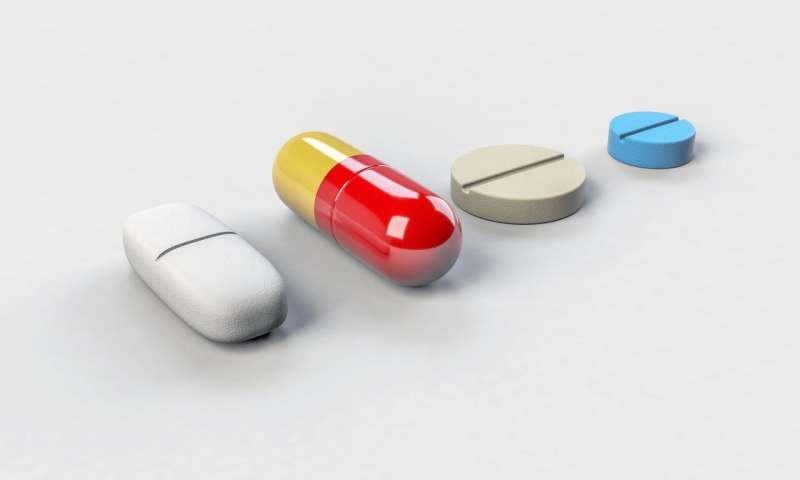
New pill combo approved for breast cancer that stops responding to hormone therapy
The US Food and Drug Administration (FDA) approved giredestrant, a once-daily pill, to be taken with the drug everolimus. It is for adults with advanced breast cancer that stopped responding to hormone therapy and carries an ESR1 gene change. In a trial, patients taking giredestrant went a median of 10 months before their cancer worsened, versus 5.5 months on standard hormone therapy. It is still too early to know if the combination helps people live longer.

Study finds that feeling ownership of a pain-relief object may help increase pain tolerance
Researchers at Lingnan University studied 187 healthy adults in two experiments. People who felt ownership of a placebo cream felt pain later and held their hands in icy water longer. The findings, published in The Journal of Pain, suggest a low-cost way to support pain care.

This supernova is 50 million light-years away, but that's close enough for astronomers
A new supernova called SN 2026ahvu was spotted in NGC 1433, a spiral galaxy about 50 million light-years away. A supernova is a huge star explosion. This one is a Type Ia, which happens when a small dead star called a white dwarf explodes in a pair of stars. The ATLAS sky survey found it on Nov. 2, early enough for scientists to watch it grow brighter over the coming months.

AI may help spot early signs of lung cancer in the blood
Researchers at the Cancer Research UK National Biomarker Centre in Manchester, England, are testing a new idea. They use artificial intelligence (AI) to find early signs of lung cancer in blood. The blood test, called a liquid biopsy, could work alongside CT scans to make them more accurate. The team hopes it can also tell fast-growing tumors from slow ones.

Meta-compass: An on-chip toolkit for visualizing optical spectrum and polarization
Researchers have built a small toolkit on a single chip. It helps people see the color and polarization of light more easily. Today, scientists often need many separate parts and extra data processing to measure these properties. The chip offers a visible reference, much like a ruler makes length easy to read.

Available space reshapes cooperation and survival in new game theory model
Researchers wrote a theory study that extends classic game-theory models. These models study how people and creatures choose to cooperate or compete. The new version lets rewards change based on how much living space and resources are available. This helps explain how cooperation may have grown in a world with limited resources.
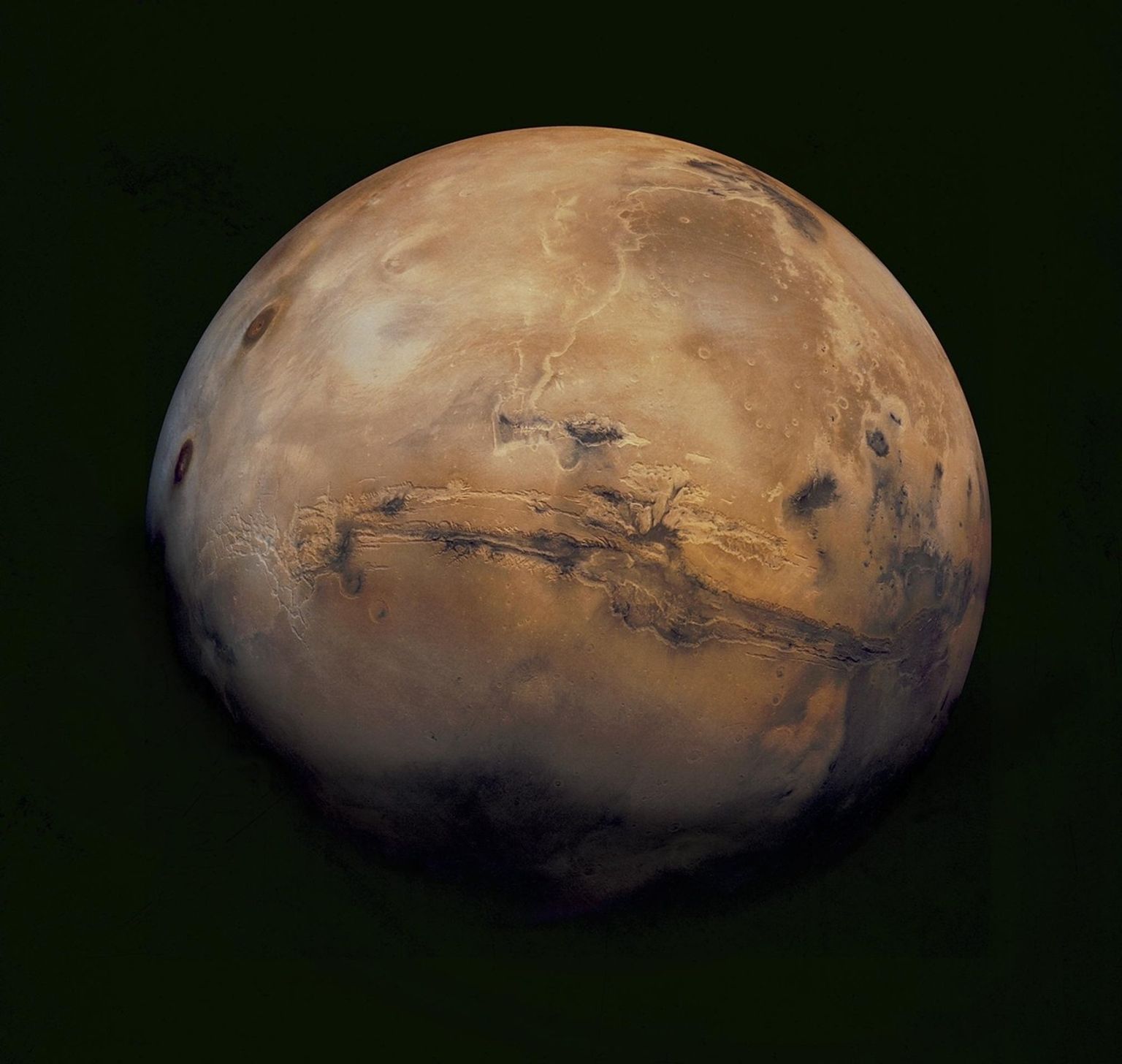
Curiosity Blog, Sols 5072-5076: The Return of the Polygons
NASA's Curiosity rover on Mars took a new picture of a patch of ground. The picture shows polygon shapes, which are cracks or patterns that form in the rock and soil. The blog covers five Martian days of rover work, called sols, from 5072 to 5076. Scientists use these patterns to learn about the planet's past.
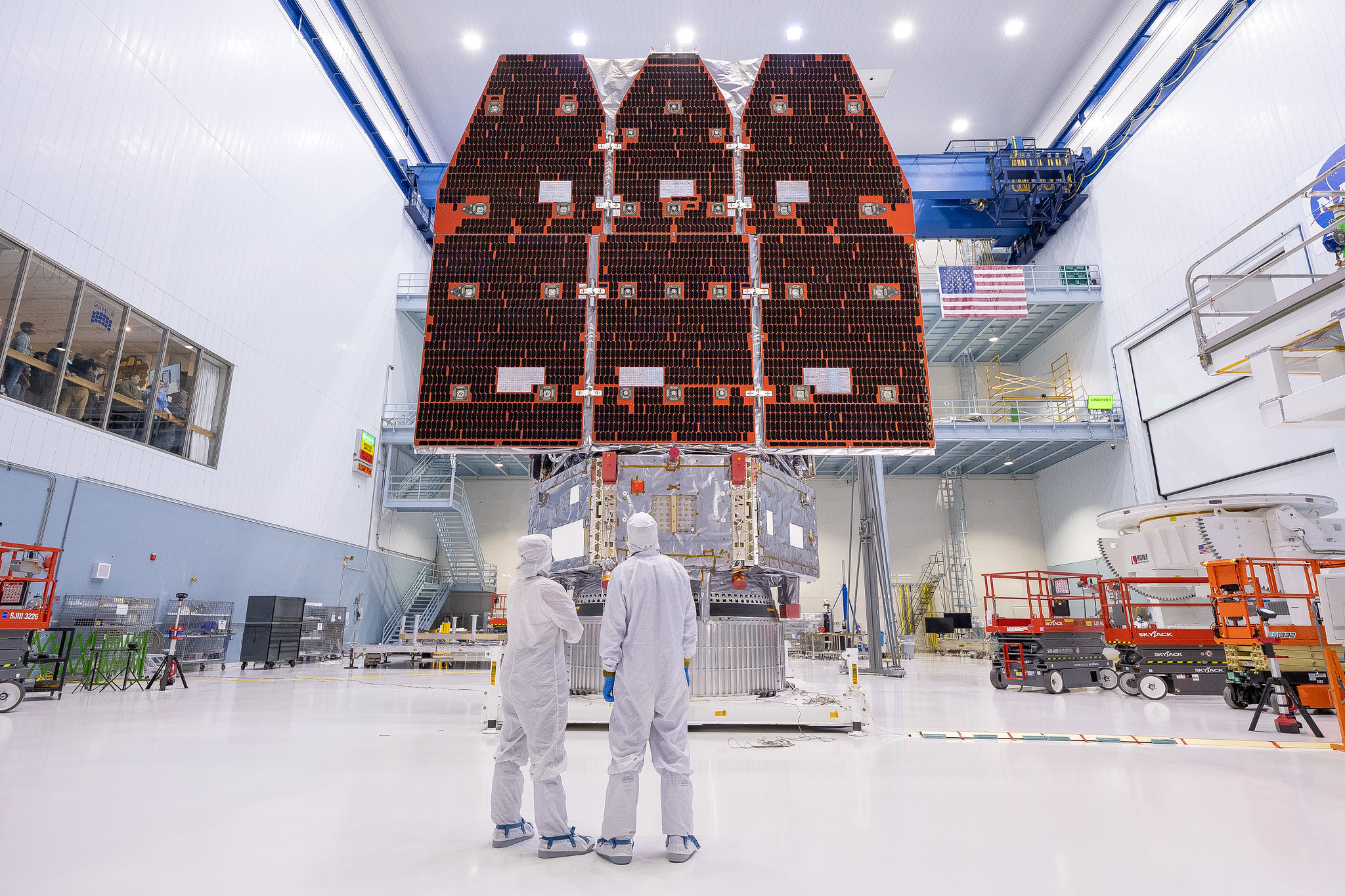
NASA Invites Media, Public to View Roman Telescope’s First Images
NASA will release the first images from its Nancy Grace Roman Space Telescope during a live stream on Monday, December 7. The stream is held at the American Geophysical Union meeting in San Francisco. The Roman telescope will study dark energy, which is the mysterious force pushing the universe apart. It will also search for planets outside our solar system.

NASA, European sea level satellite prepped for new role
NASA and a European space agency satellite called Sentinel-6B has passed all its starting checks. Its data meet strict quality and accuracy standards. In January, it will become the main reference that other sea-level satellites use to calibrate their measurements. This helps scientists track sea level rise around the world.