Latest News
Positive stories from around the world · Good news by country
Showing 1777–1800 of 37354 articles

Is this iconic black hole image accurate? New study delivers an independent result
Scientists released the first picture of a black hole in 2019. It shows the object at the center of the M87 galaxy, about 55 million light-years from Earth. A new independent study now tests whether that famous image is accurate.
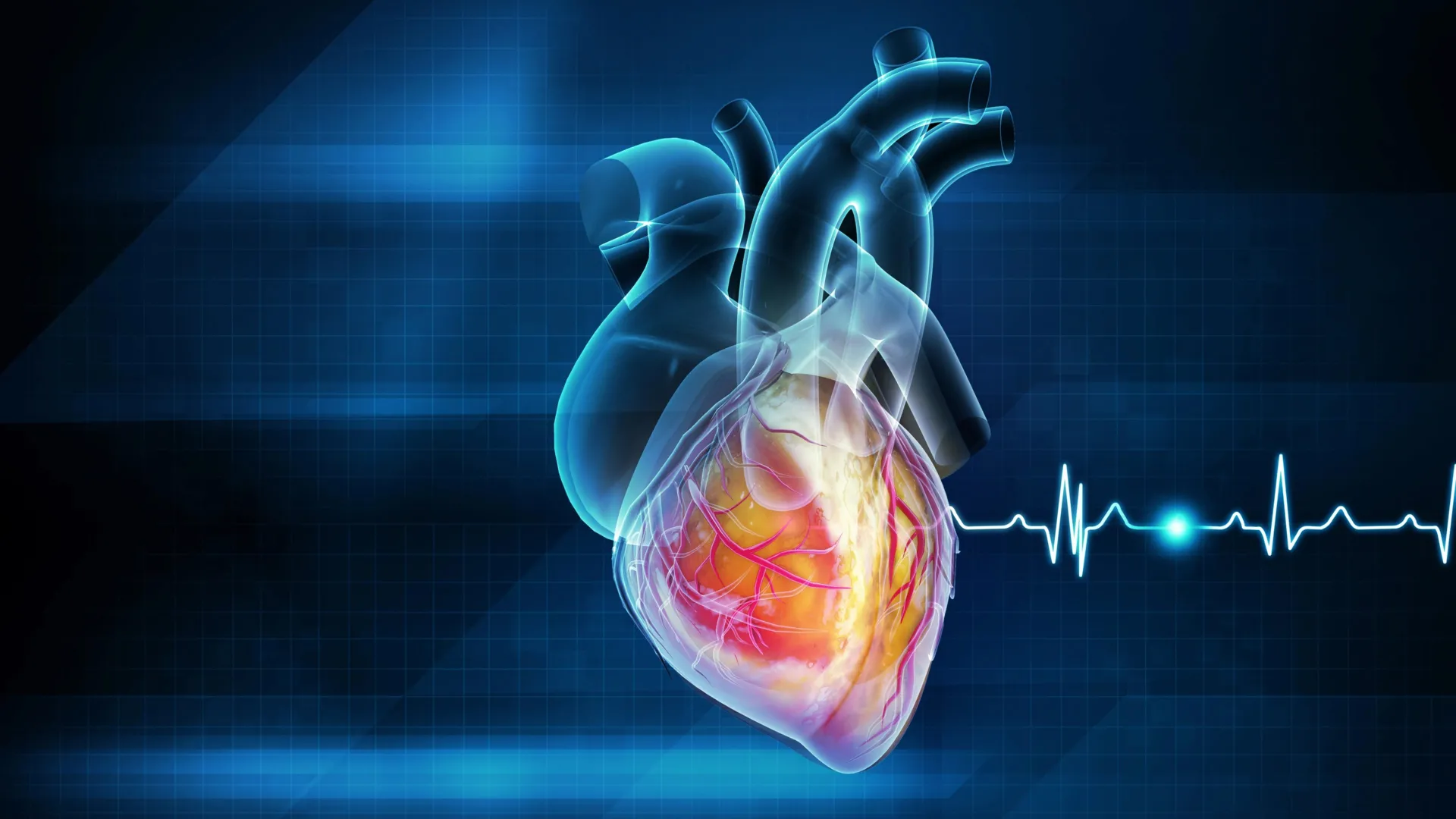
AI discovers a hidden heart signal that could predict sudden death
Scientists used artificial intelligence (AI) to find a hidden warning sign in routine heart scans. The sign may predict sudden cardiac death, which is when the heart suddenly stops working. The AI method did better than usual screening tests. It could help doctors spot thousands of people at risk who might otherwise be missed.
The 'manager's dream' who has put NI one game from history
Northern Ireland beat Ukraine 1-0 in a football match. Terry Devlin scored his first goal for his country. Manager Michael O'Neill said Devlin is "a bit of a dream" to coach. The win has put Northern Ireland one game away from a historic moment.
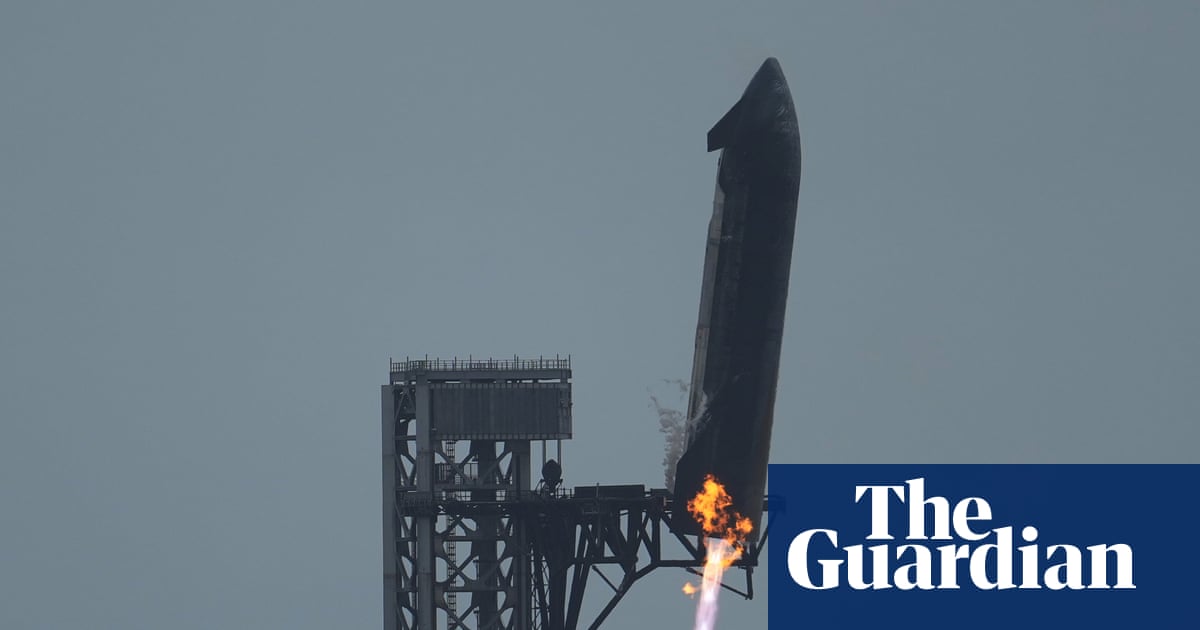
SpaceX’s Starship returns to launch pad from orbit in victory for company
SpaceX's Starship upper stage flew around Earth 14 times and then returned to its launch tower in Texas. The craft was caught by the tower's mechanical arms, a first for the company. The booster stage was lost in the Gulf of Mexico after it veered off course. The milestone moves SpaceX closer to making its rocket reusable and to NASA's plan to land people on the Moon by 2028.
Nerveless Andreeva reaches WTA Finals showpiece
Mirra Andreeva, 19, beat American Jessica Pegula 6-3, 6-4 in Indian Wells, California. She came back from an early break down in both sets. She is the youngest WTA Finals finalist since Maria Sharapova in 2004. She has not lost a set at the tournament.
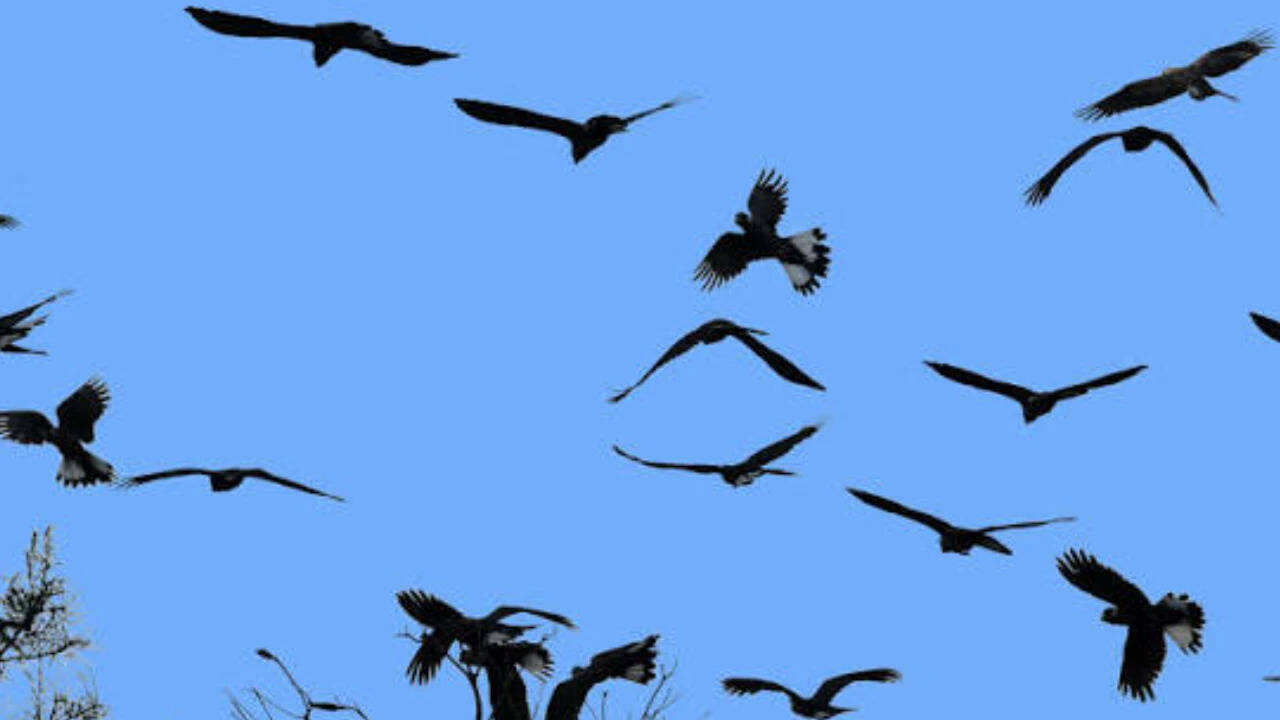
Researchers tracking endangered Carnaby's cockatoos in Western Australia found that tiny patches of surviving bushland act as stepping stones across cleared farms, showing why even fragments of native habitat matter - The Times of India
Researchers in Western Australia are tracking endangered Carnaby's cockatoos. They found that tiny patches of surviving native bushland help the birds move across farmland that has been heavily cleared. These patches work like stepping stones between bigger areas of habitat. The study shows that even small pieces of nature matter for wildlife.
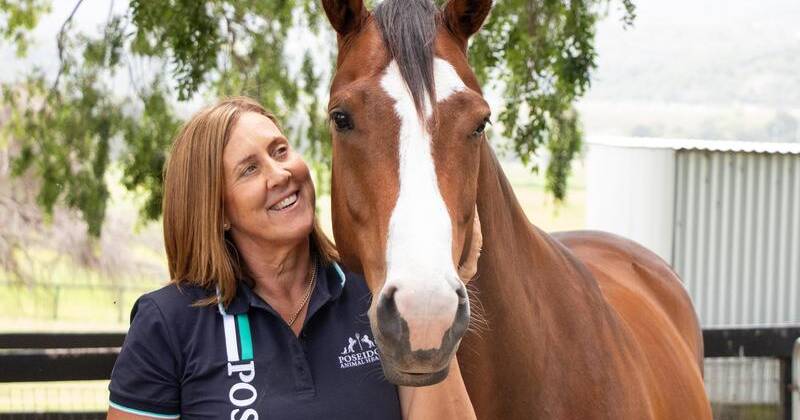
Cheers to culture: Indigenous businesses take on world | Lithgow Mercury | Lithgow, NSW
Linda Goldspink-Lord has used links with First Nations businesses to take Poseidon Animal Health global. The company is based in Lithgow, New South Wales, in Australia. The story shows how Indigenous culture and business can reach markets worldwide.

Cheers to culture: Indigenous businesses take on world | Eastern Riverina Chronicle | Henty, NSW
Linda Goldspink-Lord has used links with First Nations businesses to take Poseidon Animal Health global. The story shows how Indigenous business partnerships can help companies reach markets around the world. It was reported by the Eastern Riverina Chronicle, a local paper in New South Wales, Australia.
'One of the greatest wins' - Wales stun All Blacks to go from no-hopers to heroes
Wales beat New Zealand at the Principality Stadium in Cardiff, ending a losing run of 73 years. Nobody expected Wales to win, and some bookmakers gave them odds of 30-1. Former captain Sam Warburton called it one of the greatest Welsh wins of all time. The Welsh defence made a record-equalling 38 tackles by one player.

A supply chain’s real safety margin is the stock already in transit
Supply chains can only meet demand above their maximum production for a limited time. This depends on how much stock is already moving along the chain. Researchers derived rules that guarantee a minimum time before shelves run empty. They also use a quadratic program, a type of math optimization, to find low-cost stock targets, and a two-mode controller builds reserves in normal times and uses them during shocks. Simulations show the approach works.

A better airway model starts with knowing where every branch ends
Researchers built CT-RespGeomLib, a free method that turns CT scans of the airways into 3D computer models. The models are checked against 42 reference airways from two public datasets. The tool can also simulate narrowing or widening of airways, such as stenosis or dilation, without scanning the patient again. It may help doctors and scientists study airflow in the lungs.
A tangled evolutionary history becomes countable when every species appears twice
Scientists studied phylogenetic networks, which are diagrams showing how species evolved and sometimes mixed together. These diagrams can be very hard to count. The team built a matching rule between these networks and simpler trees with doubled labels. This let them calculate exact counts with a formula and a two-step recurrence rule.

A compressible weather model learns to hold a vortex in balance
Researchers extended a weather simulation solver so it can model slow, rotating air patterns. The new mode lets one framework handle fully compressible, hydrostatic, and quasi-geostrophic flows. Tests with two idealized vortices show the spinning air stays stable. As the rotation weakens, the full model converges to slow, balanced dynamics.

When evolution takes too large a step, fitness peaks become launchpads
A new math paper looks at how living groups change over generations to reach the best traits for survival. The authors show that when each step is too large, the group can overshoot the best point and bounce around or drift away. They prove that a simple limit on step size keeps the group settled near the peak. The result also applies to some computer methods that search for good answers.
When wind turns a solid sand ripple into quicksand
Wind ripples are the small wave patterns that form on sand. Scientists say the old idea about why they get flattened is flawed. They propose a new view: ripples break when hopping grains start to act like a fluid. Their theory is backed by a stability chart and control measurements.

Does your culture shape how you look at art? What an eye‑tracking study in Sudan revealed
Researchers studied people looking at medieval paintings in a monastery at Old Dongola, an old city on the Nile in Sudan. They gave visitors eye-tracking glasses that record where the eyes go and for how long. Western visitors looked first at faces and bodies, while Sudanese visitors first looked at objects and clothing. The team says this could help create heritage programs that fit different cultures.

NASA's Voyager 1 closes in on a light-day in interstellar space for a new distance record
NASA's Voyager 1 is about to become the first human-made object to be one light-day from Earth. A light-day is the distance light travels in 24 hours, about 16 billion miles. The spacecraft, launched 49 years ago, still sends back data about magnetic fields, dust, and cosmic rays. Its twin, Voyager 2, will reach the same mark in 2035.
Wales believed they could create history - Lake
Wales captain Dewi Lake says the team always believed it could beat New Zealand. Wales had not beaten the All Blacks in 73 years. This win ended that long losing streak in rugby union. Lake said the players felt sure they could make history.

A cosmic magnifying glass could reveal the same supernova two more times in roughly 70 years
Astronomers used the James Webb Space Telescope and a huge galaxy cluster acting as a natural lens. They found a distant exploding star called SN Ares, which blew up about 8.8 billion years ago. Its light reaches us as one image now. Two more copies are predicted to arrive in about 73 and 76 years, and timing them could help measure how fast the universe is expanding.

Some of the oldest rocks ever discovered shed light on Earth's early history
Scientists found some of the oldest known rocks on Earth in northern China. The rocks are about 3.95 billion years old. Rocks this old are very rare, so the find is important. They give new clues about how Earth's outer crust formed and changed over time.

Using AI to accelerate neuroscience research
Scientists are now using artificial intelligence (AI) to study the brain. AI can sort through huge amounts of brain data and copy brain processes. Researchers report a shared learning method in fruit flies and AI networks, plus a free tool that lets people without coding skills analyze genetic data in plain English. The results will be presented at Neuroscience 2026.
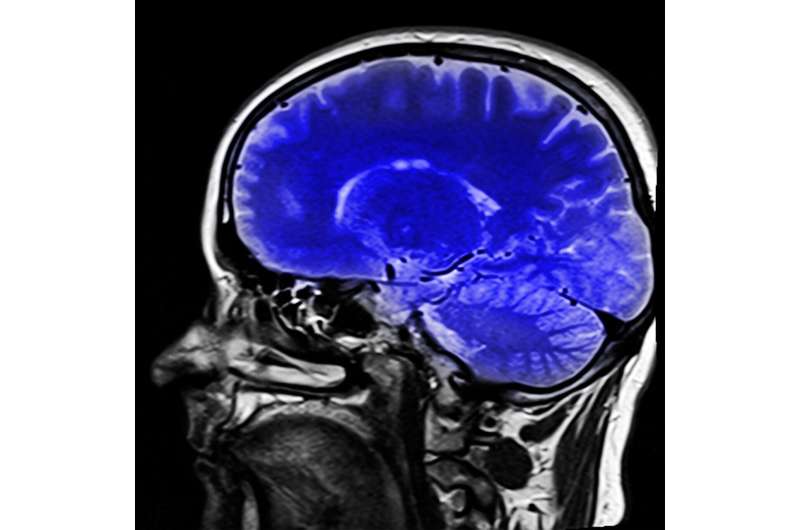
New biomarkers for Alzheimer's disease, depression and beyond
Researchers presented new biomarkers that may help doctors spot and treat brain and mind disorders. Biomarkers are body signs, such as brain scans or blood substances, that show a disease is present. Studies covered Alzheimer's disease, depression and conditions that affect brain development. The findings were shared at Neuroscience 2026, the yearly meeting of the Society for Neuroscience.

Brain-computer interfaces: A new voice for people with paralysis
Brain-computer interfaces, or BCIs, read brain signals and turn them into speech, text, or movement. In clinical trials, people who could not speak or move have regained ways to communicate. One patient in a completely locked-in state used a BCI on her own for more than a year. Researchers also showed a portable system that turns brain activity into written words on an iPhone.

A single CRISPR infusion lowers blood fats in monkeys for three years
Researchers at Verve Therapeutics, a subsidiary of Eli Lilly, tested a gene-editing treatment in monkeys. One infusion turned off ANGPTL3, a liver gene that slows the clearing of fats from the blood. Triglyceride levels stayed lower for three years. The approach could one day replace daily medicine for people with high blood fats.