Latest News
Positive stories from around the world · Good news by country
Showing 2209–2232 of 37359 articles
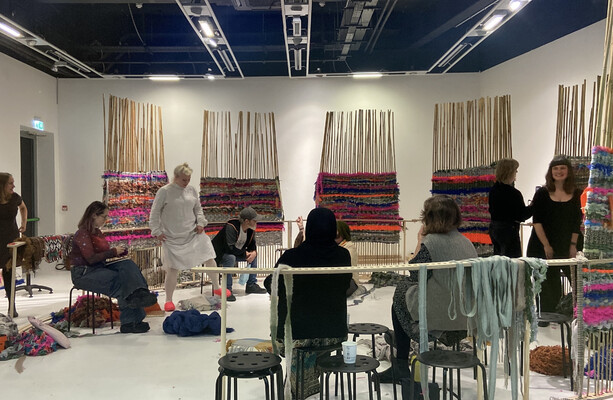
As the city shuts down, strangers are invited to 'weave a living room' over on Thomas Street
As the city shuts down, a project called Common Threads invites strangers to gather on Thomas Street in Sheffield. The Somali community led talks and workshops that shaped the idea. The goal is a safe, open space where people can meet and connect. The project aims to give everyone a place to belong.

Urgent care emerges as a promising setting for imaging low back pain
Researchers reviewed urgent care imaging across 23 Mass General Brigham centers over seven years. Of 2,924 urgent care X-rays for uncomplicated low back pain, 24 were followed by advanced emergency imaging within 30 days. Reviewers found one missed finding among those 24 patients. The study suggests urgent care may use fewer imaging resources, but researchers say broader studies are needed.
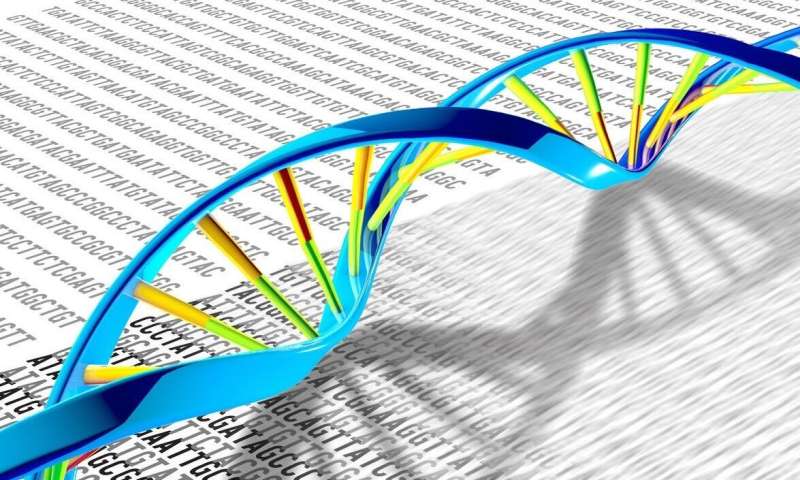
New method maps DNA folding and epigenetic marks in single cells
Researchers at Yale School of Medicine created Epi-PHR to study DNA's 3D folding and epigenetic marks at the same time. The method can profile hundreds of genetic sites in one cell and detect different chemical marks. A test on brain tissue revealed patterns across neurons and other cells. The tool may help scientists better understand genetic diseases.

When rain finally does come to drylands, only some microbes in the soil 'awaken'
Penn State researchers studied biological soil crusts, thin layers of microbes that help dryland soils function. Within six hours after wetting, only a small share of bacteria had resumed protein production. Older, more developed crusts had more active microbes. The findings may help teams choose better ways to restore these threatened ecosystems.

Biologists reveal chlorophyll-building enzyme's structure for first time and clarify its mechanism
An international team mapped the structure of chlorophyll synthase, an enzyme plants and cyanobacteria use to make chlorophyll. They studied the enzyme from cyanobacteria in two states, with and without a key tail molecule. The results reveal where the molecule attaches and clarify how the enzyme works. This may help researchers better understand photosynthesis.

One day in the ICU without care from a pharmacist increases risk of death by 20%
Researchers studied more than 28,000 ICU patients across 64 hospitals. Patients without pharmacist care for even one day were 20% more likely to die. Risk also rose when pharmacists cared for more than 15 patients. The findings point to the value of daily pharmacist coverage in intensive care units.

Biodegradable bubble moves away from lactic acid without a motor—a step toward artificial cells
A team led by Daniela Wilson at Radboud University found that flexible bubbles made from biodegradable PLA move away from lactic acid. Their skin senses the chemical and creates a tiny water flow that pushes them away. The bubbles are about 200 times narrower than a human hair. The work may help researchers build artificial cells, but medical use has not been tested.

Octopus Energy plans to develop clean energy projects in Asia | New Civil Engineer
Octopus Energy, a British energy company, has launched a fund aiming to raise $600 million for renewable energy across Asia. The first step is a proposed solar and battery project in the Philippines. Solar panels make power from sunlight, and batteries store it for later use.

Chip identifies cells by their electrical signature, then separates them with a precisely aimed sound wave
A team led by Singapore University of Technology and Design developed a chip that sorts cells without adding labels. It measures each cell's electrical behavior, then uses a focused sound wave to move selected cells. The system reached up to 98% purity when sorting cells by size. It also separated cells with different responses to light, though that test reached 85.4% purity.

Team discovers key pathway in heart lymphatic vessel development
Researchers at Children's Hospital Los Angeles uncovered signals that help shape lymphatic vessels in the heart. These vessels form a little-understood network. The findings shed light on normal heart development and how the network responds to injury. More research is needed to know whether this leads to new treatments.

From remedy to prevention: Researchers call for proactive approach to protect the human right to water
More than 2 billion people lack safe water, sanitation, and hygiene. Researchers at the University of Notre Dame argue that prevention should come before cleanup and legal blame. They say rules must reflect local needs, from pollution risks to culturally important water sites. Their ideas are timely as the UN prepares its 2026 Water Conference.

The forecast gap wasn’t a bigger model—it was the information it was given
Researchers compared machine-learning systems with standard formulas using 158,097 weather-balloon profiles. The strongest gains came from better predictor information, not from choosing a larger or different model. A one-dimensional correction method lowered near-surface forecast error at U.S. stations from 1.5 to 1.2 meters per second. This could help short-range forecasts and wind-energy siting.
Why the rarest words may hold the biggest share of a book’s vocabulary
A new study applies ideas from physics to the way words appear in books. It found that words used only once or twice can make up a large share of a text's distinct vocabulary. The team tested its model on 16 literary works and data from the American National Corpus. The work links word patterns to similar processes studied in physics.
A formation can be on target—and still be unsafe on the way there
A robot group can reach its planned shape and still face danger along the way. Researchers developed a method to check for possible collisions and lost communication during the change. It also helps choose how strongly robots coordinate, based on the space available. Simulations show a trade-off: stronger coordination speeds convergence but takes more control effort.
A power-grid AI can be almost right—and still fail the test that matters
A research team developed a framework to test AI models that calculate power flows in electrical grids. It checks whether predictions follow basic physical rules, as well as whether they match expected voltages. Across four test cases and eight model types, accurate-looking predictions sometimes failed physical checks when grid layouts or energy use shifted. The work offers a starting point for safer testing before these tools are used in grid planning.
A transformer without iron? This 2 kW converter swaps magnetics for capacitors
A new power converter design replaces the transformer in part of an isolated circuit with an AC capacitive bridge. Transformers can limit switching speed because of losses in their cores and windings. Researchers checked their equations against measurements from a 2 kW prototype. The work may help engineers build converters that operate at higher frequencies.
A single line outage can set a grid on several very different paths
The paper presents a model for studying how power-grid failures can spread. It estimates the chance of line trips and uses power-flow calculations to track stress, islanding, and lost load. Tests on the IEEE 39-bus system found several possible failure routes that basic checks may miss. The work could help assess grid resilience.

Symbolic clay figurines change our understanding of the prehistoric Middle East
Figurines found at three sites in modern-day Israel date from about 15,000 to 11,500 years ago. They depict people and animals, and some were painted red or orange. Fingerprints on one figure suggest an adult and a child shaped it together. The finds show that Natufian communities used clay for symbolic art long before farming became common.

Monkey foot and palm prints differ between individuals, as they do in humans
Researchers compared palm and foot prints from 116 monkeys across three species at facilities in Brazil. No two monkeys had identical ridge patterns. The differences may eventually help scientists and wildlife investigators identify individual animals, though the method still needs testing. Patterns also differed between species, possibly because of their different ways of life.

Misunderstandings about statistics common even among experienced researchers
A research team led by Uppsala University reviewed 55 studies published from 1963 to 2024. The studies included more than 15,000 participants, from students to statisticians. Many misunderstood ideas such as p-values and statistical significance. The team hopes the findings will improve statistics teaching and help people judge research claims more carefully.

Spain's massive stone tombs reveal collective burials continued well into Bronze Age
Researchers dated remains from 16 people buried in two tombs at the Trafalgar necropolis in southern Spain. The tombs were used between 1875 and 1625 B.C., during the Bronze Age. This suggests people kept using large shared tombs after many Iberian groups had shifted to individual burials. Shifting dunes threaten the site and may hide other tombs.
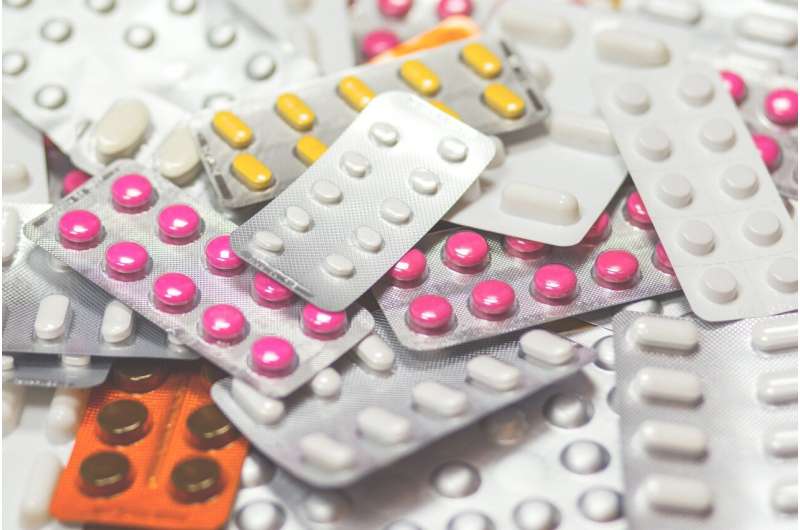
Could your genes affect your medications? New study highlights high probability
Researchers led by the University of Pittsburgh studied nearly 100,000 people from diverse backgrounds. Every person had at least one gene variant that can change how their body processes a medicine. About one in four had been prescribed a medicine known to be affected by their variant. The findings point to a chance to better match medicines to patients.

Stone Age children left fingerprints on ancient art projects
Fingerprints preserved on small clay sculptures may belong to children from the Natufian culture. Researchers say adults may have guided them in making the art. The finds hint that creative skills were shared across generations thousands of years ago. The source gives no exact site or age for the prints.
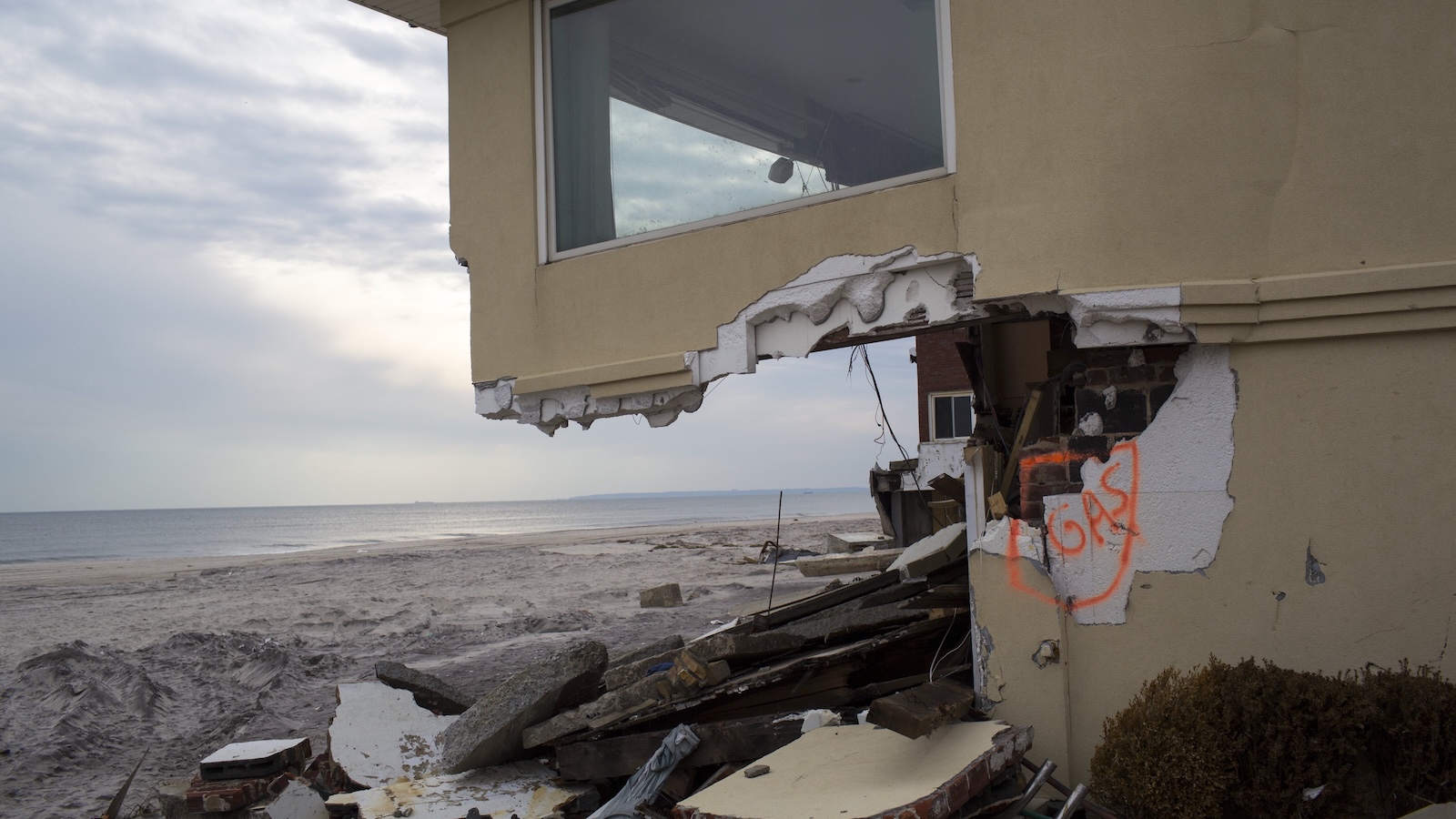
FEMA’s disaster buyout program is working — but there’s a catch
For nearly 40 years, FEMA has helped buy homes in places at risk from disasters so residents can move to safer ground. The agency has spent over $6 billion on more than 53,000 properties nationwide. A new study in Science Advances examines how well the effort works, while raising a concern about its limits.