From Drought-Stricken Zambia to China's Deserts, the Clean Energy Transformation Is Accelerating
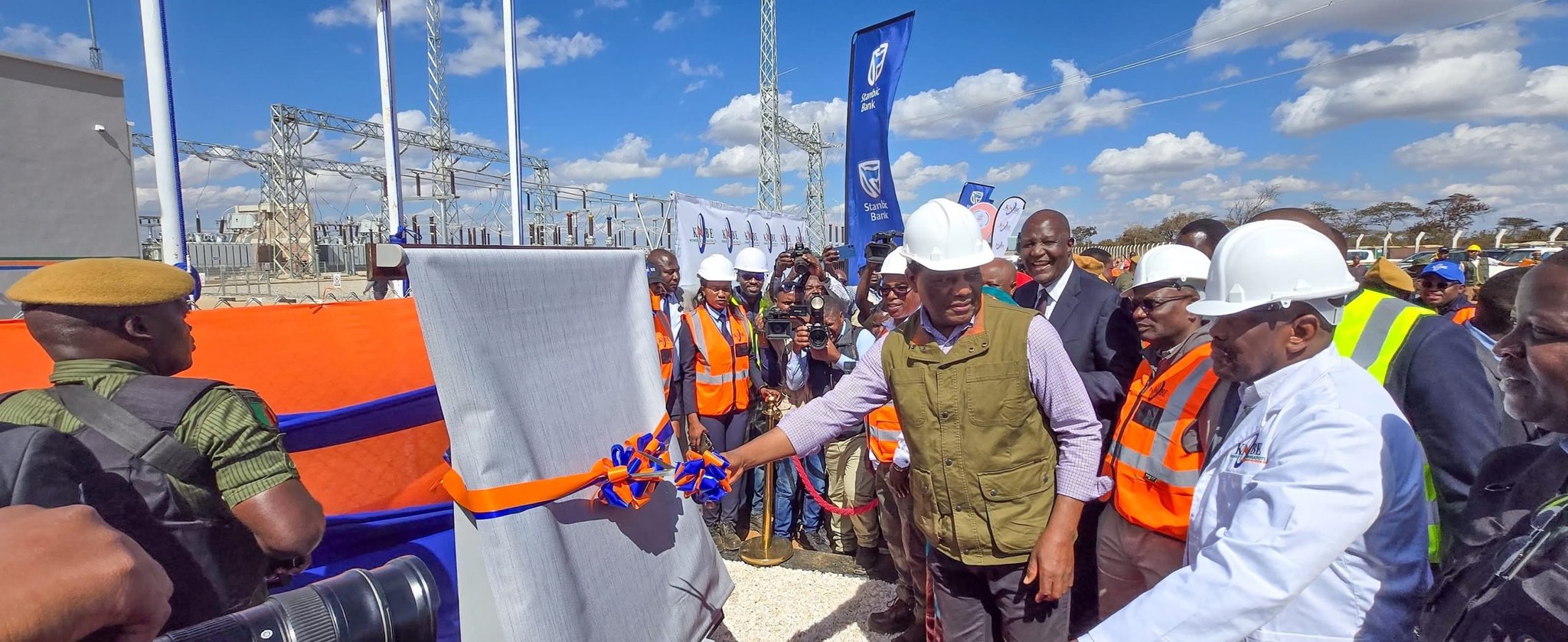
In Zambia's copperbelt, children once studied by candlelight for up to 20 hours a day as the hydroelectric dams that powered their nation went dry. Now, massive solar arrays are rising across the southern African nation at breathtaking speed—a pivot from hydro-dependency that CleanTechnica has tracked since the crisis peaked. Zambia's government made a bold bet on solar, and it's delivering. Meanwhile, half a world away, engineers in China's Gobi Desert are racing to install more solar capacity in five years than most countries have built in decades.
These aren't isolated success stories. They're signals of something bigger: a global clean energy movement hitting its stride.
China's newly released 15th Five-Year Plan sets targets that would have seemed fantastical a decade ago. The country will deploy at least 370 gigawatts of new wind and solar capacity across seven massive bases spanning Xinjiang, the Hexi Corridor, and the Songliao Basin between 2026 and 2030. That's roughly equal to installing the entire current U.S. solar fleet every two years.
But scale alone isn't the story. The story is integration. China's plan explicitly links PV desertification control with ecological restoration and green power transmission—turning barren wastelands into power plants and shipping that electricity across provinces. As PV Tech reports, the plan integrates renewable development with grid modernization in ways previous five-year cycles never attempted.
The Private Sector Catches Up
Corporations aren't waiting on the sidelines either. This week, Tesla and ContourGlobal signed one of the largest solar-plus-storage corporate power purchase agreements in U.S. history: a 1 terawatt-hour-per-year deal for Project Sterling, a hybrid facility in Arizona combining 450 megawatts of solar with 1.4 gigawatt-hours of battery storage. The project will break ground in 2026 and reach commercial operation in 2028, delivering roughly 90 percent of its output to Tesla under a bundled electricity and renewable energy credit contract.
That's not charity—it's market confidence. When companies the size of Tesla commit to multi-decade renewable contracts, they signal that clean energy is now the economically rational choice.
Meanwhile, courts cleared a major bureaucratic hurdle. The D.C. Circuit Court of Appeals upheld FERC Order 2023, ruling that the Federal Energy Regulatory Commission properly mandated reforms to interconnection queues that had backlogged clean energy projects for years. Ninety-five percent of those stalled projects were wind, solar, or batteries. Sierra Club attorneys defended the order against challenges from grid operators trying to circumvent reform—a victory that could unlock gigawatts of clean power waiting in regulatory limbo.
The Next Generation Gets in the Game
The momentum isn't just top-down. At the Department of Energy's collegiate competitions this summer, a record 45 teams vied for top honors in hydropower and marine energy innovation. University of Southern California took the Grand Prize in marine energy; Cal Poly San Luis Obispo won the hydropower challenge. Students designed solutions to real grid problems, competing for cash prizes and industry recognition. The DOE welcomed an unprecedented applicant pool for 2027—proof that the clean energy workforce pipeline is filling up.
Transport is electrifying faster than many predicted. At the 33rd GAIKINDO Indonesia International Auto Show, pure electric vehicle brands commanded center stage while Honda debuted the Super-One electric hot hatch in ASEAN for the first time. The message from Southeast Asia's automotive market was clear: the internal combustion era is ending. In Europe, the European Commission's new Electrification Action Plan doubles down on direct electrification of cars, buses, trucks, and beyond—framing EVs as "batteries on wheels" that can solve grid storage challenges while replacing fossil fuels.
Even in markets where full electrification faces unique challenges, adaptation is underway. Hyundai Motor Group Executive Chair Euisun Chung visited the company's plant in Piracicaba, Brazil, this week to chart a strategy that includes ethanol-gasoline hybrids and hydrogen mobility—recognizing that the clean energy transition will take different forms in different markets.
The Grid of Tomorrow
What ties all these stories together? A shared recognition that the old energy system—centralized, fossil-dependent, slow to adapt—is giving way to something distributed, renewable, and accelerating. From Zambia's emergency solar buildout to China's desert megabases to America's corporate PPAs, the same themes repeat: urgency, scale, and integration. The technology works. The economics make sense. The policies are clearing. And the next generation of engineers is already designing what's next.
The lights stayed on in Lusaka for 20 hours a day not so long ago. The world has spent the years since building something more resilient. And now, that resilience is spreading fast.
Sign in to join the conversation.
Comments (0)
No comments yet. Be the first to share your thoughts.