The Numbers Don't Lie
On the outskirts of Becker, Minnesota, where Unit 3 of the once-mighty Sherco coal plant towered over prairie farmland, construction crews are now installing solar panels. Xcel Energy broke ground last year on what will become the Sherco Energy Hub — a 460-megawatt solar array paired with battery storage, replacing the three coal units that once made this the biggest power plant in the state. Unit 3 cost taxpayers an eye-popping $1 billion to build and another $200 million to repair after a catastrophic 2011 failure. The economics that seemed impossible in 2015 — when Xcel first announced the retirement — are now undeniable. Solar and storage have won.
That local transformation is echoing across the globe. New data from the U.S. Energy Information Administration, reviewed by the SUN DAY Campaign, shows renewables provided more than 30% of U.S. electricity in the first five months of 2026 — up 10.1% from the same period in 2025. Utility-scale solar alone surged 21.6%. Meanwhile, U.S. coal output fell nearly 11%.
Momentum From All Angles
The shift isn't just technical — it's political. A new POLITICO poll shows half of all Americans find their utility bills difficult to afford, and that number is reshaping election-year priorities. An April Gallup survey found 66% of Americans want policymakers to put greater emphasis on solar — including 87% of Democrats and strong majorities of independents and Republicans. Voters aren't waiting for permission.
"In November, this growing crowd of cost-conscious Americans will be looking hard at policymakers' energy agendas," CleanTechnica reported.
Across the Atlantic, Europe is finding clever ways to squeeze more from existing infrastructure. A new Ember report reveals that seven EU countries — Austria, France, Italy, Spain, Portugal, Romania, and Bulgaria — could add 25 gigawatts of wind and solar by simply hybridizing with existing hydropower plants. Many of these facilities only generate during peak demand, leaving grid connections idle during sunny, windy hours. "For countries facing gridlock, hybridisation offers an immediate, zero-intervention solution," said Elisabeth Cremona, Energy Infrastructures Lead at Ember.
Storage Gets Creative
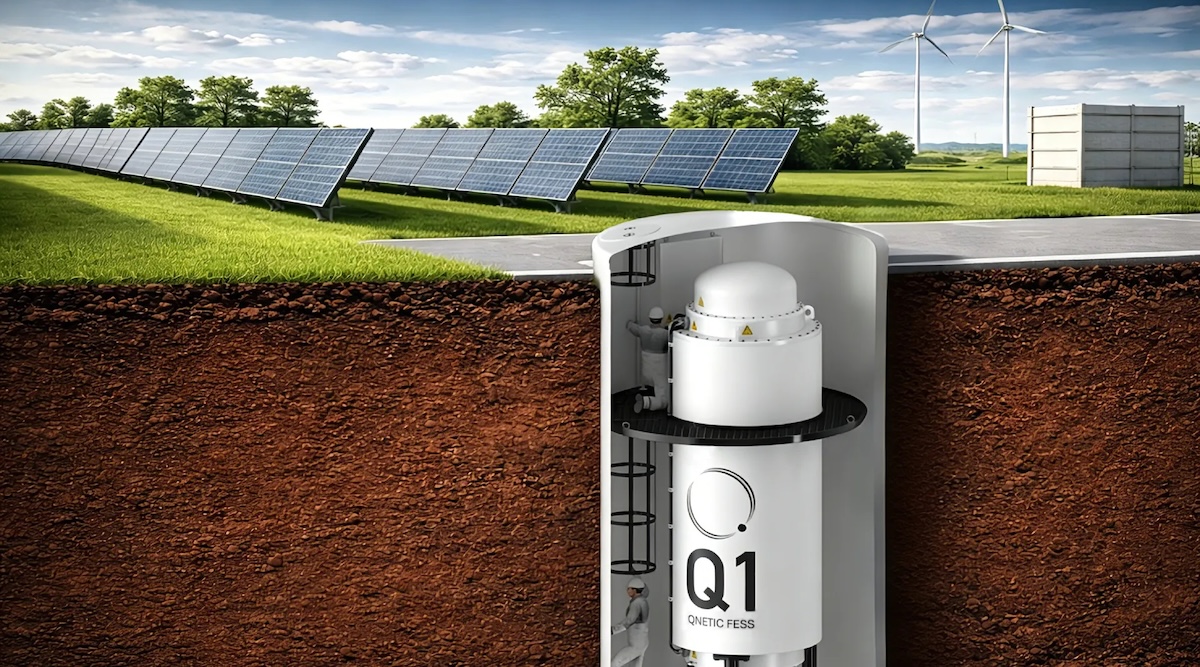
As solar and wind capacities grow, so does the need to store their output for cloudy days and calm nights. One unexpectedly promising solution comes from an ancient technology: flywheels. New underground flywheel systems — the same principle pottery wheels used 8,000 years ago — are emerging as contenders in the long-duration storage race. Unlike lithium-ion batteries, they don't rely on overseas supply chains, and developers say they could offer lower costs over their operational lifetime.
From Kenya to Scotland
The energy transition is also rewiring transportation. In Kenya, BasiGo's pay-as-you-go electric bus model — bundled battery rental, charging, and maintenance in one subscription — has catalyzed the country's electric vehicle sector. As bus fleets grow, the charging infrastructure they need is quietly building the foundation for public EV charging across Nairobi.
Meanwhile, in Scotland's highlands and islands, Loganair — the country's regional carrier — agreed to purchase five ALIA CX300 electric aircraft from BETA Technologies, with an option for five more. Many of Loganair's routes are under 100 miles, perfect for short-haul electric flight. Testing already covered Royal Mail postal routes across remote communities, averaging 56 miles per flight at an efficiency of 1.37 kilowatt-hours per nautical mile — better than some electric trucks.
"Scotland's geography makes it one of the most compelling proving grounds for electric aviation," noted CleanTechnica.
The Bigger Picture
China tells the same story from a different angle. Beijing consistently beats its wind and solar deployment targets — sometimes years ahead of schedule — while nuclear projects face delays and cost overruns. Why? Renewables scale through industrial throughput. Solar panels and wind turbines roll off production lines; nuclear plants require years of bespoke construction. The market has made its preference clear.
Despite federal policy reversals and political noise, the Sherco Energy Hub is rising from coal ashes in Minnesota. BasiGo is running electric buses through Nairobi. Loganair pilots are training on battery-electric aircraft in Scotland. Europe is unlocking 25 gigawatts from existing hydropower connections. And new storage technologies — flywheels included — are quietly solving the grid integration puzzle.
The transition isn't coming. It's here.
Sign in to join the conversation.
Comments (0)
No comments yet. Be the first to share your thoughts.