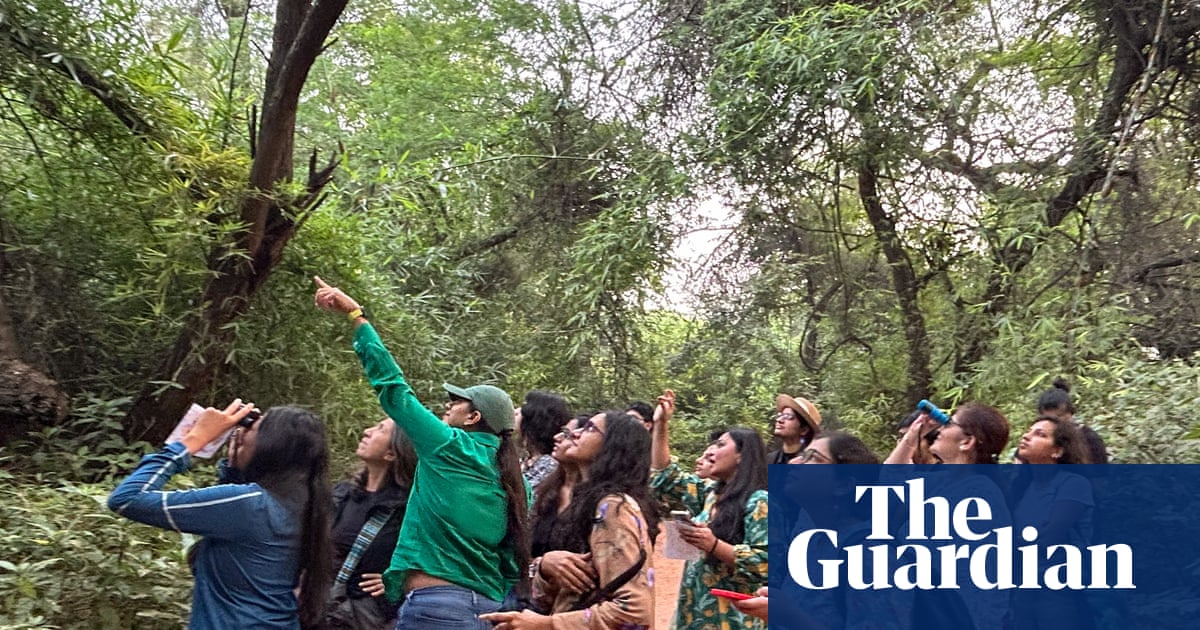
At 7am in Sanjay Van, about 20 women set out together through Delhi’s forest trails, listening for owls and jackals and keeping close on lonely stretches. The early start was deliberate: it was late for birdwatching, organiser Neha Sinha said, but some women could not leave home while it was still dark.
Their walk brought a simple pleasure into view—and the barriers that make it harder for women to enjoy. In Delhi, harassment can turn carrying a camera, cycling, running or watching birds into a safety calculation. The women gathered in October to share what they faced and to explore the city’s nature in company. Some had never been in a forest before.
Vallari Sheel, an urban ecologist, described being questioned by a man in a car while she looked at a tree about 50 metres from her south Delhi home. He shouted, “You have been clicking photos here for 10 days. What are you going to do with them?” Sheel says men have asked who she is, where she is from and what her father does. She often drives for safety and tells female interns not to engage with men who approach them.
Others brought different versions of the same limits. A scientist had stopped birdwatching after moving to Delhi. A psychiatrist struggled to find a safe place to run. Photographer Paroma Mukherjee recalled being advised to dress inconspicuously and carry small equipment—advice she said was easier for a man to follow. “Men can pee on the road and we can’t even carry a camera,” one participant said.
Sinha, author of “My Wild City: Finding Nature, Meaning, and Hope in India’s Capital,” has led these walks for two years. She says she has changed routes to mislead stalkers and been asked how much she would charge for sex. Two weeks before the October walk, hundreds of people protested after the gang rape of a 17-year-old in a public park. The government responded by banning entry to public parks after sunset. Wildlife conservation student Alankrita Narayan said the restriction did not help with work that can require her to be out at night.
The group’s practical response is to make sure no one is left alone. Women pick one another up and drop one another home, wait at the forest gate until everyone arrives, and stay together in isolated areas. Those steps offer support, but the women noted that they may not be possible for women with fewer resources. The limits on freedom are not shared equally.
Still, walking together lets the women claim time and space for curiosity. The forest holds ruellias, vajradantis and jaal trees, along with the calls of animals that the women came to hear. For Sinha, observing nature is a way to slow down and immerse oneself rather than conquer a place. Her walks do not remove the risks women face, but they create room to explore despite them—and a reminder that public spaces should be safe enough for everyone to enjoy alone or together.