Latest News
Positive stories from around the world · Good news by country
Showing 2593–2616 of 37367 articles
The public trusts scientists with AI — more than it does anyone else
A Nature report describes public confidence in scientists who use generative artificial intelligence. Scientists receive more trust than other groups for this work. The report also says trust has limits and depends on how AI is used. The provided text gives no survey figures or location.
How microbes can secure the critical minerals the world needs
Microbes can help extract valuable metals from rock and waste. The article argues that this method could support steadier supplies of critical minerals. It calls on policymakers to fund the infrastructure needed to use these tools at a much larger scale.
Mongolia’s iconic grasslands are in crisis — invisible fungi could help save them
Clues from Mongolia point to underground fungal networks as a possible tool for restoring damaged grasslands. These fungi may help plants grow and support many kinds of plant life. The report describes a promising idea, not a confirmed large-scale fix.
California votes to give record $8.4 billion to medical research
California voters approved a record $8.4 billion for medical research. The funding is earmarked for immunology studies, which examine how the body's defenses work. It is the largest science package authorized by a US public vote. The plan has also drawn criticism.
Sabalenka wins WTA Finals opener despite wayward serve
Aryna Sabalenka beat Karolina Muchova 7-6, 7-5 in her opening match at the WTA Finals in Riyadh. She came back from a break down in each set despite an inconsistent serve. Sabalenka is seeking her first title at the season-ending tournament. Mirra Andreeva also won her opener, beating Elina Svitolina 6-4, 6-0.

Water may play critical role in how our tissues stretch and spring back
Researchers at the University of Connecticut used computer simulations to study elastin, a protein that helps skin, lungs, and arteries return to shape. They found that water around the protein makes a larger contribution to its recoil than previously thought. The team modeled a 225-amino-acid part of human tropoelastin and tracked it for 60 microseconds. The work offers new insight into how tissue elasticity works.

Cancer patients' voices could help improve care across Australia
A study led by Flinders University says regular patient reports can improve cancer care. Patients share symptoms and well-being, often through short digital surveys. New South Wales has gathered more than 40,000 reports across over 50 cancer services. A national $22 million initiative is helping expand this approach, but hospitals must act on the feedback.

Archaeological finds at an Irish fort reveal insights into the finer side of medieval life
Archaeologists found evidence of leisure and learning at Caherconnell Cashel, a wealthy family farmstead in western Ireland. The discoveries include bone and antler game pieces and an unusual 11th-century pen made from bone and bronze. The pen may be Ireland's earliest known evidence of everyday writing outside church settings. The finds show that medieval life included more than farming and conflict.

Ministry of SMEs and Startups Reports $7.06 Million in Exports from 'Global Growth' Companies, Up 56% YoY
South Korea's Ministry of SMEs and Startups reported strong export growth among firms in its new Global Small Business Incubation Program. The 92 firms with export records earned $7.06 million from January to September, a 56.3% rise from the same period a year earlier. Their export destinations grew from 44 countries to 75. Six firms also made their first exports.

Philly Habitat for Humanity project will overhaul blighted East Germantown rentals
Habitat for Humanity, a nonprofit that builds homes, plans to transform run-down rental townhomes on East Collom Street in Philadelphia's Germantown neighborhood. The townhomes will become affordable homes that families can buy. The project turns neglected buildings into places where people can build lasting roots.

Singing in a choir may improve breathing and well-being in children born with a single heart ventricle
Fourteen children aged 8 to 16 joined an eight-week choir program linked to Lurie Children's Hospital in Chicago. They received private voice lessons, group singing, and online breathing exercises. Afterward, some breathing measures improved, and children reported better well-being. Parents also reported gains in school function and lower depression and anxiety.
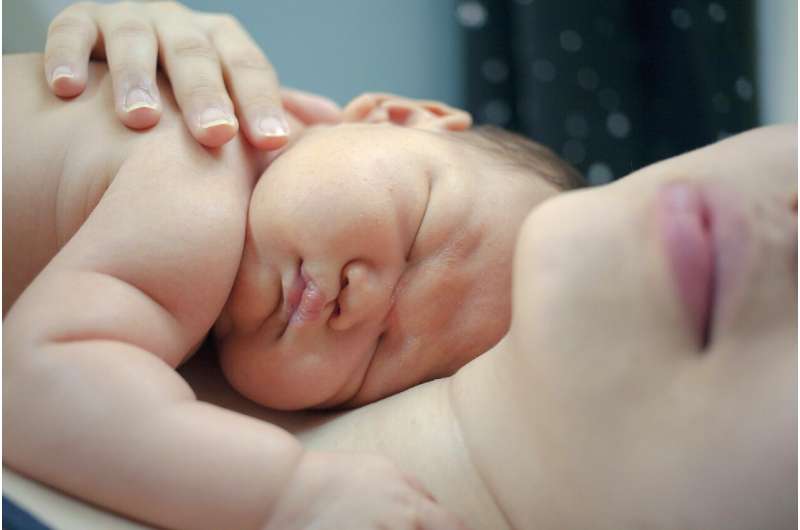
High lung pressure may protect newborns with diaphragmatic hernia from blood congestion
A Brazilian study found that high pressure in the lungs may temporarily protect newborns with congenital diaphragmatic hernia. Their compressed lungs grow extra tiny blood vessels that cannot exchange oxygen. Lowering lung pressure with certain drugs may remove this protection and cause dangerous blood congestion. The findings could change how doctors manage these babies in intensive care.

Machine learning reveals how often fish schooling evolved—and repeatedly disappeared
Researchers used machine learning to study when fish began schooling and when the behavior disappeared. They analyzed written descriptions and images for 2,839 species, nearly 10% of living fish species. Schooling appeared independently about 60 times and was lost about 320 times across 350 million years. The work shows that complex behavior can be compared across many species.

New drug combination improves survival in patients with muscle-invasive bladder cancer
An international clinical trial found that a new drug combination improved survival for people with muscle-invasive bladder cancer. It also reduced the chances that the cancer would return or progress. The approach may be especially helpful for people who cannot receive standard chemotherapy. UCLA Health researchers co-led the study.
Celtic Classic revival effort underway as founders plan ‘wake’ for beloved Bethlehem festival | Bethlehem Area | wfmz.com
After the group behind Bethlehem’s Celtic Classic closed, original founders Neville Gardner and Jim Foley began planning a revival for 2027. They are raising money and forming a new nonprofit. A bagpipe gathering and fundraiser will help build support, though the festival will need a more sustainable business model to return.

Tin deposits are formed from source rocks, not cooling
A team at the University of St Andrews has identified the main drivers of tin mineralization, the process that forms tin deposits. Their work challenges the idea that deposits mainly form as magma cools. Better knowledge of how tin forms could help geologists find deposits used in energy technology.

Discontinuing statins generally safe for older adults without heart disease
Researchers presented preliminary findings at the American Heart Association's Scientific Sessions 2026 in Chicago. The study suggests adults aged 70 and older who take statins to prevent heart disease, but have never had a heart attack or stroke, may generally stop taking them safely. The results are not yet final and need further review.

Intravenous antiplatelet therapy may improve heart function in cardiogenic shock patients compared to oral medication
People who survive cardiogenic shock after a heart attack face a high risk of later heart failure. The report says intravenous antiplatelet therapy may improve heart function compared with oral medicine. Better heart function could lower long-term risk, but the short article provides no study details or results.

Scientists finally discover why we learn to love bitter coffee
Scientists uncovered a pathway linking the gut and brain through dopamine, a chemical that helps drive reward and learning. It may explain why people can grow to enjoy bitter coffee and other initially unpleasant flavors. The finding could someday help researchers develop ways to change eating habits, though no treatment is described yet.

An inside look at a molecular switch that triggers inflammation
Researchers at VIB and Ghent University studied how a key driver of inflammation becomes active. The work also shows how a medicine used for severe psoriasis blocks that signal. This finding may help scientists better understand inflammation and how the treatment works.

Tree-rich landscapes help birds and bats nearly double cacao yields in Peru
A study led by the University of Vienna found that tree-rich cacao landscapes in Peru benefit both wildlife and farmers. Birds and bats help control crop pests, and cacao yields can nearly double. The findings show that protecting biodiversity can support farm production rather than compete with it.
Trump Administration Announces $10 Billion in Second Year of Rural Health Transformation Awards to All 50 States | HHS.gov
The U.S. Department of Health and Human Services announced $10 billion in Rural Health Transformation Program awards. The money goes to all 50 states in the program’s second year. It is part of a planned $50 billion investment to improve rural health care. The announcement does not give details here on how much each state will receive.

The New Zealand Cleantech Brief - Sphere NZ
Two New Zealand firms, Leaft Foods and BioLumic, made TIME’s Best Inventions of 2026 list. Solar developer Lodestone Energy raised NZ$75 million in its stock market listing, and BioLumic secured another NZ$5.1 million for field trials. Other local companies advanced battery storage, e-waste recycling, zero-emission aircraft and electric work bikes. The brief shows investment and commercial partnerships helping homegrown climate technology grow.

Scientists identify inhibition of a specific enzyme as a promising target to treat pancreatic cancer
A study reports that blocking complement factor B (CFB) stopped pancreatic tumor growth in the research setting. The treatment also changed the tumor's surrounding environment. CFB inhibition had its strongest effect when paired with chemotherapy and immunotherapy. The findings point to a possible treatment target, not a proven therapy for patients.