Latest News
Positive stories from around the world · Good news by country
Showing 2617–2640 of 37367 articles

Did early humans collect keepsakes 500,000 years ago?
Researchers at Tel Aviv University studied signs that early humans collected objects with personal meaning. They suggest this behavior began about 500,000 years ago. Such keepsakes may have helped people connect objects with past moments. The study offers a clue to the long history of human memory.
Commission approves €2 billion Belgian State aid to support offshore wind energy
The European Commission approved a €2.04 billion Belgian state aid scheme for offshore wind energy. The support is meant to help grow wind power and advance the Clean Industrial Deal’s goals. It supports Belgium’s move toward a net-zero economy.

Could a flu shot help fight skin cancer?
Researchers are testing whether an ordinary flu vaccine can help the body attack skin cancer. They inject it directly into tumors to rally the immune system. Early results come from a small trial, so more research is needed to know if it works. The article excerpt does not name the study location.

Upgraded microscope can now watch individual quantum particles in motion
Columbia chemist Milan Delor studies how energy moves through materials. His upgraded stroboSCAT microscope uses brief, strobe-like light pulses to capture individual electrons and quasiparticles in motion. These observations may help scientists understand how materials carry energy at the quantum scale.

Expressive writing may help reduce negative alcohol-related consequences among people prone to heavy drinking
College students wrote about a drinking experience that went badly and the guilt they felt. Those who did so had fewer negative alcohol-related consequences over the next year. The finding suggests expressive writing could add to brief alcohol interventions, which encourage people to change drinking habits. The excerpt does not report the number of students or the size of the effect.
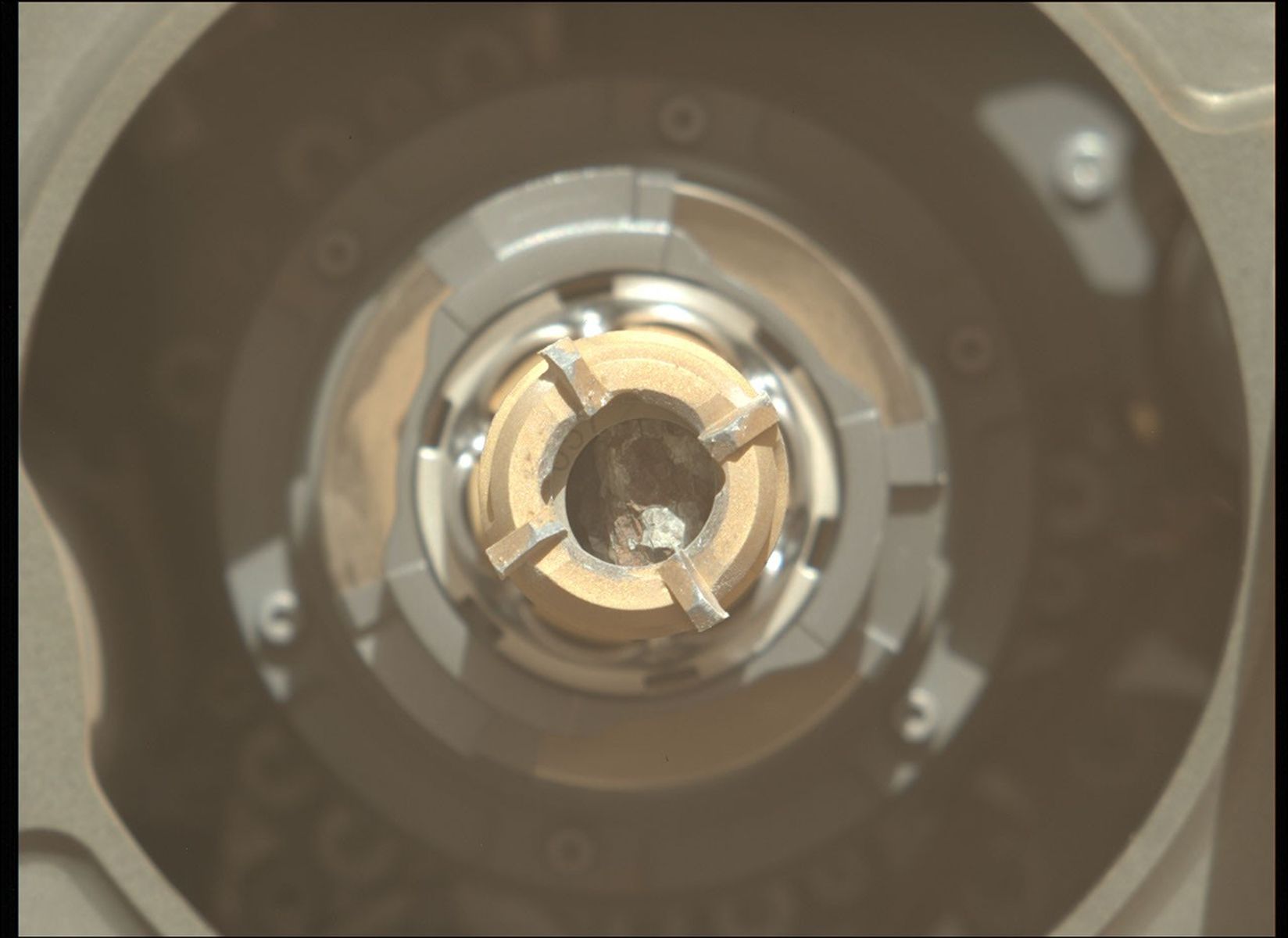
Newest Sample, Oldest Rock?
Perseverance collected a new rock sample called Singita on Mars, its first in more than a year. The rover drilled about 3.1 centimeters into the rock. Its textures suggest it formed deep in Mars’ crust and was later changed by large impacts. The rover has also completed 66 successful rock abrasions.

Starting with a statin or statin plus ezetimibe to lower LDL led to similar heart outcomes
Adults with heart or blood vessel disease had similar rates of heart attack, stroke, and other heart problems over three years. Researchers compared starting a statin alone with starting a statin plus ezetimibe. Treatment was adjusted to meet assigned LDL cholesterol goals. The results are preliminary and were presented at a medical science meeting.

New perovskite system extends room-temperature spin polarization via successive quantum wells
Researchers led by Lu Haipeng at the Hong Kong University of Science and Technology developed a new chiral perovskite system. Its linked quantum wells keep spin polarization about 300 times longer at room temperature. Spin polarization is the alignment of tiny particle spins that can carry information. The result could aid future quantum and spin-based devices.
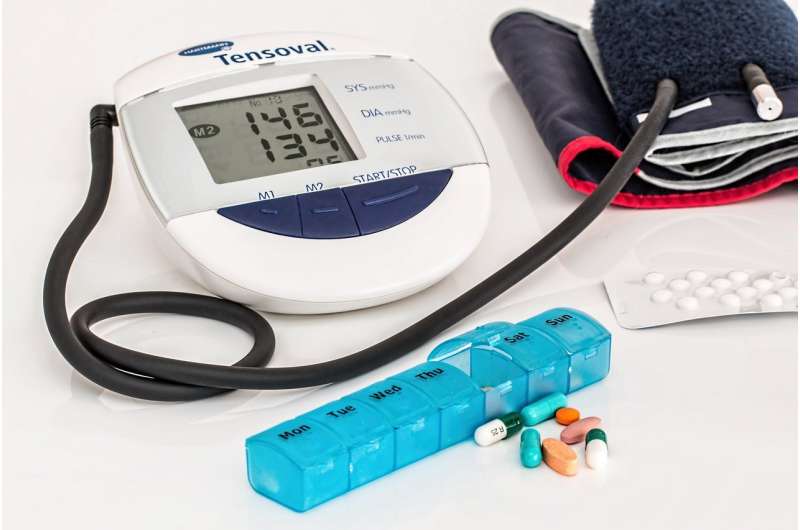
Single-pill combination helps more patients control hypertension
A study co-led by UT Southwestern Medical Center found that combining blood pressure medicines in one pill worked better than usual treatment with several pills. The research involved patients in Jamaica and Colombia. The report does not give the size of the benefit or the number of patients.

Computer science researcher reroutes truckloads of excess food from landfills to food pantries
A computer science researcher is rerouting truckloads of extra food from landfills to food pantries. The work targets a logistics problem: food is available, but it does not always reach people who need it. The excerpt does not name the researcher, location, or program.

Subaru Telescope reveals the shape and temperature of Comet Encke's nucleus
Researchers used mid-infrared observations from the Subaru Telescope to study Comet Encke's nucleus. They estimated its long axis at about 7 kilometers and its short axis at about 3 kilometers. The surface measured about 55°C during the observation. The findings may help explain how comets change and preserve clues about the early solar system.

FDA-approved drug kills cancer cells in lab by disrupting cellular recycling
Researchers at VCU Massey Comprehensive Cancer Center tested eliglustat on colon, ovarian and cervical cancer cell lines. The FDA-approved drug, usually used for Gaucher disease, caused the cancer cells to die by lowering glucosylceramide and disrupting lysosomes, the cell's recycling structures. The work may help guide future studies and patient markers. It does not show that eliglustat treats cancer in people.

Projeto Corais de Alagoas firma parceria para retomar mergulhos de turismo regenerativo na Piscina do Amor - Alagoas 24 Horas: Líder em Notícias On-line de Alagoas
Piscina do Amor, a reef site off Ponta Verde in Maceió, is reopening for supervised scuba trips. The site was closed in 2015 to help protect and recover the area. A partnership will let visitors learn about reef life and coral restoration, and may include monitoring or cleaning coral nurseries. Separately, researchers planted 200 restored corals at Pajuçara Beach in October.

Light reflecting within thin films can masquerade as molecular signals in perovskite solar materials
Jun Nishida of Japan's Institute for Molecular Science found that infrared signals in perovskite films can come from light bouncing between layers, not changing molecules. The effect, called carrier-induced photonic resonance, can look like stronger absorption or shifted molecular signals. Diluting nanocrystals may reduce the effect while keeping molecular signals visible. That proposed test still needs experimental study.

New synthesis strategy controls handedness in large, light-emitting molecular spirals
A team led by researchers at the Institute of Science Tokyo made a large carbon-based spiral molecule called a carbo[17]helicene. Their step-by-step method controlled whether the molecule twisted left or right, reaching a 98:2 enantiomeric ratio. The structure has 17 connected benzene rings and extra side extensions. It may help improve light-based 3D displays and security inks.

New surface coating could help implants bond better with bone in people with diabetes
Researchers at Flinders University tested a coating designed to stop diabetes-linked molecules from building up on implants. In experimental models, coated implants caused less inflammation and scar-like tissue. They also supported new blood vessel growth and stronger bonding with nearby bone. The approach could eventually help people receiving hip, knee, dental, or other implants.

Alternative approach could reduce reliance on potentially toxic surfactants in pharmaceutical and food applications
Researchers led by the University of Sydney developed a way to form microemulsions without traditional surfactants. They used an ionic liquid whose molecules can interact with both oil-like and water-like substances. X-ray and neutron tests showed three distinct regions in one mixture. The approach may help create safer or easier-to-process products for food, medicine, and chemical research.

No link discovered between water fluoridation and cognitive decline in older Irish adults
Researchers at Trinity College Dublin studied 2,495 Irish adults with an average age of 65. They estimated each person's lifetime exposure to fluoridated water, including exposure in early childhood. Cognitive test scores did not differ across exposure groups. The results offer reassurance about water fluoridation in Ireland, where it has been used since 1964.

Researchers identify blood-based biomarkers that could help personalize treatment for autoimmune diabetes
A team at Bar-Ilan University tested a three-drug combination in mice with a model of adult autoimmune diabetes. About 30% of treated mice reached remission, with normal blood sugar and no need for insulin for weeks after treatment stopped. Two blood RNA markers distinguished future responders from nonresponders. If confirmed in people, the markers could help doctors choose treatment, but this has not yet been tested in humans.

Researchers develop AI tool to improve crisis communication
Researchers at Texas A&M University are developing an AI tool to organize social media posts during disasters such as hurricanes. It sorts posts into disaster, weather and humanitarian information, then labels details such as event type and requests for aid. The team hopes to build an interactive system for emergency workers. The tool is still under development and has not been tested during an active disaster.

Novel pacemaker technique reduced cardiac events in people with a heart rhythm disorder
The OptimPacing trial followed nearly 700 people with heart block who received pacemakers. Left bundle branch pacing was linked to fewer deaths, heart failure hospital stays, and cases of heart muscle damage than standard right ventricular pacing. After four years, the combined outcome affected 8.5% of the newer-method group and 19.2% of the standard-method group. The findings are preliminary and need further review.

CheMeleon model adapts to predict molecular properties from scant data
CheMeleon is an MIT-developed AI model for predicting how molecules may behave. It first learns patterns from about 1 million molecules and 1,600 chemical descriptors, then adapts to new tasks with limited data. The model can estimate properties such as toxicity, solubility, and drug-target activity. Nine of the top 20 entries in a molecule-prediction contest used CheMeleon.

New review maps a 'structure-to-physiology' roadmap for functional fruit packaging
Researchers at the South China Botanical Garden reviewed packaging methods that can help fruit stay fresh after harvest. The approaches include coatings, moisture and gas controls, antimicrobial materials, and sensors that track ripeness. Some examples cut grape weight loss or removed nearly all ethylene from storage air. The authors say cost, safety checks and scale remain hurdles for many newer designs.

Q&A: Researcher investigates pharmacological approaches to breast cancer prevention
Mattias Hammarström studied lower doses of tamoxifen and endoxifen for breast cancer prevention at Karolinska Institutet in Sweden. In trials lasting six months, low-dose endoxifen reduced breast density compared with placebo. The 1 mg dose had symptoms like placebo, while 2 mg caused more hot flashes and night sweats. The results are promising, but they do not prove the drugs prevent cancer.