Latest News
Positive stories from around the world · Good news by country
Showing 2569–2592 of 37367 articles
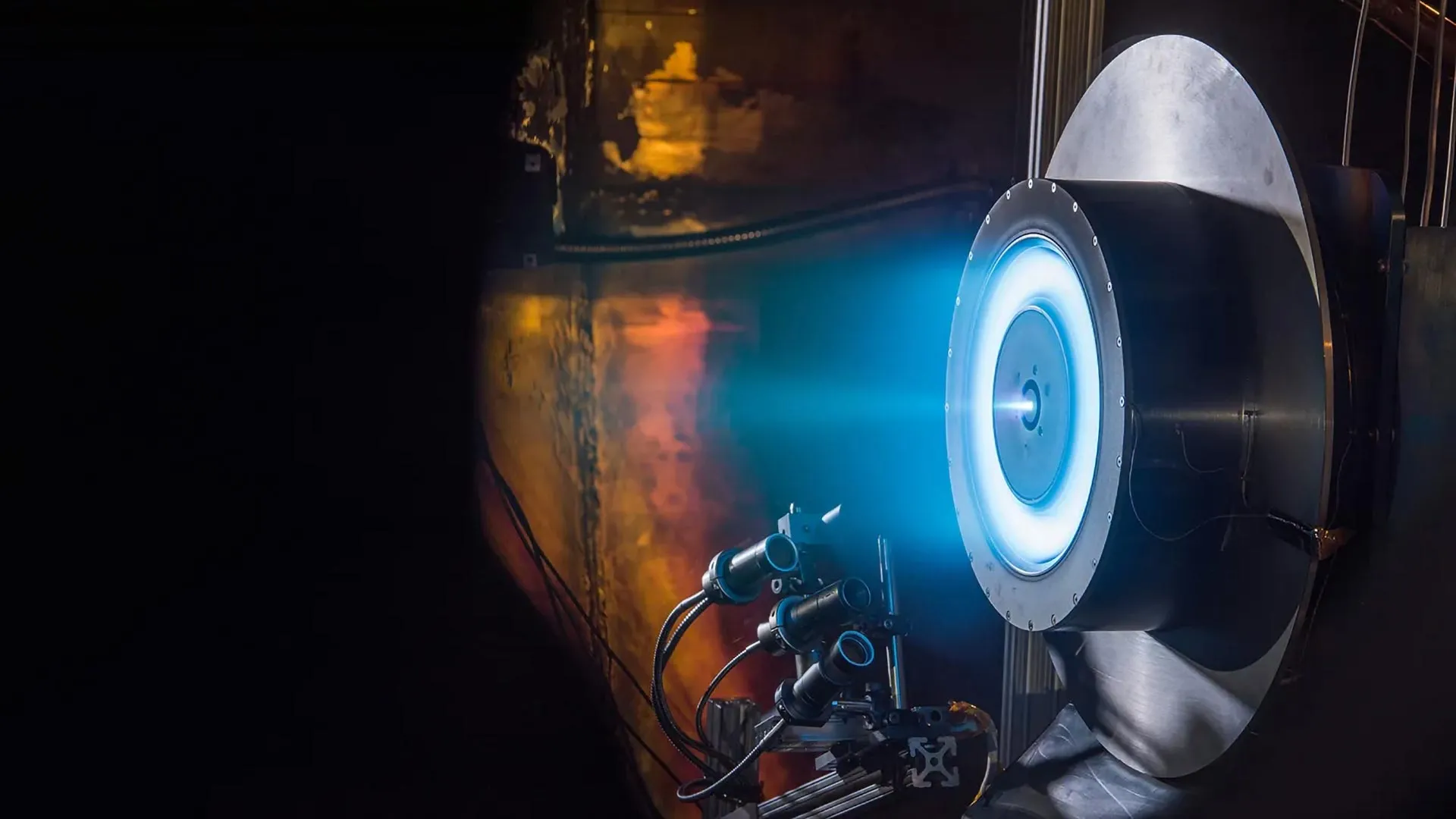
NASA offers $500,000 to develop next-generation electric rocket engines
NASA has launched the AMPERE Challenge to advance electric rocket engines for satellites and future space missions. The competition offers $500,000 in total prizes, split among up to two U.S. companies. Winners will also gain access to NASA testing facilities, helping move promising designs closer to use.

Light-pulse pairs reveal the femtosecond decay of an inner-shell hole in xenon atoms
A team at Japan's UVSOR Synchrotron Facility watched a vacancy in xenon atoms decay in real time. They sent two linked bursts of extreme ultraviolet light and measured the electrons released. The electron fringe pattern faded over a few femtoseconds, matching the known lifetime of about 6 femtoseconds. The method may help scientists study fast changes in molecules and materials.

AI-assisted atomic models reveal how protective shells regulate aluminum nanoparticle oxidation
Building accurate models of atomic interactions can take repeated calculations and tests. Researchers developed MLP Copilot, an AI agent that links scientific evidence with computational tools under human supervision. The approach helps model how protective shells affect oxidation in aluminum nanoparticles.
Why heart attacks can still happen even when bad cholesterol is low
Scientists report two types of fat-carrying particles that may increase heart attack risk. They appear to trigger inflammation and damage blood vessels through routes beyond cholesterol buildup. This may help explain why some people remain at risk even after lowering bad cholesterol. The research could point to new ways to study heart disease.
Alzheimer’s may have early warning signs outside the brain
Scientists used tiny lab systems made from human cells to study inherited Alzheimer’s mutations. They found the mutations can disrupt connections between nerves and muscles, even without the brain or spinal cord. This may help explain why balance, walking, and coordination problems can appear before memory changes. The work could point to earlier ways to spot the disease.

AI-interpreted echocardiograms comparable to human reports, cardiologists' time cut by about 50%
A preliminary study found that AI readings of heart ultrasound scans were about as accurate as early reports from sonographers and cardiologists. With AI help, cardiologists spent almost half as much time interpreting each scan. The findings were presented at the American Heart Association’s Scientific Sessions 2026 in Chicago.

Barium titanate's optical properties emerge more clearly after decades of widely varying measurements
Researchers led by KAIST studied how light moves through and is absorbed by barium titanate, a material with promise for future optical communication devices. Its complex structure had made past measurements vary widely. The clearer data give engineers a stronger basis for designing devices, though no new device was reported.

AI analysis of ECG data measured by smartwatch may help detect reduced heart pumping function
Researchers tested AI software on heart signals recorded by smartwatches. It may help detect left ventricular systolic dysfunction, a condition where the heart's main pumping chamber is weak. Early findings were presented at the American Heart Association's 2026 Scientific Sessions in Chicago. Results varied by smartwatch brand and ECG recording, so more study is needed.

Electrical technique concentrates milk without using heat, challenging traditional preservation methods
Traditional milk powder production uses high heat and a lot of energy. Researchers describe an electrical technique to concentrate milk without heating it. This could help preserve delicate proteins, enzymes and vitamins while reducing energy needs. The excerpt gives no study location or measured results.
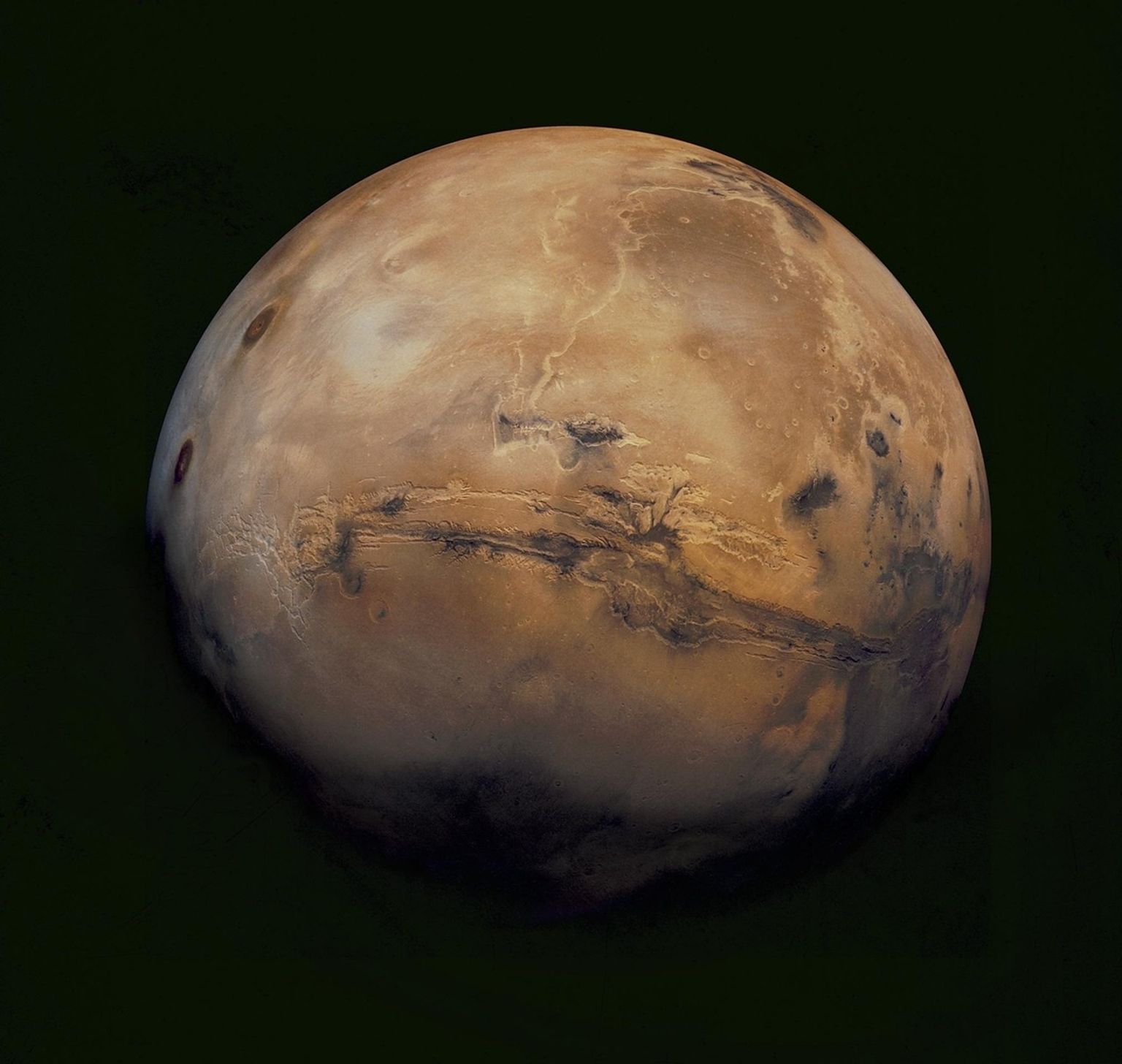
Curiosity Blog, Sols 5056-5062: Charging Back Up!
Curiosity spent three sols taking science measurements and conserving power during its Nazca drilling campaign. The rover also tested running a science-data task while sending data to an orbiter. This approach, called parallelism, could save power by keeping the rover awake for less time. Engineers still need to review the test results.

Curiosity Blog, Sols 5050-5055: It’s Nazca, Our 49th Drill Hole
Curiosity drilled a rock called Nazca during its 5050th to 5055th sols on Mars. It is the rover’s 49th drill hole. The team chose the rock because it contains many disc-shaped forms that may be crystals. They are analyzing the sample to learn what the forms are and what they reveal about the rock’s past environment.

Brazil deploys national security force to Indigenous territory following invasion
More than 500 people invaded Ituna/Itatá Indigenous Territory in Pará, home to the isolated Igarapé Ipiaçava people. Brazil has now deployed its National Public Security Force for 180 days to support Funai's protection work. The response comes after a court order and a delay of about two months. Funai will lead field operations, while the force provides security.

Fossil CO₂ emissions projected to decrease in 2026 amid clean energy growth and Iran conflict
A new Global Carbon Project report projects fossil fuel emissions will fall 0.4% worldwide in 2026. The report links the decline to expanding solar and wind power and the Iran conflict. It is the project's 21st annual report, published in Earth System Science Data.

After 40 years, CERN finds evidence of a one-in-10-billion particle decay
Scientists at CERN have found evidence of an extremely rare particle decay, seen about once in 10 billion decays. The finding ends a search that lasted more than 40 years. Studying this decay may help physicists look for particles and forces that current accelerators cannot detect.

Accidental discovery enables room-temperature recrystallization of molybdenum
Teams at the University of Rochester and Technion–Israel Institute of Technology found that a diamond-tipped probe can reshape molybdenum crystals at room temperature. The method works in a tiny area and may help repair defects without heating an entire part to about 1,000°C. The discovery could also support future use of molybdenum in smaller microchips.

AI used to predict cavities
An international team tested AI models using Brazil's 2023 Oral Health Survey, which included 23,726 people. The models predicted cavity risk and severity across age groups. Wealth and household crowding were the strongest predictors, while dental insurance and recent visits were protective. Among 12-year-olds, cavities affected 62.5% without fluoridated water, compared with 35.5% with it.
A New Iron Age? Scientists Uncover a Potential Game Changer for Clean Energy
Scientists at KIT, a research institute in Germany, studied a new way to use clean electricity. Extra power from wind and solar could be used to make hydrogen, which then turns iron ore back into iron. This could store energy and cut the need for costly new power lines. The work built on the Clean Circles research project.
Plymouth Parkway beat Berkhamsted to reach FA Cup second round
Plymouth Parkway came from behind to beat Berkhamsted 2-1 after extra time. Andrew Neal scored twice from the penalty spot. The win gives the Devon club its first-ever place in the FA Cup second round.

Methane-eating microbes grown on electrodes build electrically conductive nanowires
Researchers at Radboud University in Nijmegen found that methane-eating microbes build tiny wires to send electricity to an electrode. The microbes grew faster on electrodes than in nature. The team also created a lab culture made up of 95% of these microbes. The work may help future clean energy research, but practical use could be about 20 years away.

Cracking the case of the Roman frog graveyard
Researchers solved the mystery of 8,000 frog bones found in a ditch at Bar Hill, England. The bones are about 1,700 years old and show that owls likely ate the frogs. Woodland had been cleared for grazing, leaving open ground where the frogs were easier to catch. The discovery also offers clues about seasonal livestock movements in Roman times.
Initiative launched to make UK world leader in women's sport
The English Football Association, Team GB and England Netball are backing a new push for equality in sport. The Equal Sport Project sets out five priorities, including fair access for girls, stronger women's sport and equal leadership. Sporting Insights found fewer than 1% of women in sports jobs think equality has been reached. Sports bodies and the UK government have pledged support.

Anglo-Saxon kingdom chose copper coins despite abundant silver
Researchers examined all known ninth-century gold and silver artifact finds from Northumbria. They found precious metals were still plentiful, challenging the idea that Viking raids forced the kingdom to use copper-alloy coins. Instead, Northumbria may have chosen lower-value coins to support more everyday trade and let more people use money. The study appeared in the journal Antiquity.

Electric ferries that fly above water are arriving in the US
Electric hydrofoil ferries lift above the water to cut drag and save energy. Vessev plans its first US route on Lake Tahoe, while Candela ferries already carry commuters in Stockholm. In the San Francisco Bay Area, four battery-powered ferries are due within two years as part of a roughly $500 million fleet upgrade. The shift could make water transit quieter and cleaner.

China to Spend $940B on Energy Transition in 2026 | OilPrice.com
China is set to invest $940 billion in its energy transition in 2026. The focus is shifting toward power grids and infrastructure, which can help move renewable electricity to users. Wind and solar capacity passed 2,000 GW by September 2026. But overcapacity, electricity curtailment, and continued coal use remain challenges.