Latest News
Positive stories from around the world · Good news by country
Showing 3145–3168 of 37370 articles

A robot felt the current before its pilot could see it
Researchers tested haptic feedback, or touch cues, with an underwater robot facing controlled cross-currents. A soft, vibrating touchpad helped operators sense water movement they could not see. They drove the robot faster and felt more confident, but reported greater mental demand and frustration. The findings could help make underwater robot work safer.

The AI power plant was temporary. Its pollution crossed a state line.
Two satellites found nitrogen dioxide levels rose about 50% as gas turbines expanded at SpaceXAI's Colossus 2 data center. The pollution hotspot crosses the Mississippi-Tennessee border, and about two-thirds of its 116,000 residents live in Tennessee. Researchers estimate the turbines cause four early deaths each year, with $49 million in health damages. The hotspot has no government nitrogen dioxide monitor.
A climate model can learn ocean eddies—if it knows what kind of ocean it’s in
Climate models often miss small ocean eddies because their grids are too coarse. Researchers trained a neural network to estimate the energy of these hidden eddies. The strongest model reached an R² score near 0.95 for average patterns, but regional success depended on how closely conditions matched its training data. The work could help improve climate models, though it is an early step.
The safer AI is the one willing to call danger early
Conservative DeepReach, or ConDR, is a new way to train AI safety systems. It errs toward warning that a state may be unsafe, helping prevent dangerous states from being mislabeled as safe. Tests on aircraft, multi-vehicle, and quadrotor simulations found fewer missed dangers and lower collision rates than other methods. The approach kept its safety warnings from becoming overly broad.

A plant-based hair dye that smells like cinnamon
Many common hair dyes contain chemicals that can irritate the skin. Researchers have developed a plant-based dye that smells like cinnamon. The brief article details no test results or measured benefits, so its safety and performance are not clear.

COVID-19 vaccines generated trillions in benefits, far exceeding their estimated costs
Researchers compared the costs and benefits of COVID-19 vaccines across 173 countries from December 2020 to December 2021. They estimated worldwide development and delivery cost $79.4 billion. The health and economic value was $6.43 trillion to $64.3 trillion, or $81 to $810 for each dollar spent. The study supports investing in vaccine development and fair access before future health crises.

Virtual reality tied to lower presurgery anxiety in kids
Researchers offered a custom virtual reality experience to 80 children ages 6–15 before elective surgery. After the session, children reported less distress and fear, and their heart rates and blood pressure fell. Most children, parents and nurses liked the experience. Because there was no control group, the study cannot show that VR alone caused the changes.
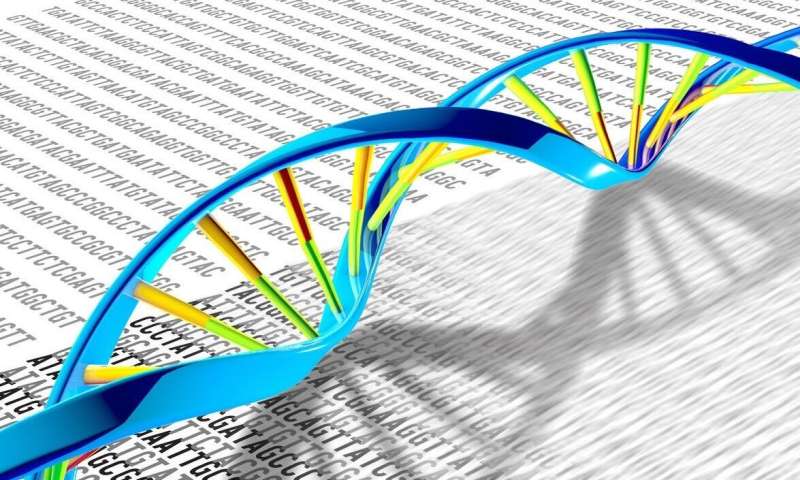
DNA nanoswitches find new drug leads faster by measuring protein interactions
Teams from the Wyss Institute, Boston Children's Hospital, and Harvard Medical School developed FIND. The platform tests large molecule libraries using DNA nanoswitches. It looks for compounds that change how two proteins bind, not just compounds that attach to one protein. This could help researchers find useful drug leads faster.

Blocking specific molecular signal on immune cells may restore ability to fight mutated cells
Natural killer cells can help destroy cancer cells, but they may be held back by an inhibitory signal. Researchers found these immune cells remain active in patients with a certain genetic form of blood neoplasm. Blocking the signal could help them fight the mutated cells. The finding may guide future treatments, but it is not yet a proven therapy.

Putty-like electrode could improve vocal rehabilitation
Researchers at McGill University developed an electrode that molds to the skin. It recorded activity from small neck muscles and performed as well as a standard clinical electrode for noise and stability. The proof-of-concept study suggests it could help monitor and treat voice disorders and upper airway diseases. More research is needed before it becomes a routine tool.

Controlling molecular helicity: A new approach to constructing chiral nanographenes
A team at Science Tokyo created a two-step method for making multi-helical nanographenes. These tiny carbon structures can contain up to eight helicene units, which are spiral-shaped parts. The method also controls their handedness, or the direction of their twist. This could help researchers design complex molecules more precisely.

Mali’s ‘Moringa Queen’ wins UN recognition for restoring degraded land
Rokiatu Traoré, head of Mali’s Herou Alliance, was named a Changemaker at the U.N. Sustainable Development Goals Action Awards. The group plants moringa and baobab trees, trains farmers, and builds businesses around moringa products. Its work aims to restore damaged land and expand jobs for rural women and young people. There is still limited research on moringa’s role in restoration across the dry Sahel.

Researchers explore how AI could improve earthquake safety
Researchers at the University of East London developed an AI-assisted framework for assessing earthquake risks. It examines how soil conditions, ground shaking and structural strength affect a building's ability to withstand an earthquake. The work could help improve safety assessments, though the report gives no test results or deployment details.

A well-timed blink helps us to look around
Researchers from Justus Liebig University Giessen and the University of Texas at Austin studied more than 80 people doing everyday tasks. They recorded over 38,000 blinks and found that people blinked more during faster head movements. They often held off blinking just before moving, when they needed to gather visual details. Timing blinks this way may help make vision feel steadier.

How the midterms could unleash a new era for clean energy in these 3 states
Democrats won control of the governor’s office and both legislative chambers in Arizona, Pennsylvania, and Wisconsin. The change could help these states pass new clean-energy policies. In Wisconsin, advocates hope for utility planning rules and a 100% clean electricity goal. Those plans still need to become law.

Nasal spray duo offers relief for stubborn blocked noses without rebound congestion in early clinical trial
Researchers tested a nasal spray combining two medicines for people with chronic nasal blockage. Some sprays, such as oxymetazoline, can cause worse blockage after repeated use. The new combination aims to provide lasting relief without this rebound effect. The supplied article excerpt does not report trial results or its location.

Coating made from renewable plant-based materials could simplify recycling while reducing exposure to microplastics
A University of Waterloo team created a durable coating made from plant-based cellulose. In tests, it stayed largely intact in boiling water, oil and solvents, unlike conventional plastic liners that showed wear and released particles. Because the coating and cup are both cellulose-based, they may be easier to recycle together. The coating may also let manufacturers use thinner paper.

New European database to support environmental risk assessment of human pharmaceuticals
The PREMIER consortium has launched a free, public database for assessing environmental risks from human medicines. It brings together data on more than 450 active pharmaceutical ingredients, making research easier to access. Water managers and regulators can use the information to help set safe levels in rivers and other waters. The tool also helps identify older medicines that need more testing.

A sweeter future? AI helps scientists discover new sugar substitutes
A team at the Hebrew University of Jerusalem used artificial intelligence and molecular modeling to search for new sweeteners. They screened about 50.7 million chemical compounds and narrowed the list to 92 promising candidates. These compounds still need lab testing; none is yet a proven sugar substitute. The approach may help researchers find options with a cleaner taste.

Astrocytes help sustain brain activity and blood flow during prolonged sensory stimulation
Researchers in South Korea found that astrocytes become more active when sensory input lasts 20 seconds. In mice, water enters these brain cells and triggers a chain of signals that ends with D-serine release. This helps sustain neuron activity and increase blood flow. The finding clarifies how brain cells and blood vessels work together over time.

Study links clinical characteristics to brain network connectivity in disorders of consciousness
A study of 128 patients and 40 healthy controls examined brain network connections using resting-state MRI scans. Patients with traumatic brain injuries had higher consciousness levels and better long-term recovery than those with injuries caused by lack of oxygen. Network patterns linked to injury cause were associated with recovery, but the study found correlations, not proof of cause and effect. The results may help explain why recovery differs among patients.
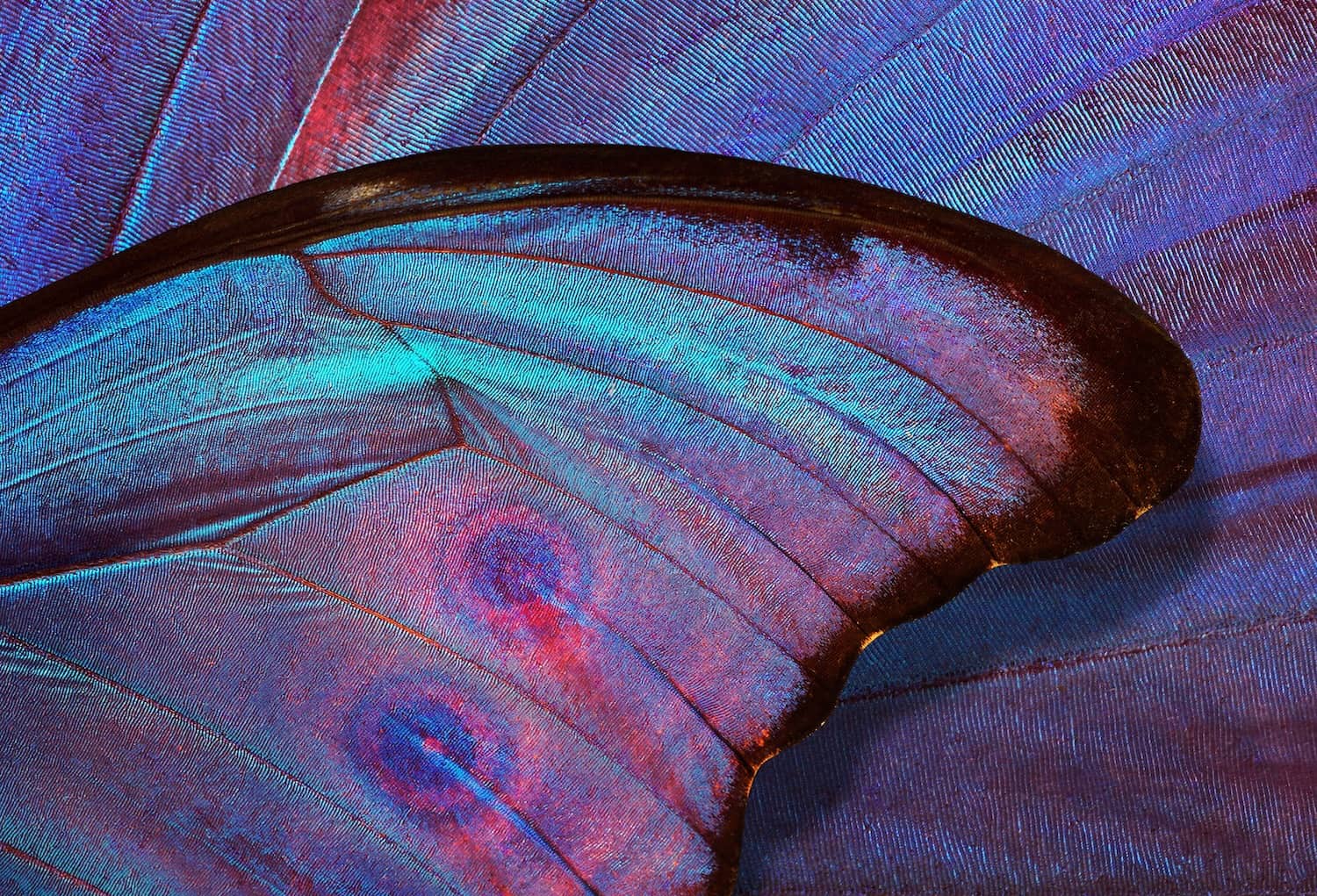
The butterfly effect: a brighter way to make paint?
Researchers at Northeastern University in Boston are exploring colour made by tiny structures, like those on butterfly wings. This could offer an alternative to some synthetic pigments that can fade or contain harmful chemicals. The team has grown only milligram-size crystals, so making enough for paints and glitter remains a challenge. The materials still need formal safety testing.

After 40 years of searching, physicists find evidence for an ultrarare particle decay
CERN physicists found evidence that the B⁰ meson can decay into two muons. The decay is extremely rare and was first proposed in 1984. The result reached 3.2 standard deviations when combined with earlier LHCb data, below the usual five-standard-deviation mark for a discovery. It agrees with the Standard Model and does not point to new physics.
Nanobubbles, hungry foxes and hidden reservoir - Twickenham's hi-tech turf
Allianz Stadium in Twickenham replaced its rugby pitch over the summer. A reservoir beneath the field can store water, while controls adjust how quickly moisture drains through the turf. Captured water can be reused, and tiny bubbles help keep it fresh. The new system aims to support a strong playing surface with less waste.