Latest News
Positive stories from around the world · Good news by country
Showing 33361–33384 of 37378 articles
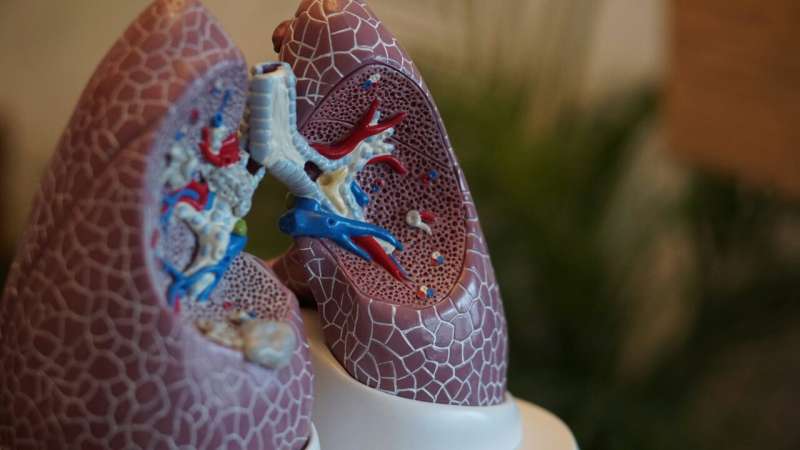
KRAS(ON) inhibitor zoldonrasib showed effective, durable responses in patients with advanced G12D-mutated lung cancer
Researchers tested zoldonrasib, a new oral drug, on patients with KRAS G12D-mutated lung cancer. This mutation affects about 4% of non-small cell lung cancer patients and was previously untreatable with targeted drugs. In 27 patients who had already tried other treatments, 52% responded positively to zoldonrasib, and 93% had their disease controlled. The drug was safe with no severe side effects, and the FDA has now given it Breakthrough Therapy designation to speed up its approval process.
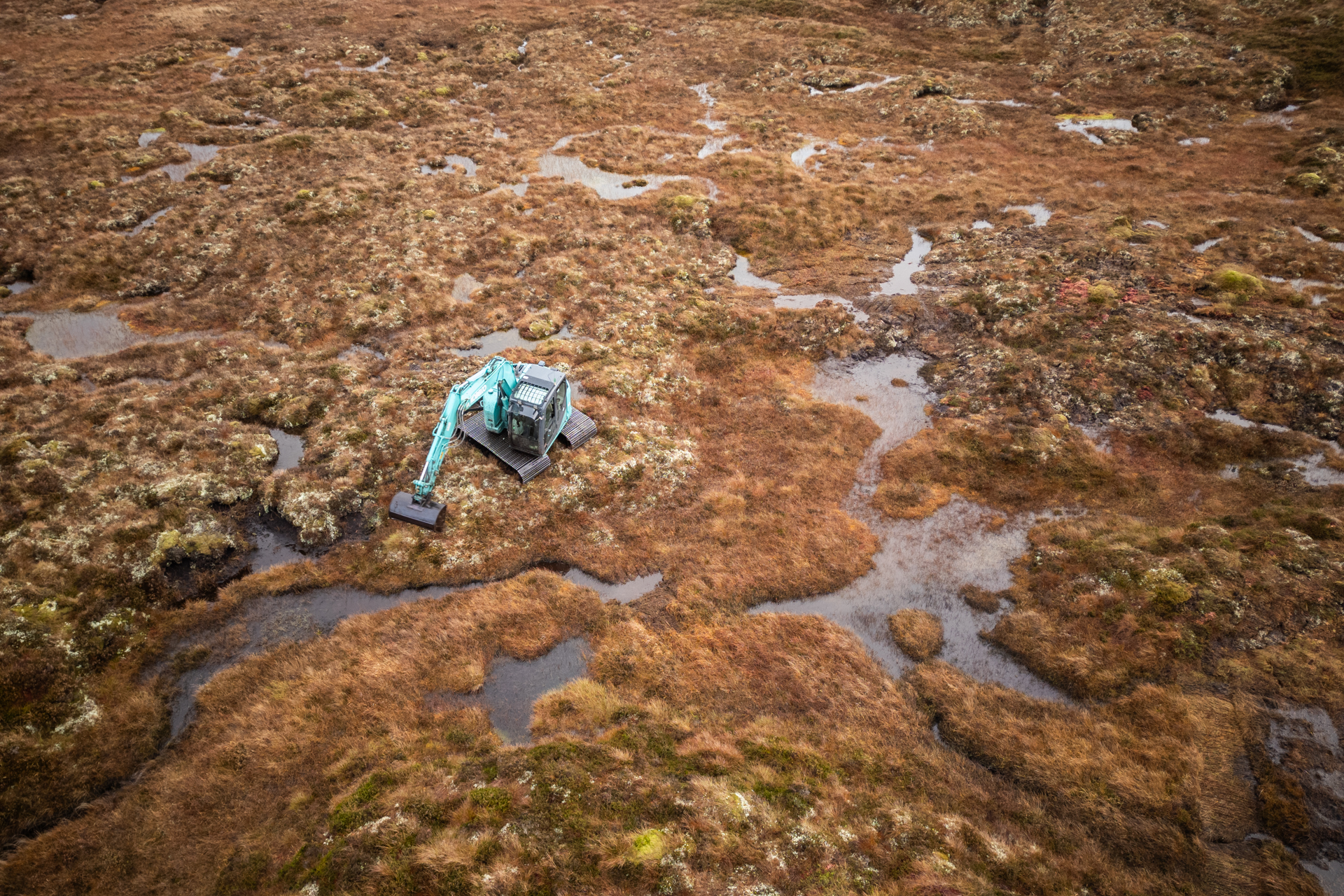
A Peatland Partnership: Restoring a 1000-hectare ecosystem in the Affric Highlands for nature, climate and people
Neighbors in Scotland's Affric Highlands have restored 1,000 hectares of degraded peatland through a partnership of landowners. Peatlands are rare ecosystems that, despite covering just 3% of Earth's land, store over 30% of the world's soil carbon. The team is blocking artificial drains, reprofiling eroded hillsides, and replanting sphagnum moss, which can hold 20 times its weight in water. The restored peatland will store carbon, reduce flooding, increase wildlife, and benefit local communities.

Migratory blackcap bird brain mapped for the first time, opening a new era of 3D digital atlases
Scientists have created the first-ever 3D digital map of a migratory bird brain. The Eurasian blackcap brain atlas, built by researchers at UCL and the University of Oldenburg using advanced imaging, reveals 44 distinct brain regions. Crucially, it uncovered a direct connection between areas that sense Earth's magnetic field and the brain's decision-making center. The open-source atlas is freely available to researchers worldwide, promising to accelerate discoveries about animal navigation and magnetoreception.

Video game improves emergency doctor trauma triage decision-making
A video game called Night Shift, developed by surgeon-scientists at UPMC and the University of Pittsburgh, is helping emergency physicians make better trauma triage decisions. The game trains doctors by placing them in high-stakes scenarios where they learn from decisions without risking real patients . A yearlong study of 800 physicians found those who played the game outperformed colleagues who only received standard education when caring for severely injured older adults, who are under-triaged up to 70% of the time .

Disabled parrot is undefeated alpha male of his group thanks to novel 'beak jousting'
Bruce, a kea parrot born without an upper beak, invented a unique "beak jousting" technique to become the alpha male at Willowbank Wildlife Reserve in New Zealand. The study published in Current Biology found he won all 36 dominance interactions recorded. Bruce's success shows how animals can innovate to overcome physical disabilities. His technique—never seen in other kea—was effective 73% of the time at immediately displacing opponents.

Bringing quantum time into the lab—a single clock can run young and old at once
Scientists have shown that today's atomic clocks are precise enough to test a wild idea about time. The research, published in Physical Review Letters, suggests that time itself might exist in quantum superposition—ticking faster and slower simultaneously, like a cat being both young and old at once. The team from Stevens Institute of Technology, Colorado State University, and NIST says trapped-ion clocks can now probe this strange effect where quantum physics meets Einstein's relativity. This was previously beyond experimental reach.

NASA shuts off instrument on Voyager 1 to keep spacecraft operating
NASA engineers in Southern California have shut down the Low-energy Charged Particles experiment (LECP) aboard Voyager 1. The shutdown on April 17, 2026, aims to conserve power as the nuclear-powered spacecraft ages. The LECP had been operating almost without pause since Voyager 1 launched in 1977—nearly 49 years. Of the 10 instruments Voyager 1 carries, seven have now been shut off, but the spacecraft continues its historic journey as humanity's only interstellar explorer, gathering unique data from beyond our solar system.

Gut microbiome changes may signal Parkinson's disease risk
Scientists at University College London have found that gut bacteria could serve as early warning signs for Parkinson's disease. The study discovered 176 microbial species that differ between people with Parkinson's and healthy individuals. Most importantly, 142 of these species also appeared in healthy people who carry a gene variant increasing Parkinson's risk by up to 30 times. Researchers hope this gut signature could enable early detection and prevention treatments for the disease.

Long-term use of immunotherapy may be safe for patients with alveolar soft part sarcoma
Researchers at the National Cancer Institute found that long-term use of the immunotherapy drug atezolizumab (Tecentriq) is safe for patients with alveolar soft part sarcoma, a rare cancer that mainly affects people aged 15 to 35. In the phase II trial, 17 patients aged 11 to 56 received treatment for more than two years with rare and manageable side effects. Responses lasted between 10 and 69 months, and 42 percent of initial patients had responses lasting over a year.

Scientists map how HIV hijacks human cells—and how cells can fight back
Scientists at Gladstone Institutes and UC San Francisco have created the first comprehensive genetic roadmap of how HIV interacts with real human cells. The study, published in the journal Cell, identified human proteins that either help the virus thrive or work to stop it. Using real human T cells instead of easier-to-study lab cell lines, the team tested all 20,000 human genes to find which ones affect HIV infection. They achieved up to 70% infection rates in T cells during testing, up from the typical 1-2%.

How primitive plants evolved to survive Earth's most catastrophic extinction event
Ancient plants called lycophytes survived Earth's worst mass extinction 250 million years ago by evolving a remarkable survival strategy. Researchers from the University of Leeds found these plants used CAM photosynthesis — opening their pores at night instead of day to store carbon dioxide as acid for daytime use. This allowed them to conserve water and tolerate temperatures exceeding 50°C. The discovery, based on fossils from South China, may help predict how plant communities could adapt to future warming.
Lennon cup final reunion for what could be O'Neill swansong
Neil Lennon and Martin O'Neill first met in 1996 when O'Neill convinced the 24-year-old midfielder to join Leicester City - reportedly staying at Lennon's flat until he agreed. Together, they won promotions and cup competitions before O'Neill brought Lennon to Celtic in 2000 for £6m. The pair dominated Scottish football, with Celtic winning five titles during their partnership. Now, 30 years on, they will oppose each other in the Scottish Cup final on 23 May - potentially O'Neill's last match as a manager.

Pancreatic cancer success story stems from 'undruggable' KRAS target | STAT
For nearly 50 years, scientists struggled to target the KRAS gene mutation that makes some cancers more aggressive. Then biochemist Kevan Shokat at UCSF found a way to do it, opening the door for new drugs. Revolution Medicines developed daraxonrasib, which Leanna Stokes received during a clinical trial. She says the drug transformed her life, letting her live far longer than most patients with her diagnosis. Doctors say this marks a new era for pancreatic cancer treatment and could help patients with lung, colorectal, and other cancers too.
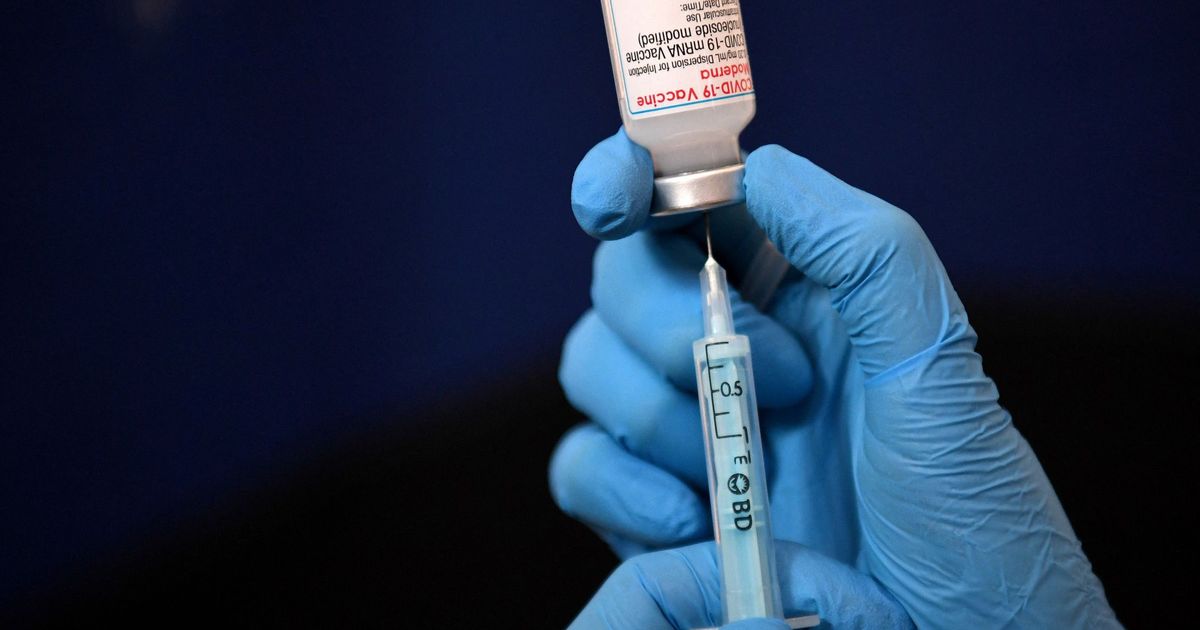
After a year of turmoil, cancer researchers see promising signs for mRNA vaccines :: WRAL.com
mRNA cancer vaccines are bouncing back after a turbulent year of political controversy tied to COVID vaccine backlash. The National Cancer Institute recently announced $200 million in funding for novel cancer vaccines, providing a major boost to the field. Scientists at leading institutions like Johns Hopkins and Dana-Farber report exciting results from early-stage trials.

How maze-like magnetic patterns form and evolve in materials
Researchers from Tokyo University of Science and other Japanese universities have created a new AI-based model called the explainable entropy-feature-Extended Ginzburg-Landau (eX-GL) framework to study how maze-like magnetic patterns form and evolve in soft magnetic materials. Using persistent homology and machine learning, the model maps complex magnetic domain structures to understand temperature-dependent magnetization reversal, which could help reduce energy loss in electric motors used in vehicles and industrial applications.

Engineers develop new plasma spray technique for tungsten–copper protective coatings
Researchers at the University of Nottingham developed a new plasma spray technique to create tungsten–copper coatings without needing expensive vacuum chambers. Tungsten handles extreme heat while copper carries it away, but the two materials are hard to combine because they expand differently when heated. The team solved this by gradually changing the mixture from mostly copper at the base to mostly tungsten at the surface, reducing internal stress.

Brushstroke-mapping AI reopens a centuries-old mystery about one of El Greco's masterpieces
Spanish painter El Greco's The Baptism of Christ was believed to be completed by his son Jorge Manuel after his death in 1614. Scientists created a new AI tool called PATCH that maps paint texture using 3D imaging to compare tiny one-centimeter brushstroke patches. The AI was first tested on 25 paintings by 9 different artists to prove it could tell hands apart. Results show El Greco likely played a bigger role in finishing his own work than previously thought.

A long-sought quantum computing milestone arrives as fermionic atom gates top 99% accuracy
Two independent research teams built quantum gates using fermionic atoms that hit over 99% accuracy—a milestone for the field. The German team at the Max Planck Institute used stable optical lattices with a quantum gas microscope. The Swiss team at ETH Zurich tuned bias voltage to make gates resistant to noise. Both exceed the threshold needed for quantum error correction. Researchers in quantum chemistry already see potential for simulating molecules, and both groups aim to expand their systems next year.

Student mental health trial finds conversational AI better than group therapy for anxiety
Researchers tested Kai, a conversational AI, against group therapy with 995 university students. Students chatting with Kai showed greater anxiety reduction and depression relief than those in traditional therapy or no treatment. The study, published in JAMA Network Open, found the AI formed effective therapeutic connections. Researchers hope AI could fill the global gap where 75% of people with mental health needs get no care.

A hidden property of light could power future nanomachines
Japanese physicists have achieved a major breakthrough in understanding light's interaction with matter at tiny scales. At Hokkaido University, they built a novel "micro-drone" platform that uses four laser beams to trap nanostructures and measure forces in all three dimensions. The team made a surprising discovery: tiny gold V-shaped structures twist sideways when hit by light, instead of rotating with the light's direction. This phenomenon, called transverse optical torque, had only been predicted before.
[2026-04-20] Working Families Tax Cuts Help Small Businesses Grow | The United States Senate Committee on Finance
The United States Senate Committee on Finance announced that recent tax legislation created lasting benefits for small businesses. The law made the 20 percent small business deduction permanent, giving entrepreneurs certainty for planning. It also increased Section 179 expensing, allowing businesses to deduct more equipment purchases immediately. Additionally, the law allows full expensing for domestic research and development and new factories.

New antibody-drug conjugate shows clinical benefit for advanced platinum-resistant ovarian cancer
A new drug called QLS5-132 showed promise for treating advanced platinum-resistant ovarian cancer in a clinical trial. The drug targets the CLDN6 protein found on ovarian cancer cells. In 28 patients treated at five different dose levels, half achieved tumor shrinkage. No patients stopped treatment due to side effects, and serious complications like lung disease or eye toxicity were not seen. The trial was conducted by researchers at Zhejiang Cancer Hospital in China and presented at a major cancer research conference.

Mind the gap! The semiconductor industry is relying on the wrong materials
Scientists at TU Wien in Austria found a hidden flaw in popular 2D materials being developed for better computer chips. When these ultrathin materials are combined with insulating layers, an invisible gap forms between them—just 0.14 nanometers wide, thinner than a single sulfur atom. This gap weakens electronic performance no matter how good the materials look on their own.

Emojis trigger brain responses like real faces within 160 milliseconds, study finds
Researchers at Bournemouth University used EEG brain scans to compare how people's brains react to emojis versus real human faces. They found both triggered similar neural patterns in just 145 to 160 milliseconds. The study suggests emojis are processed by the brain in ways comparable to genuine facial cues. This means when you send an emoji, people literally respond to it like a real expression.