Latest News
Positive stories from around the world · Good news by country
Showing 34105–34128 of 37370 articles
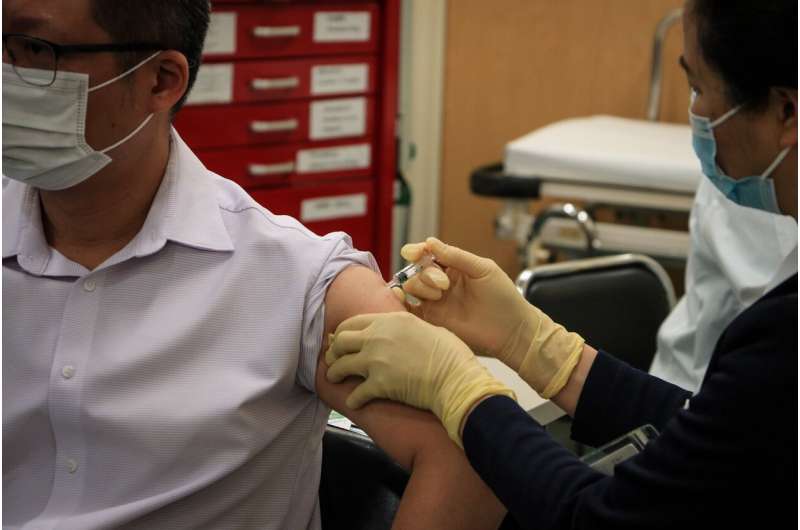
What raises vaccination rates most? Access, community outreach and incentives lead the list
Researchers looked at 237 randomized controlled trials involving 4.36 million people across high and upper middle income countries. They found three key strategies work best: offering more ways to get vaccinated, having community members help share information alongside health workers, and providing financial incentives. For children, covering costs like travel helped most. For adolescents and young adults, personal messages by phone or text worked well. For adults, help scheduling appointments and motivational counseling made a difference.

Machine learning tool pinpoints optimal locations for tree planting, offering a powerful tool for climate mitigation
A new AI tool helps Europe plant trees in the smartest spots possible. Scientists built a genetic algorithm that picks locations to maximize flood control while saving water. Tests show optimized planting cuts river flooding by up to 43% and preserves groundwater by 60%. The tool works even in a +2°C warming world, making it ready for climate change.

‘Africa Is Inevitable!’, Akinwunmi Adesina’s Powerful Message After Lifetime Achievement Award • Channels Television
Akinwumi Adesina received the African Lifetime Achievement Award in Accra, Ghana on April 11, 2026. The former African Development Bank President used the platform to declare Africa an "investable reality" rather than a continent of unrealized potential. He highlighted that Africa is projected to grow at 4.2% in 2026, making it the fastest-growing region globally. During his tenure at AfDB, he raised the bank's capital from under $100 billion to over $300 billion, and his projects impacted 500 million Africans.
How Bayern Munich's wingers took the game to Real Madrid
Champions League football analysts Stephen Warnock, Nedum Onuoha and Julien Laurens examined Bayern Munich's semi-final success against Real Madrid. They focused on wingers Michael Olise and Luis Diaz, whose pace and attacking skills troubled Madrid's defense throughout the match. The analysis highlighted how Bayern's wide players created constant problems, helping the German club reach the semi-finals. This piece provides tactical insight into what made Bayern's attack so effective in this high-profile European tie.

Stress-triggered protein clusters reveal how cells sort damaged cargo
Scientists at Syracuse University discovered how the Dsk2 protein reshapes itself under stress and links with other molecules to form temporary droplet-like clusters called biomolecular condensates. These clusters act as cleanup hubs, gathering and processing damaged proteins before they can form harmful clumps. At the heart of the mechanism is a folded region shaped like a clamp, with spiral segments that briefly bind and release.

Australia's 60-day prescriptions are saving millions; why aren't more patients getting them?
Australia's 60-day prescription policy launched in September 2023 has already saved patients $65 million on blood pressure medicines. However, a new study found only 21.2% of eligible prescriptions use the longer supply option — less than half the government's 45% target. Researchers surveyed 20 GPs and found most aren't proactively offering the prescriptions due to confusion about which medicines qualify and some pharmacists discouraging the longer supply. If uptake reached 50%, annual patient savings could hit $165 million.

AI-powered biochip detects genetic markers in 20 minutes
Researchers at Nanyang Technological University in Singapore designed a biochip that detects microRNAs—tiny genetic markers linked to diseases—using AI and light-capture technology. A single blood drop goes into the chip, where thousands of genetic signals are imaged and analyzed in one snapshot. Compared to standard PCR testing that takes hours, this new method delivers results in 20 minutes. The team built a compact prototype with a color camera and phone app that could make fast disease screening accessible anywhere.

Astronomers crack a decades-old mystery, catching gas morphing into planet-building disks around newborn stars
Astronomers have finally cracked a cosmic puzzle: how gas transforms into planet-building disks around newborn stars. An international team led by Dr. Indrani Das discovered ENDTRANZ—a transition zone where falling gas gradually shifts into ordered motion that forms disks. The findings, combining computer simulations with ALMA telescope observations, were published in The Astrophysical Journal. This breakthrough helps explain how stars and planetary systems, including our own solar system, come to exist.
We can get Lawes to World Cup – Sale boss Sanderson
Sale Sharks boss Alex Sanderson has backed Courtney Lawes to make a sensational return to England duty at the 2027 Rugby World Cup in Australia. Lawes, 37, who captained England and earned 105 caps, is joining Sale from French club Brive after coming out of international retirement. Sanderson believes Sale's strong pack and new recruits can help Lawes reach the World Cup in great form. Former England teammates Joe Marchant and Alex Lozowski are also joining the Sharks this summer.

Dark matter could explain the earliest supermassive black holes
Scientists at UC Riverside have proposed a new explanation for supermassive black holes that formed less than a billion years after the Big Bang. Their research shows that decaying dark matter could have released enough energy to prevent gas from forming stars, causing it to collapse directly into black holes instead. The James Webb Space Telescope has been observing these unexpectedly large black holes, confirming the mystery that this theory aims to solve.

From benign growth to pancreatic cancer: New study shows how the switch gets flipped
Researchers at Memorial Sloan Kettering Cancer Center have uncovered how pancreatic cancer develops from harmless cells. The key finding is that cancer arises from rare cells in a special 'injury repair' state that can reshape their surroundings to suppress the immune system. These cells need two things to become cancerous: an oncogenic mutation (like KRAS, altered in nearly all pancreatic cancers) AND the failure of tumor suppressor genes like p53 (mutated in about half of all cancers) to stop them.

Cut off from making fat, parasitic wasps lose pheromones, fail to form eggs and cannot reproduce
Scientists at German universities found that parasitic wasps can make fat from sugar—a process called lipogenesis. They disabled the Nvfas1 gene in the species Nasonia vitripennis using a technique called RNA interference. Without this gene, male wasps could not make sex pheromones, and females could not develop eggs properly. The discovery shows that wasps need to produce fat from sugar to reproduce.

Nvidia Quantum Computing Breakthrough Sparks Rally in Korean Tech Stocks - Seoul Economic Daily
Korean tech stocks jumped after Nvidia revealed Ising, an AI tool that fixes errors in quantum computers. The technology can make quantum error correction 2.5 times faster and 3 times more accurate. This pushed companies like DreamSecurity, QSI, and RNTX up by nearly 30% in one day. Experts say quantum computers could become real sooner than expected, though some warn the stock gains are based more on hope than actual business results.

What the U.S. Endangered Species Act Has Achieved (So Far) - Animals Around The Globe
The U.S. Endangered Species Act (ESA), signed by President Nixon in 1973, has become one of the world's most effective conservation laws. The Act passed with unanimous Senate support and has prevented 99% of protected species from going extinct. Iconic recoveries include the bald eagle (from 500 to 15,000+ nesting pairs) and the peregrine falcon (from 324 to 3,000+ nesting pairs). Only 11 species have been declared extinct under ESA protection, and most were likely already extinct when listed.

Jelly-like plankton fuel bigger, faster-growing reef fish across the Indo-Pacific
Australian scientists at James Cook University discovered a major reason Indo-Pacific coral reefs outproduce Caribbean reefs in fish. After analyzing 2.5 million fish observations, they found that fish eating jelly-like plankton grow bigger and faster. Jelly-eating fish make up just 4% of individual fish but account for over 30% of total reef fish biomass in the Indo-Pacific. Researchers say this knowledge could help protect reef fisheries and feed millions of people who depend on these ecosystems.

The link between migraine genetics and post-concussion headaches in kids
Scientists at the University of Calgary discovered a genetic link between migraine risk and post-concussion headaches in children. The study followed 600 children aged 8 to 16 for six months after their concussions. Children with a family history of migraine and four specific gene mutations had more severe headaches after head injuries. Researchers hope this finding will lead to rapid genetic testing that identifies which children need earlier, more targeted treatment.

AI tool reveals rare cancer cells tied to faster disease progression
Researchers at McGill University in Canada created SIDISH, an AI tool that spots rare cancer cells driving aggressive tumors. The tool connects single-cell data with patient survival outcomes. Tested on pancreatic, breast, and lung cancers, it identifies high-risk cells linked to faster disease progression. SIDISH can also simulate how these dangerous cells respond to different drugs, potentially speeding up cancer drug development and helping repurpose existing medications.

How do cancer cells 'learn' to resist treatment?
Researchers at NYU Langone Health in New York discovered how cancer cells learn to resist chemotherapy. They found that special proteins called AP-1 act like a survival toolkit, letting cancer cells rewire their genes to survive treatment. Unlike random DNA mutations, cancer cells can temporarily change how their genes work, test different survival patterns, and lock in the best one. These winning patterns then pass to future cell generations, creating drug-resistant tumors.

As polar ice changes, so do the rules governing it
Mathematician Ken Golden and colleagues found that granular sea ice requires 10% brine volume for fluids to flow through it, while columnar ice only needs 5%. This matters because as climate change warms the poles, sea ice is becoming thinner, younger, and more granular. The different ice types create very different conditions for algae, bacteria, and other organisms that live in sea ice. About 25% of Antarctic ice pack forms through this process, making the finding important for understanding polar ecosystems.

Scientists capture superconductivity's 'dancing pairs' for first time, revealing missing pieces in a decades-old theory
For the first time, scientists have directly observed how electron pairs behave inside a superconductor. Using a gas of lithium atoms cooled to near absolute zero, researchers captured images showing that these 'dancing pairs' move in synchronized patterns rather than independently. The discovery contradicts the 70-year-old BCS theory of superconductivity, which predicted no such coordination between pairs.
Bayern score late to win seven-goal thriller over Real Madrid
Bayern Munich secured a thrilling 4-3 victory over Real Madrid in the UEFA Champions League quarter-finals. The match took place at Bayern's home stadium in Munich. Both teams scored freely in an exciting game. Bayern's win sets up a semi-final clash with Paris Saint-Germain.

Why gay men can feel more attractive when they travel
A study led by Dr. Oliver Qiu at the University of East London explores why some gay men feel more attractive when traveling. The research finds that desirability is not fixed — it shifts based on location, digital platforms, and familiarity. Being "new" in a place can bring a surge of attention and messages. However, this boost is often short-lived; as people become familiar, the attention fades.

Single school mental health checks may miss students in need
Researchers at Edith Cowan University in Australia discovered that a single mental health survey can misclassify students whose moods go up and down. The study followed 750+ secondary students in Australia and the UK who completed weekly mood check-ins over 6–7 weeks. About 17% of students moved above and below the threshold for low well-being during this time. More than half of students reported that the regular check-ins helped them better understand their emotions, and a free app has been created to help schools adopt the approach.

How a hidden receptor switch could open new paths for cancer and neurological treatments
Scientists at Leipzig University in Germany uncovered why a special family of cell receptors barely activate on their own. The BAI2 receptor has a built-in cutting sequence, yet it takes about 100 days to actually cut itself. The team found that a tiny interaction between two amino acids — histidine and phenylalanine — is missing. They restored this interaction and cut the activation time to less than two days. The discovery could help develop drugs targeting these receptors for cancer, brain disorders, and inflammatory diseases.