Latest News
Positive stories from around the world · Good news by country
Showing 34225–34248 of 37370 articles

Music and traffic noise make our imagination more vivid
A new study from Murdoch University and the University of Sydney found that both music and traffic noise can make people's mental imagery more vivid. Researchers studied 107 students who imagined journeys while hearing different sounds. Surprisingly, both music and disruptive noises like traffic improved imagination clarity compared to silence. However, music made the imagined experiences feel more positive and emotional, while adding traffic noise to music slightly reduced that effect.

Back-to-basics approach can match or outperform AI in language analysis
Researchers at The University of Manchester have developed LambdaG, a grammar-based method for identifying text authors. Unlike traditional AI systems, it analyzes patterns in grammar, sentence structure, and function word usage to create a writer's profile. Tested across 12 real-world datasets, LambdaG matched or outperformed complex neural network approaches. The researchers say the method offers a more transparent, interpretable, and cost-effective alternative to large-scale AI models for authorship verification.

Study finds that whole-fat milk lowers risk of child obesity
A major new study from the University of Toronto found that children who drank whole-fat milk had 69% lower odds of obesity at age eight compared to children who drank skim milk. The research, one of the largest of its kind, followed thousands of children from the CHILD cohort study before birth through adolescence. The findings challenge dietary guidelines that for decades recommended reduced-fat milk for children over age two.

IonQ Demonstrates Networked Quantum Systems
IonQ has connected two remote trapped-ion quantum computers using photons, marking the first demonstration of quantum entanglement between commercial systems at a distance. The Maryland-based company says the achievement proves their platform can scale beyond a single processor using photonic links. The project was funded by the U.S. Air Force Research Laboratory and supports efforts to build a future quantum internet. CEO Niccolò de Masi called it a step toward distributed, networked quantum computing.
Scotland chase 160 to beat Namibia in first T20
Scotland secured a comfortable victory in their T20 match against Namibia in Windhoek. After Namibia posted 159-7, Scotland chased down the target of 160 with 7 balls remaining. Brandon McMullen was the star with an unbeaten 44, while captain Richie Berrington also contributed 34 on his 350th appearance for Scotland. This was the first match in a three-game series.
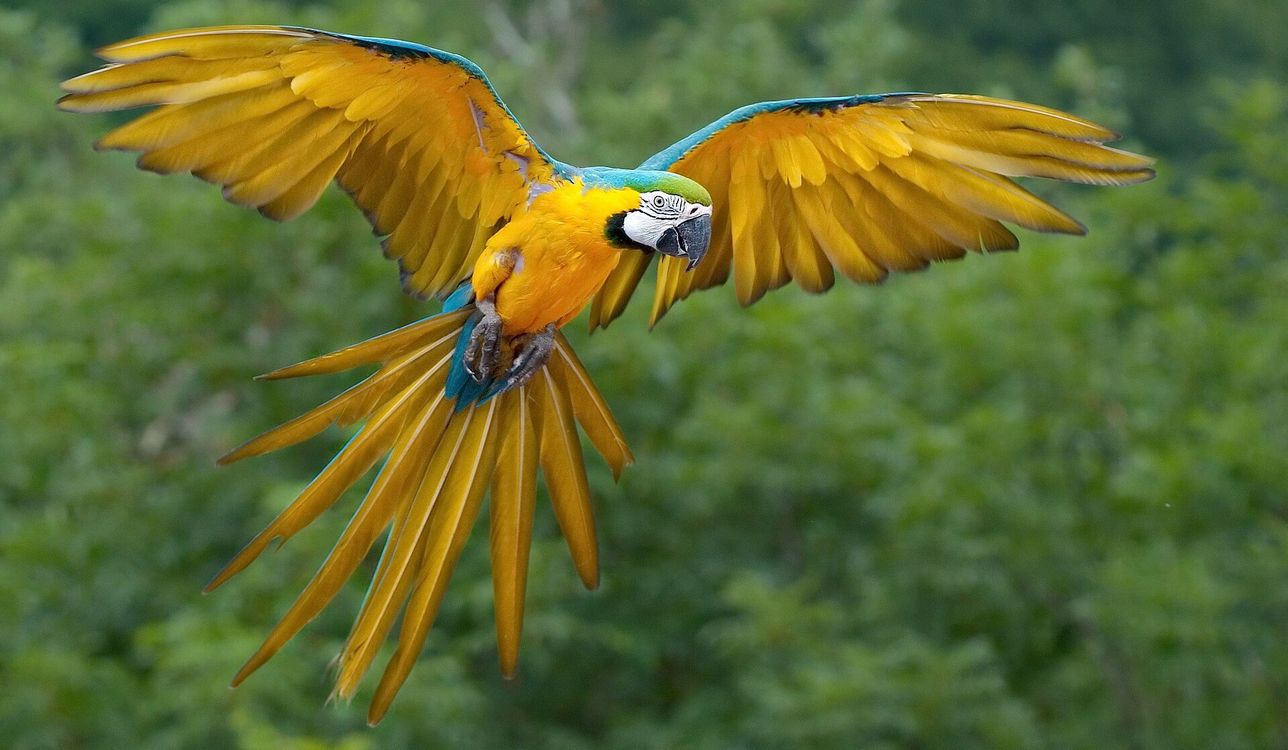
Brazil’s Blue-and-Yellow Macaws Return to Rio After 200 Years: ‘A dream come true’
Four Blue-and-Yellow Macaws have returned to Tijuca National Park in Rio de Janeiro after 200 years through a captive breeding program. Four birds have been released into the Atlantic Forest remnant in Brazil's largest urban park, where locals call it a "dream come true". The Blue-and-Yellow Macaw is a critically endangered species. Its sharp beak can help break open nuts and fruits to help trees better disperse their seeds, which many trees in the park rely on to reproduce. The Atlantic Forest has been reduced by 90% since colonial times.

'Spin-flip' system pushes solar cell energy conversion efficiency past 100%
Scientists in Japan have built solar cells that convert sunlight into electricity at 130% efficiency, shattering the long-standing 33% theoretical limit. Standard solar panels only achieve about 20% efficiency because blue photons carry more energy than needed, with the excess wasted as heat. The team used a molybdenum-based 'spin-flip' metal complex paired with singlet fission materials, which splits one high-energy exciton into two lower-energy ones.

English still dominates science, but its share fell from 94% to 85%
English still dominates scientific publishing, but its share fell from 94% in 1990 to 85% in 2023, according to a study of 88 million articles. This nine-point drop represents a modest but significant shift toward equity and diversity in global knowledge production. Languages like Indonesian rose from virtually zero to 2.69% of indexed articles, surpassing French and German.

Jury ruling sharpens questions over when heavy social media use becomes addiction
A California jury awarded $6 million to a plaintiff who argued that social media's addictive features caused her psychological harm. Google and Meta were found liable and say they will appeal the decision. Researchers say outcomes from social media vary widely—active use like posting can boost well-being, while passive scrolling is linked to harm. The case raises questions about whether social media addiction should be formally recognized as a clinical disorder, with the APA currently lacking clear diagnostic criteria.

A powerful new cancer map tracks hundreds of mutations to one escape route and exposes a drug target
Scientists at The Rockefeller University built a tool called PerturbFate. It maps how hundreds of cancer mutations reshape cells and where they converge. Using melanoma drug resistance as a test case, they found that different mutations share control points that could become drug targets. This offers a new path for combination therapies that could work across many genetic causes of cancer, not just one.

Off-label cancer drugs deliver durable benefit for some patients in large trial
Scientists in the Netherlands ran the largest-ever trial testing cancer drugs outside their original approved use. They matched 1,600 patients with advanced cancers to treatments based on their DNA makeup. About one-third responded positively to the off-label drugs. Even more impressively, 67 patients became what doctors call "exceptional responders" — remaining cancer-free or stable for at least two years. One treatment group gained national health insurance coverage after the trial proved it worked.

How farming changed us: Ancient DNA reveals natural selection sped up in recent human evolution
Harvard researchers analyzed nearly 16,000 ancient human genomes from West Eurasia spanning over 10,000 years. They discovered hundreds of gene variants were driven by natural selection, far more than the 21 cases previously known. The study found selection actually accelerated after people switched from hunting and gathering to farming. Many of these gene variants are linked to traits like diabetes and schizophrenia risk, which could help future medical research.

Mitochondria keep key immune cells battle-ready by sustaining electron flow, study reveals
Researchers at CNIC in Madrid found that mitochondria—the tiny power plants inside cells—do more than just make energy. They also keep immune cells called dendritic cells in a "ready-to-respond" state. These cells are crucial because they activate T cells to fight infections and tumors. The study showed that keeping the right chemical balance inside these cells is what matters, not just making energy. This opens new ways to improve cancer treatment and vaccine effectiveness.

'MitoCatch' delivers healthy mitochondria to diseased cells
Scientists at the Institute of Molecular and Clinical Ophthalmology Basel have created MitoCatch, a new system that sends healthy mitochondria directly to sick cells. Mitochondria are the energy factories inside cells, and when they fail, it causes diseases like Parkinson's, Alzheimer's, and heart failure. MitoCatch uses special protein binders to target specific cell types, including neurons and heart cells. Tests showed damaged neurons survived longer after treatment, with no immune reaction detected in animal studies.

Genome-wide analysis reveals host–virus genetic interactions in cancer risk
Scientists at Columbia University have made a major discovery about cancer risk by studying how human and viral genes work together. They found that the Epstein-Barr virus teams up with a specific human immune gene called HLA-A*11:01 to influence nasopharyngeal cancer. Most adults carry EBV, but only some develop related cancers. This research shows that cancer risk depends on the combination of both the person's genes and the specific strain of virus they encounter.

How HR can help public companies succeed long after the IPO
Researchers from the University of Iowa surveyed 183 companies that went public in 1996. Twenty years later, 93 of those businesses were still operating. The study found that companies succeeding long-term balanced urgency with valuing employees—too much of either hurt survival. Key to success was having an HR executive who could help maintain this balance after the IPO. The researchers say founders' values are set at the time of going public, and sustained commitment to those values determines whether firms thrive or fail.

Fracture risk detection in women improved beyond bone density tests
A new bone test from Ohio University can spot fracture danger 22% better than the current standard test for older women. The technology, called CBMT, measures how well bone resists bending instead of just counting minerals in it. Over three-quarters of people who break bones after simple falls have "normal" bone density by current tests. CBMT could help doctors prevent serious injuries like hip fractures in the many women currently slipping through the gap.

Immune system uses a conveyor belt-like process to edit defective antibodies, new research finds
Scientists at Boston Children's Hospital in the US have uncovered how immune cells fix their own mistakes. When B cells create antibodies that don't work properly, they use a special editing process to swap out defective pieces. The researchers found that an enzyme called RAG scans DNA in one direction, cutting and replacing faulty gene segments like a conveyor belt. This backup system could help explain why some people develop autoimmune diseases where the body attacks itself.

Sperm whale clicks follow similar rules to human speech
Scientists from Project CETI have found that sperm whale clicks, called codas, follow rules similar to human speech. They studied nearly 4,000 codas from 15 female and young whales off Dominica's coast. The whales organize their clicks into patterns with five features matching how humans form words. The team found individual whales have unique timing, like how people speak at different speeds. This suggests whales can create thousands of different sound combinations, making it one of the most complex animal communication systems known.

CO₂ emissions from cultivated peat soils may be lower than assumed
Scientists from Norway's NIBIO research institute have discovered that the standard method used worldwide to estimate CO₂ emissions from farmed peat soils may be giving inflated numbers. By applying a computer model calibrated with real measurements from Norwegian farms, the team found that current IPCC methods overestimate emissions by 31–88% in wetter regions with high groundwater tables.

Researchers create Olympic gels, a long-theorized class of DNA-based soft materials
Researchers at the Leibniz Institute in Dresden, Germany have finally made Olympic gels. Scientists first dreamed up this material nearly 50 years ago. The team created over 16,000 DNA rings that link together mechanically instead of with chemicals. The rings close onto themselves when activated, forming a flexible, stretchy network. Scientists say these gels could help deliver drugs inside the body or create better filtration membranes.
Seven-time Grand Slam champion Murray retires
Seven-time Grand Slam champion Jamie Murray has retired from professional tennis. The British doubles specialist is best known for his Wimbledon mixed doubles victories in 2007 and 2017. Murray leaves the sport as one of the most decorated doubles players in history, with career highlights including multiple Grand Slam titles across various tournaments. His retirement marks the end of a distinguished career spanning nearly two decades at the top of professional tennis.
British doubles legend Murray retires from tennis
Jamie Murray has announced his retirement from professional tennis at age 40, ending a remarkable 20-year career. The Dunblane native became the first British player to reach world No.1 in doubles, winning seven Grand Slam titles along the way. He partnered with brother Andy to win the Davis Cup in 2015, Britain's first victory in 79 years. Murray, known for his volleying skills and preposterous angles at the net, said he felt "very fortunate" and had "no regrets" about his career.

A monster black hole appeared first, then its galaxy began to grow around it
Astronomers have made a surprising discovery about how supermassive black holes formed in the early universe. Using the James Webb Space Telescope, a team led by Roberto Maiolino at the University of Cambridge found a black hole (QSO1) that existed 700 million years after the Big Bang—yet it formed in an environment with no stars or stellar material around it. This contradicts the usual understanding that black holes form from the remnants of exploded stars, then grow alongside their host galaxies.