Latest News
Positive stories from around the world · Good news by country
Showing 36721–36744 of 37342 articles

Bile acid and steroid signatures tied to extreme longevity
Scientists are uncovering the metabolic secrets behind extreme longevity by studying centenarians—people who live past 100. Research shows that protective genetic factors make up to 50% of what helps people reach this age. The other half comes from healthy lifestyle habits like eating plant-forward diets, getting regular natural movement, and maintaining strong social connections. The study focuses on unique immune system signatures and bile acid/steroid patterns that may reveal how these "agers" stay healthy so long.

Animals are powerful landscape engineers shaping the Earth's surface, global study finds
Scientists have confirmed what many suspected: wild animals shape Earth's landscapes as much as wind, water, and geology do. A global study involving over 100 researchers found that creatures from prairie dogs to elephants redistribute soil and sediment across ecosystems. Their everyday activities—like burrowing, feeding, and building shelters—move enormous amounts of material, challenging old ideas about how landscapes form.

Researchers use nasal stem cells to help nerves regrow in damaged limbs
Two researchers at Northeastern University are working on a new treatment for people with serious nerve injuries. They are using stem cells taken from inside the nose, which have a special ability to grow into nerve cells. The goal is to help patients who suffered nerve damage from car accidents or wartime injuries regain feeling and movement in their limbs. This research could change lives for people who've been told they may never recover.

How adults can help children move from climate anxiety to resilience
Adults can play a key role in helping children move from climate anxiety to resilience. Experts suggest practical strategies adults can use when supporting young people who feel overwhelmed by environmental concerns. The piece focuses on transforming feelings of helplessness into constructive action and emotional strength. It addresses the 'futility gap' children experience when individual actions seem meaningless against larger societal challenges.

Common genetic cause of severe epilepsy revealed
A 6-year-old girl named Ava Begley has finally received a diagnosis for a severe form of epilepsy following research by scientists at Manchester University NHS Foundation Trust. Researchers discovered this condition is one of the most common genetic causes of severe epilepsy, affecting over 80 people worldwide. Ava's parents say they feel deeply grateful for the discovery, which provides answers about their daughter's condition.

Light switch for life: Controlling molecular droplets with UV
Scientists at Leiden University's Mashaghi Lab found a way to use UV light to control tiny molecular droplets called biomolecular condensates. These droplets help organize important processes in living cells but are so small and constantly changing that they are hard to study or control. By using UV light, researchers can now shape and control these droplets in a precise way. This breakthrough could help create smarter biomaterials and give scientists new tools to understand how cells work.

Mavacamten improves obstruction in adolescents with hypertrophic cardiomyopathy
Researchers tested mavacamten, a heart drug, in adolescents with obstructive hypertrophic cardiomyopathy. This was the first trial of the drug in patients under 18. Those receiving mavacamten showed significant improvement in blood flow obstruction. The results were presented at the American College of Cardiology's Annual Scientific Session.

Rapid urine test identifies effective UTI antibiotics in about six hours
A new urine test can identify the right antibiotic for a urinary tract infection (UTI) in about 6 hours. Researchers at the University of Reading created it, working with teams at the University of Southampton and Hampshire Hospitals. Standard lab testing for the same information currently takes 2 to 3 days. Faster results mean patients can start the correct treatment sooner and avoid taking the wrong antibiotic.

Improved carp boosts profits by 25% in Bangladesh's polyculture ponds
Bangladesh's smallholder fish farmers are seeing big gains from a new carp breed. The G3 rohu, selectively bred by WorldFish, grows 32.6% faster than regular carp. This means farmers earn 24.8% higher profits while producing more fish from the same ponds. The research is published in the journal Aquaculture Research.
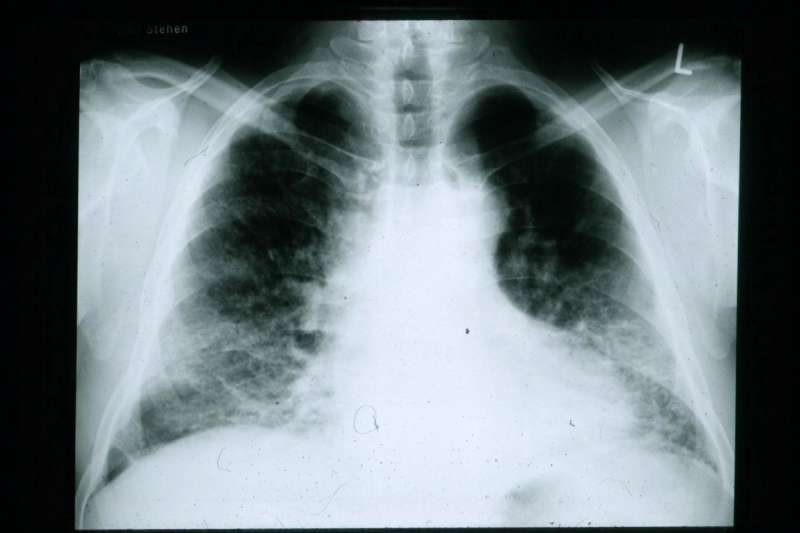
Targeting protein BCL-2 may create a promising pathway to reversing pulmonary fibrosis
Researchers have found that a protein called BCL-2 stops the lungs from repairing themselves after injury. This discovery helps explain why pulmonary fibrosis — a disease that causes lung scarring — is so hard to treat. The team showed that blocking BCL-2 with drugs may allow the lungs to heal again. The findings, published in Nature Communications, could lead to new treatments for millions of patients worldwide.

NASA wants to build a base on the Moon by the 2030s, How and why it plans to build up to a long‑term lunar presence
NASA's Artemis program is changing direction. Instead of rushing to plant flags on the Moon, the agency now focuses on learning how to live and work there. The strategy prioritizes repeated operations and building sustainable lunar infrastructure. This long-term presence could eventually link with technology networks back on Earth.

Organ-on-a-chip technology replicates decades of human aging in just four days
Scientists have created tiny chips that can mimic how human organs age over decades, doing in four days what would normally take a lifetime. These organ-on-a-chip devices contain living human tissue that ages rapidly, letting researchers study diseases like Alzheimer's and heart disease in a fraction of the normal time. With over one billion people worldwide now over 60, healthcare systems face growing challenges from age-related illnesses. This new technology could speed up drug testing and help find treatments faster.

Gut bacteria may influence social behavior through smell
Neurobiologists at Northwestern University discovered that gut bacteria work with the nose to shape social behavior in mice. The gut microbes produce a pungent odor that other mice can detect. When smelled, these scents trigger aggressive or submissive behavior, helping establish social hierarchies. This reveals a new biological pathway connecting the gut microbiome to social interactions.

Why early pregnancy loss care can feel isolating, and how a new program can help
A team at the University of Queensland has developed Australia's first dedicated mental health support program for parents who experience early pregnancy loss. Called M-HELP (Mental Health after Early Pregnancy Loss), the program was created by psychologist Dr. Marjolein Kammers and her research team. It is now being used at Ramsay Health Care maternity hospitals in Queensland, Victoria, and New South Wales. The work has been published in the journal Midwifery.

Stopping beta-blockers after heart attack is safe for low-risk patients, study finds
A large study presented at a top cardiology conference found that stable, low-risk heart attack survivors can safely stop taking beta-blockers after at least one year. The research showed that stopping the medication was just as effective as continuing it for preventing death, another heart attack, or hospital stays for heart failure. Beta-blockers are common heart medicines, but they can cause side effects like tiredness and dizziness. This new finding could give millions of patients more freedom from daily medication.

With history standards prone to politicization, 'minimalism' approach would benefit U.S. teachers, scholar argues
A University of Kansas researcher has published new findings suggesting that U.S. history curriculum standards frequently become too politicized. The study argues that "standards minimalism" — meaning lighter, less specific guidelines that give teachers more freedom — produces better outcomes than highly detailed standards that change with each new administration. The scholar examined how different states approach history teaching and found that flexible standards help schools avoid the political battles that come with rigid requirements.

Strained liquid crystals steer soliton 'bullets' along two diagonal paths
Scientists have found that strained liquid crystals can steer soliton 'bullets' along two diagonal paths. Solitons are unusual waves that travel without spreading out or fading away. The research shows how material strain—stretching or compressing—can control wave direction. This discovery, published in Physical Review Letters, could help advance optical communication technology.

Brain wiring model could shorten path to new medicines
Researchers at UCL have created a new physical model of axons, the tiny fibers that carry signals in the brain. The artificial model better mimics real human axons than earlier lab tools. Drugs that look promising in simple lab tests often fail when tried in actual humans. Testing medicines on this replica first could reduce those costly failures and speed up development of treatments for conditions like multiple sclerosis and other degenerative brain diseases.

Psychiatric training for family doctors aims to provide better mental health care for rural and Indigenous patients
Each year, 1 in 5 Canadians experience a mental health issue, and about half will have faced mental illness by age 40. For many, especially in rural and Indigenous communities, family doctors are the first and sometimes only point of contact for help. University of Alberta psychiatrists are now offering training, resources, and ongoing support to help these doctors deliver more timely and effective mental health care. The program specifically aims to reach underserved populations who face barriers to specialized care.
England fitness issues put to bed - Edwards
England women's cricket head coach Charlotte Edwards has confirmed that her players have fully resolved previous fitness concerns. She stated that the team has achieved the fitness targets set for them. This update suggests the team is well-prepared for upcoming competitions. The news focuses on the successful resolution of conditioning issues within the squad.

Hospital 'huddles' can speed up decision-making to accelerate diagnosis and discharge
Hospitals often struggle with diagnosing patients quickly while keeping care safe. Researchers at Florida International University studied how brief, structured team meetings among staff can help. These "progression-of-care huddles" let doctors, nurses, and other team members share updates and decide on next steps together. The study found this simple practice can significantly speed up both diagnosis and patient discharge times.

Unexpected potential bacterial symbiosis found in fungus that causes angular leaf spot
Scientists studying the fungus that causes angular leaf spot in beans stumbled upon something unexpected: bacteria living inside the fungus itself. This hidden partnership could help explain why the disease is more severe in some areas than others. The finding, published in Phytopathology, may open doors to breeding bean varieties that resist the disease naturally. It could also reduce farmers' reliance on chemical pesticides.
Trump beats Allen in Tour Championship opener
Judd Trump beat Mark Allen in the first round of the Tour Championship snooker event. The match was competitive and closely contested. Trump progressed to the next round of the tournament held in Manchester. This was a standard sporting result with no broader significance beyond the tournament outcome.

New biomarker for immunoglobulin A nephropathy identified
Researchers have identified a new biomarker for IgA nephropathy, a serious autoimmune kidney disease. The disease involves deposits of immune complexes in kidney filtering units. This biomarker could help doctors detect kidney damage earlier. Better monitoring may prevent progression to kidney failure.